
Cantor and Securitize Team Up to Revolutionize the IPO Process
The Evolution of the IPO: From Traditional Finance to Blockchain For decades, the Initial Public Offering (IPO) has functioned as the gold…

Kevin M. Warsh’s appointment marks a definitive departure from the traditional, insular culture that has long defined the Federal Reserve. Known for his background as both a former Fed governor and a seasoned private sector financier, Warsh brings a philosophy that prioritizes intellectual humility and radical transparency. He has openly criticized the central bank’s historical reliance on static, internal econometric models, arguing that such tools are increasingly inadequate for navigating the hyper-connected, volatile realities of today’s global markets. By signaling a move toward more collaborative, open-ended policy formation, Warsh is attempting to rebrand the Fed as a listening institution rather than an ivory tower, suggesting that the era of monolithic decision-making is effectively over.

The urgency behind this strategic shift is rooted in the hard lessons learned from the recent, persistent inflation crisis, which caught many institutional forecasters off guard. For years, the reliance on historical data patterns proved insufficient as supply chain shocks and post-pandemic behavioral changes defied standard projections. Warsh recognizes that when internal models consistently fail to predict market turning points, the central bank risks losing its most valuable asset: its credibility. By actively soliciting external expertise through specialized, ad-hoc task forces, Warsh is deliberately stress-testing his own assumptions against the real-world insights of industry veterans, academic outsiders, and market practitioners who view economic data through a different lens.
“The Federal Reserve cannot afford to operate in a vacuum when the world is moving at the speed of digital information; we must integrate the wisdom of the marketplace into the heart of our policy deliberations.”
Ultimately, this outreach program is not merely a symbolic gesture of openness, but a calculated survival mechanism for the institution. The modern economic environment is characterized by rapid, nonlinear shifts that rarely adhere to the neat, linear expectations of traditional monetary theory. By inviting outside perspectives to challenge internal consensus, Warsh is fostering a culture of healthy skepticism that is essential for proactive governance. This transition suggests that the future of the Federal Reserve will be defined by its ability to synthesize diverse, sometimes conflicting viewpoints into a more agile framework, ensuring that the bank remains a stabilizing force even when the ground beneath the global economy feels increasingly unstable.

To navigate the complexities of a modern, volatile economy, the Federal Reserve has inaugurated five specialized task forces, each designed to dissect the structural underpinnings that currently elude traditional macroeconomic models. This reorganization represents a shift away from reactive policy toward a more proactive, granular understanding of systemic risks. By isolating these five pillars, the central bank aims to ensure that its decision-making process is anchored in the reality of today’s fractured global landscape rather than the assumptions of a bygone era.

The first two task forces focus on the real economy, specifically addressing labor market dynamics and supply chain resilience. The labor market group is tasked with understanding the decoupling of traditional wage growth and inflation, particularly in an era of demographic shifts and remote-work structural changes. By identifying these nuances, the Fed hopes to better calibrate its maximum employment mandate without inadvertently fueling inflationary pressures. Simultaneously, the supply chain resilience group investigates the transition from “just-in-time” efficiency to “just-in-case” robustness. Because global trade bottlenecks have become a primary driver of price instability, this group’s work is essential to achieving the Fed’s goal of stable prices in a world prone to geopolitical shocks.
The core mission of these task forces is to bridge the gap between abstract monetary theory and the concrete, shifting realities of 21st-century commerce.
Technology and government policy round out the remaining agenda, with task forces dedicated to digital asset integration and long-term fiscal sustainability. The digital asset group is not merely exploring cryptocurrency; it is evaluating the integration of blockchain technology into the plumbing of the financial system and the potential for a central bank digital currency. This is critical for ensuring the Fed maintains control over the money supply as the medium of exchange evolves. Meanwhile, the fiscal sustainability group acknowledges the uncomfortable reality that monetary policy cannot function in a vacuum. By analyzing the intersection of burgeoning national debt levels and interest rate sensitivity, this group ensures that the Fed remains cognizant of fiscal constraints that could limit its own policy maneuverability.
Finally, the fifth pillar acts as an integrative force, tasked with synthesizing these disparate findings into a cohesive framework. This group ensures that insights regarding supply chains, for instance, are not siloed away from labor or fiscal data. By mandating this cross-functional collaboration, the leadership is effectively forcing the institution to view the economy as a living, interconnected system. This comprehensive approach is designed to prevent the central bank from being blindsided by systemic shifts, ultimately providing a more stable foundation for the dual mandate to thrive in an unpredictable future.
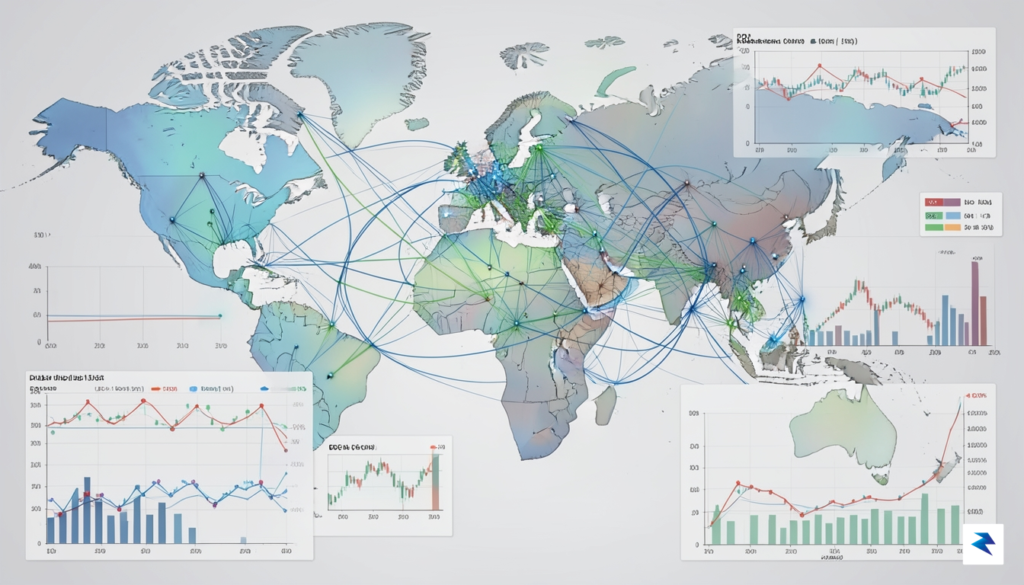
The era of viewing the American economy as an isolated island is effectively over. As the new leadership at the Federal Reserve begins to recalibrate its research priorities, there is a growing recognition that domestic monetary policy can no longer be conducted in a vacuum. With global trade routes shifting due to supply chain diversification and international economic dependencies reaching unprecedented levels, the Fed’s newly formed task forces are shifting their focus toward integrating global variables directly into the heart of domestic decision-making. This strategic pivot is designed to ensure that the U.S. dollar remains resilient against the volatility of external shocks, which have increasingly become a primary driver of domestic price pressures.

Geopolitical tensions have fundamentally altered the relationship between international stability and domestic inflation. When conflict or political instability disrupts energy markets or key manufacturing hubs abroad, the resulting supply-side shocks invariably find their way into the U.S. consumer price index. Consequently, the Fed’s research agenda now prioritizes a more sophisticated analysis of how these external friction points ripple through the American economy. By monitoring global fragility more closely, the Fed aims to move from a reactive posture—where they adjust interest rates only after inflation has peaked—to a more proactive framework that anticipates how global instability might compromise domestic price stability.
Furthermore, the volatility of international capital flows has become a critical focal point for modern risk management. As institutional investors move vast sums of capital across borders in response to changing interest rate differentials, these flows can inadvertently tighten or loosen financial conditions within the United States in ways that traditional domestic metrics might miss. The Fed’s new research direction emphasizes a more collaborative approach, acknowledging that understanding the global plumbing of finance is essential to setting effective local policy. This involves:
The goal of these task forces is to transform global complexity from an unpredictable external threat into a measurable, manageable component of the domestic economic outlook.
Ultimately, this research evolution argues that a more collaborative, globalized approach to analysis is not just a preference but a necessity for modern central banking. By breaking down the silos between domestic mandates and global reality, the Fed is positioning itself to be more agile in a fragmented world. This comprehensive strategy ensures that when the next wave of global instability hits, the Federal Reserve will have the analytical architecture in place to insulate the American economy from the worst of the turbulence, thereby safeguarding the long-term value of the dollar.
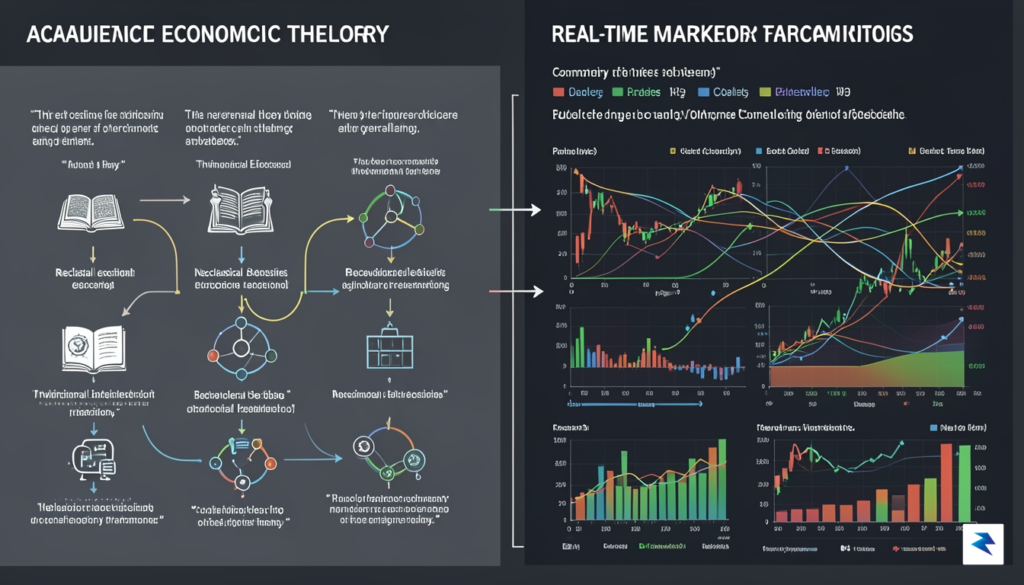
For decades, the Federal Reserve has operated under the shadow of venerable academic frameworks, most notably the Phillips Curve, which posits a predictable, inverse relationship between unemployment and inflation. While these models served as reliable compasses in the industrial era, they have increasingly struggled to map the terrain of a hyper-connected, digital-first global economy. By relying on historical correlations that often evaporate in the face of modern liquidity shocks or algorithmic trading, policymakers have frequently found themselves behind the curve. The fundamental tension today is not a lack of intellectual rigor, but rather the friction between elegant, static macroeconomic theory and the chaotic, high-velocity reality of contemporary financial markets.
The core of this new initiative is a pivot away from purely retrospective data modeling and toward the integration of real-time market sentiment. Traditional economic indicators—such as lagging monthly employment reports or quarterly GDP revisions—are essentially rearview mirrors, offering a view of where the economy was, rather than where it is heading. By incorporating private sector data and direct feedback from the front lines of commerce, the Federal Reserve aims to inject a necessary dose of pragmatic realism into its decision-making process. This shift acknowledges that modern markets are driven by sentiment, technological disruption, and global supply chain nuances that simply do not appear in conventional classroom textbooks.

The true test of monetary policy lies not in the internal consistency of a model, but in the measurable impact of its application on the dynamism of the actual economy.
Ultimately, the effectiveness of these newly formed task forces will be measured by their ability to translate raw, messy market observations into actionable policy instruments. It is one thing to acknowledge that markets are faster than models; it is quite another to reform the institutional machinery of the Fed to account for that velocity. By inviting practitioners—traders, private equity analysts, and supply chain experts—into the advisory loop, the leadership is signaling a departure from the “ivory tower” approach that has defined central banking for so long. If successful, this strategy will move the Fed toward a more responsive, nuanced framework that values current market intelligence just as highly as historical precedent, ensuring that policy decisions are grounded in the actual mechanics of the 21st-century economy rather than the theoretical ghosts of the past.

While the formation of these new task forces is unlikely to trigger an immediate pivot in next month’s federal funds rate, their presence signals a fundamental shift in the Federal Reserve’s operational philosophy. Rather than reacting to lagging indicators, the leadership is signaling a transition toward a more granular, diagnostic approach to monetary policy. For investors, this suggests that the era of “wait-and-see” guidance may be giving way to a more rigorous, data-heavy framework. Markets should expect the Fed to become increasingly vocal about the structural underpinnings of inflation and labor market dynamics, potentially reducing the volatility caused by surprise policy shifts. By prioritizing institutional foresight over reactionary adjustments, the Fed is positioning itself to better manage the interest rate cycle, moving away from abrupt shocks and toward a more predictable, albeit highly scrutinized, policy trajectory.
For businesses and consumers, this recalibration promises a more proactive stance on economic stability. By dissecting the economy into specific, manageable sectors, the Fed is effectively widening its lens to catch systemic risks before they manifest in broad-based inflation or recessionary pressures. Businesses that rely on long-term capital planning may find this evolution particularly advantageous; as the Fed becomes more transparent about the inputs driving its decisions, corporate leadership can better model the cost of credit and capital investment. This is not merely about setting a target rate, but about fostering a stable environment where businesses can project growth with greater confidence. As the Fed integrates these task force findings, we are likely to see a shift in the “Fed speak” that governs market expectations, emphasizing long-term health over short-term market appeasement.
The true success of this institutional evolution will be measured by the Fed’s ability to turn complex, multidimensional data into clear, actionable policy that preserves the dual mandate of price stability and maximum employment.

Ultimately, this organizational evolution serves as a necessary modernization of the central bank’s toolset. In an increasingly complex global economy, the traditional levers of monetary policy often require more nuance than a simple hike or cut can provide. By institutionalizing a more comprehensive review process, the Fed is essentially “future-proofing” its decision-making apparatus. While the average consumer may not see immediate changes in their mortgage rates or credit card APRs, they will benefit from a central bank that is better equipped to navigate the volatility of the 21st-century economy. This transition represents a commitment to structural resilience, aiming to ensure that the American economy remains robust enough to withstand shocks while maintaining the delicate balance required for sustainable, long-term growth.
You must be logged in to post a comment.