
Broken Pledges: Why Big Business is Quietly Abandoning Climate Goals
The Great Corporate Climate Retreat Between 2020 and 2022, the corporate landscape was defined by an unprecedented wave of environmental…
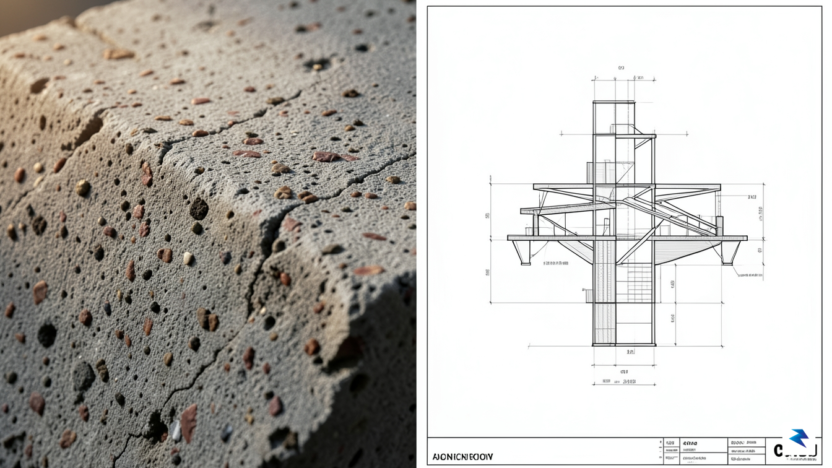
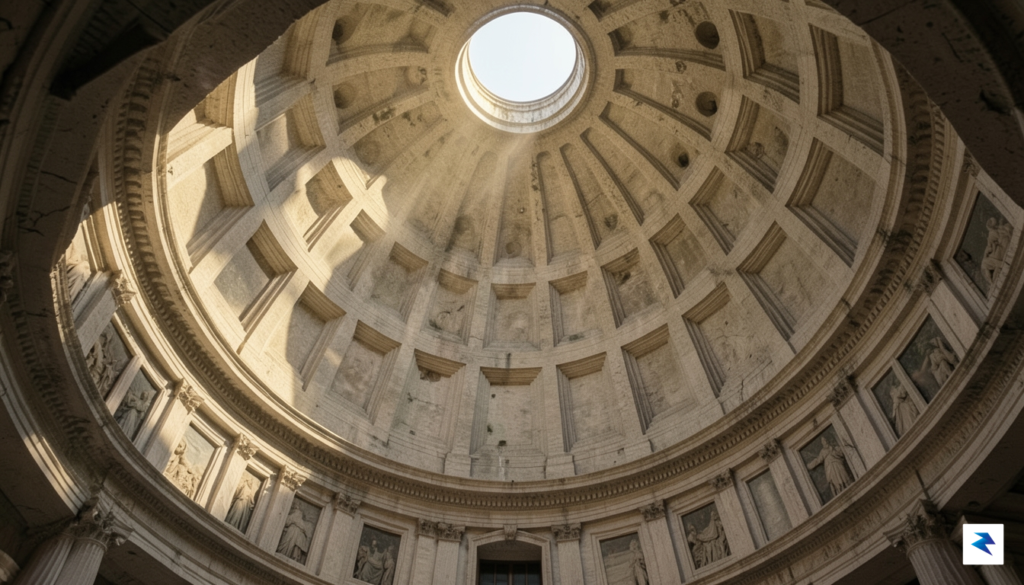
In the modern era, we have grown accustomed to the idea that infrastructure is inherently ephemeral. A typical bridge or highway constructed with today’s standard Portland cement often begins to show signs of structural degradation—cracking, rebar corrosion, and surface spalling—within a few short decades. When we look at these crumbling monuments of the twentieth century, it becomes difficult to reconcile our engineering prowess with the staggering reality of ancient Roman architecture. Across the Mediterranean, structures like the Pantheon and sprawling harbor walls have stood defiant against the corrosive power of saltwater and the relentless shifting of tectonic plates for nearly two millennia. While our modern concrete demands constant maintenance and eventual replacement, the Roman opus caementicium appears to grow stronger with age, effectively mocking the fleeting lifespans of our contemporary skyscrapers and dams.
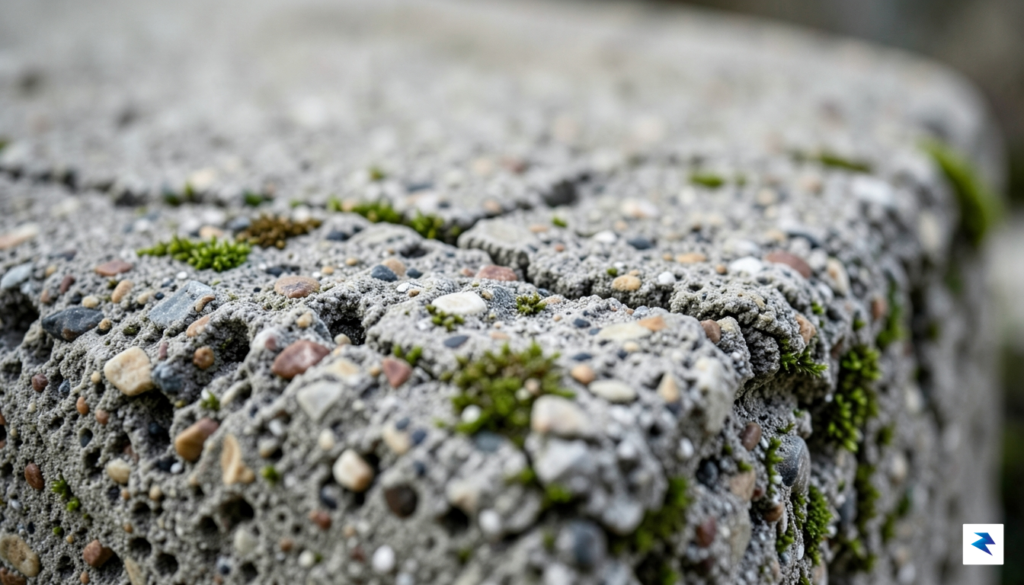
The stark contrast between the fifty-to-one-hundred-year life cycle of modern concrete and the multi-millennial endurance of Roman masonry has long baffled material scientists. Portland cement, the backbone of modern construction, is essentially a fragile chemistry that relies on a precise hydration process that, once finished, remains static and susceptible to environmental stress. Conversely, Roman concrete is a dynamic material that seems to possess a primitive form of self-healing intelligence. By incorporating volcanic ash, lime, and seawater, Roman engineers inadvertently created a chemical cocktail that triggers ongoing mineral growth over centuries. This process, which modern researchers are only just beginning to fully map, allows the material to “knit” itself back together when micro-cracks form, preventing the catastrophic structural failures that plague our current infrastructure.
The secret of Roman durability lies not in the absence of change, but in the active, ongoing chemical reactions that occur long after the structure has been set.
As we delve deeper into the microscopic composition of these ancient remnants, the race to decode the Roman “recipe” has intensified. Recent discoveries—most notably from the analysis of ancient latrines and maritime structures—have revealed that the inclusion of “lime clasts” was not a sign of poor mixing or inferior quality, as previously theorized. Instead, these white mineral chunks were a deliberate engineering masterstroke, acting as a reservoir of reactive calcium that could dissolve and recrystallize to seal fissures as soon as they appeared. By understanding the sophisticated, intentional chemistry behind these ancient foundations, engineers today are no longer just looking at historical curiosities; they are looking at the blueprint for a future where our infrastructure is built to last for generations rather than just decades.
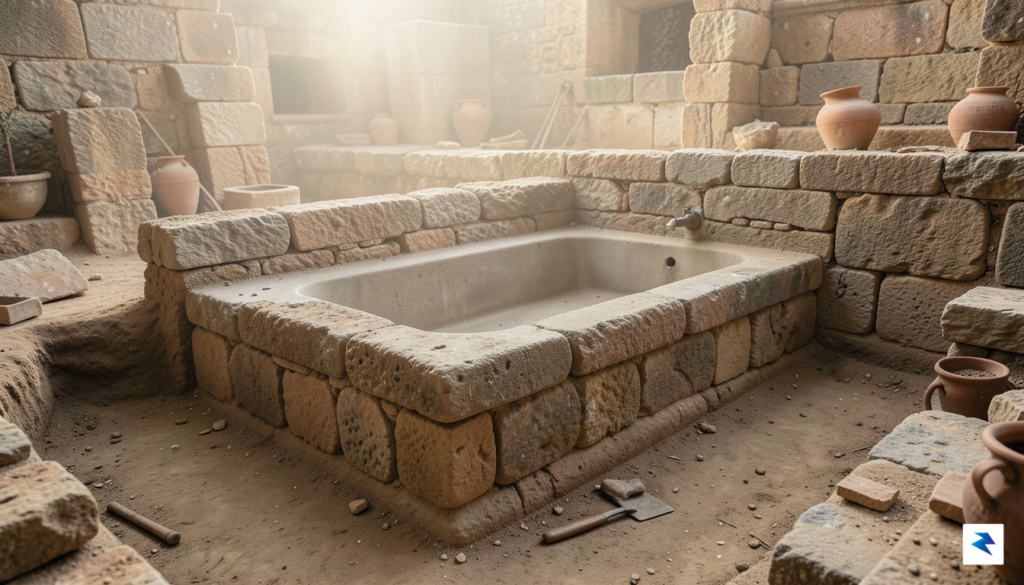
The recent excavation of a 1,900-year-old latrine in the ruins of Pompeii has provided researchers with an unprecedented, undisturbed window into the material science of Roman utilitarian construction. While historians have long marveled at the grandeur of the Colosseum or the Pantheon, this humble sanitation facility offers a far more valuable “living laboratory.” Because it was preserved by the same volcanic ash that entombed the city, the structure remained shielded from the weathering and modern chemical contamination that typically degrade ancient sites. This rare state of preservation allows scientists to examine concrete in its original, intended context, far removed from the idealized conditions of major architectural monuments.
A latrine might seem like an unlikely subject for architectural scrutiny, but it is actually the perfect environment for testing material resilience. Unlike a temple or a palace, a latrine is subjected to constant, aggressive environmental stressors, including high moisture levels, cyclical temperature fluctuations, and exposure to concentrated organic waste and chemical byproducts. By analyzing how Roman concrete withstood these harsh, corrosive conditions for nearly two millennia, researchers can better understand the fundamental chemical mechanisms that allowed Roman infrastructure to remain stable where modern equivalents would have long since crumbled into dust.
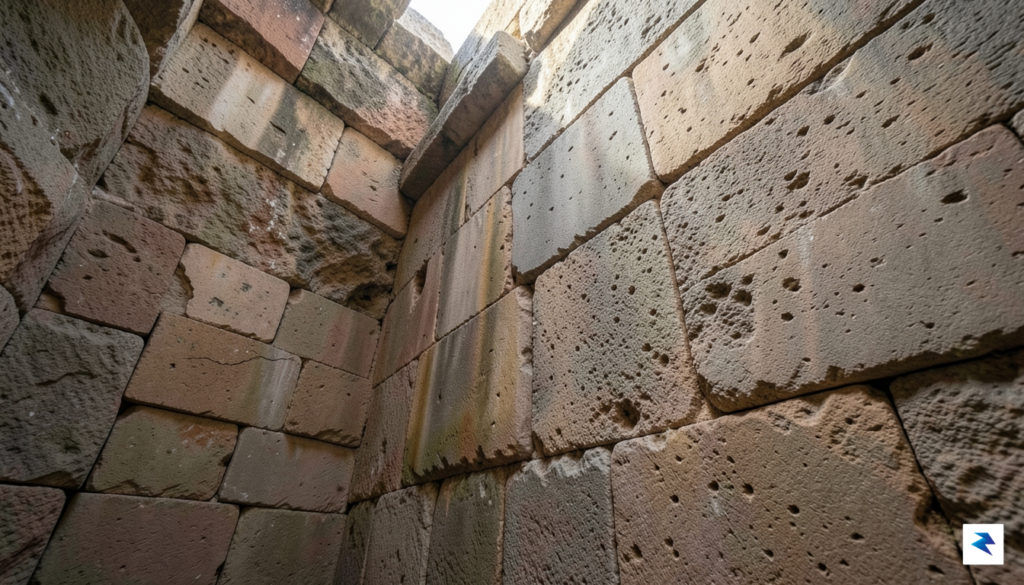
To unlock these secrets, a team of researchers carefully extracted mortar and concrete samples from the foundation and drainage points of the site. Using advanced mineralogical analysis, including scanning electron microscopy and energy-dispersive X-ray spectroscopy, they identified the presence of unique “lime clasts.” These small, white mineral inclusions—once thought to be a sign of poor mixing—are now understood to be the key to the material’s longevity. These clasts act as a self-healing mechanism; when cracks form in the concrete, water ingress dissolves the lime, which then recrystallizes to bridge the gaps, effectively repairing the structure from within.
The discovery confirms that Roman engineering was not merely about strength, but about dynamic, self-maintaining chemical reactions that allowed infrastructure to adapt to its environment rather than simply resisting it.
Ultimately, this discovery serves as a bridge between the ancient world and the future of sustainable construction. By decoding the precise mineralogical recipes used by Roman builders, modern engineers are gaining insights into how we might develop concrete that is not only more durable but also significantly more environmentally friendly. Studying this 1,900-year-old latrine demonstrates that the most profound lessons in durability often come from the most utilitarian aspects of daily life, reminding us that true engineering genius lies in the ability to design for the long haul.
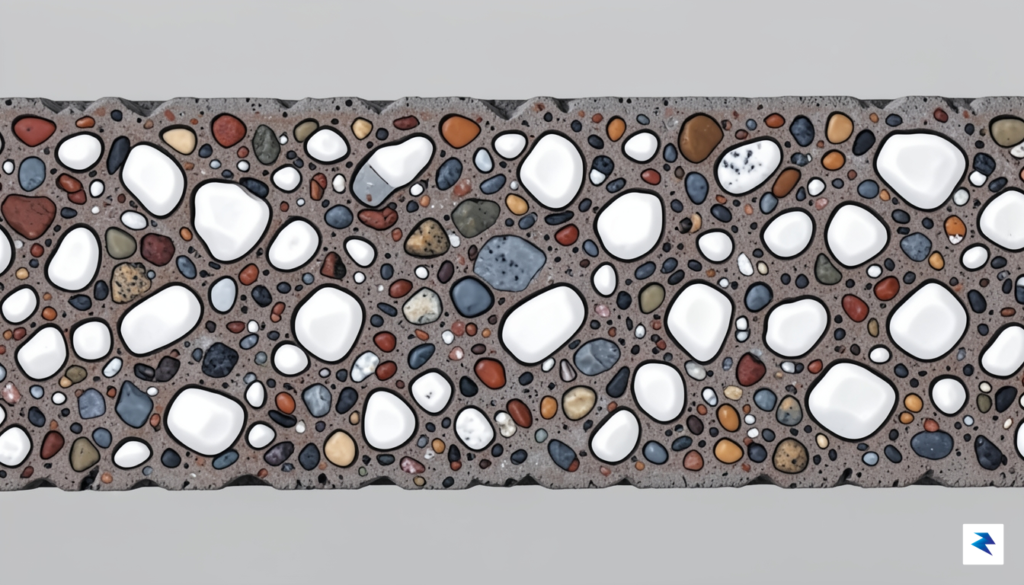
For generations, historians and engineers dismissed the small, white, mineral-rich pebbles embedded in Roman concrete as the hallmark of sloppy craftsmanship. These inclusions, known as lime clasts, were long viewed as evidence that ancient builders failed to properly dissolve their quicklime before mixing it into the mortar. However, modern chemical analysis of 1,900-year-old structures suggests that these clasts were not a mistake at all, but rather a sophisticated engineering feature. By employing a process known as “hot mixing,” the Romans were able to incorporate reactive calcium oxide directly into the concrete, creating a structural fail-safe that has allowed their buildings to defy the ravages of time.
The brilliance of this design becomes apparent the moment a crack begins to form in the concrete. In modern infrastructure, a crack is a death sentence; once water infiltrates the surface, it compromises the structural integrity and accelerates the decay of steel reinforcements. In contrast, Roman concrete treats a crack as a catalyst for repair. When moisture seeps into the structure, it interacts with the dormant lime clasts. This water dissolves the calcium oxide, creating a calcium-saturated solution that flows into the microscopic fissures of the concrete. As the solution dries, it recrystallizes into calcium carbonate, effectively “sealing” the wound before the damage can spread any further.
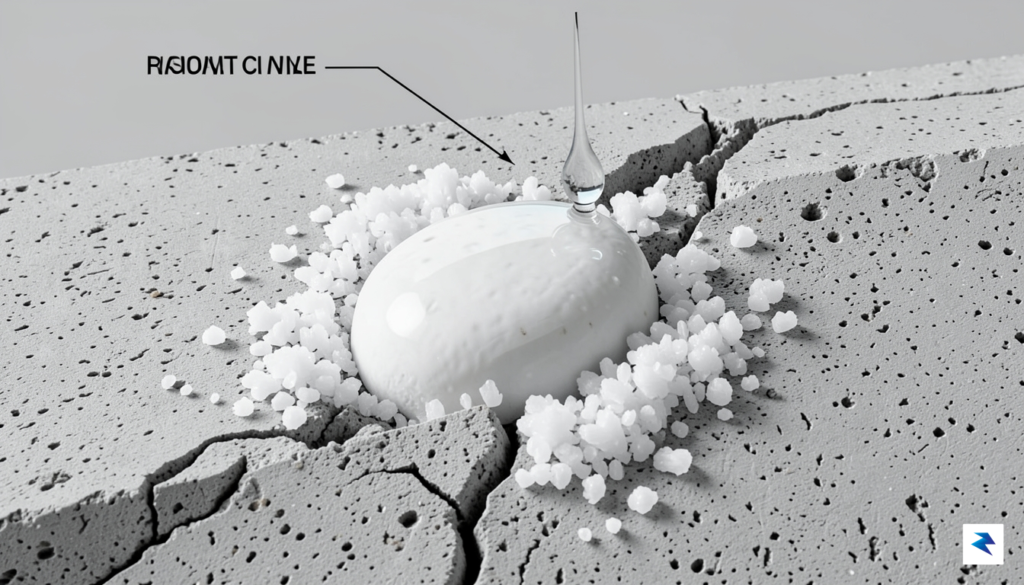
This self-healing mechanism represents a stark departure from the passive nature of modern Portland cement. Today’s concrete is designed to be chemically inert, meaning it does not react to its environment once it has cured. Because it lacks the ability to regenerate, modern concrete typically requires expensive and frequent maintenance, often failing within a century as it succumbs to thermal expansion and structural stress. The Roman method, by contrast, functions more like a living biological system. By maintaining a reservoir of reactive minerals within the matrix of the wall, the Romans ensured that their infrastructure remained dynamic, constantly adapting to the stresses of the environment over the course of centuries.
The presence of lime clasts is the definitive proof of a ‘hot mixing’ process, revealing that Roman builders were masters of thermochemistry who prioritized long-term structural resilience over the immediate convenience of a uniform, homogenized finish.
Ultimately, the longevity of these ancient latrines and aqueducts provides a blueprint for a more sustainable future in construction. By shifting our focus away from the quest for perfect homogeneity and toward the inclusion of reactive components, we may be able to replicate the self-repairing properties that have kept Roman monuments standing since antiquity. Understanding these chemical interactions allows us to view ancient ruins not just as historical artifacts, but as sophisticated, high-performance materials that hold the key to building infrastructure that is truly built to last.
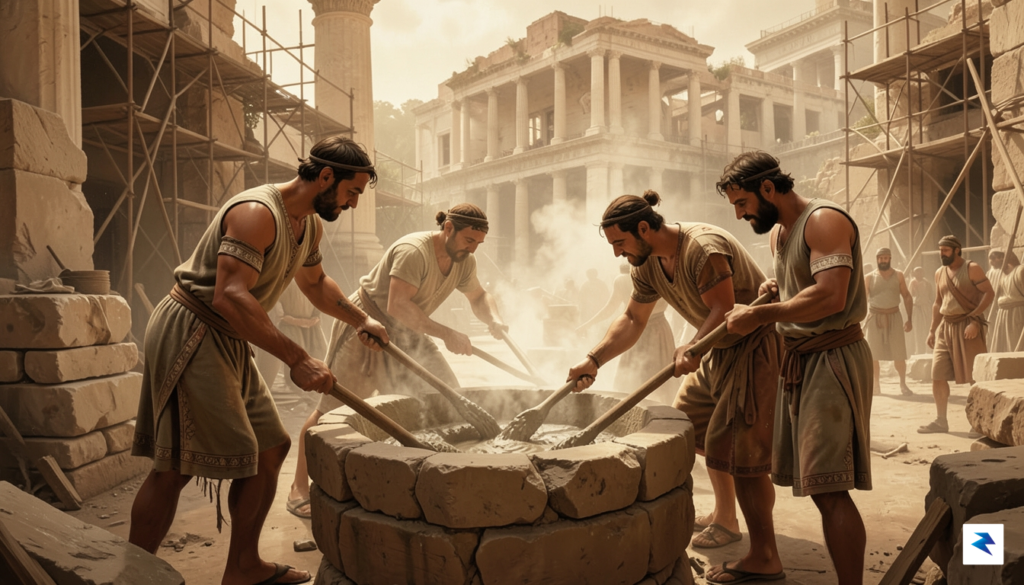
The secret behind the staggering longevity of Roman infrastructure lies in a fundamental departure from modern construction: the use of “hot mixing.” While contemporary builders typically rely on cold-mixing techniques—where pre-hydrated lime or Portland cement is blended with aggregates at ambient temperatures—Roman architects followed precise, thermochemical protocols described by Vitruvius. In the ancient process, builders utilized quicklime (calcium oxide) that was added directly to the concrete mix in a reactive state. This created an intense, exothermic reaction that generated significant heat during the initial stages of hydration, effectively “cooking” the material into a superior, mineral-dense matrix that far surpasses the durability of standard modern alternatives.
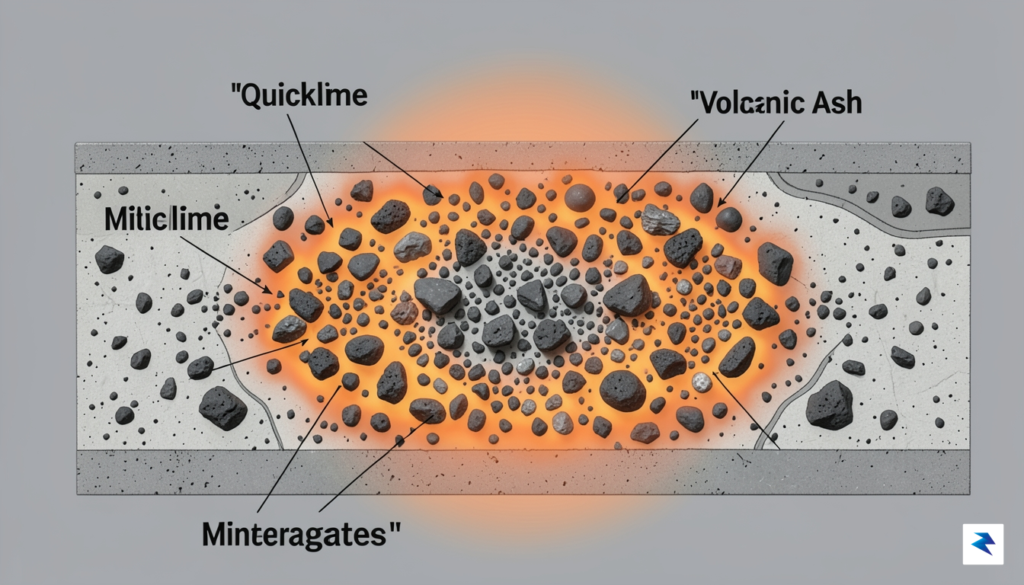
This thermal intensity is not merely a byproduct; it is a critical component of Roman durability. When quicklime reacts with water, it releases substantial heat, which facilitates the dissolution of volcanic ash and other reactive components within the mix. This process encourages the formation of unique calcium-silicate-hydrate structures and lime clasts—small, white inclusions previously thought to be evidence of poor mixing. In reality, these clasts are a hallmark of the hot-mixing method, acting as a self-healing reservoir. When a crack begins to form in the structure, water seeps into these clasts, dissolving the lime and allowing it to recrystallize within the fracture, effectively “sealing” the wound before structural integrity is compromised. This dynamic, chemical resilience allows ancient walls to withstand tension and seismic stress in ways that static, cold-mixed concrete simply cannot replicate.
The heat generated during the initial hydration of Roman concrete is not an accident of history, but a purposeful engineering choice that creates a self-healing mineral bond.
In stark contrast, the contemporary production of Portland cement is a far more energy-intensive and chemically sterile process. Modern concrete relies on calcining limestone at temperatures exceeding 1,450 degrees Celsius in massive industrial kilns, an energy-heavy endeavor that releases vast amounts of carbon dioxide into the atmosphere. Once produced, this cement is cooled, ground into a fine powder, and mixed with water at ambient temperatures. While this method allows for rapid setting times and predictable industrial output, it produces a rigid, brittle material that is prone to cracking over time. Unlike the ancient Roman matrix, modern concrete lacks the self-healing chemical potential inherent in hot-mixed lime. By prioritizing speed and uniformity over the slow-acting, thermally active alchemy of the past, we have inadvertently traded the architectural immortality of the Roman Empire for a cycle of constant repair and reconstruction.
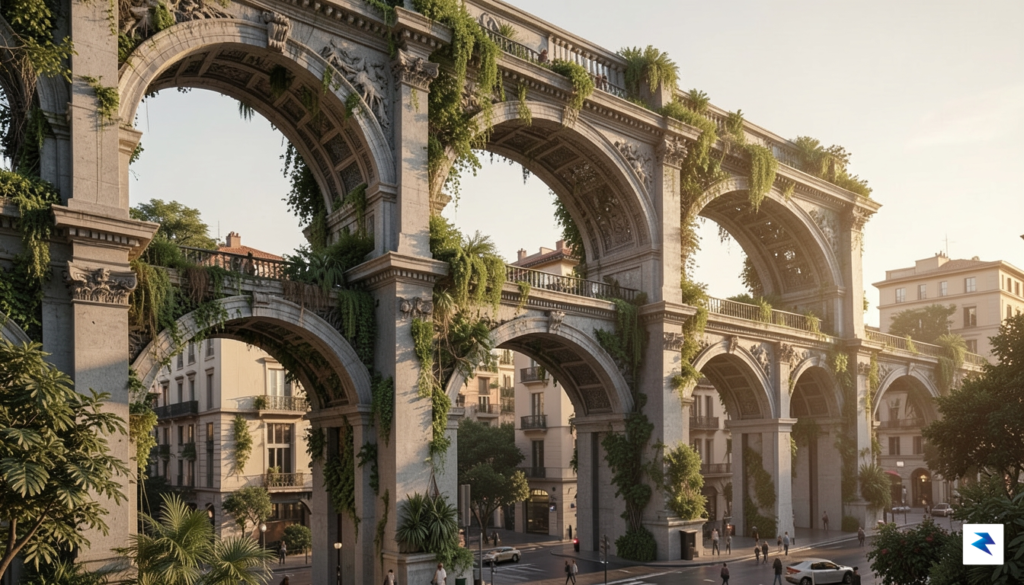
The construction industry currently stands as one of the most significant contributors to global carbon emissions, primarily due to the production of Portland cement. The chemical process required to create modern concrete—specifically the calcination of limestone—releases massive quantities of carbon dioxide, accounting for roughly 8% of global CO2 output. As we strive to meet international climate goals, our current reliance on materials that deteriorate within a few decades necessitates a cycle of constant demolition and reconstruction, further compounding our environmental debt. By shifting our perspective toward Roman-inspired engineering, we move away from this “disposable” infrastructure model and toward a paradigm of true durability.
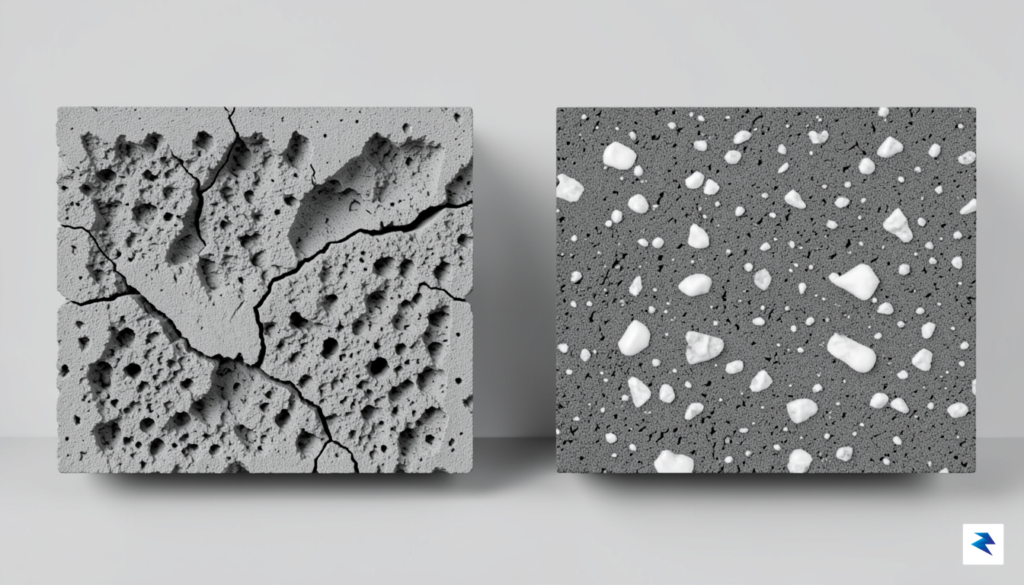
The secret lies in the integration of lime clasts, the tiny white mineral deposits found in ancient structures that allow Roman concrete to essentially “heal” itself over time. When cracks begin to form in these ancient foundations, moisture triggers a chemical reaction that dissolves these clasts, effectively sealing the fractures before they can compromise the structural integrity of the building. Incorporating this self-healing technology into modern cement mixes would be a transformative leap forward for sustainable architecture. If we can replicate this process using industrial byproducts like volcanic ash or recycled mineral waste, we could significantly lower the carbon footprint of new builds while ensuring that our bridges, dams, and skyscrapers remain standing for centuries rather than decades.
“The transition to self-healing materials represents the most promising path toward a carbon-neutral built environment, turning our infrastructure from a source of emissions into a legacy of permanence.”
Beyond the immediate environmental benefits, the economic argument for long-lasting materials is equally compelling. Current construction practices prioritize low initial costs, often ignoring the staggering long-term expense of maintenance, retrofitting, and eventual disposal. By investing in Roman-inspired concrete, we shift the focus to a life-cycle approach that values durability over cheap, rapid assembly. Reduced maintenance requirements mean less disruption to urban traffic and fewer raw materials pulled from the earth over the coming centuries. Ultimately, adopting these ancient techniques allows us to build with the foresight of the past, creating a greener, more resilient future where our infrastructure serves as a lasting solution rather than a recurring environmental liability.
You must be logged in to post a comment.