
Inside the $25M ICE Data Contract: How Digital Surveillance is Changing Enforcement
The Digital Expansion of Immigration Enforcement The landscape of federal immigration enforcement has undergone a quiet but profound…


In recent years, Polymarket has evolved from a cryptic corner of the decentralized finance ecosystem into a formidable force that is rewriting the rules of geopolitical forecasting. At its core, the platform operates on the mechanism of prediction markets, which incentivize participants to bet real capital on the outcomes of future events. By tethering financial risk to accuracy, the platform creates a powerful incentive structure: those who possess the most precise information—or the best analytical frameworks—are rewarded with profits, while those who are wrong suffer losses. This dynamic stands in stark contrast to traditional polling organizations, which often rely on self-reported intent and complex statistical weighting, methods that have faced increasing scrutiny for their inability to capture the nuance of a polarized electorate.
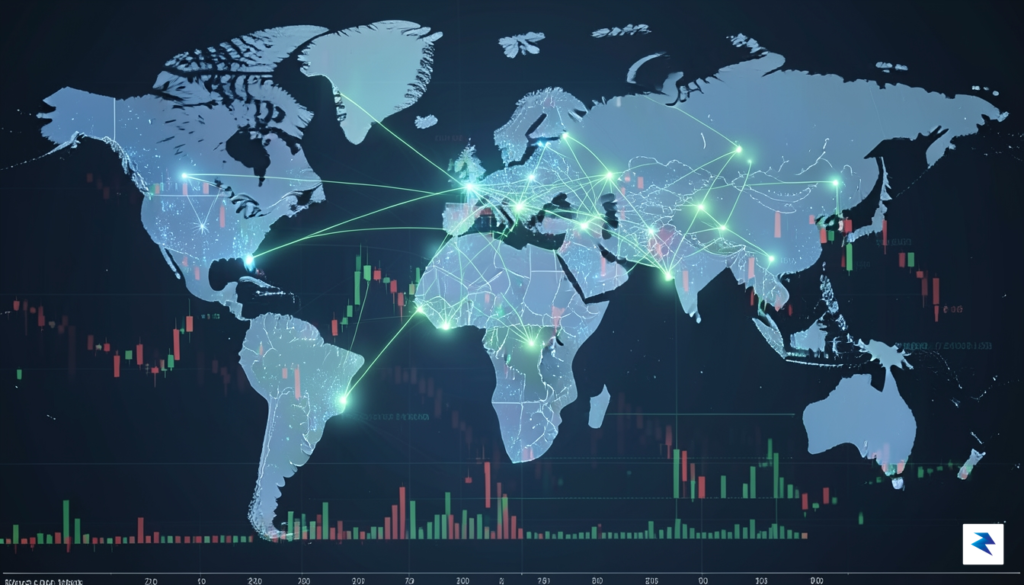
The platform’s rapid ascent has been particularly pronounced during high-stakes election cycles, where legacy media outlets and academic polling firms often struggle to provide real-time updates. Because Polymarket functions as a live, 24/7 trading floor, it reflects the collective sentiment of thousands of participants in an instant, providing a “wisdom of the crowd” output that is perpetually updated with every new piece of breaking news. This speed has made it a go-to resource for journalists, investors, and political analysts who are eager to bypass the multi-day lag inherent in traditional survey methodology. Consequently, the platform has successfully positioned itself as a disruptor, challenging the long-standing monopoly that legacy institutions have held over public opinion measurement.
The power of prediction markets lies in their ability to aggregate dispersed information into a single, actionable price signal that reflects the market’s collective belief about the future.
The stakes involved in this transformation are massive, as evidenced by the hundreds of millions of dollars in trading volume that flow through the platform’s smart contracts. Unlike a static poll, which offers a snapshot in time that may be obsolete by the time it is published, Polymarket’s order book is a living document of public expectation. This transparency is a double-edged sword; while it offers unparalleled insight into market sentiment, it also invites questions about the influence of whales and the potential for market manipulation. As the platform continues to gain mainstream traction, it is forcing a fundamental rethink of how we quantify uncertainty, shifting the focus from academic statistical models to the cold, hard logic of financial incentives.

While Polymarket positions itself at the cutting edge of decentralized finance and predictive modeling, the foundation upon which it stands is strikingly traditional, albeit shrouded in layers of offshore complexity. The platform’s reliance on entities registered in Panama serves as a stark reminder that even the most innovative “Web3” ventures often default to established, opaque legal jurisdictions when it comes to formal incorporation. This discrepancy between a public-facing brand that champions transparency through blockchain data and a private corporate structure that remains largely inaccessible creates a paradox. Users who trust the platform with their capital often assume that the underlying legal entity offers a clear line of accountability, yet the reality is that these Panamanian registrations are designed to prioritize privacy and insulation over public disclosure.
Startups frequently gravitate toward jurisdictions like Panama to minimize regulatory friction and reduce tax liabilities, but this strategic choice often comes at the expense of corporate transparency. By embedding itself within such an environment, the organization avoids the rigorous reporting requirements found in major financial hubs like New York or London. For a company that effectively operates as an unregulated global betting exchange, this lack of transparency is not merely a technicality; it is a fundamental aspect of their risk management strategy. However, this cloak-and-dagger approach complicates the landscape for regulators and users alike, as it obscures who is ultimately liable when disputes arise or when platform operations face legal scrutiny.

The ambiguity surrounding this corporate architecture has even permeated the company’s internal culture. Former employees have noted a palpable confusion regarding the firm’s hierarchy and the precise relationship between various legal entities. When staff members themselves are uncertain about which entity governs their contracts or holds responsibility for specific product features, it signals a deeper issue with organizational governance. This internal bewilderment reflects an environment where structure is treated as an afterthought or, worse, a deliberate obfuscation designed to shield the firm’s leadership from scrutiny. Without a clear corporate parentage or an accessible legal trail, the platform operates in a gray zone that challenges the very notion of institutional accountability.
The reliance on offshore entities creates a scenario where the platform’s legal footprint is intentionally disconnected from its digital presence, leaving stakeholders with little recourse in the event of systemic failure.
Ultimately, the choice to maintain an elusive Panamanian corporate structure suggests that despite the rhetoric of decentralized disruption, the traditional desire for secrecy remains a powerful incentive. In an industry that prides itself on the “don’t trust, verify” ethos of blockchain technology, Polymarket’s own corporate opacity stands in direct contradiction to its product. Until there is a greater demand for legal clarity alongside technical transparency, these offshore shells will continue to serve as a convenient shield for startups looking to innovate without the burden of standard corporate oversight.

The thin line between innovation and illegality often blurs within the fast-paced world of decentralized finance, and nowhere is this more evident than at Polymarket. By operating at the volatile intersection of predictive markets, high-stakes gambling, and blockchain technology, the company has effectively placed a target on its back. This reality was underscored with startling intensity when federal agents raided the Manhattan apartment of CEO Shayne Coplan, seizing his electronic devices in an action that sent shockwaves through the crypto-betting industry. While the platform has long maintained that its functions are purely informational and distinct from traditional wagering, federal law enforcement agencies clearly view these high-velocity betting environments through a much more traditional—and restrictive—legal lens.
This intensifying scrutiny is not an isolated incident; rather, it represents the culmination of a long-standing tug-of-war between Polymarket and regulators like the Commodity Futures Trading Commission (CFTC). Because the platform facilitates the exchange of value based on the outcomes of real-world events, it inherently treads upon territory traditionally governed by stringent federal oversight. The challenge for the firm is compounded by its opaque corporate structure, which often obscures the lines of accountability and legal jurisdiction. When a company operates across nebulous offshore entities while simultaneously courting a massive, global user base, it creates a persistent friction with domestic regulators who demand transparency, anti-money laundering compliance, and strict adherence to investor protection standards.

The friction between Polymarket and federal oversight is emblematic of a broader, systemic struggle: how do traditional regulatory frameworks adapt to technologies designed specifically to bypass them?
The inherent tension here lies in the difficulty of enforcing federal law against a platform that deliberately utilizes decentralized structures to facilitate international participation. By choosing to incorporate or register in jurisdictions that offer limited visibility to foreign authorities, Polymarket has made it exponentially more difficult for regulators to conduct oversight or secure the cooperation necessary for routine audits. Consequently, federal bodies are left with fewer diplomatic options, often resorting to aggressive investigative tactics like the aforementioned raids to compel compliance. For a platform that markets itself on the premise of democratic, peer-to-peer prediction, this legal isolationism acts as a double-edged sword; it may protect the company from immediate domestic control, but it simultaneously labels the enterprise as a potential bad actor in the eyes of the global financial establishment.
Ultimately, the company finds itself caught in a precarious balancing act. It must continue to scale its operations to remain competitive in the surging prediction market sector while simultaneously navigating a gauntlet of potential legal pitfalls that could shutter its services overnight. Whether this opaque corporate framework is a strategic necessity for survival or a liability that invites further federal intervention remains the central question. As law enforcement continues to scrutinize the platform’s inner workings, Polymarket’s ability to reconcile its decentralized ethos with the rigid demands of the state will likely determine the future of blockchain-based prediction markets at large.
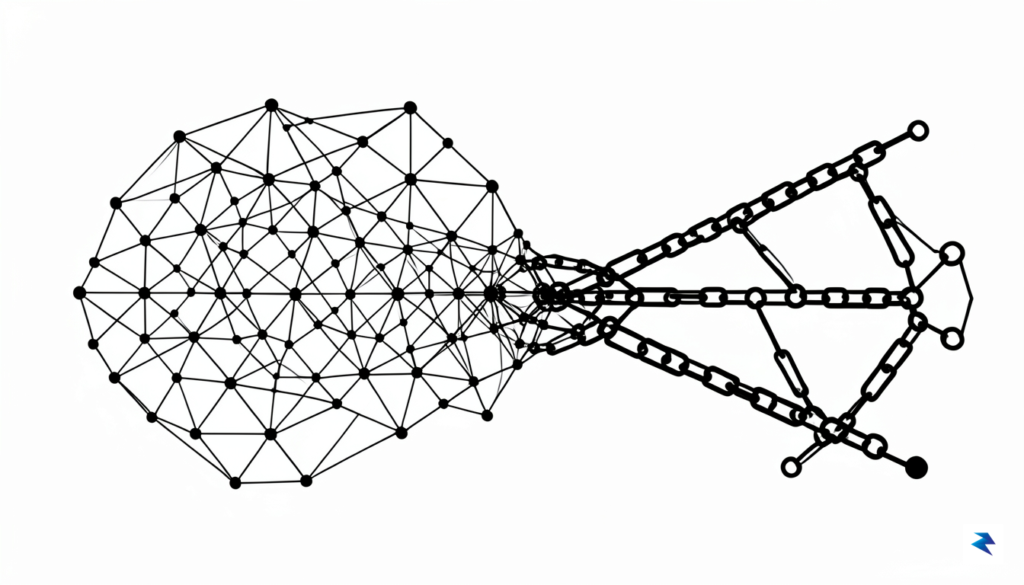
At its core, the promise of decentralized finance is built upon the pillars of auditability and trustless execution. Polymarket has effectively leveraged this narrative, positioning itself as a bastion of objective truth where market prices serve as a crowdsourced oracle for real-world events. By anchoring its operations on the blockchain, the platform suggests that the data itself—the wagers, the odds, and the final settlements—is beyond the reach of human interference. However, this technical transparency on the front end stands in stark, unsettling contrast to the opaque corporate machinery operating behind the curtain. While users trust the immutable ledger, the actual decision-making processes that dictate the platform’s development, regulatory positioning, and internal policies remain locked within a traditional, centralized black box.
This dissonance creates a profound governance paradox that leaves even those on the inside looking for answers. Former employees, who theoretically should possess a clear understanding of the company’s structural trajectory, have reported a culture where decision-making is often siloed and obscured. If a platform that champions “the wisdom of the crowd” cannot maintain internal clarity regarding its own corporate mandates, it invites legitimate skepticism about how it handles critical issues like market integrity or potential censorship. When a company markets itself as a decentralized utility yet operates with the high-stakes secrecy of a venture-backed startup, it risks alienating the very community that provides its liquidity and legitimacy.

The risks inherent in this centralized management style within a decentralized-looking framework are significant, particularly as prediction markets continue to attract mainstream political and financial attention. Without transparent governance, the platform is susceptible to what some might call “administrative drift,” where the interests of private shareholders or executive boards may quietly supersede the neutrality promised to the public. For emerging fintech entities, the transition from a scrappy startup to a globally influential market requires more than just functional code; it requires a commitment to institutional accountability. Without a clear framework for how corporate decisions are made, Polymarket faces a potential crisis of confidence where users may eventually question whether the “market” is truly as autonomous as the whitepaper suggests.
The tension between technical decentralization and corporate opacity is not merely an internal management challenge; it is a fundamental test of whether prediction markets can function as neutral public infrastructure or whether they will remain subject to the whims of centralized power.
Ultimately, the industry must grapple with the reality that code is not a substitute for corporate ethics. As Polymarket grows, the pressure to reconcile its front-end transparency with its back-end secrecy will only intensify. Whether through the implementation of decentralized autonomous organization (DAO) structures, public reporting, or clearer internal accountability, the platform needs to bridge the gap between its decentralized marketing and its centralized reality. Establishing a robust governance model is no longer an optional luxury for these platforms; it is a prerequisite for long-term survival in an increasingly scrutinized financial landscape.

The trajectory of Polymarket sits at a precarious crossroads, balancing the promise of decentralized innovation against the inevitable friction of global regulatory oversight. As the platform cements its status as a primary source for real-time political and economic sentiment, its opaque corporate architecture becomes a focal point of concern rather than a mere footnote. If the company intends to transition from a niche crypto-native tool to a foundational pillar of global finance, it must reconcile its internal ambiguity with the transparency demands of international markets. The stakes are high: failure to bridge this gap may invite severe crackdowns, while success could provide a blueprint for how prediction markets can coexist alongside traditional institutional trading frameworks.
Regulation remains the most significant hurdle for the longevity of the prediction market industry. While the platform currently operates within a grey area, the sheer volume of capital flowing through its smart contracts is increasingly impossible for authorities to ignore. History suggests that when decentralized protocols reach a certain scale, regulators inevitably demand the same levels of compliance, risk management, and corporate accountability expected of centralized exchanges. For Polymarket, this implies that the days of operating behind a veil of organizational mystery are likely numbered. Adapting to these realities will require not only a shift in operational transparency but also a willingness to engage directly with the legal systems they have historically sought to circumvent.

The ultimate test for the future of prediction markets is whether they can prove their utility as a legitimate hedging tool for the broader economy, or if they will remain relegated to the status of speculative gambling platforms.
Ultimately, the future of decentralized betting hinges on whether the industry can foster trust without sacrificing the permissionless ethos that attracted its user base in the first place. This requires a maturation of corporate governance that goes beyond simple technological efficiency; it necessitates clear leadership, identifiable accountability, and a robust framework for user protection. Should Polymarket embrace this transition, it could revolutionize how we forecast everything from electoral outcomes to scientific breakthroughs. However, if the platform continues to prioritize obscurity over structural clarity, it risks becoming a cautionary tale—a fleeting experiment in decentralized finance that was undone by its own refusal to conform to the basic standards of the global financial order.
You must be logged in to post a comment.