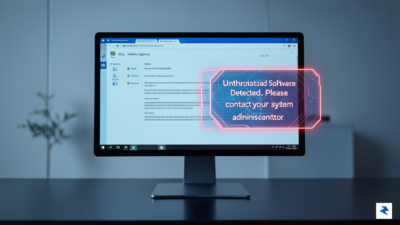
LG Monitors Silently Installing Software via Windows Update: What You Need to Know
The LG Monitor Update Controversy: What Happened? In recent weeks, a growing number of PC users have raised alarms regarding a surprising…



In the digital age, we have grown accustomed to the “freemium” model, where high-quality utility is provided at no upfront monetary cost. We download sophisticated period trackers, symptom logs, and wellness monitors with the expectation that our only responsibility is to provide input. However, in the ecosystem of mobile applications, if you are not paying for the product with your wallet, you are almost certainly the product being sold. The convenience of tracking your cycle, fertility, or mood is merely the interface for a complex data-harvesting machine designed to convert your most intimate biometric details into actionable consumer intelligence.
Behind the sleek, user-friendly dashboards of these apps lies a backend reality that operates far from the user’s view. When you log a symptom or mark the start of your cycle, that information does not simply stay within the confines of your phone’s local storage. Instead, it is frequently packaged, anonymized—often nominally—and funneled to third-party data brokers, advertisers, and analytics firms. This data-for-service exchange is the cornerstone of a multi-billion dollar industry that relies on the commodification of private health information. By aggregating millions of individual cycle records, companies can build incredibly accurate predictive models regarding a user’s lifestyle, health status, and future spending habits.
The true cost of a ‘free’ health app is rarely found in the app store; it is paid in the long-term erosion of your digital privacy and the commodification of your biological data.
The mechanism behind this mass surveillance is largely invisible to the average user, relying on embedded software development kits (SDKs) and third-party trackers. Even if a health app promises a strict privacy policy, it may contain hidden lines of code from advertising giants that track your activity across other apps and websites. These trackers operate like digital shadows, collecting device identifiers, geolocation data, and usage patterns that are then cross-referenced with your health inputs. Through this process of data triangulation, a company might know far more about your medical history than your primary care physician, all while maintaining the appearance of a helpful, innocuous wellness tool.
Ultimately, it is vital to recognize that your biometric data is among the most sensitive and valuable information you possess. Unlike a password, which can be changed if compromised, your health patterns, reproductive history, and genetic predispositions are permanent. When we treat health apps as utilities rather than data-collection platforms, we unknowingly consent to a system that prioritizes corporate profit over individual security. Understanding this hidden price is the first step toward reclaiming your digital autonomy and demanding higher standards of privacy in the tools we trust with our most personal information.
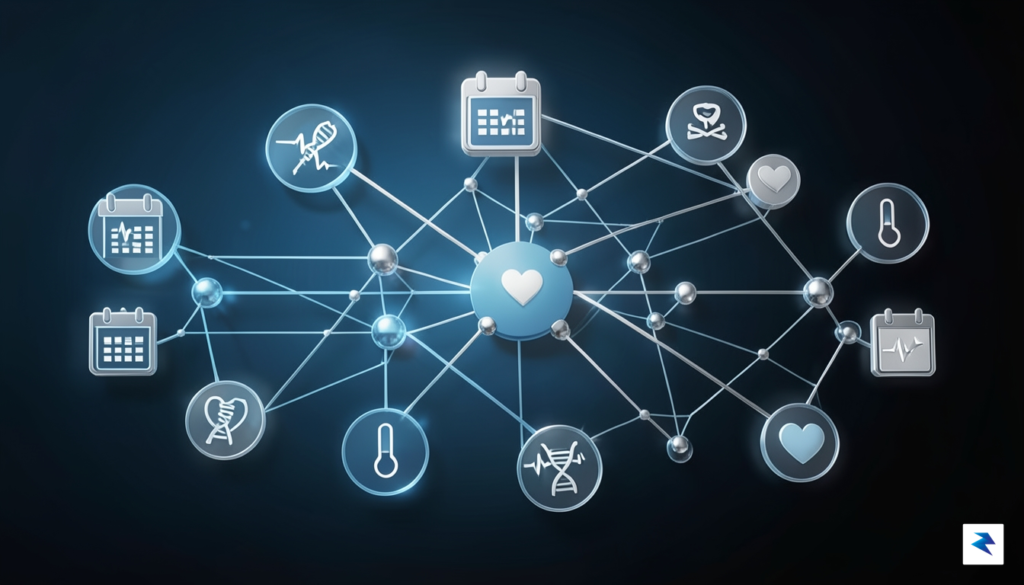
The intimacy of tracking your menstrual cycle involves logging deeply personal information, ranging from mood swings and physical symptoms to sexual activity and fertility intentions. While many users view these apps as neutral digital health journals, the reality is that the data you input is frequently treated as a commodity. When you hit “save” on an entry, that information rarely stays within the confines of your phone. Instead, it enters a complex lifecycle where trackers often integrate third-party software development kits (SDKs) from major marketing platforms. These trackers effectively act as a bridge, funneling your biological markers directly to advertising giants who use them to construct hyper-targeted consumer profiles.
A primary concern lies in the distinction between “anonymized” data and information that is merely “de-identified.” Many companies claim they strip away your name or email before sharing data with partners, but research consistently shows that this protection is fragile. By combining your cycle data with other digital breadcrumbs—such as your IP address, device ID, and location history—data brokers can easily re-identify you. In the era of big data, your unique behavioral patterns function like a digital fingerprint. Once this data is sold or shared with predictive marketing firms, it can be used to serve you ads for everything from pregnancy supplements to fertility treatments, often at moments of heightened vulnerability.
The legal reality is that most period trackers are categorized as wellness apps rather than medical devices, which means they often fall outside the stringent privacy protections afforded to traditional healthcare providers under laws like HIPAA.
This regulatory loophole creates a dangerous environment where your reproductive health data is essentially fair game for the open market. Because these apps are not held to the same legal standards as a doctor’s office, they can include sweeping clauses in their privacy policies that allow for the “sharing of information with affiliates and partners.” Often, this language is buried in dense legal jargon that the average user is unlikely to parse. Consequently, you may be unwittingly consenting to the sale of your health history every time you update your app. Once that data reaches an aggregator, you lose all control over its lifespan, as it can be aggregated, sold, and resold across a network of third-party firms, potentially impacting your future life insurance premiums or employment screening processes.
The implications of this data harvesting are profound, especially when predictive algorithms are involved. By mapping your cycle, these companies can predict your future behavior, health status, and life milestones with startling accuracy. This creates a feedback loop of targeted advertising designed to capitalize on your specific biological state. Even if you believe you have nothing to hide, the mass collection and monetization of reproductive health data create a systemic vulnerability, turning the private rhythm of your body into a predictable, profitable asset for industries that have no interest in your health, only in your wallet.

The vulnerabilities inherent in your period tracking app do not exist in a vacuum; rather, they are a microcosm of a much wider, systemic crisis in digital security. When we download a health application, we often view it as a private digital diary, yet we are actually plugging our most intimate biological data into a sprawling, interconnected network of third-party servers, advertising exchanges, and cloud storage providers. This infrastructure is increasingly targeted by state-sponsored actors and sophisticated cybercriminal syndicates that treat personal health records as high-value currency. Just as hackers probe the weaknesses of national power grids or municipal water systems to exert leverage, data brokers and malicious entities exploit the “soft” security standards of consumer health apps to build comprehensive profiles on millions of citizens.

The parallels between personal health data leaks and large-scale infrastructure hacking are striking and deeply concerning. In both scenarios, the failure is often one of neglected maintenance and prioritized convenience over robust, defensive architecture. While a breach in a utility system might lead to a blackout, a breach in the health tech sector leads to a permanent, irreversible exposure of sensitive biological metrics that can be used for discrimination, surveillance, or targeted manipulation. Furthermore, the industry’s current “move fast and break things” ethos—a mantra borrowed from the tech giants—mirrors the lax standards seen in the rapid development of AI training models. These models often scrape personal information from across the web without consent, treating individual privacy as a secondary consideration to the voracious appetite for training data.
The illusion of localized privacy is the greatest danger in the modern digital age; once your data leaves your device, it enters a global ecosystem where systemic vulnerabilities are the standard, not the exception.
To understand the gravity of this situation, one must recognize that we are no longer just protecting passwords; we are protecting the integrity of our digital identities against a backdrop of global data insecurity. Whether it is a massive corporate data breach caused by an unpatched server or the algorithmic harvesting of user behavior by AI developers, the trend remains the same: the individual is expected to bear the risk while corporations reap the rewards of data aggregation. By acknowledging that our personal health data is a piece of a much larger, global security puzzle, we can begin to demand the systemic changes necessary to shift the power dynamic. Protecting your privacy is no longer just about choosing the right app settings; it is about recognizing the interconnected nature of the digital landscape and pushing for higher standards of accountability across every sector that touches our personal lives.

The persistent vulnerability of both corporate giants and government agencies often stems from a systemic misalignment between rapid technological advancement and outdated defensive infrastructure. While these organizations possess the capital to invest in cutting-edge security suites, they are frequently hamstrung by the “legacy debt” of decades-old systems that were never architected with modern privacy threats in mind. When a period tracker or a government database is integrated into an existing, bloated digital ecosystem, the complex web of interconnected APIs and third-party plugins creates inevitable blind spots. These gaps serve as silent entry points where sensitive data can be siphoned away for months—or even years—before the breach is ever officially acknowledged.

Furthermore, the challenge of cybersecurity is rarely a matter of lacking resources, but rather one of managing the sheer velocity of data traffic. Organizations frequently struggle with the “needle in a haystack” dilemma, where security operations centers are inundated with millions of alerts daily. Because distinguishing between benign user behavior and a sophisticated, stealthy exfiltration script requires near-perfect pattern recognition, many breaches occur in plain sight. By the time a security team initiates an investigation, the threat actor has often already pivoted through the network, leaving the organization to perform a painful, retrospective discovery process that reveals the extent of the damage far too late.
The most dangerous breaches are not those that trigger a deafening alarm, but the ones that mimic legitimate traffic, quietly eroding trust while remaining invisible to standard monitoring tools.
This struggle is compounded by the fragmented nature of data oversight. Even within highly regulated industries, data is often siloed across different departments, each utilizing different protocols, encryption standards, and access permissions. When a health application shares data with an analytics provider, it may inadvertently pass through unencrypted gateways or insecure cloud storage buckets that are not subject to the same rigorous oversight as the primary application. This lack of a unified security perimeter ensures that even if one component is hardened, the entire ecosystem remains only as strong as its weakest, most neglected integration. Until organizations prioritize holistic visibility over reactive, piecemeal patching, the digital architecture will remain fundamentally porous, leaving personal health data—and everything else—exposed to those who know exactly where to look.

Reclaiming your digital privacy does not require you to abandon technology entirely, but it does demand a shift from passive consumption to intentional management. Start by performing a comprehensive audit of your smartphone’s permission settings. Navigate to your device’s privacy dashboard to see which apps have access to sensitive sensors, such as your location, contacts, and calendar. If a cycle-tracking app requests permission to track your physical location or access your microphone without a clear, functional justification, revoke that access immediately. Often, these permissions serve only to build a more granular profile for third-party advertisers rather than improving your user experience.
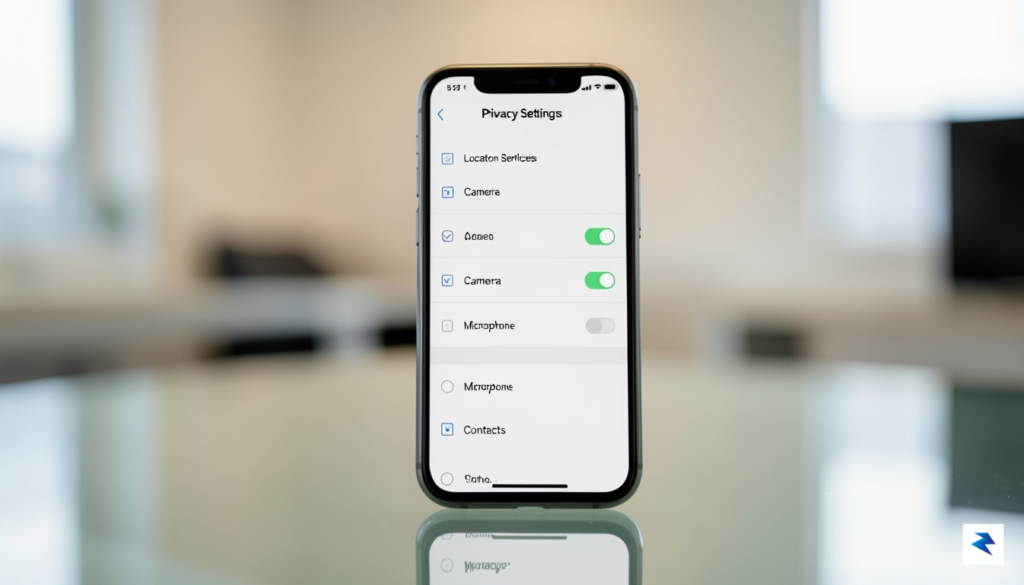
Beyond tightening existing permissions, consider migrating to privacy-focused alternatives that prioritize data minimization. Many mainstream trackers act as data-harvesting engines, whereas specialized, open-source apps often store information locally on your device rather than in the cloud. Look for platforms that offer end-to-end encryption, ensuring that even the service provider cannot read your health logs. Utilizing a “burner” email address—specifically one created for non-essential accounts—can further insulate your primary digital identity from the health data you input. By decoupling your health metrics from your legal name and primary contact information, you create a layer of anonymity that makes data monetization significantly more difficult for brokers.
Privacy is not an all-or-nothing endeavor; it is a series of small, consistent habits that limit the surface area available to trackers and bad actors.
If you have already utilized invasive apps in the past, you should take proactive steps to purge your existing footprint. Most reputable companies are legally required to provide a mechanism for data deletion under frameworks like GDPR or CCPA. Navigate to the app’s settings menu to find the “Delete Account” or “Request Data Export” options. Once you submit a deletion request, the company is typically obligated to scrub your historical data from their active servers. To ensure this process is thorough, follow these concrete steps:
Ultimately, the most effective defense is a mindset of data minimalism. Ask yourself whether a specific feature—like social networking within a health app—is worth the trade-off of exposing your most intimate biological patterns. By keeping your data local, using encrypted backups, and regularly auditing your digital permissions, you can leverage the convenience of modern technology without sacrificing your right to personal autonomy.
You must be logged in to post a comment.