
How Databricks Reached a $188B Valuation by Betting on Open AI
The Evolution of Databricks: From Data Lakehouse to AI Powerhouse The trajectory of Databricks represents one of the most calculated and…
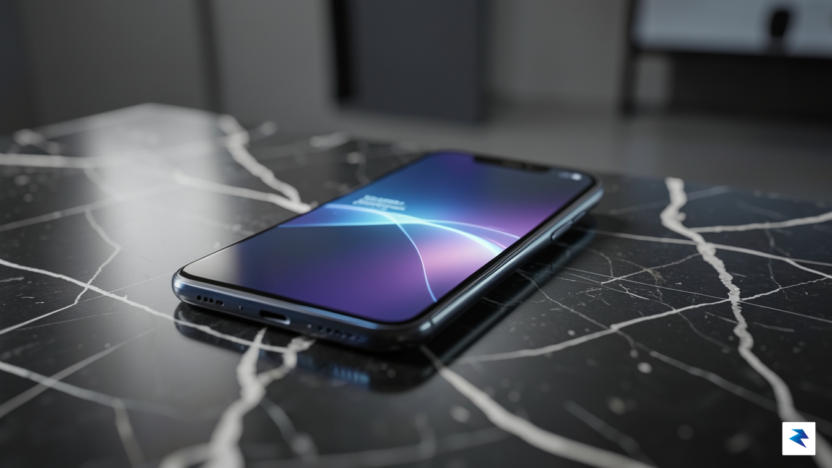
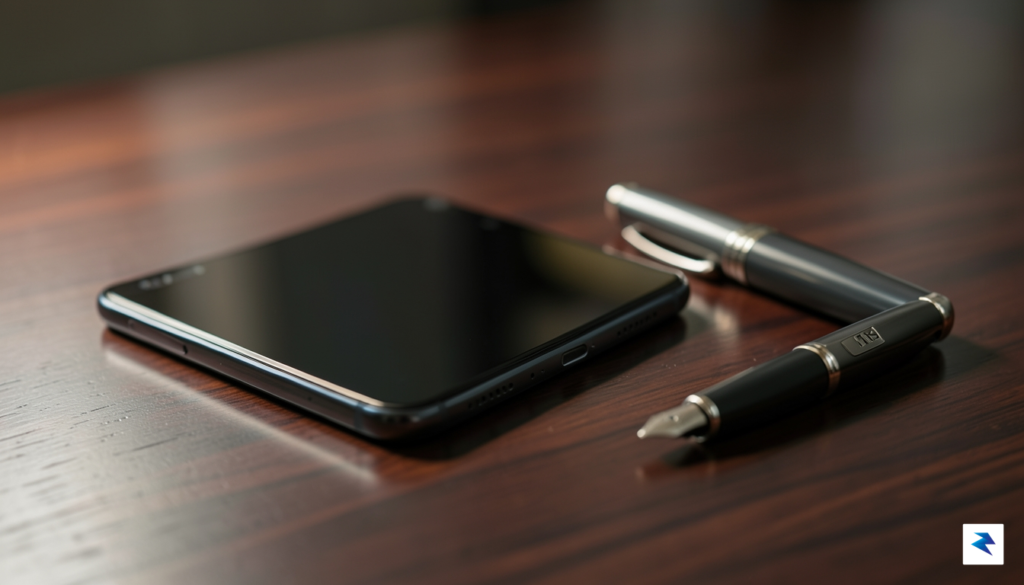
For decades, the luxury smartphone market has operated under a distinct set of rules, prioritizing tactile prestige and artisan craftsmanship over the iterative hardware cycles that define mass-market flagships. Vertu has long been the standard-bearer for this niche, catering to a clientele of executives and collectors who view their mobile devices not merely as communication tools, but as symbols of status and exclusivity. However, the industry is currently undergoing a seismic shift as the promise of artificial intelligence moves from the research lab to the pocket. With its latest $6,880 device, Vertu is attempting to pivot from being a mere purveyor of jewelry-like aesthetics to a provider of high-stakes, AI-driven productivity, forcing us to ask whether the premium price tag represents a genuine leap in computational utility or simply the continuing cost of maintaining an elite lifestyle.

When comparing this Vertu offering to the latest high-end smartphones from mainstream tech giants, the divergence in value proposition becomes stark. While a standard $1,200 flagship might boast the fastest processor and the most sophisticated camera array, it is ultimately a mass-produced commodity that depreciates the moment it leaves the retail shelf. Conversely, Vertu bets on the idea that its target audience values concierge-level service, bespoke materials, and a curated software experience that minimizes the friction of modern digital life. The central question is whether the integration of a proprietary AI agent can bridge the gap between “luxury accessory” and “essential executive tool.” If the software merely replicates the capabilities found in free, widely available large language models, the hardware’s exquisite finish may no longer be enough to justify the staggering five-figure premium.
True luxury in the modern age is defined not by the rarity of the materials, but by the efficiency with which a device can navigate the complexities of an executive’s schedule.
As we delve into the performance of this device, we must look beyond the gleaming sapphire glass and hand-stitched leather to evaluate the intelligence beneath the surface. Does the AI agent truly understand the nuances of high-level business correspondence, or is it merely an expensive facade for standard generative scripts? In the following sections, we will rigorously test the device’s ability to manage tasks, synthesize complex information, and provide the level of discreet, intuitive assistance that a high-net-worth user expects. Only by contrasting these real-world results against the device’s astronomical price can we determine if Vertu has successfully reinvented the luxury phone for the AI era, or if it has simply tethered a standard digital assistant to a piece of high-priced, heritage-brand hardware.

When you hold a device carrying the Vertu insignia, the immediate sensation is one of deliberate weight and uncompromising permanence. This latest foldable iteration is no departure from that legacy, meticulously crafted from aerospace-grade titanium and encased in hand-selected, top-grain leathers that provide a tactile warmth rarely found in the sterile world of mass-produced smartphones. The sapphire crystal display cover acts as a visual anchor, offering a refractive clarity that feels significantly more substantial than the tempered glass found on standard flagships. By prioritizing such premium materials, Vertu ensures that the physical hardware feels less like a piece of consumer electronics and more like an heirloom-quality tool designed to withstand the rigors of executive travel.
The engineering marvel, however, lies within the hinge mechanism, which manages to balance the structural integrity required to protect the sensitive inner display with a fluid, silent motion. Opening the device reveals a seamless transition that feels calibrated for precision, avoiding the grit or resistance often associated with early-generation foldable designs. This ergonomic excellence is not merely for show; it is a functional necessity when the device is tasked with acting as a high-performance AI agent. The hardware must remain cool and stable during intensive processing tasks, and the titanium chassis serves as an efficient heat sink, ensuring that the demanding computational load of the AI assistant does not compromise the comfort of the user’s grip during extended productivity sessions.
The marriage of artisan-grade materials and cutting-edge silicon creates a psychological bridge for the user, suggesting that the intelligence housed within is as reliable and enduring as the casing that protects it.
Ultimately, the physical design heavily influences how an executive perceives their interaction with the integrated AI. When you are paying a premium for a digital assistant, the tactile experience of summoning it—whether through a dedicated, jewel-encrusted physical button or a swift, fluid unfolding of the device—establishes a sense of ritual and exclusivity. The weight of the device in the hand acts as a grounding force, reinforcing the notion that you are wielding a singular, powerful instrument rather than just another app-based interface. In this way, Vertu has successfully aligned its reputation for luxury craftsmanship with the modern demand for hyper-intelligent, mobile productivity, creating a device that feels as authoritative in the boardroom as it does innovative in the digital sphere.

When you strip away the polished marketing veneer of the Vertu AI agent, the value proposition shifts from luxury craftsmanship to raw computational utility. At its core, the device promises to act as a digital concierge capable of managing the high-velocity lives of executives who cannot afford the delays of traditional cloud-based processing. By leveraging onboard localized processing, the agent attempts to bridge the gap between reactive smart assistants and proactive workflow managers. In practice, this means the device can parse complex calendar conflicts or draft sophisticated correspondence without the millisecond-latency penalties typically associated with routing queries through remote server farms.
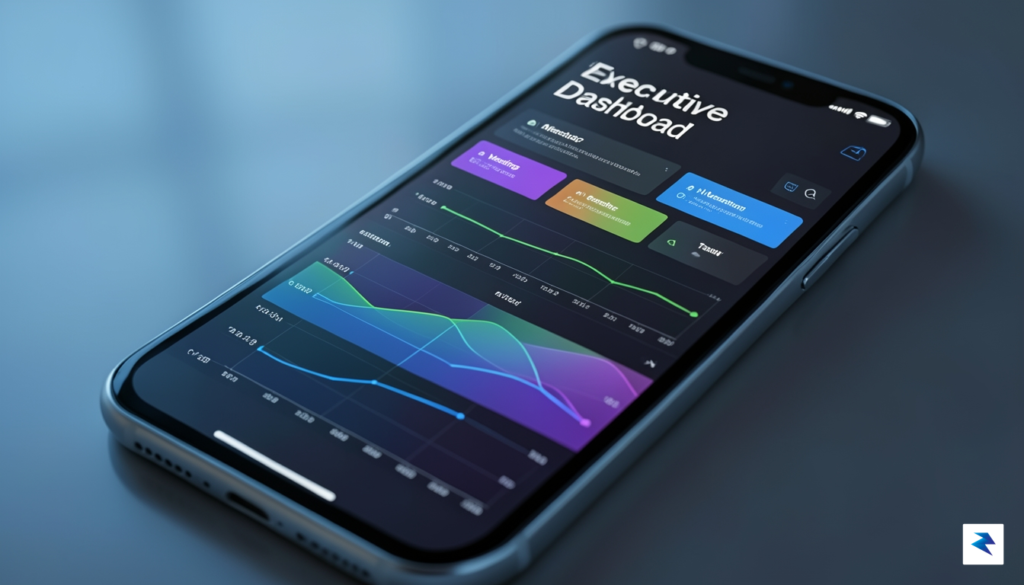
The agent truly shines when it comes to synthesizing fragmented data streams into actionable intelligence. For an executive juggling multiple time zones and cross-departmental reports, the onboard AI excels at distilling lengthy email threads and meeting transcripts into concise, prioritized summaries. Where standard mobile assistants often fail by providing generic, surface-level responses, this agent demonstrates a tighter grasp of context, likely due to its localized training data. The system manages to retain the nuances of corporate jargon and specific project history, allowing it to generate drafts that feel less like machine-generated templates and more like human-curated communications.
The true test of a $6,880 mobile investment is not the speed of a single query, but the reliability of the agent’s decision-making process when the user is disconnected from the office network.
However, the performance is not without its limitations, particularly when the agent encounters highly ambiguous or unstructured tasks. While it excels at logical scheduling and data summarization, it frequently struggles with multi-step creative brainstorming or tasks requiring deep, empathetic reasoning. For instance, while it can quickly reorganize a travel itinerary based on a flight cancellation, it may lack the finesse required to navigate a delicate human resources conflict via email. Users will find that the agent is an exceptional tool for operational efficiency, yet it remains a supplement to, rather than a replacement for, high-level executive judgment.
Ultimately, the utility of this AI agent comes down to the trade-off between convenience and capability. By opting for on-device processing, Vertu has prioritized security and speed, which are undeniably critical for the C-suite, yet the model faces the inevitable ceiling of local hardware constraints. Those who expect a sentient digital partner might be disappointed, but those who need a high-performance, privacy-conscious engine for managing daily logistical chaos will find that the agent provides a tangible, if expensive, competitive advantage in time management.
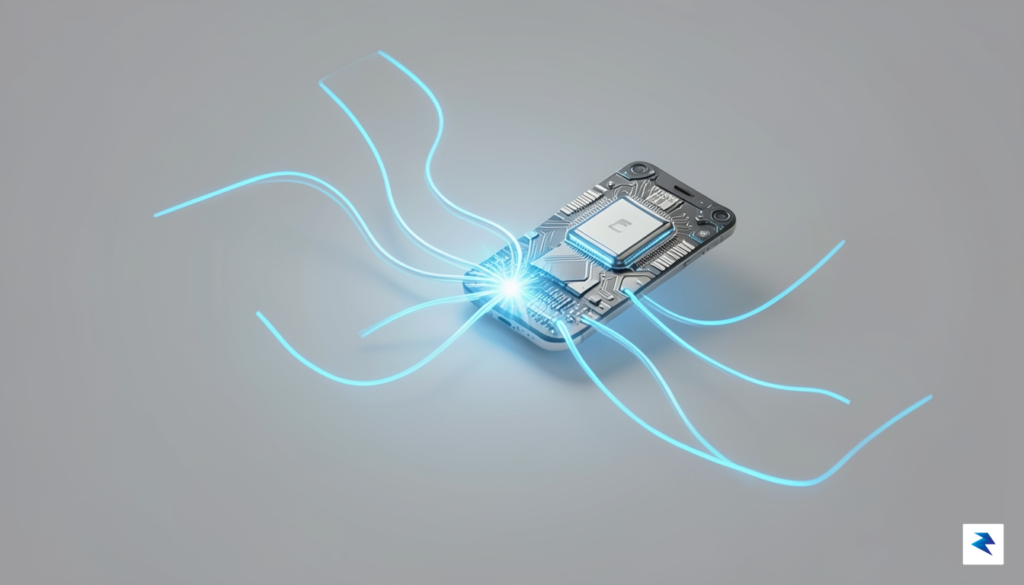
The core challenge of packing high-level artificial intelligence into a mobile form factor is the brutal collision between thermal physics and computational demand. When you task a local Large Language Model with managing schedules, summarizing complex documents, or drafting emails, the processor must run at peak frequency for extended intervals. This creates an immediate spike in power consumption that, if left unmanaged, would leave a device tethered to a charging cable before the morning commute is even over. During our rigorous 12-hour workday simulation, which included constant background agent activity and several intensive generative tasks, the device’s power draw proved significantly higher than that of standard flagship handsets.
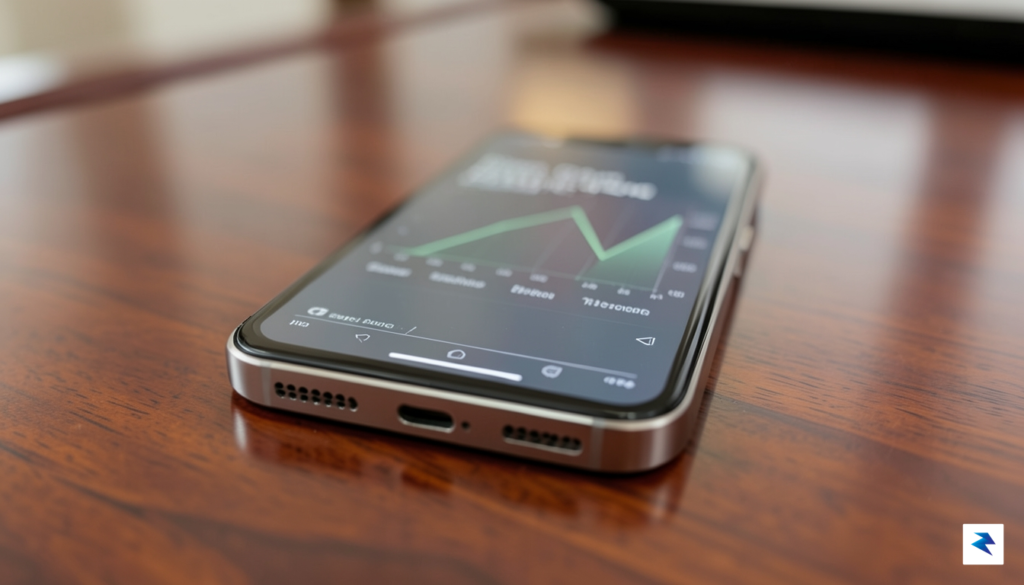
To combat this, Vertu employs a custom thermal management system designed to bleed heat away from the sensitive silicon, yet the physical constraints of a slim chassis remain a persistent hurdle. Under heavy AI workloads, the chassis becomes noticeably warm to the touch, suggesting that the device is working overtime to prevent thermal throttling. While this helps maintain consistent performance during a deep analysis session, the trade-off is a measurable decline in total battery stamina. Unlike the hyper-optimized efficiency found in Apple’s A-series chips or Samsung’s latest Snapdragon integration—which often offload AI tasks to specific NPU clusters with surgical precision—Vertu’s implementation feels more aggressive, prioritizing immediate results over long-term energy conservation.
The true test of a premium productivity device is not its ability to process a query in milliseconds, but its capacity to survive a cross-continental flight without requiring a mid-air top-up.
When comparing this hardware to its mainstream competitors, the divergence in philosophy becomes clear. Samsung and Apple have spent years building layered software ecosystems that dynamically prioritize background tasks to save energy; they are masters of the “silent” AI, where the user rarely notices the heavy lifting occurring behind the scenes. Vertu, by contrast, treats its AI agent as a front-and-center workhorse, which leads to a more tactile, albeit power-hungry, user experience. For the busy executive, this means that while the AI capabilities are undeniably robust, one must reconcile these features with a battery profile that requires careful scheduling. Without a more refined power-scaling architecture, the device risks becoming a beautiful, expensive paperweight by early evening if the user leans too heavily on the onboard AI features throughout a high-pressure day.
For the ultra-high-net-worth individual, the threat landscape is not merely abstract; it is a constant, calculated risk. When Vertu positions its AI-integrated device as a digital fortress, the expectations for data sovereignty shift from standard consumer-grade protection to something bordering on military-grade confidentiality. At the heart of this system lies a complex architecture designed to minimize the footprint of sensitive data. Unlike mass-market AI assistants that rely heavily on persistent cloud ingestion to “learn” user habits, the Vertu ecosystem prioritizes onboard processing for critical decision-making tasks. By keeping transactional data and personal communications localized within the device’s hardware, the phone mitigates the risks associated with data interception during transit, effectively creating an air-gapped logic for your most confidential interactions.
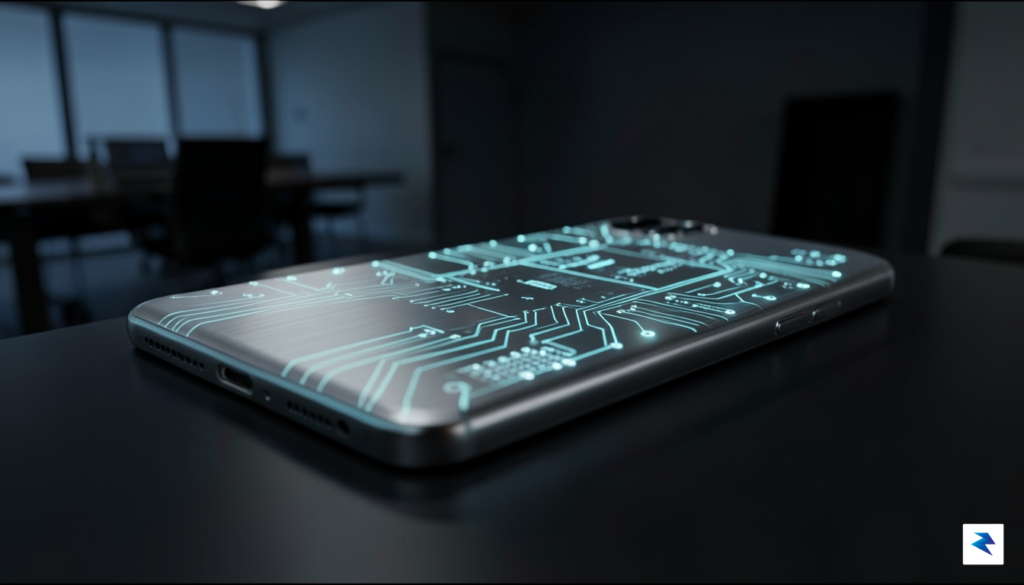
The hardware-level security is anchored by an integrated, tamper-resistant secure element—a dedicated hardware token that stores cryptographic keys away from the reach of the primary operating system. This isolation ensures that even if a sophisticated exploit were to target the device’s interface, the core identity and encryption credentials remain compartmentalized. For an executive managing high-stakes mergers or private equity portfolios, this is the functional equivalent of a digital safe. Furthermore, the AI agent is programmed with strict data-scrubbing protocols; it does not retain logs of sensitive queries, nor does it feed user-specific information into a broader, public training set. This commitment to data sovereignty is paramount, as it guarantees that the intelligence you interact with is a private consultant rather than a data-harvesting engine.
True privacy in the AI era is defined not by how much data a system can process, but by how little it chooses to remember.
However, the transition from cloud reliance to edge computing is not without its trade-offs. While keeping data on-device is objectively safer, it occasionally limits the expansive, real-time connectivity that cloud-synced AI models enjoy. Users will find that the Vertu system favors a hybrid approach: local processing for sensitive document analysis and private scheduling, while utilizing encrypted, ephemeral tunnels for broader information retrieval. This balance allows the phone to maintain its “digital fortress” status without sacrificing the utility that executives pay for. Ultimately, the system is designed for those who view every byte of data as a liability, offering a sophisticated layer of obfuscation and encryption that turns personal productivity into a secure, proprietary asset.

When distilling the experience of using Vertu’s AI-integrated device, it becomes clear that we are witnessing a collision between high-end craftsmanship and the burgeoning world of artificial intelligence. If you are scouring the market for a device that offers the most efficient, cost-effective path to AI-driven productivity, this device is almost certainly not for you. The software, while polished and aesthetically tailored to the brand’s opulent hardware, does not offer a functional advantage over standard, widely available AI assistants that can be accessed on much more affordable hardware. For the average power user or tech enthusiast, the $6,880 price tag is difficult to justify through a purely utilitarian lens, as the core capabilities often mirror what is already available for a fraction of the cost.
However, to dismiss the device entirely would be to misunderstand its primary purpose: it is not intended to compete with mass-market productivity tools, but to serve as a beacon of exclusivity. In the realm of luxury goods, the value proposition is rarely tied to raw performance metrics, but rather to the prestige, scarcity, and physical quality of the object itself. The AI agent acts less like a revolutionary engine of work and more like a concierge-style accessory—a digital manifestation of the brand’s heritage. If you view this purchase through the lens of “value for status,” the device succeeds in a way that a standard smartphone never could, acting as a conversation piece that signals a specific echelon of success.
Ultimately, the decision to invest in this device depends on whether you are buying a tool to get things done or an emblem to be seen with. One is a pragmatic investment in efficiency; the other is a strategic investment in image.
Looking toward the future, this device likely represents the first wave of a “luxury tech” movement where AI personalization becomes the ultimate accessory. We expect to see more heritage brands attempting to bridge the gap between bespoke hardware and digital intelligence, but the challenge remains in proving that these devices offer more than just a premium aesthetic. For now, the Vertu AI agent remains a specialized artifact for the ultra-wealthy who value the marriage of tactile luxury and modern tech trends. If you prioritize function above all else, stick to your current high-end flagship; if you prioritize the unique intersection of jewelry-grade hardware and digital exclusivity, this represents a category of one.
You must be logged in to post a comment.