Inside the Solar Car Challenge: How Students Are Engineering the Future
The Solar Car Challenge: Engineering the Future of Transportation The Solar Car Challenge is far more than a high-stakes competition; it is a…

The proposed $14.8 billion acquisition of Delivery Hero marks a decisive pivot for Uber, signaling a transition from the era of experimental hyper-growth to a calculated phase of global market consolidation. For years, Uber functioned primarily as a ride-hailing pioneer, but this move cements its evolution into a comprehensive logistics platform that underpins the digital economy. By absorbing Delivery Hero’s extensive operational network, Uber is effectively moving beyond the simple delivery of restaurant meals and into the broader “Everything Store” model, where the instantaneous transport of goods becomes a utility as essential as electricity or internet access. This is no longer just about moving people; it is about owning the last-mile infrastructure that powers modern commerce in key international markets.

A primary driver behind this acquisition is the immediate, non-organic scale it provides in regions where Uber previously faced significant headwinds. While Uber has spent years attempting to capture market share in fragmented international territories, the intense competition and localized regulatory hurdles often stunted its expansion efforts. Delivery Hero, conversely, has already done the heavy lifting of building deep-rooted supply chains, merchant partnerships, and localized delivery fleets across Europe and Asia. By absorbing this infrastructure, Uber bypasses the costly and time-consuming process of building from the ground up, allowing it to achieve immediate dominance in high-density urban centers that were previously difficult to penetrate.
The acquisition represents a fundamental shift in the gig economy: the transition from fragmented, competitive rivalry to a consolidated, platform-led infrastructure that prioritizes long-term unit economics over short-term expansion.
Furthermore, this deal is instrumental in refining Uber’s long-term vision of a seamless, multi-vertical ecosystem. By integrating Delivery Hero’s assets, Uber can leverage a more robust data set to optimize delivery routes, reduce wait times, and improve the efficiency of its gig-worker fleet. This level of logistical density is the “holy grail” for delivery platforms, as it allows for the bundling of services—such as grocery, retail, and restaurant delivery—into a single, profitable delivery trip. As Uber continues to integrate these operations, the company is positioning itself to be the primary interface for consumer consumption, effectively turning its app into a daily necessity that touches every aspect of the modern urban experience.

The food delivery landscape has undergone a seismic shift over the past decade, evolving from a hyper-fragmented marketplace of local startups into a high-stakes arena dominated by a handful of global titans. In the early days, venture capital fueled a “land grab” mentality where dozens of platforms competed for market share through aggressive discounting and heavy subsidization. However, this period of chaotic growth proved unsustainable, as the underlying logistics of moving meals from kitchens to doorsteps require extreme operational efficiency to reach profitability. Today, we are witnessing the inevitable endgame of this battle: a move toward total market consolidation that prioritizes scale over the rapid, localized expansion strategies of the past.
The “winner-takes-most” dynamic in the delivery industry is driven by the unique mathematics of logistics. Because delivery networks rely heavily on density—the number of orders fulfilled per hour within a specific geographic radius—platforms that control the largest share of the market naturally gain a massive competitive advantage. By consolidating operations, giants like Uber effectively reduce the cost per delivery by minimizing idle time for couriers and optimizing routing algorithms across a wider pool of restaurant partners. This economy of scale is not merely a corporate luxury; it is a fundamental requirement for achieving sustainable unit economics in an industry plagued by razor-thin margins.
The path to profitability in the gig-economy era is paved with scale. When one platform dominates a region, the network effects create a self-reinforcing loop that makes it increasingly difficult for smaller, regional players to compete on price, speed, or technology.
For end-users and restaurant partners, this wave of consolidation brings a complex mix of consequences. On the positive side, the integration of massive logistics networks often leads to more reliable delivery times, better-integrated app features, and a wider variety of culinary choices as the platform gains the capital to invest in advanced infrastructure. Conversely, the reduction of competition can create a monopolistic environment where platforms hold significant leverage over commission rates for restaurants and service fees for customers. As these global entities continue to absorb regional players, the future of the delivery sector will likely be defined by a focus on “super-app” integration, where food delivery becomes just one component of a broader ecosystem that includes grocery, retail, and logistics services, further cementing the dominance of the few remaining market leaders.

This strategic consolidation represents far more than a simple balance-sheet expansion; it is a fundamental reconfiguration of the delivery ecosystem across two of the most hotly contested regions on the planet. By absorbing Delivery Hero’s extensive operational network, Uber effectively bridges the gap between its established Western strongholds and the rapidly digitizing consumer bases of Southeast Asia and the Middle East. For years, Delivery Hero has meticulously cultivated deep-rooted logistics infrastructure in emerging markets, securing exclusive partnerships with local merchants that have historically been difficult for global players to penetrate. Now, Uber inherits these hard-won footholds, instantly scaling its footprint in regions where local brand loyalty is a critical currency for long-term survival.
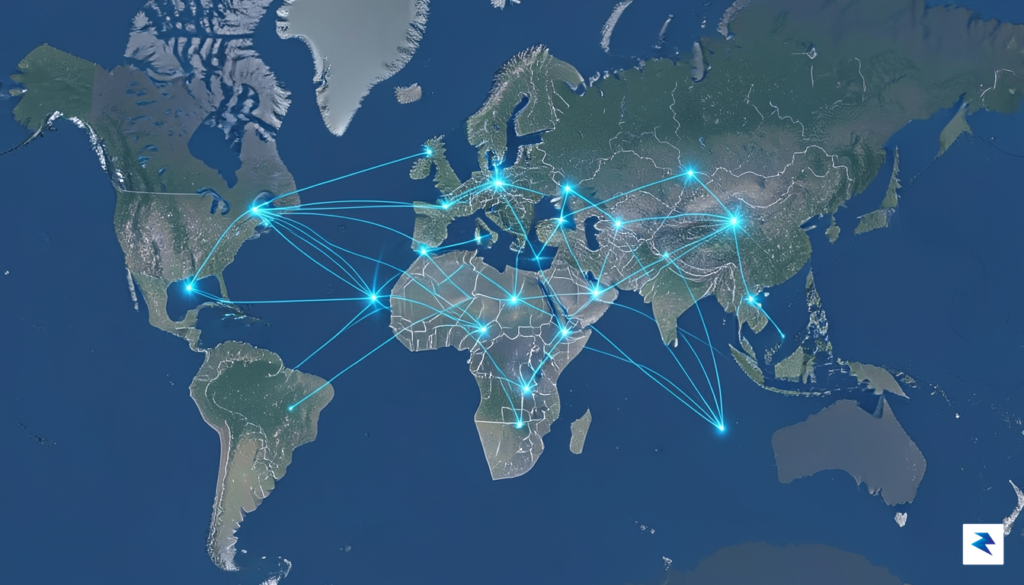
In Europe, the acquisition serves to solidify Uber’s dominance against a fragmented field of local competitors. While Uber Eats has long maintained a steady presence in major Western European capitals, the integration of Delivery Hero’s existing regional operations acts as a massive force multiplier. This merger allows Uber to optimize delivery routes, streamline regional supply chains, and leverage a broader data set to predict consumer demand with unprecedented accuracy. By consolidating these assets, Uber is not merely buying market share; it is erecting a formidable barrier to entry that makes it increasingly difficult for smaller, specialized delivery startups to compete on price, speed, or service variety.
The marriage of Uber’s technological ecosystem and Delivery Hero’s regional saturation creates a “flywheel effect” that makes it nearly impossible for fragmented, local players to keep pace with the resulting economies of scale.
The competitive shift is equally profound in Southeast Asia and parts of the Middle East, where the battle for the “super-app” crown has intensified. These territories have served as testing grounds for innovative delivery models, yet they have also been plagued by high customer acquisition costs and thin margins. With this tactical reshuffling, the market is effectively pivoting from a stage of hyper-competition to one of disciplined consolidation. Smaller, niche delivery services that once thrived on the margins of these markets will now face a unified entity capable of subsidizing operations in ways they simply cannot match. Ultimately, this deal signals that the era of aggressive, localized experimentation is giving way to a new phase of global infrastructure dominance, where the winner is determined by the sheer depth and efficiency of their logistical reach.

A transaction of this staggering $14.8 billion scale inevitably invites intense scrutiny from international competition authorities, who are tasked with ensuring that such a massive consolidation does not stifle innovation or harm the end-user. In the European Union, the European Commission maintains a rigorous stance on digital markets, likely focusing its investigation on whether Uber’s absorption of Delivery Hero assets would create an insurmountable barrier to entry for smaller, localized competitors. By effectively removing a major rival from the board, the merged entity could possess enough market share to dictate terms to restaurant partners, leading to fears that commission rates might climb higher. Similar concerns are echoed across various Asian markets, where regulators are increasingly wary of “super-app” dominance and the potential for predatory pricing strategies that could squeeze out independent delivery services.

The core of the antitrust debate rests on the dual impact of pricing: the cost imposed on restaurant partners and the final fee charged to consumers. When a single platform commands a near-monopoly in a specific geographic region, it gains the leverage to increase take rates from restaurants that are already operating on razor-thin margins. If these businesses are forced to pass those costs on to their customers, the end result is a localized inflationary effect on the cost of dining. Regulators will be looking for concrete evidence that this deal will not lead to a degradation in service quality or a surge in “hidden” delivery fees, which have become a persistent point of contention for labor advocates and consumer protection groups alike.
The success of this acquisition hinges not on the financial synergy between the two companies, but on their ability to prove to global watchdogs that the digital food delivery ecosystem remains a competitive, rather than monopolistic, landscape.
To navigate these complex regulatory waters, it is highly probable that government bodies will mandate significant concessions as a prerequisite for final approval. This could take the form of forced divestitures, where Uber might be required to sell off its operations in specific, highly concentrated cities to ensure that a third-party player retains a viable foothold. These conditions are not merely administrative hurdles; they serve as a direct check on the final valuation of the deal. If Uber is forced to shed too many profitable territories to appease regulators, the long-term financial projections that justified such a high purchase price may be fundamentally altered, forcing both parties to renegotiate the terms of the acquisition to account for a smaller, albeit more compliant, global footprint.
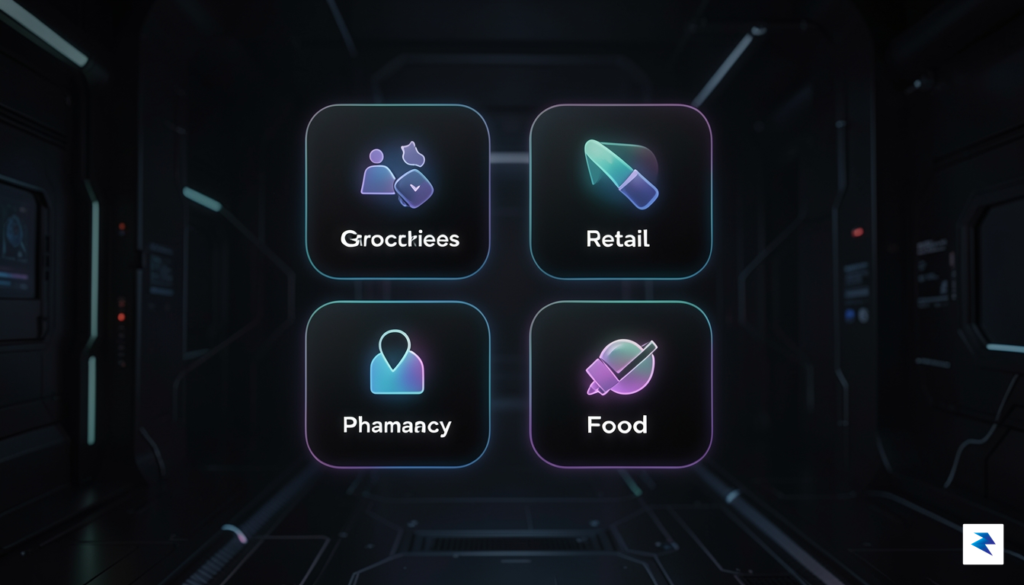
The integration of Delivery Hero’s extensive operational footprint into Uber’s existing architecture signals a definitive pivot away from the traditional model of restaurant-centric logistics. By absorbing this vast network, Uber is effectively transforming its platform into a comprehensive infrastructure layer for the entire “on-demand” economy. This evolution suggests that the future of the delivery super-app lies in its ability to facilitate the rapid movement of any physical asset, shifting the focus from prepared meals to a diverse ecosystem of groceries, essential retail goods, and time-sensitive pharmaceutical products. As these verticals converge under a single interface, the friction of daily life—from stocking a kitchen pantry to acquiring urgent medical supplies—is systematically removed, turning the app into an indispensable utility for urban living.

To manage this massive increase in complexity, Uber is poised to leverage advanced artificial intelligence and machine learning at a scale previously unseen in the logistics sector. Optimizing a network that handles everything from cold-chain grocery storage to delicate medical delivery requires a level of predictive analytics that can anticipate demand surges before they occur. By deploying sophisticated AI models, the company can streamline routing, balance fleet distribution in real-time, and automate inventory management for local retail partners. This technological backbone is what will eventually distinguish the dominant super-apps from niche competitors; success will be defined not just by the speed of the driver, but by the precision of the algorithms coordinating the entire supply chain.
The true value of this expansion is not found in the volume of meals delivered, but in the creation of a high-frequency, multi-vertical utility that integrates into every facet of the consumer’s daily routine.
Ultimately, this strategic maneuver underscores a profound shift in the global digital economy: the transition from fragmented, service-specific platforms toward unified, “everything” apps. In this new landscape, the winner is the entity that captures the greatest share of a user’s daily logistical needs. As Uber continues to refine its multi-vertical capabilities, the boundary between physical retail and digital ordering will continue to blur. By positioning itself as the primary interface for local commerce, Uber is not merely expanding its reach; it is setting the stage for a future where the seamless delivery of goods is as foundational to modern infrastructure as electricity or high-speed internet.
You must be logged in to post a comment.