
The Orchid Synth: Why Retro Chord Organs Are Trending Again
The Resurgence of the Chord Organ Aesthetic The gentle hum of a vintage chord organ often conjures images of cozy mid-20th century living…


The current revolution in artificial intelligence, while promising immense transformative power, is unfolding against a backdrop of significant ethical and philosophical questions. At its core, the development of sophisticated AI models has largely been driven by commercial interests, resulting in systems often trained on data that overwhelmingly reflects Western, English-centric perspectives. This dominant paradigm risks exacerbating a new form of digital divide – not just in access, but in the very representation and understanding of the world’s diverse cultures within AI itself. Current AI emerges as a critical counter-narrative, proposing an alternative where artificial intelligence serves as a true public good, reflecting the rich tapestry of global human experience rather than a narrow, profit-driven lens.
Current AI’s foundational philosophy is rooted in the belief that such a powerful technology should not be proprietary or exclusive. Operating as a non-profit entity, the organization deliberately eschews the commercial pressures that often lead to shortcuts, data biases, and a focus on monetization over universal benefit. This structure is not merely an operational choice; it’s an ethical stance designed to ensure that the development agenda remains aligned with the public interest. By prioritizing inclusivity and accessibility, Current AI aims to build an infrastructure for AI that is fundamentally open, transparent, and accountable to all, rather than beholden to shareholder value or geopolitical agendas.
The dangers of culturally biased Large Language Models (LLMs) are profound and far-reaching. When AI systems are predominantly trained on data reflecting a limited segment of humanity – often internet content originating from a few dominant cultures and languages – they inevitably develop skewed understandings and perpetuate existing societal biases. These models can misinterpret nuances, reinforce stereotypes, and even fail to comprehend the unique needs and expressions of communities outside their training data. Imagine AI tools for healthcare, education, or even social interaction that misunderstand cultural norms, produce inaccurate information, or worse, perpetuate harmful stereotypes simply because they lack a truly global perspective. This isn’t just an inconvenience; it’s an ethical failure that can marginalize entire populations and erode trust in AI’s potential to uplift humanity.
To combat this, Current AI envisions a true “World Wide Web of AI” – a decentralized, open-source ecosystem designed from the ground up to embrace global diversity. This ambitious undertaking involves meticulously curating and integrating diverse datasets, supporting a multitude of languages, and developing algorithms that are inherently culturally sensitive. Their goal is not just to add more data, but to ensure that the foundational models of AI are built upon a comprehensive and equitable representation of humanity, allowing AI to genuinely serve as an intelligent assistant for every culture and community on Earth. This commitment to inclusivity is a necessary step towards an AI future where technology truly empowers everyone, fostering understanding and collaboration across borders.
Ultimately, Current AI’s mission underscores a critical juncture in the evolution of artificial intelligence. The choice before us is whether AI will be a tool that widens existing divides, or one that bridges them. By championing a non-profit, culturally inclusive approach, Current AI is advocating for an ethical framework where AI is developed as a universal public good, accessible and beneficial to all of humanity. Their efforts represent a profound commitment to ensuring that the future of intelligence, artificial or otherwise, reflects the world’s actual diversity and helps us collectively navigate the complexities of our shared global future.


Building a truly universal AI infrastructure presents a monumental challenge, far exceeding the mere aggregation of massive computing power. The vision of a “World Wide Web of AI” implies a system that can function seamlessly across an incredibly diverse landscape of devices and environments, from the sprawling data centers housing cutting-edge GPUs to the humble processors within everyday smartphones and IoT devices. The fundamental technical hurdle lies in reconciling the immense computational demands of advanced AI models with the vastly disparate resources available at the edge. Current AI is directly addressing this scalability paradox by architecting a system focused intently on interoperability, ensuring that intelligence can flow and operate wherever it is needed, without being confined to a single processing paradigm.
The core of this challenge revolves around the optimal balance between cloud-based inference and on-device processing. Traditional AI models often rely heavily on centralized cloud servers, leveraging their immense power for complex computations and access to vast datasets. While this approach offers unparalleled capabilities for large-scale models, it introduces inherent limitations: latency due to network communication, potential privacy concerns as data leaves the device, and a dependency on consistent internet connectivity. Conversely, on-device processing, also known as edge AI, performs computations locally, offering real-time responses, enhanced privacy, and offline capabilities. However, these local environments typically have significant constraints in terms of processing power, memory, and battery life, limiting the size and complexity of the AI models they can host. Current AI is not choosing one over the other but is instead developing a dynamic, adaptive architecture that intelligently allocates AI workloads. This hybrid approach allows the system to leverage cloud resources for computationally intensive tasks when available and appropriate, while simultaneously enabling efficient, lightweight AI operations directly on the device when connectivity is poor or privacy is paramount.
To truly enable a “Web” of AI, Current AI is championing the development of open standards that facilitate seamless communication and cooperation between diverse AI models and systems. Just as the original internet relies on common protocols like HTTP and TCP/IP to allow any device to access any website, the future of AI demands a universal language for intelligence. This means defining standardized APIs, data formats, and interaction protocols that allow different AI models – regardless of their underlying architecture, training data, or developer – to understand, respond to, and collaborate with one another. Such open standards are critical for preventing vendor lock-in, fostering a vibrant ecosystem of innovation, and ensuring that the AI landscape remains decentralized and accessible. By creating a common ground where various AI components can plug and play, Current AI is laying the groundwork for a truly modular and resilient network, where intelligence can be exchanged, augmented, and applied across the entire spectrum of digital interactions, from smart homes to industrial automation and beyond. This commitment to interoperability is arguably the most crucial technical pillar in their quest to build a free, global, and open AI network.
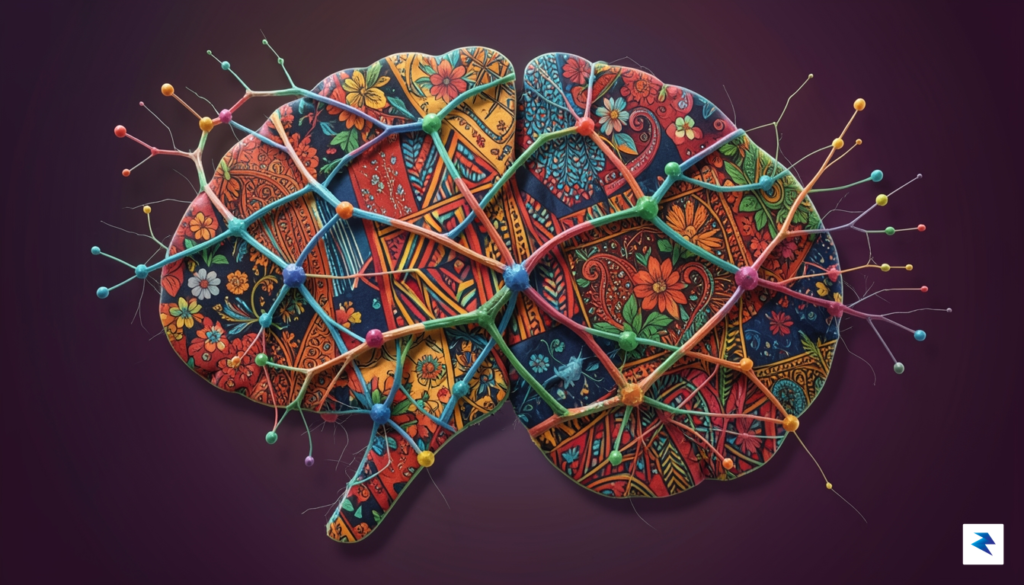
The quest for truly intelligent AI extends far beyond merely translating words from one language to another. While many of today’s most prominent AI models excel at linguistic tasks in dominant languages like English, they often fall woefully short when confronted with the vast tapestry of human communication. This deficiency stems from what can be termed ‘data poverty,’ where the overwhelming majority of AI training datasets are skewed towards a few powerful languages and cultural contexts, leaving hundreds, if not thousands, of unique linguistic and cultural perspectives largely unrepresented. Consequently, the AI systems we interact with frequently exhibit a limited understanding of the world, struggling to comprehend nuances, idioms, and social contexts that are commonplace outside of their training bubble.
True AI inclusivity, therefore, demands a paradigm shift from simple linguistic conversion to a profound appreciation of cultural specificity. It’s not enough for an AI to know the dictionary definition of a word; it must grasp the emotional weight, the historical connotations, or the regional slang associated with it. Consider a common idiom: a direct translation often renders it nonsensical, stripping away its rich cultural meaning. Current AI recognizes this critical gap and is actively working to bridge it by building models trained on datasets that deliberately include underrepresented languages and regional perspectives – a radical departure from the Big Tech norm. This dedication ensures that AI can truly serve and understand diverse populations, rather than inadvertently imposing a monocultural view of intelligence.
The ethical collection of this diverse data is paramount to Current AI’s mission. Instead of scraping the internet indiscriminately, which often perpetuates existing biases, the organization is engaging directly with communities to compile datasets that accurately reflect local customs, linguistic variations, and social norms. This collaborative approach not only ensures a higher quality of data but also respects data sovereignty and cultural ownership, fostering trust and genuine partnership. By meticulously curating these rich, culturally-informed datasets, Current AI is laying the groundwork for an AI that doesn’t just process information but genuinely understands the intricate weave of human experience across the globe, ensuring that the “World Wide Web of AI” truly is for everyone.
The impact of this nuanced understanding extends profoundly into AI’s practical applications, from decision-making algorithms to creative content generation. In a world where AI is increasingly involved in everything from healthcare diagnostics to financial advice, a culturally ignorant AI could make inappropriate or even harmful recommendations, missing critical social cues or ethical considerations unique to a specific culture. Similarly, for creative AI tasks, an understanding of regional humor, storytelling conventions, or artistic traditions is essential for generating content that resonates authentically and avoids cultural appropriation or misrepresentation. An AI that understands the subtle interplay of language and culture is not just more effective; it is also more equitable, fostering greater understanding and reducing barriers between people worldwide.


The current trajectory of artificial intelligence development often leads towards centralized control, with powerful models and essential infrastructure increasingly residing behind proprietary APIs and restrictive subscription paywalls. This trend risks creating a landscape where access to foundational AI capabilities is dictated by commercial interests, potentially stifling innovation and concentrating immense power in the hands of a few corporations. Current AI, however, represents a profound counter-movement, positioning itself as a non-profit entity committed to building a truly open-access “World Wide Web of AI,” freely available to all. This radical departure is not merely an alternative business model; it is a philosophical stand aimed at preventing the monopolization of intelligence itself, ensuring that the benefits of AI are broadly distributed rather than narrowly confined.
The distinction between Current AI’s non-profit framework and the prevailing closed-source commercial entities is crucial for understanding its potential impact. Traditional tech giants, driven by shareholder value, naturally seek to protect their intellectual property and monetize their AI advancements, often through exclusive licenses or per-usage fees. This approach, while commercially viable, can inadvertently create bottlenecks, limiting who can build with, research, or even understand the underlying technology, thereby slowing down collective progress. In stark contrast, Current AI’s non-profit status allows it to prioritize public benefit over profit, fostering an environment where innovation can flourish without the financial burdens or restrictive terms often associated with proprietary systems. The primary goal shifts from maximizing revenue to maximizing collective intelligence and democratizing access to powerful AI tools for everyone.
Operating a non-profit in the capital-intensive and rapidly evolving field of artificial intelligence presents significant long-term sustainability challenges that must be thoughtfully addressed. Developing, maintaining, and scaling cutting-edge AI infrastructure requires substantial resources, from high-performance computing power to top-tier research talent. Unlike commercial ventures that can attract private investment with the promise of future returns, Current AI must rely on a different funding ecosystem. This typically involves securing grants from philanthropic organizations, soliciting donations from individuals and foundations, and forging strategic partnerships with academic institutions or governmental bodies that share its open-access mission. While challenging, the success of other large-scale open-source projects, such as Linux or Wikipedia, demonstrates that a vibrant, community-supported model can indeed sustain complex technological endeavors, provided there is a clear value proposition and strong governance.
For the global community of developers, researchers, and startups, Current AI’s commitment to open access offers unparalleled benefits, effectively leveling the playing field. Proprietary AI services often come with steep learning curves, opaque decision-making processes, and prohibitive costs that can exclude smaller teams or individuals with limited budgets, thereby centralizing innovation within well-funded entities. By providing free access to high-quality AI building blocks—such as advanced models, robust APIs, and comprehensive datasets—Current AI empowers innovators to experiment, build, and deploy novel applications without financial barriers. This fosters a vibrant ecosystem of creativity, accelerates scientific discovery by allowing researchers to inspect and extend foundational models, and ultimately drives the development of diverse AI solutions tailored to a wider range of societal needs, rather than just commercially lucrative ones.
Ultimately, the vision behind Current AI’s open-access strategy extends far beyond mere technological provision; it

The true power of Current AI isn’t confined to abstract research labs or theoretical discussions; it’s being woven into the fabric of our daily digital lives, making advanced intelligence readily available where and when users need it most. This commitment to ubiquity is evident in Current AI’s rapid expansion across a diverse array of devices and interfaces, mirroring the accessibility once championed by the earliest web browsers. Recent milestones include optimizing the core Current AI engine for deployment on edge devices, allowing for seamless integration into everything from smart home hubs and wearable technology to in-vehicle infotainment systems. This means that personalized AI assistance and complex computational tasks can now be performed locally on your device, enhancing both speed and data privacy without constant reliance on cloud servers, truly bringing AI into the user’s immediate environment.
At the heart of this user-centric approach is Current AI’s intuitive chat interface, which serves as a primary gateway to its powerful capabilities. Gone are the days of navigating complex menus or specialized software; users can now interact with sophisticated AI models using natural language, just as they would converse with another person. This conversational paradigm lowers the barrier to entry significantly, enabling individuals from all technical backgrounds to leverage AI for tasks ranging from drafting complex documents and summarizing lengthy reports to brainstorming creative ideas and receiving personalized recommendations. The interface is designed not merely for convenience, but to make advanced tools feel like an extension of one’s own thought process, providing immediate, context-aware responses that adapt and learn from ongoing interactions, transforming complex tasks into simple, engaging dialogues.
Looking ahead, Current AI has an ambitious roadmap designed to further embed its technology into everyday existence. Upcoming features include enhanced multi-modal capabilities, allowing the AI to understand and generate not only text, but also process and respond to voice commands, visual inputs, and even gestural cues, paving the way for truly holistic interactions. Furthermore, expect more proactive assistance features, where Current AI can anticipate user needs based on context and past behavior, offering relevant information or completing tasks before being explicitly asked. Integrations with an even wider ecosystem of third-party applications and services are also on the horizon, promising a future where Current AI acts as a central, intelligent layer across all your digital tools, streamlining workflows and enhancing productivity across personal and professional domains.
Crucially, Current AI understands that building a truly open and global “Web of AI” requires a collaborative effort. To this end, they have made significant strides in empowering developers to contribute to and integrate with their platform. Comprehensive Application Programming Interfaces (APIs) and Software Development Kits (SDKs) are readily available, providing the necessary tools for developers to embed Current AI’s intelligence into their own applications, create custom AI agents, or even build entirely new AI-powered devices. The platform also boasts robust documentation, a vibrant developer community, and active support channels, fostering an environment where innovation can flourish. Developers are encouraged to experiment with the core models, extend their functionalities, and bring Current AI’s capabilities to novel use cases, ensuring that the future of accessible AI is shaped by a diverse and global collective of builders.

You must be logged in to post a comment.