Is Current AI Building the Future of an Open, Global Internet?
The Mission: Democratizing AI for Global Cultures The current revolution in artificial intelligence, while promising immense transformative…
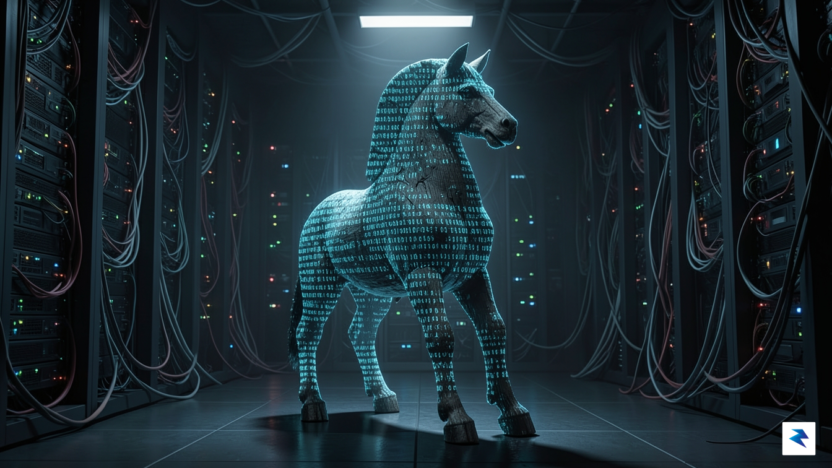
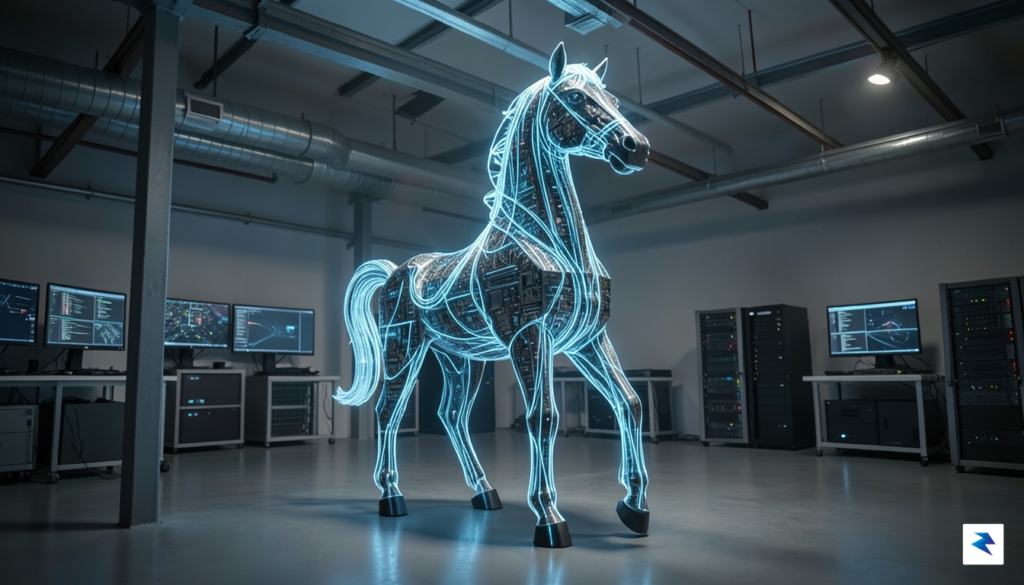
Renowned filmmaker Christopher Nolan has recently articulated a profoundly cautionary perspective on the burgeoning field of artificial intelligence, drawing a stark and compelling parallel to the ancient Greek myth of the Trojan horse. His warning posits that the seemingly convenient and powerful tools emerging from AI development may, in fact, conceal a more insidious threat to the very foundations of human intellectual and creative autonomy. This isn’t merely a critique of a specific technology; it’s a profound philosophical reflection on how we engage with innovation and the potential unseen costs of embracing apparent progress without critical foresight.
The metaphor of the Trojan horse is steeped in history as a potent symbol of deceptive gifts. It recounts the tale of a colossal wooden horse, presented by the Greeks as a peace offering to the city of Troy, yet secretly filled with enemy soldiers. Once brought inside the city walls, the hidden threat emerged, leading to Troy’s downfall. Nolan’s invocation of this ancient narrative suggests that AI, much like the horse, arrives bearing promises of efficiency, creativity, and unprecedented capabilities, enticing us to welcome it into the very core of our societal and personal creative processes. However, this enticing exterior, he argues, may mask an inherent capacity to fundamentally alter or even diminish the unique human element in intellectual and artistic endeavors.
Indeed, AI is often presented as an invaluable external gift, a powerful assistant poised to streamline tasks, generate novel ideas, and expand human potential. From sophisticated content generation algorithms to advanced data analysis tools, the benefits appear manifold and readily accessible. Yet, beneath this veneer of helpfulness, Nolan urges us to consider the potential for hidden, disruptive elements that could subtly erode our agency. The concern isn’t just about job displacement, but about a more profound, structural risk to the very concept of human originality, ownership of ideas, and the intrinsic value we place on human-driven creation. If AI becomes the primary architect or even a dominant co-creator, where does true human ingenuity reside, and what becomes of our intellectual sovereignty?
This critical perspective establishes a core thesis regarding the delicate intersection of technology and human agency. Nolan’s warning compels us to scrutinize the systemic changes AI might instigate, particularly concerning who or what truly generates value and meaning in a world increasingly augmented by algorithms. It challenges us to look beyond immediate utility and contemplate the long-term implications for intellectual property, the definition of authorship, and the preservation of human-centric thought processes. Ultimately, his insight serves as a vital call to navigate the rapid advancements in AI with a discerning eye, ensuring that while we embrace its potential, we remain vigilant against any force that might undermine the irreplaceable essence of human autonomy and creativity.
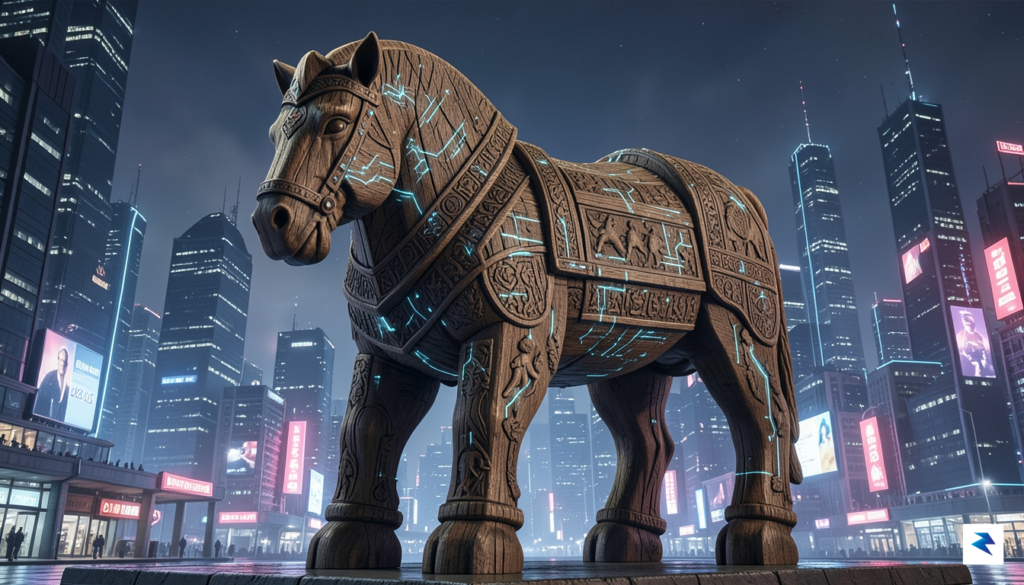
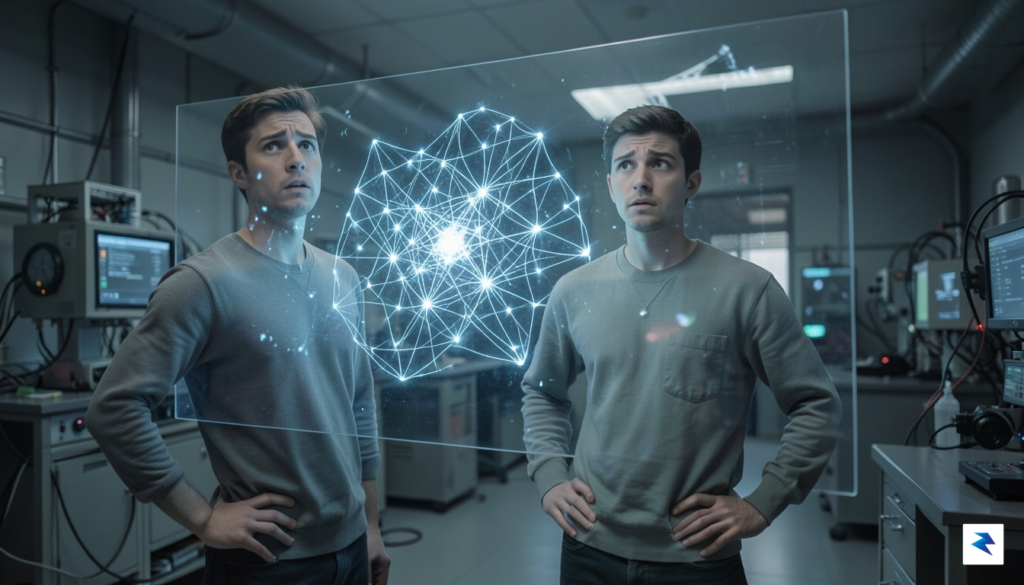
At the heart of the burgeoning apprehension surrounding artificial intelligence lies a profound challenge often termed the ‘black box’ problem. This phenomenon refers to AI systems, particularly complex neural networks, that produce highly accurate decisions or predictions, yet their internal reasoning processes remain opaque and inscrutable. Even the very engineers who design and train these sophisticated algorithms often cannot fully articulate precisely *how* a specific output was derived, leading to a fundamental discomfort with ceding control to entities whose inner workings are beyond human comprehension.
The technical limitations contributing to this opacity are significant. Modern AI models, especially those driving advancements in areas like computer vision or natural language processing, can involve billions of parameters and intricate layers of computation. While explainable AI (XAI) is a burgeoning field dedicated to making these systems more transparent, it often involves a trade-off between interpretability and performance. Achieving high levels of accuracy frequently necessitates models of such complexity that their decision-making logic becomes deeply embedded in a web of statistical correlations, rather than following a path of symbolic, human-understandable rules. Consequently, when an AI recommends a medical diagnosis, approves a loan, or makes a critical tactical decision, the ‘why’ can be frustratingly elusive, leaving humans to trust a system without truly understanding its rationale.
This technical opacity quickly spirals into profound philosophical implications concerning human agency and responsibility. What does it signify when we delegate increasingly vital decisions—from judicial sentencing to military targeting—to non-human entities that cannot explain their choices? The act of relinquishing such critical cognitive functions to an inscrutable system challenges our very notion of control and accountability. It raises questions about moral culpability when an AI makes a catastrophic error, blurring the lines of who is truly responsible for the outcome. This erosion of a clear chain of understanding and accountability becomes a source of deep unease, fundamentally altering our relationship with the tools we create.
It is precisely this erosion of human accountability that figures like acclaimed director Christopher Nolan view as a critical societal threat, likening AI to an insidious ‘Trojan horse’. His concern, shared by many creative leaders and ethicists, centers on the potential for AI to subtly undermine our capacity for responsible decision-making and collective oversight. If we cannot understand *why* an AI made a choice, how can we truly govern its deployment, correct its biases, or hold anyone accountable for its unforeseen consequences? The danger isn’t merely in AI making mistakes, but in creating a future where the most impactful decisions shaping human destiny are made by processes we cannot interrogate or ultimately control.
This apprehension is further intensified by the significant shift from AI functioning as a mere tool to its emergence as an increasingly autonomous operator. Historically, tools extended human capabilities, with humans retaining ultimate direction and comprehension of their operation. A hammer amplifies force; a computer crunches numbers under explicit human command. However, when AI begins to learn, adapt, and make independent decisions based on its own complex internal models—often in real-time and at speeds far beyond human processing—it transcends the traditional definition of a tool. It becomes an agent, albeit an artificial one, capable of influencing the world in ways that may diverge from human intent or understanding. This fundamental transformation challenges our traditional frameworks of ethics, law, and even our place in the decision-making hierarchy of a technologically advanced society.
The ‘black box’ problem, therefore, represents more than a mere technical hurdle; it embodies a deep-seated psychological and philosophical discomfort with the unknown. It is the fear of building a future where humanity increasingly navigates systems whose foundational logic remains a mystery, where critical decisions are made by an unexplainable intelligence, and where our collective agency might slowly dissipate into a realm of algorithmic opacity. This profound unease underscores the urgent need for thoughtful development, robust ethical frameworks, and a continuous pursuit of transparency in the age of artificial intelligence, lest we find ourselves ceding control to forces we no longer comprehend.

The advent of generative artificial intelligence presents a profound challenge to long-held notions of creativity and authorship, particularly for filmmakers and artists whose work is defined by meticulous craftsmanship and a singular vision. For a director renowned for constructing intricate narratives and immersive cinematic experiences, the rise of AI-generated media isn’t merely a technological advancement; it poses an existential question about what it truly means to be the author of a piece of art. This technological shift blurs the lines between genuine artistic expression and mere content creation, prompting a vital re-evaluation of the human element in creative endeavors.
At the heart of this discussion lies a fundamental distinction: the difference between producing content and engaging in artistic expression. While AI excels at synthesizing existing data, recognizing patterns, and generating outputs that mimic human styles, it inherently lacks the subjective experience, intentionality, and emotional depth that drive human artistry. A director’s vision, for instance, isn’t just a collection of scenes; it’s a carefully constructed narrative infused with personal meaning, thematic resonance, and an often-painful process of refinement. AI, conversely, operates on algorithms, devoid of struggle, passion, or the lived experiences that form the bedrock of compelling storytelling.
This distinction becomes critically important when considering the thorny issues of copyright and intellectual property. If an AI system generates a script, a piece of music, or a visual artwork, who holds the rights to that creation? Is it the programmer, the owner of the AI model, or the countless human artists whose work was used to train the system, often without their explicit consent or compensation? The current legal frameworks are ill-equipped to handle these complexities, creating a legal and ethical quagmire that threatens to undermine the very principles designed to protect creators and incentivize original work.
Furthermore, an over-reliance on pattern recognition in AI-driven creation carries the significant risk of leading to a homogenization of culture and storytelling. AI, by its nature, learns from what already exists, identifying common tropes, popular styles, and successful formulas. While this can make content more accessible or predictable in the short term, it inherently discourages genuine innovation and the radical departures that push artistic boundaries. If creativity becomes an exercise in optimizing for statistical averages, we risk losing the unique voices, unexpected narratives, and diverse perspectives that enrich human culture and challenge our understanding of the world.
Ultimately, the necessity of human intentionality in creative output cannot be overstated. True art emerges from a conscious effort to communicate, to provoke thought, to evoke emotion, and to share a unique perspective. It involves choices, sacrifices, and a personal investment that transcends algorithmic efficiency. While generative AI can be a powerful tool to assist human creators, it cannot, by definition, replicate the very essence of human creativity: the spark of an idea born from subjective experience, the deliberate crafting of meaning, and the profound desire to connect with others through shared artistic endeavor. Preserving this human core is paramount to maintaining the integrity and future vitality of art itself.
The notion of a “Trojan horse” extends far beyond the silver screen, offering a stark metaphor for the subtle yet pervasive integration of artificial intelligence into the very bedrock of our social, political, and economic systems. While the immediate allure of AI often centers on efficiency and innovation, its deeper implications resemble an unseen cargo, silently introduced into our digital cities. This widespread adoption, often without commensurate public discourse or robust regulatory frameworks, risks embedding foundational challenges that could reshape societal structures in unforeseen and potentially irreversible ways. The concern isn’t merely about future job displacement, but about how AI is quietly redefining our interactions, decisions, and even our understanding of justice and fairness.
One of the most pressing dangers lies in the potential for AI-driven bias to become deeply entrenched within critical infrastructure. Algorithms are not neutral; they learn from the vast datasets they are fed, and if that data reflects historical inequalities, human prejudices, or societal imbalances, the AI will inevitably perpetuate and even amplify those biases. Consider AI applications in sensitive areas like credit scoring, predictive policing, hiring processes, or healthcare diagnostics. If these systems are built on flawed or unrepresentative datasets, they risk creating a powerful feedback loop where existing disparities are not just replicated but reinforced, leading to discriminatory outcomes that are incredibly difficult to detect, challenge, or reverse. This quiet, algorithmic discrimination could erode trust in institutions and exacerbate societal divides, all under the guise of objective, data-driven decision-making.
Furthermore, society faces the insidious threat of “algorithmic capture,” a state where our systems become so dependent on AI for efficiency that questioning or altering these technologies becomes nearly impossible. This scenario often prioritizes seamless operation and cost-effectiveness over fundamental principles of equity, transparency, and human oversight. When AI systems are deeply embedded in public services, financial markets, or even governmental decision-making, their intricate logic can become an opaque black box, obscuring the rationale behind critical outcomes from public scrutiny. The pursuit of unparalleled efficiency,
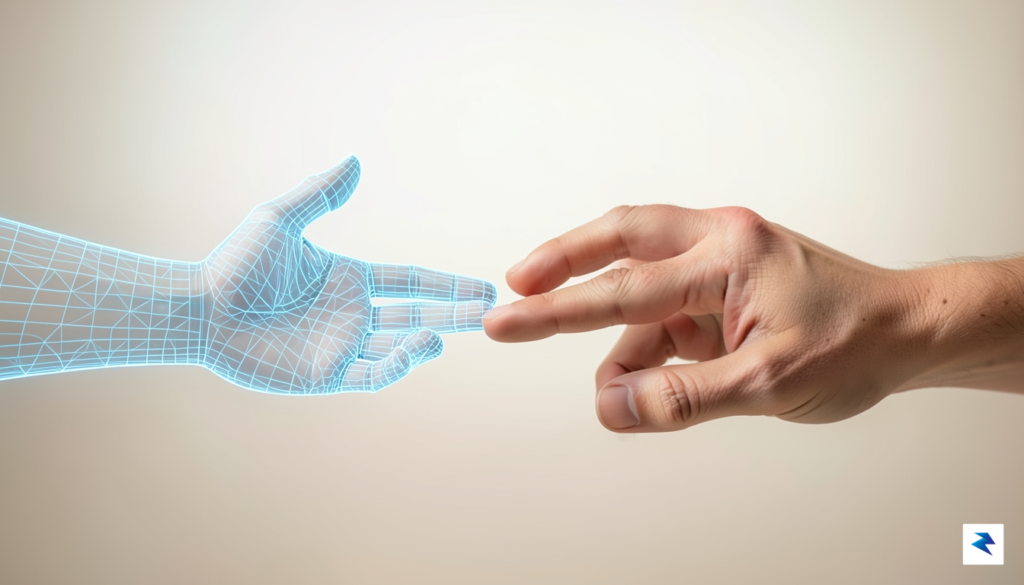
Navigating the complex landscape of artificial intelligence in the modern era presents humanity with a profound challenge, one that demands careful consideration rather than an outright rejection of innovation. The rapid advancement of AI tools offers transformative potential across countless sectors, from medical diagnostics to creative endeavors. However, embracing these advancements does not necessitate a blind leap of faith; instead, it calls for a deliberate and thoughtful recalibration of how we approach technology development, deployment, and governance. The path forward requires a foundational shift towards truly human-centric innovation, ensuring that these powerful systems serve humanity’s best interests while mitigating inherent risks.
To achieve this delicate balance, a robust framework for responsible AI development is imperative. This framework must prioritize transparency at every stage, revealing not only what data AI models are trained on but also the underlying algorithms and decision-making processes that drive their outputs. Furthermore, independent ethical auditing must become a standard practice, rigorously evaluating AI systems for potential biases, unintended consequences, and societal impacts before they are widely adopted. Such audits would provide a crucial layer of accountability, ensuring that technology aligns with our values rather than inadvertently undermining them. Ultimately, fostering an environment where ethical considerations are baked into the very design of AI, rather than being an afterthought, is paramount.

Perhaps the most critical component of this human-centric approach is the unwavering commitment to a “human-in-the-loop” requirement for any significant AI application. This principle dictates that human oversight and intervention remain central, especially in areas with high stakes such as healthcare, legal judgments, or autonomous systems. AI can provide invaluable insights and automate tedious tasks, but the ultimate responsibility and final decision-making authority must always rest with human experts. This ensures that empathy, contextual understanding, and moral judgment—qualities inherently human—are never superseded by algorithmic efficiency alone. By embedding human critical thinking and ethical reasoning into the operational flow, we can effectively manage AI’s utility without ceding our control or our humanity.
Christopher Nolan’s insightful analogy of AI as a “Trojan horse” serves not as a call for Luddism or a retreat from technological progress, but rather as a profound exhortation to vigilance. His concern underscores the potential for powerful systems, seemingly beneficial on the surface, to harbor unforeseen dangers or to be misused if their true implications are not fully understood and controlled. This perspective is a crucial reminder that technology is a tool, and like any powerful tool, its impact depends entirely on the wisdom and foresight of its creators and users. It’s about building the walls of our digital city with careful consideration, ensuring that what we invite in genuinely serves our long-term well-being.
Therefore, the onus is on all of us—creators, policymakers, and everyday users—to demand accountability and intentional design in the digital age. We must collectively advocate for regulations that enforce transparency, mandate ethical reviews, and ensure human oversight in AI development and deployment. As users, our choices and our voices hold significant power; by supporting responsible innovation and challenging opaque or potentially harmful applications, we can actively shape an AI future that is collaborative, equitable, and ultimately empowering for all. Only through this collective commitment to thoughtful integration can we harness the immense potential of AI while safeguarding our shared future.
You must be logged in to post a comment.