Christopher Nolan: Why AI Is a Modern Trojan Horse
The Digital Trojan Horse: Nolan’s Warning on AI Renowned filmmaker Christopher Nolan has recently articulated a profoundly cautionary…
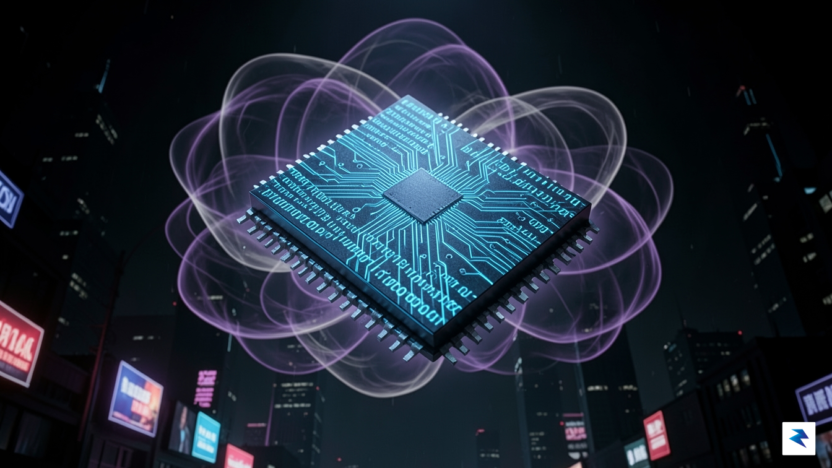

For decades, the bedrock of our digital existence has been the von Neumann architecture, a model defined by the rigid, binary certainty of zeros and ones. In this world, a switch is either “on” or “off,” a path is either taken or ignored, and every logical operation follows a strictly predictable sequence. While this deterministic approach has powered the technological explosion of the silicon age, we are increasingly hitting the physical walls of Moore’s Law. As transistors shrink to the size of individual atoms, the predictable behavior of electricity begins to falter, and the sheer energy required to maintain absolute precision in complex optimization problems—such as logistics, drug discovery, or financial modeling—has become a bottleneck. We are essentially forcing systems designed for perfect clarity to solve problems that are inherently messy and uncertain.
This is where the paradigm of probabilistic computing offers a radical departure. Unlike traditional computing, which treats noise as an enemy to be suppressed or filtered out at any cost, probabilistic computing embraces the fluctuating nature of physical systems as a foundational computational asset. Instead of forcing a transistor into a definitive state, a probabilistic bit—often called a p-bit—is allowed to fluctuate rapidly between states. By leveraging the natural, microscopic thermal noise inherent in electronic components, these systems do not look for a single, linear path to a solution. Instead, they navigate the vast landscape of a problem by exploring multiple possibilities simultaneously, effectively “feeling out” the most likely optimal answer rather than calculating it through brute-force iteration.
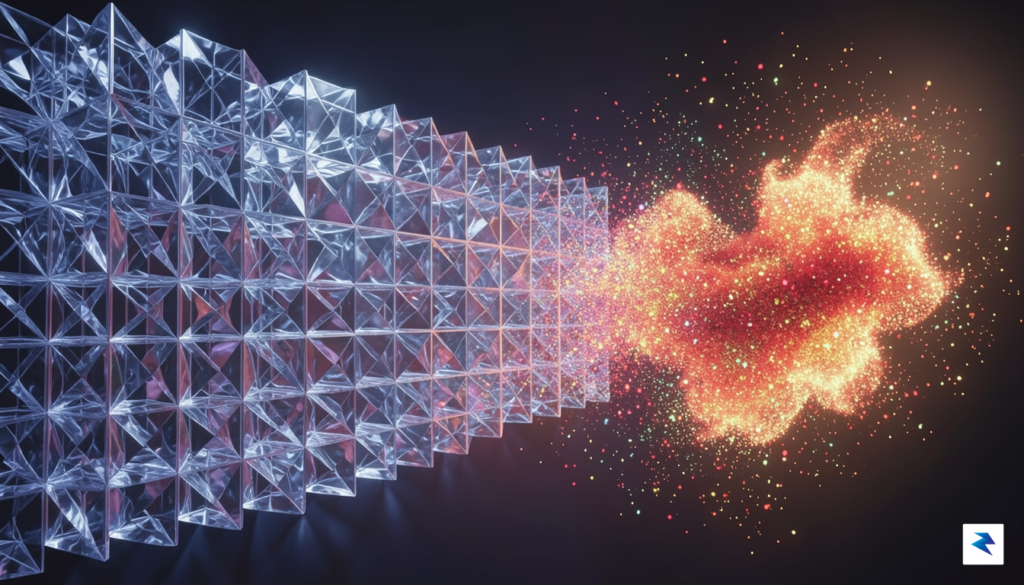
The distinction between these two models is profound. Traditional binary logic is an “all-or-nothing” framework; if a single bit flips incorrectly due to interference, the entire calculation can fail, necessitating complex error-correction protocols. Conversely, probabilistic systems thrive on this fluidity. Because they are designed to operate within a range of probabilities, they are naturally resilient to the very noise that cripples traditional hardware. By shifting from a paradigm of perfect precision to one of statistical confidence, we can solve massive combinatorial problems that would otherwise take current supercomputers years to process. In essence, we are moving from a model that demands an exact answer to one that recognizes that, in a complex universe, the best answer is often the one we can arrive at through the elegant navigation of probability.
By transforming noise from a nuisance into a computational resource, we are moving toward a future where our hardware mimics the fluid, adaptive nature of biological intelligence rather than the static rigidity of a calculator.
As we continue to integrate these probabilistic processors, the goal is not to replace classical computing entirely, but to create a hybrid ecosystem. We will continue to rely on deterministic machines for tasks that require absolute precision, such as basic arithmetic or database management. However, for the complex, high-dimensional challenges that define the frontier of science and artificial intelligence, the probabilistic revolution provides a new toolkit. By accepting that the world is not binary, we are finally building machines that are capable of understanding it as it truly exists: a fluid, dynamic, and interconnected web of probabilities.
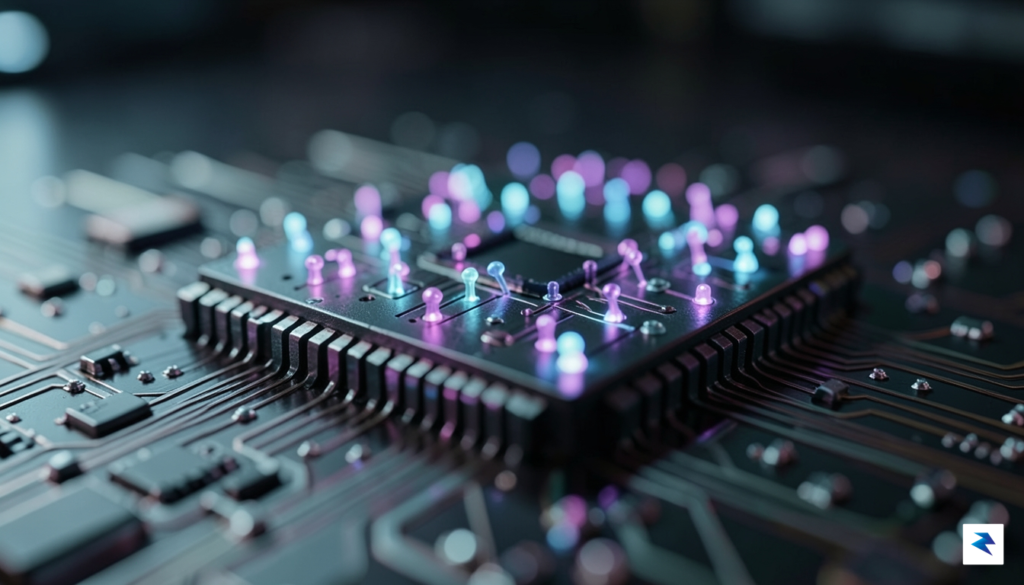
At the foundation of this computational shift is the probabilistic bit, or “p-bit,” a fundamental departure from the rigid binary logic that has governed silicon technology for decades. While a standard bit is strictly deterministic—locked into a state of either zero or one—a p-bit exists in a state of constant, controlled fluctuation. It behaves like a coin spinning endlessly on a tabletop; it is not definitively heads or tails until it is sampled. This behavior is physically realized through magnetic tunnel junctions (MTJs), where the orientation of a free magnetic layer is influenced by thermal noise. By manipulating this noise, engineers can force the p-bit to oscillate rapidly between two states, effectively turning the inherent instability of the physical world into a productive computational resource.
The operational requirements of p-bits provide a distinct advantage over their more famous cousins, the qubits used in quantum computing. Quantum systems are notoriously fragile, often requiring extreme, near-absolute-zero refrigeration to prevent decoherence and maintain their fragile superposition states. In contrast, p-bits are robust and thrive at room temperature. Because they do not rely on the delicate quantum entanglement of subatomic particles, they can be integrated into existing semiconductor manufacturing processes with relative ease. This accessibility means that we can scale these systems to include thousands or even millions of p-bits without the astronomical costs and infrastructure hurdles associated with quantum cooling systems.
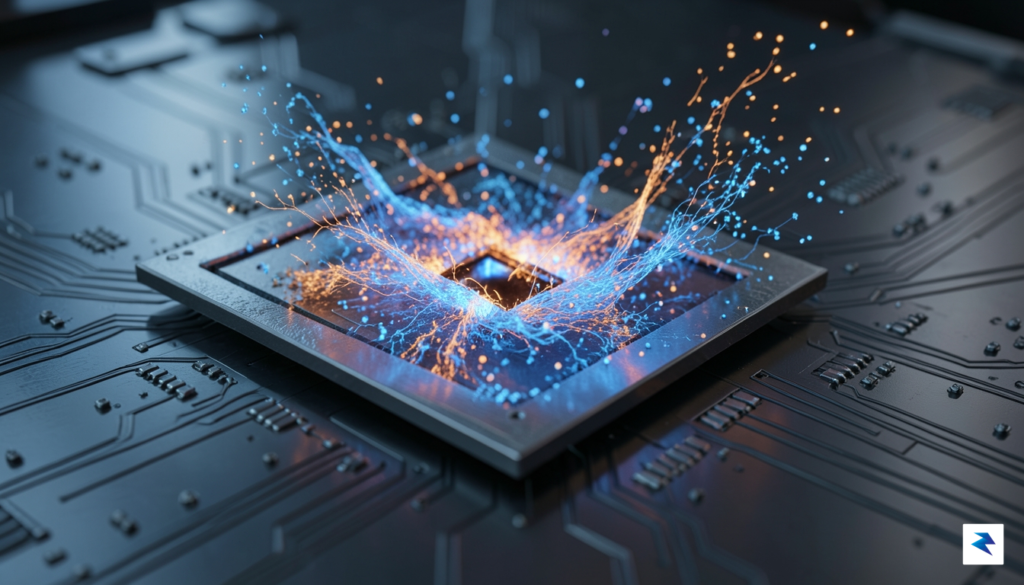
Unlike the binary “on” or “off” of classical bits, or the fragile superposition of qubits, p-bits embrace the chaos of thermal noise, using it as a deliberate engine for solving complex, high-dimensional problems.
The true power of this architecture emerges when these individual p-bits are interconnected. Through a process known as coupling, the state of one p-bit can exert a probabilistic influence on its neighbors, creating a distributed network of interconnected variables. When researchers connect these bits into large-scale arrays, the entire system begins to act as a physical simulation of the problem it is meant to solve. Rather than calculating every possible outcome through a linear sequence of instructions, the network naturally settles into the most probable solution, effectively “feeling” its way toward the answer by exploring the energy landscape of the dataset. This collective behavior allows probabilistic machines to navigate optimization problems—such as those found in logistics, finance, or molecular modeling—that would typically cause even the most powerful classical supercomputers to grind to a halt.
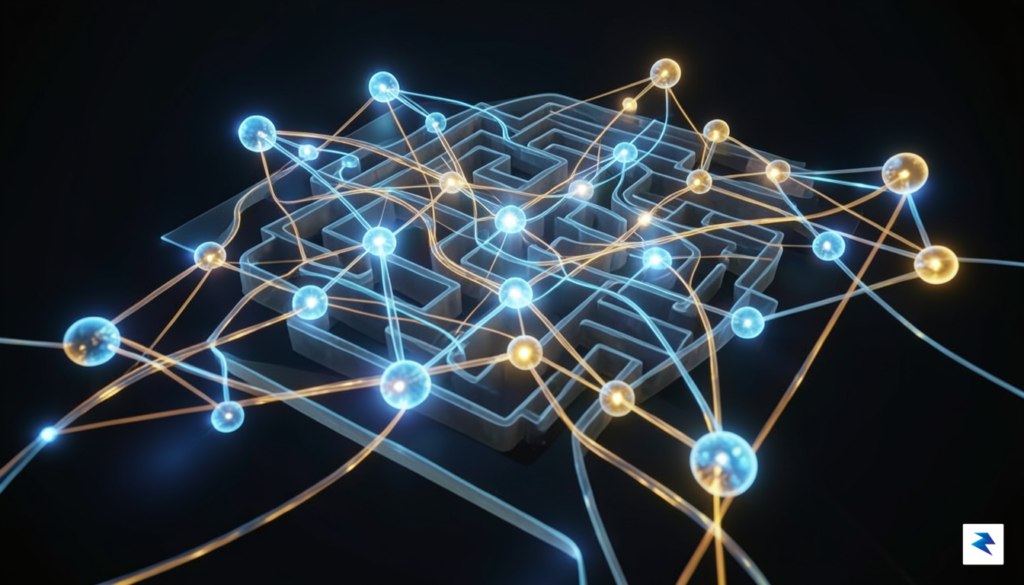
At the heart of modern industry lies a class of challenges known as NP-hard problems, which include everything from optimizing global supply chain logistics and predicting complex protein folding patterns to managing volatile financial portfolios. In simple terms, these problems are defined by their astronomical scale; as the number of variables grows, the number of potential solutions explodes exponentially. Traditional deterministic computers, which rely on rigid, step-by-step logic, often choke under this pressure. To find an optimal answer, they are frequently forced to brute-force their way through an exhaustive search, checking every single permutation until they identify the best one. For complex problems, this approach can take centuries, even with the most powerful supercomputers currently in existence.
Probabilistic computers, however, operate on an entirely different philosophy. Instead of treating computation as a linear path toward a single, certain outcome, these machines harness the inherent randomness of the physical world. Rather than struggling to calculate every possible configuration, a probabilistic machine essentially “settles” into a solution by allowing its internal components to fluctuate. By embracing noise, the computer creates a landscape of potential states, where the most stable or desirable solutions emerge as the most likely outcomes. It is akin to a marble rolling down a rugged mountain range; while a deterministic machine would painstakingly map every inch of the terrain to find the lowest valley, the probabilistic machine simply drops the marble and lets gravity—or in this case, the laws of physics—guide it toward the lowest point.

The efficiency of this sampling approach represents a monumental shift in computational speed. Because these machines do not need to verify every single possibility to arrive at a high-quality answer, they can bypass the exponential bottlenecks that plague conventional architecture. When tackling large-scale combinatorial optimization, the convergence speed of a probabilistic computer is significantly faster, as it effectively ignores the “noise” that doesn’t contribute to a valid solution and rapidly homes in on the most probable configurations. This makes them uniquely suited for real-time decision-making, where the cost of waiting for a perfect solution is often higher than the cost of implementing a near-optimal one immediately.
The power of probabilistic computing lies in its ability to trade absolute, exhaustive certainty for rapid, highly accurate insights in complex environments.
Ultimately, the transition toward probabilistic systems marks a departure from the “all-or-nothing” logic of the digital age. By viewing computation as a dynamic process of settling into stability rather than a rigid sequence of instructions, we unlock the ability to solve problems that were previously deemed intractable. As these machines scale, the capacity to process massive datasets in seconds rather than years will fundamentally reshape our approach to medicine, infrastructure, and global economics, turning the chaotic uncertainty of noise into the foundation for our next era of innovation.
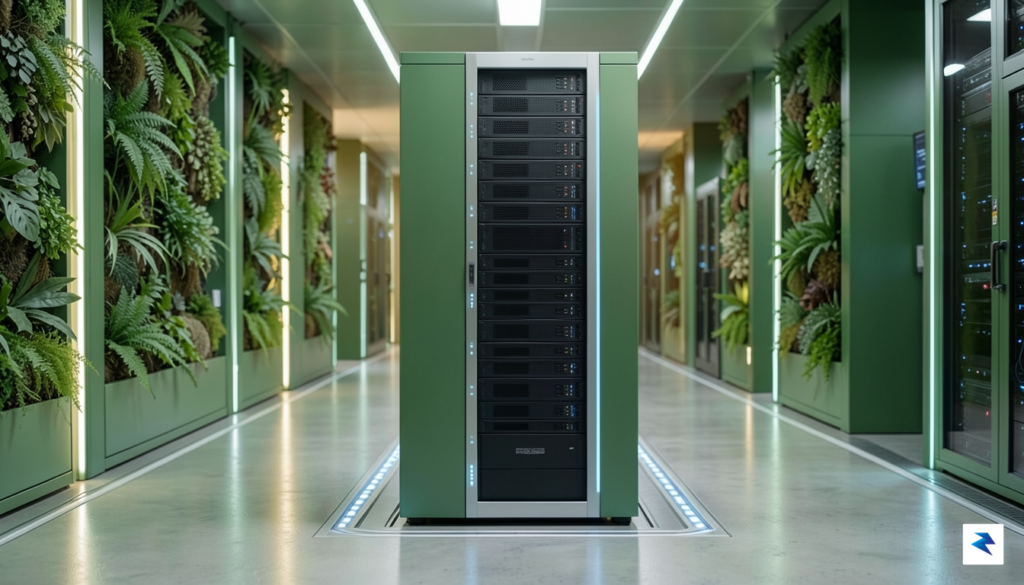
The relentless expansion of artificial intelligence has pushed our current computational infrastructure to its absolute physical limits. As modern data centers grow to the size of small cities, the power required to train massive neural networks is becoming both an environmental crisis and an economic hurdle. Traditional hardware, dominated by high-performance GPUs, relies on millions of energy-guzzling logic gates that must be kept in a precise, deterministic state. This process generates an immense amount of waste heat, necessitating cooling systems that consume nearly as much electricity as the processors themselves. Consequently, the industry is approaching a “power wall” where the energy cost of running more sophisticated models may soon outweigh the utility of the insights they provide.
Probabilistic computing offers a radical departure from this unsustainable trajectory by fundamentally rethinking how we handle information. Rather than fighting the inherent noise present in electrical systems, these new computers embrace it as a core component of the calculation process. In a probabilistic framework, the hardware does not force transistors into rigid “on” or “off” positions, which requires constant energy input to overcome electron jitter. Instead, these systems utilize the natural, stochastic fluctuations of components to explore vast solution spaces rapidly. By transforming what was previously considered “noise” into the very fuel for the computation, probabilistic chips perform complex optimization tasks with a fraction of the energy footprint required by conventional silicon architectures.
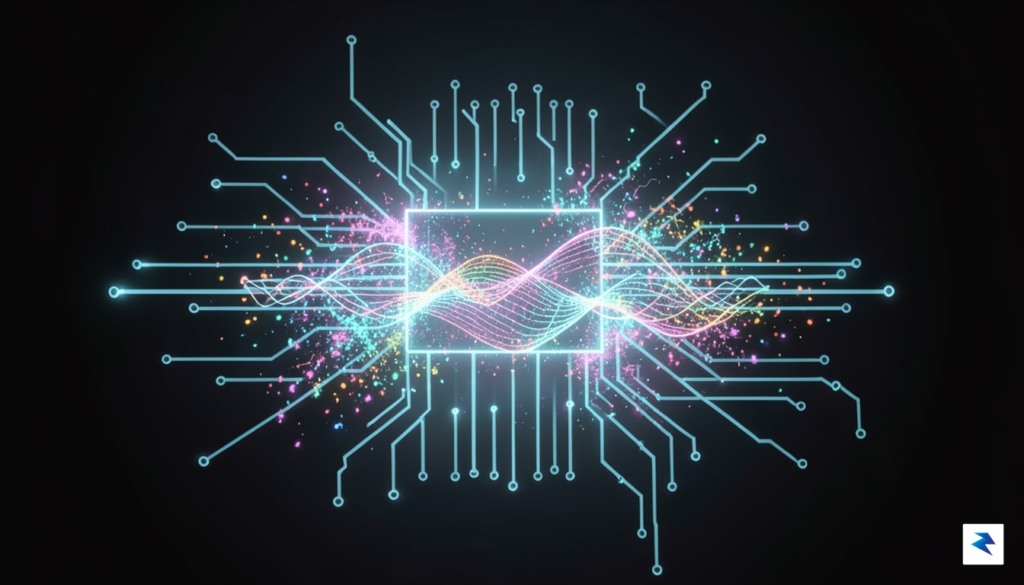
This shift toward probabilistic efficiency carries profound implications for the future of edge computing and high-stakes decision-making. Because these systems function without the need for massive, cooling-intensive server farms, they can be miniaturized and integrated into portable devices that operate on minimal battery power. Imagine an autonomous vehicle or a diagnostic medical device capable of performing complex probabilistic forecasting in real-time, right at the source of the data, rather than relying on a distant, energy-hungry cloud connection. By moving toward hardware that is physically tuned to the nature of the tasks it performs, we are entering an era where high-performance artificial intelligence is no longer tethered to the grid.
The transition to probabilistic hardware represents more than a mere incremental improvement; it is a fundamental reconfiguration of our relationship with energy, proving that the greatest computational efficiency may come from working with, rather than against, the physical laws of our world.
Ultimately, the long-term economic benefits of this technology are as significant as the environmental ones. As organizations look to scale their AI operations, the ability to achieve superior results with lower power consumption will define the next generation of industry leaders. By decoupling computational growth from escalating energy demands, probabilistic computing ensures that the technological progress of the coming decade remains both scalable and sustainable. This is not just a change in how we build computers, but a necessary evolution in how we power the future of human intelligence.
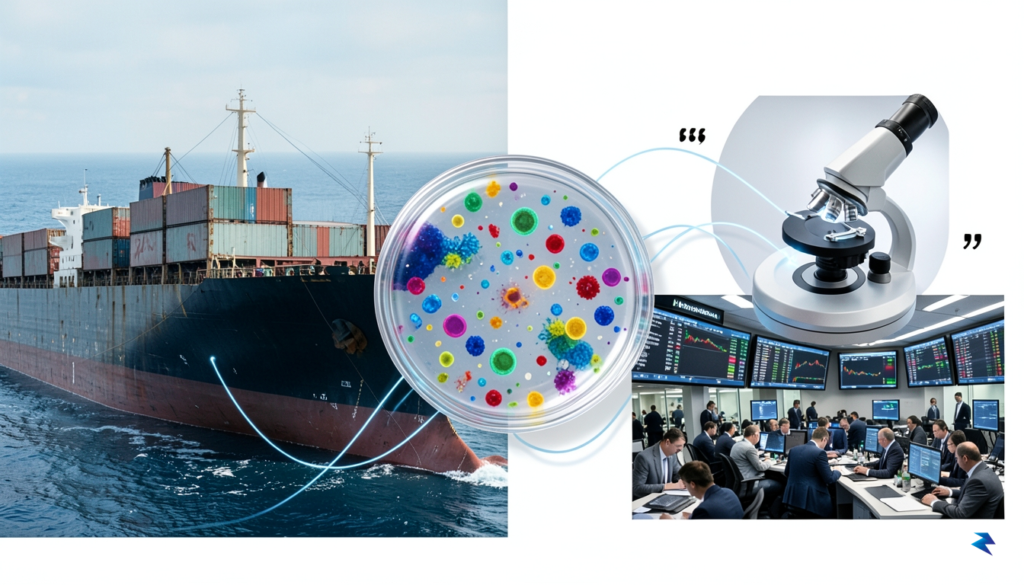
We are currently witnessing the dawn of a new computational era where the inherent unpredictability of the physical world is no longer a hurdle, but a primary asset. As we transition from theoretical models to functional hardware, the potential for probabilistic computing to reshape our most complex industries is becoming increasingly clear. By embracing noise rather than filtering it out, these processors can tackle problems that would leave traditional, deterministic machines caught in an infinite loop of trial and error. This shift promises to move us beyond binary limitations, offering a more nuanced approach to solving the most persistent challenges of the twenty-first century.
The most immediate impact of this technology will likely be felt in fields that require massive parallel exploration of possibilities. In drug discovery, for instance, researchers struggle to simulate how millions of candidate molecules might interact with specific proteins. Probabilistic computers could map these chemical landscapes with unprecedented speed, effectively “sampling” the likelihood of successful reactions rather than calculating every atomistic movement from scratch. Similarly, in the realm of global supply chains, these processors could provide real-time optimization for logistics networks, constantly adjusting to the “noise” of unexpected weather patterns, geopolitical shifts, and sudden market fluctuations to maintain fluid, efficient operations.
Financial modeling and risk assessment represent another fertile ground for this technology. Traditional systems often rely on simplified assumptions to manage market volatility, but probabilistic processors can ingest raw, noisy data to generate more accurate forecasts of complex systemic risks. By treating uncertainty as a fundamental parameter, these systems can identify hidden patterns that deterministic algorithms frequently overlook. As we refine these processors, we expect to see them integrated into financial infrastructure to provide more robust defenses against market turbulence, effectively turning the unpredictability of human behavior into a manageable data set.
It is important to note that probabilistic computing is not intended to replace the classical computers we use today. Instead, the most viable path to commercialization lies in hybrid architectures, where classical CPUs manage structured logic and file management, while probabilistic co-processors handle the heavy lifting of complex, non-deterministic tasks. This tandem approach allows for a “best of both worlds” scenario: the precision of traditional digital logic paired with the creative, heuristic power of probabilistic sampling. This synergy will likely be the standard in data centers within the next decade, acting as an accelerator for everything from artificial intelligence training to advanced climate modeling.
The future of computing isn’t about eliminating noise; it is about learning to speak its language to unlock answers that were previously buried in the static.
Looking ahead, the trajectory of this field points toward miniaturization and wider accessibility. As the hardware becomes more efficient and less resource-intensive, we will likely see these probabilistic capabilities move from massive, specialized research rigs into the cloud, and eventually into edge devices. This evolution will empower smaller organizations and individual researchers to solve high-stakes problems that were once the exclusive domain of massive supercomputing clusters, democratizing the ability to navigate uncertainty and paving the way for a more resilient and innovative industrial landscape.
You must be logged in to post a comment.