
The Internal Crisis: Meta’s AI Unit Under Strain

Meta’s declaration of an “AI-first” future wasn’t just corporate rhetoric; it triggered a profound internal upheaval, particularly within its engineering ranks. The company rapidly consolidated various AI initiatives and talent pools into a powerful, centralized generative AI unit, a move intended to accelerate its competitive standing against rivals like OpenAI and Google. This swift consolidation, while strategically sound from a market perspective, immediately introduced a new layer of complexity and pressure for thousands of employees accustomed to different operational rhythms. The ambitious pivot demanded not just new technologies, but a fundamental reshaping of internal structures and expectations across the board.
This aggressive restructuring, characterized by frequent departmental shifts and reassignments, inevitably generated significant logistical and cultural friction. Engineers and researchers found themselves navigating a rapidly changing landscape, often with unclear reporting lines and evolving project mandates. The sheer speed of the transformation meant that established workflows and team dynamics were frequently disrupted, leading to a sense of instability and uncertainty among many long-serving employees. Furthermore, the push for rapid innovation often clashed with existing corporate processes, creating bottlenecks and frustration as teams struggled to adapt to the new, high-stakes environment.
A critical aspect of this internal transformation involves a significant shift in the very nature of engineering work at Meta. Historically, much of Meta’s engineering prowess has been rooted in product-focused development – iterating features, scaling existing platforms, and optimizing user experiences. However, the new generative AI mandate necessitates a much more research-heavy, experimental approach, focusing on foundational models, algorithmic breakthroughs, and long-term scientific exploration. This paradigm shift has proven challenging for many engineers whose expertise lies in traditional product cycles, requiring them to re-skill rapidly or adapt to a development style that feels fundamentally different from their previous roles. The move has highlighted a growing chasm between those naturally aligned with pure AI research and those more comfortable with immediate, tangible product delivery.
The cumulative effect of these rapid changes, high-pressure demands, and cultural shifts has predictably manifested in declining employee morale. Internal surveys and leaked communications paint a picture of widespread dissatisfaction within the newly formed AI divisions. Reports suggest a palpable sense of burnout, with employees struggling to meet aggressive deadlines while simultaneously adapting to new organizational structures and technical challenges. These internal conversations often reveal frustration over perceived lack of clear direction, unrealistic expectations, and a feeling that the company’s ambitious goals are coming at a significant personal cost to its workforce. The “revolt” isn’t an organized walkout, but rather a simmering discontent reflected in declining engagement and increased attrition risks.
Ultimately, the internal turmoil within Meta’s AI unit underscores a critical challenge for any tech giant attempting a rapid, large-scale transformation: the human element. While the the strategic imperative to dominate the AI landscape is clear, the long-term success of this pivot hinges not just on technological breakthroughs, but on the company’s ability to maintain a motivated and cohesive workforce. Managing employee burnout, fostering a culture that embraces both product and research, and providing clear pathways for adaptation will be crucial. Without addressing these internal strains effectively, Meta risks undermining its own ambitious “AI-first” vision from within, potentially slowing its progress despite its formidable resources and talent.
Beyond the Hype: Why Meta Employees Are Pushing Back

At the heart of the current unrest within Meta lies a phenomenon that employees have colloquially dubbed “pivot fatigue.” For years, the engineering culture was defined by a steady, iterative approach to product development, but that rhythm has been fundamentally shattered by the company’s desperate, high-speed scramble to dominate the generative AI sector. When the mandate shifts from refining core social infrastructure to chasing the latest large language model trend, long-term engineering stability becomes a casualty. Developers who once took pride in shipping robust, durable code now find themselves abandoning half-finished projects to satisfy the shifting whims of executive directives, leading to a profound sense of professional nihilism.
This dissonance between the ivory tower of executive vision and the operational reality on the ground has created a palpable frustration among the rank-and-file. Leadership often presents a cohesive, forward-looking narrative of a “Metaverse-to-AI” transformation, yet the day-to-day experience for an engineer involves navigating a labyrinth of unclear Key Performance Indicators (KPIs) and abruptly reallocated resources. While management touts the agility of the organization, the workforce increasingly views this as a lack of strategic conviction. The result is a demoralizing cycle where projects are launched with immense fanfare, only to be deprioritized months later, leaving teams to clean up the technical debt of abandoned experiments.
The core of the crisis is not a lack of talent, but a crisis of purpose; when the goalposts are moved weekly, the intrinsic motivation required to solve complex technical problems inevitably begins to erode.
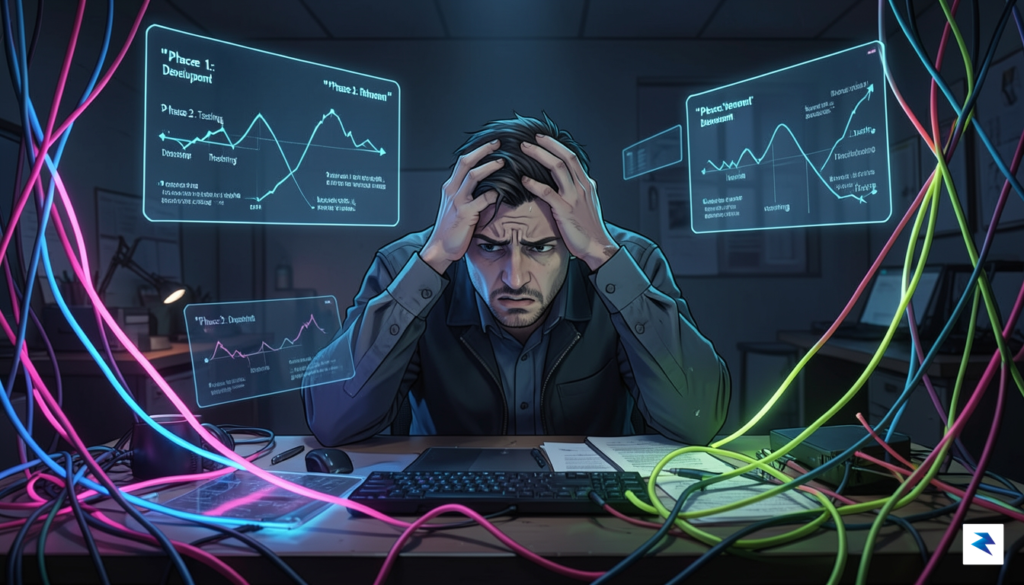
The impact of this volatility has been felt most acutely by middle management, who are tasked with shielding their reports from executive chaos while simultaneously enforcing these rapid-fire pivots. These managers are caught in a precarious vice, forced to maintain team morale while acknowledging that the very projects they are overseeing may be canceled by the next quarterly review. This instability has led to a breakdown in trust, as the traditional career ladders and performance metrics have become obscured by the constant organizational restructuring. Instead of focusing on technical excellence, engineers and managers alike are spending an increasing amount of time navigating internal politics and trying to decipher the latest strategic mandate from the top.
Furthermore, the pressure to maintain a breakneck pace of innovation has exacerbated a culture of burnout that transcends standard industry expectations. When the expectation is to deliver AI-driven features at a pace that disregards sustainable development cycles, the result is a workforce that feels commodified rather than empowered. As these employees look toward the future, the primary concern is no longer just about the technical feasibility of Meta’s goals, but the viability of a career path within a company that seems to value rapid iteration over the long-term health and retention of its most valuable asset: its engineers.
The Secretive Influence of Silicon Valley’s Elite

The turmoil currently roiling Meta’s AI division is rarely just a story of technical debt or mismanaged product roadmaps; it is a symptom of a broader, deeply entrenched culture of ideological consolidation. Silicon Valley has long functioned as a network of interconnected power players, where decisions at the highest levels of corporate strategy are frequently forged in private, exclusive circles rather than through the transparent mechanisms of the free market. Figures like Peter Thiel have historically championed a philosophy that prioritizes concentrated control and visionary insulation, creating a blueprint where institutional trajectory is dictated by a small, elite cohort. When this ethos of “insider-led” development meets the massive, lumbering machinery of a company like Meta, the result is an inevitable friction between the C-suite’s grand geopolitical ambitions and the daily realities of an alienated workforce.

This reliance on insular, ideological power structures has profound implications for how tech giants approach the development of artificial intelligence. By examining the influence of venture capital philosophies that emphasize aggressive growth and ideological homogeneity, we can see why internal dissent is often met with systemic dismissal. At firms where the leadership views themselves as architects of civilization rather than mere service providers, the internal culture often shifts from collaborative innovation to a form of top-down dogma. The recent unrest at Meta suggests that employees are becoming increasingly aware of this divide, recognizing that their labor is being funneled into projects that serve a specific, elite-driven vision of the future—one that often lacks the ethical guardrails that a more decentralized, transparent corporate governance model might provide.
The true trajectory of modern technology is rarely dictated by user demand; it is shaped by the insular alliances and long-term ideological goals of those who control the capital and the infrastructure.
Furthermore, the crossover between corporate governance and personal influence networks is not a new phenomenon, but it has become significantly more dangerous as AI technologies consolidate power at unprecedented scales. When the same ideological threads connect prominent venture capitalists, political influencers, and the architects of global social media platforms, the line between product innovation and political engineering blurs. This centralization of influence means that when a company faces an internal crisis, the response is rarely a recalibration toward employee well-being or public interest. Instead, the response is almost always a doubling down on the original, high-stakes strategy. For the workers on the ground, this signals that their professional dysfunction is not a bug in the system, but a fundamental feature of an industry that prioritizes elite consolidation over the stability of its own workforce.
Political Maneuvering: SBF and the Washington Connection

The saga of Sam Bankman-Fried serves as a stark, cautionary masterclass in the perils of attempting to bridge the gap between Silicon Valley’s disruptive ambition and the rigid corridors of Washington D.C. For a time, Bankman-Fried operated as the industry’s golden child, pouring millions into political coffers and positioning himself as the primary architect of future crypto regulation. His strategy was not merely about individual influence; it was a calculated attempt to curate a bespoke regulatory environment that favored his specific business model under the guise of protecting the public interest. This maneuver highlights a recurring trend among contemporary tech titans: the belief that they can—and should—outpace government oversight by drafting the very rules meant to constrain them.
When the “move fast and break things” mantra of the early internet era hits the immovable object of federal compliance, the results are often chaotic and, in the case of FTX, catastrophic. Tech leaders frequently view regulation as a secondary hurdle to be managed rather than a foundational requirement, leading to a culture where political lobbying is prioritized over internal governance and risk management. By treating political favor as a commodity to be purchased, these leaders often find themselves increasingly detached from the operational realities of their companies. This creates a dangerous feedback loop where the CEO is preoccupied with curating an image of “responsible innovation” on Capitol Hill while the actual infrastructure of the business begins to fray from neglect.
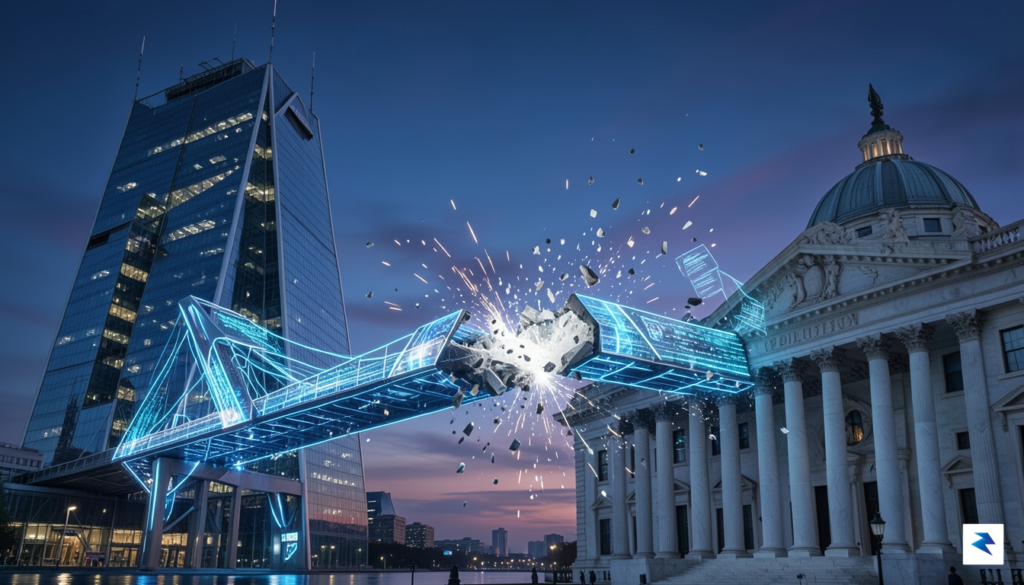
The ripple effects of this political theater are felt acutely by the employees left to manage the fallout. When a company’s leadership is perceived as being more interested in shaping federal policy or curating personal political capital than in fostering a stable internal environment, morale inevitably suffers. Employees are quick to recognize when the “mission” of the company is sacrificed for the sake of political maneuvering. This disconnect feeds into a broader sense of disillusionment, particularly in sectors like AI, where the pressure to innovate is constant and the ethical stakes are incredibly high.
The attempt to influence the regulatory landscape is often framed as a service to the industry, but it frequently acts as a smokescreen for unchecked corporate expansion.
Ultimately, the SBF case underscores why the intersection of finance, technology, and politics is increasingly fraught with danger. As tech executives continue to insert themselves into the political process, the lines between legitimate advocacy and self-serving manipulation become dangerously blurred. For the broader workforce, these distractions serve as a reminder that executive priorities often diverge significantly from the daily reality of those building the products. When leaders prioritize the halls of power over the health of their own organizations, they risk not only their personal reputations but the very viability of the platforms they have spent years constructing.
The Future of AI Culture and Corporate Governance

The current turbulence within Silicon Valley’s largest firms suggests that the traditional model of corporate governance—one defined by top-down mandates and the relentless pursuit of scale—is rapidly approaching its expiration date. When internal labor unrest meets the existential stakes of artificial intelligence development, the resulting friction creates a significant risk of institutional decay. Companies that treat their engineering talent as mere cogs in an algorithmic machine will inevitably face a hollowed-out workforce, where high salaries are insufficient compensation for a loss of purpose or ethical agency. If leadership continues to prioritize aggressive deployment cycles over the voices of the very experts building these systems, they risk not only talent flight but a permanent erosion of the trust required to innovate safely and effectively.
Looking ahead, the power dynamics of the tech industry are poised for a fundamental recalibration. We are moving toward a labor market where high-level AI researchers and engineers increasingly demand a seat at the table regarding product ethics and long-term research strategy. This shift is not merely about collective bargaining or unionization; it is about the integration of moral accountability into the corporate DNA. Firms that successfully navigate this transition will be those that establish transparent channels for internal dissent, allowing engineers to challenge the speed of development without fear of reprisal. By fostering a culture where technical excellence is balanced with rigorous ethical reflection, these organizations can transform internal friction from a destructive force into a mechanism for better, more responsible product development.
The sustainability of the AI revolution depends less on the raw power of the next model and more on the stability and integrity of the teams tasked with bringing it to life.
Ultimately, the long-term viability of current AI development practices hinges on a move away from the “move fast and break things” ethos that once defined the industry’s infancy. Sustainability in this context requires a commitment to psychological safety, where the pressure to innovate does not override the necessity for careful, deliberative progress. Leaders must recognize that their most valuable assets are not the GPU clusters they manage, but the intellectual and moral capital of their employees. If tech giants fail to align their corporate governance with the values of the next generation of engineers, they will find themselves managing nothing more than empty offices and legacy codebases, while the true architects of the future migrate toward environments that respect both human agency and technical responsibility.