
The Illusion of Control: Why Digital Export Restrictions Fail

For decades, governments worldwide have grappled with the complex challenge of regulating the flow of information and technology across borders. The concept of “cyber export controls” emerged from this struggle, attempting to apply the established frameworks for controlling physical munitions, weapons systems, and dual-use technologies to the intangible realm of software, encryption, and cyber-tools. This approach inherently assumes that digital code can be contained, tracked, and restricted with the same efficacy as a physical shipment of arms, requiring licenses, customs checks, and international treaties to prevent it from falling into the wrong hands. However, the very nature of digital information fundamentally undermines these traditional control mechanisms, creating a persistent illusion that such restrictions can truly halt its spread.
The critical distinction lies in the inherent characteristics of physical weaponry versus digital code. A tank, a missile, or a rifle possesses mass; it must be manufactured in a specific location, transported physically, and occupies a tangible space. Its movement across national borders is a physical event, subject to inspection and interdiction by border authorities. Digital code, conversely, is a sequence of bits, an idea made manifest in a language that computers understand. It has no physical form, can be copied infinitely without degradation, and traverses national boundaries at the speed of light, transmitted instantly across networks and satellites. This fundamental difference renders the entire premise of physical export controls—designed for a world of atoms—largely impotent in the world of bits.
Once digital code, especially powerful encryption algorithms or sophisticated cyber-tools, is written and released into the wild, it is akin to a genie escaping its bottle. The “cat is out of the bag” the moment the first copy is made available, whether intentionally or accidentally. This could be through an open-source project, a public forum, a peer-to-peer network, or even a simple email attachment. Unlike a physical weapon that can be seized or destroyed, digital code, once disseminated, becomes virtually impossible to recall, erase, or contain within predefined geographical boundaries. It exists simultaneously in countless locations, accessible to anyone with an internet connection, making any attempt at physical-style trade restrictions not merely difficult, but fundamentally obsolete.
History is replete with examples that underscore this reality, perhaps most famously during the “Crypto Wars” of the 1990s. Governments, particularly the United States, attempted to classify strong encryption software like PGP (Pretty Good Privacy) as munitions, imposing severe restrictions on its export. The rationale was that such tools could be used by adversaries or criminals, compromising national security and law enforcement efforts. Yet, these efforts largely failed. PGP, though initially facing export challenges, eventually found its way globally, often via ingenious methods like printing its source code in books and exporting them as “free speech.” The absurdity highlighted the futility of treating algorithms as weapons, demonstrating that ideas, once articulated, cannot be effectively locked behind national borders or customs declarations.
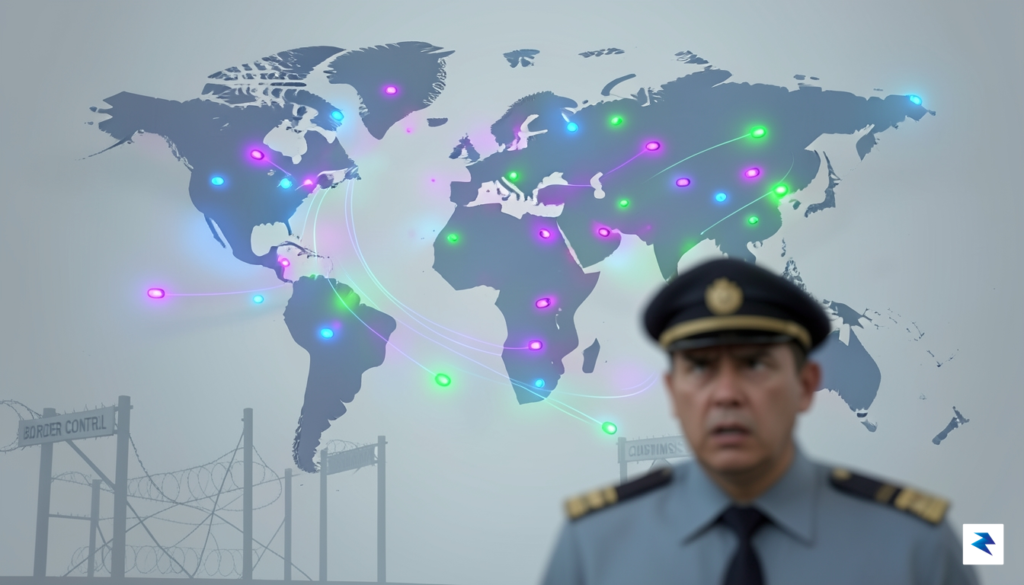
The borderless nature of the internet further exacerbates the ineffectiveness of these controls. A server hosted in one country can provide access to software for users in any other country, circumventing national export laws with ease. Developers from diverse nations collaborate on projects, sharing code and knowledge instantaneously, creating a global digital commons that defies geographical limitations. This inherent fluidity means that any attempt to restrict the flow of digital tools based on national origin or destination is akin to trying to hold water in a sieve—the information will inevitably find a way to flow through the cracks, rendering such legislative and regulatory efforts largely symbolic rather than truly effective. The persistent historical pattern suggests that instead of containing innovation, such controls often merely delay its inevitable global diffusion or, worse, drive it underground, making it harder to monitor and understand.
The PGP Era: A Lesson in Borderless Mathematics
During the nascent years of the internet in the 1990s, a pivotal clash between governmental control and digital freedom erupted, laying down a foundational blueprint for all subsequent attempts to regulate information in the digital age. This conflict centered squarely on Pretty Good Privacy (PGP), a groundbreaking encryption program developed by Phil Zimmermann. As digital communication began to flourish, the US government, viewing strong encryption as a tool that could potentially undermine national security and law enforcement efforts, took an unprecedented and ultimately futile step: it classified encryption software as a “munition.” This meant that exporting PGP, or even making it available internationally, was considered akin to shipping weapons, subjecting developers and users to stringent export controls and potential criminal charges.
The implications of this classification were profound and immediately controversial. Treating lines of code—mathematical algorithms designed to secure private communications—as armaments sparked outrage among cryptographers, civil liberties advocates, and early internet pioneers. They argued vociferously that such a stance was not only an overreach of governmental power but also fundamentally illogical. How could an algorithm, a series of mathematical instructions, be contained by physical borders or regulated by export licenses designed for tanks and missiles? The government’s intent was clear: to maintain a strategic advantage in intelligence gathering by limiting access to tools that could render communications unreadable to surveillance. However, this perspective failed to grasp the inherent nature of information in a rapidly globalizing digital world.
Undeterred by legal threats, the burgeoning community of digital rights activists and privacy advocates devised ingenious methods to circumvent these restrictive laws, effectively exposing their impotence. One of the most famous acts of defiance involved printing the PGP source code in books, turning what was legally classified as a munition into constitutionally protected speech. These books were then exported globally, proving that once an idea, especially a mathematical one, is expressed, it cannot be contained. Furthermore, the code was shared internationally via bulletin board systems and early internet forums, demonstrating that the very architecture of the internet inherently defied geographical restrictions. This decentralized, borderless dissemination rendered the government’s export controls toothless, as the “munition” spread globally through sheer intellectual willpower and distributed networks.

The PGP saga ultimately served as a powerful, early lesson: mathematical truths, once discovered and disseminated, cannot be unlearned or effectively restricted by national legislation. This pivotal battle not only solidified the right to use strong encryption for personal privacy but also set a crucial precedent for the entire digital age. It underscored the fundamental truth that information flows freely across digital borders, challenging traditional notions of sovereignty and control. The government’s failed attempt to classify PGP as a weapon inadvertently cemented its legacy as a symbol of digital freedom, paving the way for the pervasive encryption that underpins modern internet security and privacy, from secure online banking to encrypted messaging apps, proving that the digital revolution truly made mathematics borderless.
Modern Surveillance: How Spyware Evades the Regulatory Net

The landscape of digital security has shifted dramatically from the era of PGP encryption, where the primary concern was the government’s attempt to restrict mathematical tools, to a modern reality defined by a thriving, opaque market for commercial spyware. Companies like NSO Group and their contemporaries have effectively turned the concept of export controls into little more than a bureaucratic tax. By deliberately rebranding their sophisticated surveillance capabilities as “security research tools” or “investigative software for law enforcement,” these vendors exploit a fundamental weakness in international regulatory frameworks: the inability to distinguish between defensive infrastructure and offensive exploitation.
This exploitation of the “dual-use” dilemma creates a massive loophole that current treaties are ill-equipped to close. While export controls like the Wassenaar Arrangement were designed to prevent the proliferation of military-grade hardware, they struggle to categorize software that can be updated or repurposed remotely. When a vendor sells a platform designed to bypass end-to-end encryption, they are essentially selling a weapon, yet they classify the transaction as a commercial service agreement for “cybersecurity forensic services.” This semantic maneuvering allows these firms to move freely across borders, effectively bypassing the spirit of international arms treaties while hiding behind the veneer of legitimate business operations.
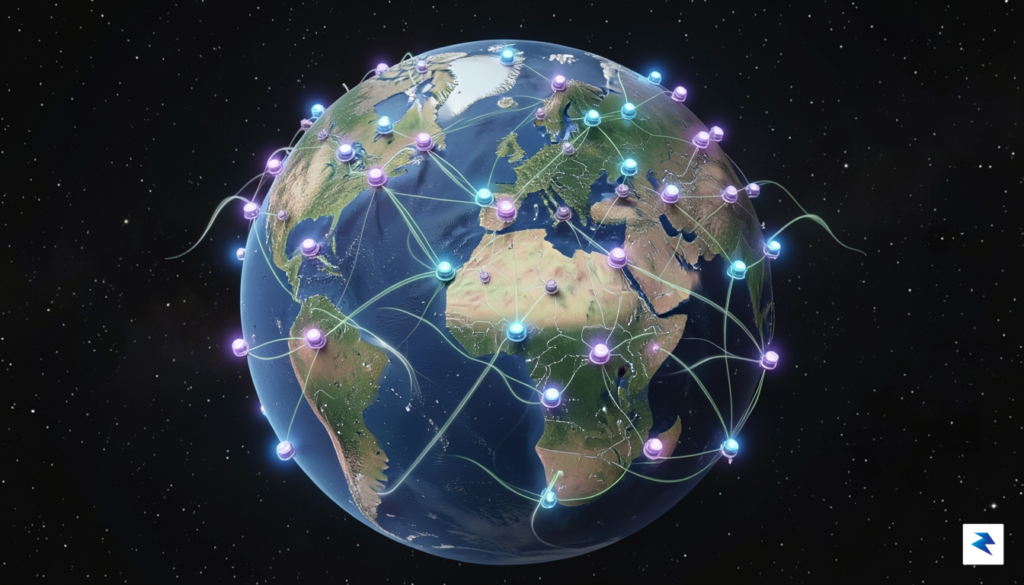
The regulatory failure is compounded by the fact that these companies often operate within a patchwork of international jurisdictions, choosing to house their intellectual property in one country while maintaining sales offices in another. When a specific tool is sanctioned or faces public scrutiny, these entities often simply pivot, reincorporating under new names or shifting their operational hubs to jurisdictions with lax oversight. This “whack-a-mole” approach to enforcement ensures that the technology remains perpetually ahead of the legislation meant to constrain it.
The core of the issue lies in the fact that code is inherently fluid; once a vulnerability is discovered and weaponized, it cannot be “un-invented” or easily quarantined by a border agent.
Furthermore, the reliance on self-reporting by these vendors creates a profound conflict of interest. Because governments are often the primary customers for this software, there is little political appetite to enforce rigorous standards that might limit the capabilities of their own intelligence agencies. Instead of a robust firewall against misuse, we are left with a system of “voluntary” compliance that serves as a mere administrative hurdle for companies that have already priced the risk of legal sanction into their business models. Consequently, the digital arms race continues unabated, fueled by a regulatory net that is designed to catch minnows while allowing the sharks to swim through the gaps.
Mythos and the New Frontier of Code Regulation

The emergence of Mythos represents the latest chapter in a long-standing struggle between state-led efforts to control technological dissemination and the borderless nature of modern software development. At its core, Mythos is a sophisticated framework designed to automate advanced cryptographic verification and secure decentralized data processing, capabilities that have caught the attention of government regulators worldwide. Because the technology possesses inherent dual-use potential—capable of both securing private communications and obscuring malicious digital traffic—officials have moved swiftly to place Mythos under restrictive export controls. These mandates aim to limit who can access the source code and how it can be distributed across international jurisdictions, effectively attempting to treat intangible code as if it were a physical shipment of weapons-grade hardware.

However, the attempt to contain Mythos has been met with immediate and practical resistance from the global developer community, mirroring the historical failures of early cryptography regulation. Much like the PGP era, where developers famously printed source code on t-shirts or distributed it via academic papers to circumvent restrictive laws, the Mythos community has leveraged the inherent design of decentralized repositories to bypass these new barriers. By utilizing distributed version control systems and peer-to-peer distribution networks, developers have rendered traditional export controls essentially moot. These restrictions struggle to account for the reality that once a piece of logic is understood by the global network, it cannot be “un-invented” or pulled back behind a national border, regardless of the legal framework surrounding it.
The core fallacy of modern digital export control lies in the belief that software can be contained within a jurisdiction when the very infrastructure of the internet is built to facilitate the rapid exchange of information.
This persistent cat-and-mouse game suggests that the “export control” mindset is fundamentally broken when applied to the digital frontier. Regulators continue to operate under the assumption that code can be treated as a proprietary material asset, ignoring the fact that software is inherently an abstract mathematical expression rather than a tangible commodity. When developers encounter these barriers, their instinct is not to comply, but to innovate around the restriction, often resulting in more robust, decentralized, and harder-to-track versions of the original technology. By attempting to bottle up Mythos, policymakers are inadvertently accelerating the development of tools that ensure no single entity can ever exercise control over the digital landscape again.
The Unintended Consequences for Global Innovation

When governments attempt to treat software code as a physical commodity subject to export controls, the result is rarely the containment of threats; instead, it is the systematic erosion of the global security ecosystem. By imposing rigid bureaucratic hurdles on the exchange of cryptographic research and security patches, regulators inadvertently cast a chilling effect over open-source collaboration. Developers and researchers, fearing the legal repercussions of accidentally violating “dual-use” restrictions, often choose to silo their findings or abstain from contributing to international projects altogether. This isolationist approach does little to stop malicious actors, who operate outside the bounds of international law, but it effectively silences the very community responsible for hardening the infrastructure that powers the modern economy.
The concept of “dual-use” is particularly problematic in the digital realm, as it essentially categorizes any tool capable of encryption or vulnerability analysis as a potential weapon. This classification creates a dangerous paradox where security researchers are discouraged from sharing insights that could patch critical vulnerabilities. When the free exchange of security intelligence is curtailed, the only people left in the dark are the defenders. Sophisticated threat actors, who have no interest in regulatory compliance, continue to share their own research and exploit kits in private, underground forums. Consequently, export controls create a security vacuum, leaving the digital landscape more vulnerable than it was before the restrictions were enacted.

Furthermore, these regulations trigger a significant “brain drain” as talent migrates toward jurisdictions with more open, innovation-friendly policies. When brilliant minds are barred from collaborating on the next generation of privacy-enhancing technologies due to outdated legal frameworks, they naturally gravitate toward environments where their expertise is encouraged rather than criminalized. This loss of human capital is perhaps the most damaging long-term consequence of misguided trade policy, as it diminishes a nation’s capacity to lead in critical technological sectors. True national security cannot be achieved by hoarding secrets or restricting the flow of information in a globally connected world.
True digital resilience is built through the collective scrutiny of the global community, not through the artificial containment of ideas.
Ultimately, the history of export controls reveals a fundamental misunderstanding of how software development functions. Robust, secure systems are the product of continuous, transparent auditing and peer review. By attempting to treat digital innovation as a state-controlled resource, governments only succeed in weakening the very software upon which their own security depends. If the goal is to protect citizens and institutions, the focus must shift from restricting access to code to fostering a collaborative environment where security researchers are empowered to identify and resolve threats before they can be exploited.
Rethinking Cybersecurity Policy in an Open Source World

The persistent failure of export controls to contain the proliferation of encryption and advanced cybersecurity tools reveals a fundamental truth: digital information is inherently fluid and impossible to gatekeep. As we look toward the future, the policy focus must pivot away from the futile attempt to treat code like physical munitions and instead toward the creation of a resilient, defensive infrastructure. Governments that invest in robust domestic cybersecurity—prioritizing secure-by-design principles, widespread encryption adoption, and the rapid patching of vulnerabilities—will be far better positioned than those attempting to build digital walls. By hardening the target rather than trying to restrict the weapon, nations can mitigate the risks posed by adversarial actors regardless of the tools at their disposal.

Beyond domestic hardening, the path forward requires a rigorous commitment to international cooperation on cyber-norms. In a world where digital threats ignore sovereign borders, isolationist policies only serve to hinder the collective intelligence needed to combat systemic vulnerabilities. We must move toward frameworks that prioritize transparency and accountability, encouraging nations to engage in responsible disclosure practices rather than hoarding exploits for clandestine use. When states collaborate on threat intelligence and establish clear boundaries regarding the targeting of civilian critical infrastructure, they create a global environment where the cost of offensive operations rises, effectively disincentivizing malicious behavior through diplomatic and technical pressure rather than failed bureaucratic prohibitions.
True security in the digital age is not found in the prohibition of tools, but in the collaborative strength of the systems we build together.
Ultimately, the era of attempting to regulate the digital frontier through restriction is over; the only effective way to counter the risks inherent in our interconnected world is through open collaboration. By embracing the open-source ethos that drives technological innovation, we can foster a global community where security researchers, private enterprises, and governments work in tandem to identify and neutralize threats before they can be exploited. This transition requires a fundamental shift in perspective: recognizing that the democratization of technology is an inevitability, not a threat to be contained. By fostering an ecosystem of shared knowledge and defensive solidarity, we can build a future where our collective strength becomes our most effective shield against those who would seek to do us harm.