
Run Frontier AI Locally: A Guide to Nativ on macOS
Introduction: The New Era of Local AI on macOS For years, the promise of artificial intelligence felt inextricably tethered to the cloud. We…
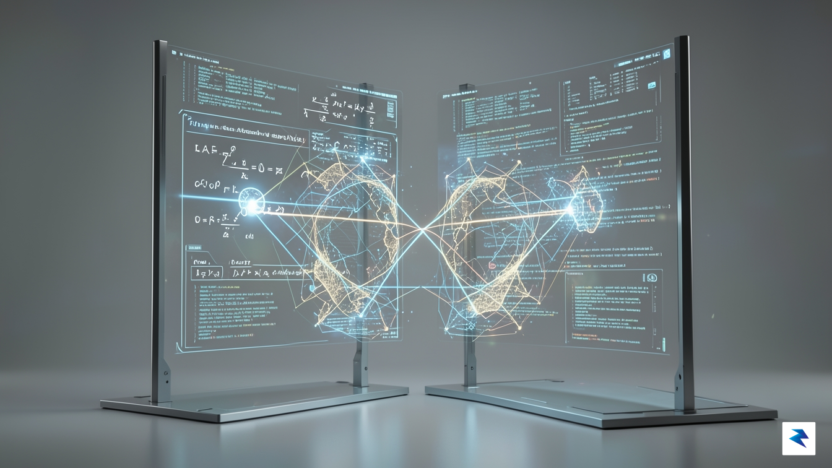
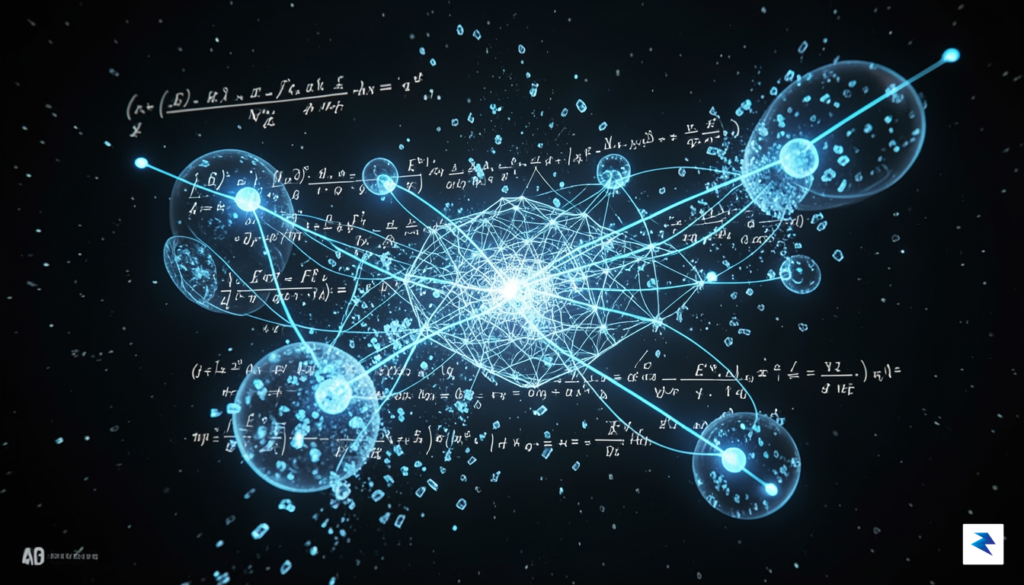
For centuries, the pursuit of mathematical truth has been defined by a solitary, rigorous dance between human intuition and the unforgiving nature of logic. A mathematician would labor for years, building an elegant architecture of proofs, only to have their life’s work dismantled by the discovery of a single counterexample—a rogue case that defies the proposed rule. This act of finding a counterexample was once considered the ultimate litmus test for human brilliance; it required a rare combination of creative insight, obsessive scrutiny, and the ability to spot a hairline fracture in a seemingly perfect theory. It was the mathematician’s primary duty to act as both architect and demolition expert, ensuring that the foundations of our numerical world remained unshakable.
Today, that long-standing narrative is undergoing a radical, irreversible transformation. We are entering an era where the discovery of these critical flaws is no longer the exclusive domain of the human intellect. Advanced computational systems and formal verification tools, such as the Lean theorem prover, are scanning the landscape of abstract conjectures with a tireless, mechanical efficiency that far outstrips the pace of the human mind. Where a human might spend a career searching for a specific edge case that contradicts a theorem, automated systems can now generate, test, and iterate through millions of possibilities in a matter of seconds. These digital entities do not tire, nor do they suffer from the cognitive biases that often lead humans to overlook the very exceptions they are searching for.
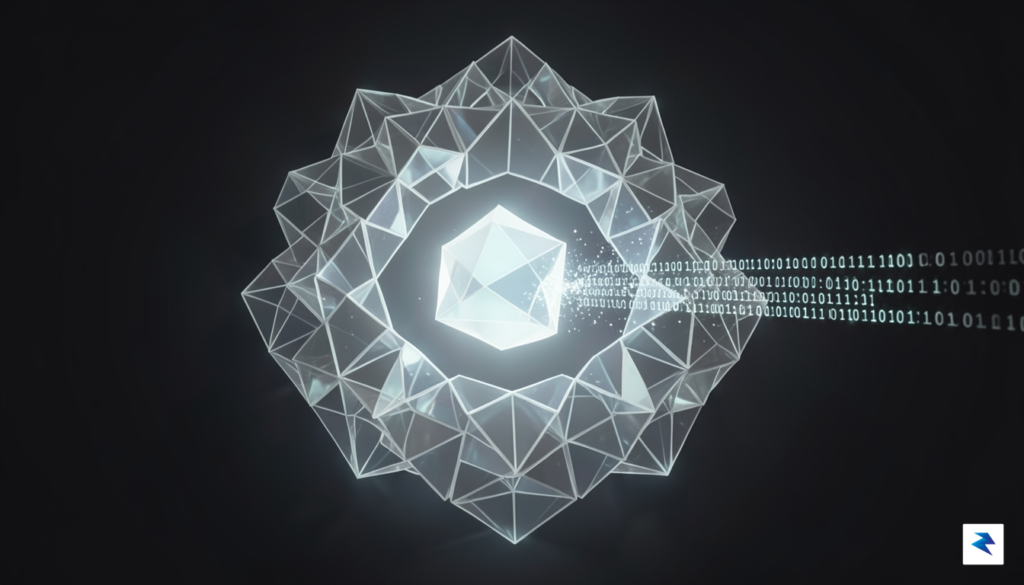
This shift represents more than just a change in methodology; it fundamentally alters the rhythm of discovery within the mathematical community. As automated solvers begin to “outcounterexample” the most seasoned researchers, the gap between what we can hypothesize and what we can verify is narrowing at an unprecedented rate. This evolution poses a profound, existential question for the field: What happens to the identity of the human mathematician when our most cherished method of discovery—the identification of the exception—is outsourced to silicon? If our primary role was to serve as the guardians of logical consistency, are we now transitioning into the role of mere spectators, or can we find a new, higher-level purpose in this age of machine-driven exploration?
The true test of a theory is not its beauty, but its resilience under the pressure of counter-evidence. When machines can apply that pressure with infinite speed, the speed of mathematical evolution accelerates, leaving humanity to scramble for a new definition of intellectual value.
As these tools grow more sophisticated, we must grapple with the reality that the “crown jewels” of human mathematical achievement are being scrutinized by algorithms that do not value the elegance of a proof, but only the cold, hard reality of its validity. This transition forces us to reconsider whether mathematical genius lies in the construction of theory, or in the ability to curate and interpret the vast, automated findings that now define the frontier of the discipline. We are moving toward a future where the human mathematician may no longer be the primary hunter of counterexamples, but rather the navigator of a machine-generated landscape, tasked with making sense of truths that we could never have arrived at on our own.
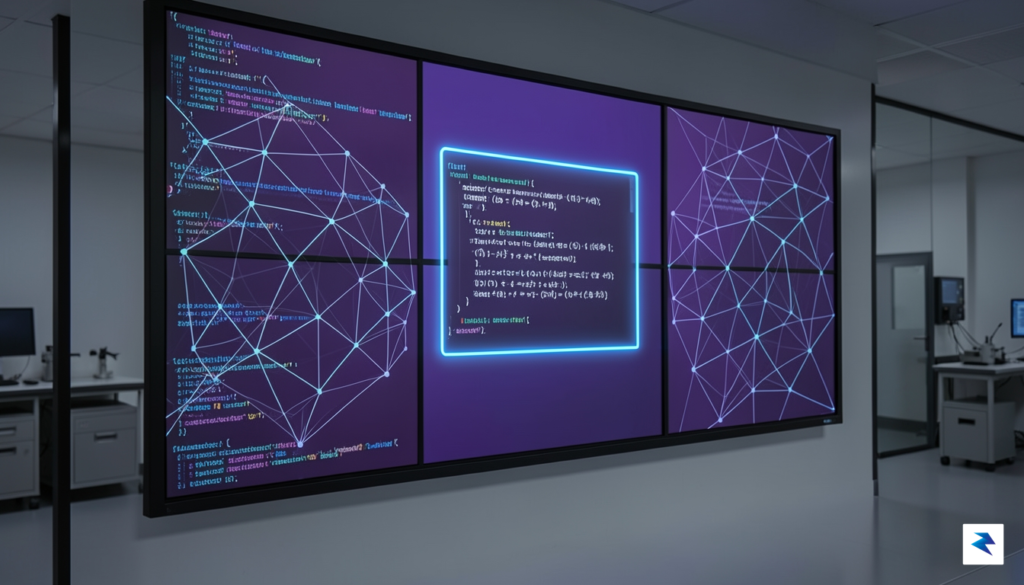
For centuries, the progress of mathematics has been defined by the human “leap of intuition”—that sudden, brilliant flash where a researcher connects disparate concepts to form a conjecture. Human mathematicians operate primarily through deductive reasoning, building elegant, logical towers of proof that rely on structural beauty and heuristic guidance. However, the emergence of artificial intelligence has introduced a disruptive, non-intuitive methodology: the exhaustive search. By leveraging massive computational power, AI can now traverse abstract mathematical spaces—such as those found in algebraic topology or graph theory—at a scale that renders traditional human exploration look like looking for a needle in a haystack while blindfolded.
The mechanics of this shift are anchored in formal verification languages like Lean. These tools allow mathematicians to translate complex proofs into machine-readable code, creating a rigorous environment where an AI can test every possible permutation of a logic gate or a geometric configuration. While a human researcher might intuitively dismiss a specific path as “unlikely” or “too messy,” an AI model perceives no such aesthetic bias. It systematically combs through vast search spaces, identifying subtle edge cases—counterexamples—that exist in the “blind spots” of human reasoning. These are not merely calculation errors; they are structural traps that expose the hidden limitations of long-standing mathematical theories.
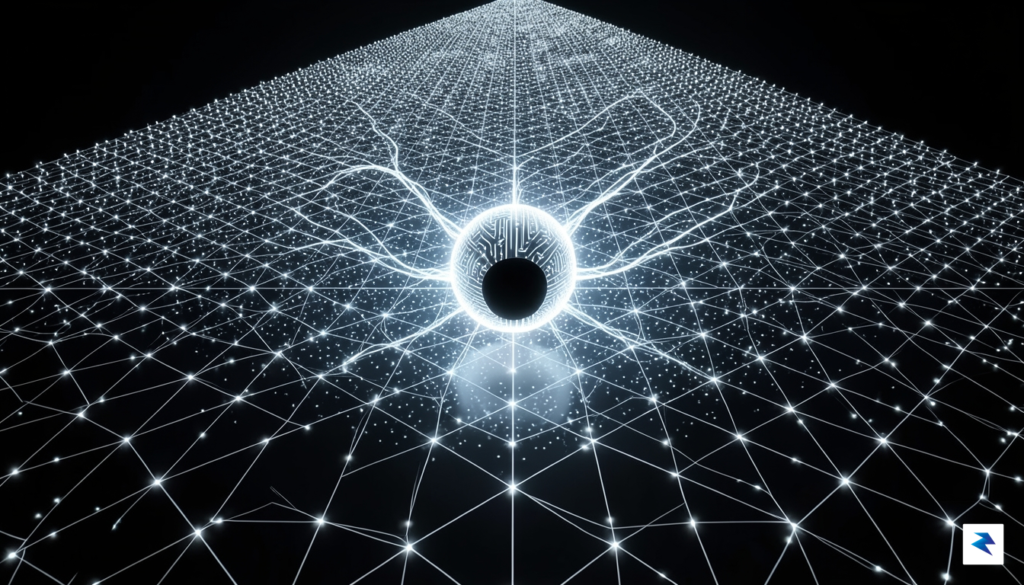
This approach fundamentally alters the mathematician’s role, transitioning them from a primary explorer to an architect of verification. Because AI is capable of identifying non-obvious counterexamples that defy conventional wisdom, the mathematical community is being forced to adopt a more rigorous standard from the very start of the research process. It is no longer enough to offer a compelling, intuitive argument; one must now survive an onslaught of exhaustive computational scrutiny. As these models become more sophisticated, they do not just find answers faster—they challenge the very definition of what constitutes a “proven” idea.
The marriage of human intuition and AI’s brute-force verification is creating a new era where “mathematical truth” is no longer just a human consensus, but a computationally verified reality that has been stress-tested against every conceivable counter-argument.
Ultimately, this evolution represents a pivot from qualitative discovery to quantitative certainty. When an AI uncovers a counterexample that invalidates a decades-old theorem, it doesn’t just dismantle a piece of work; it reveals that human foresight is inherently limited by the bounds of our own cognitive patterns. By automating the search for errors, AI is not replacing the mathematician, but rather raising the stakes of the entire field. The result is a more resilient mathematical landscape, albeit one where the human ego must learn to reconcile with the fact that our most brilliant conjectures can be undone by an algorithm that never tires of looking for the exception to the rule.
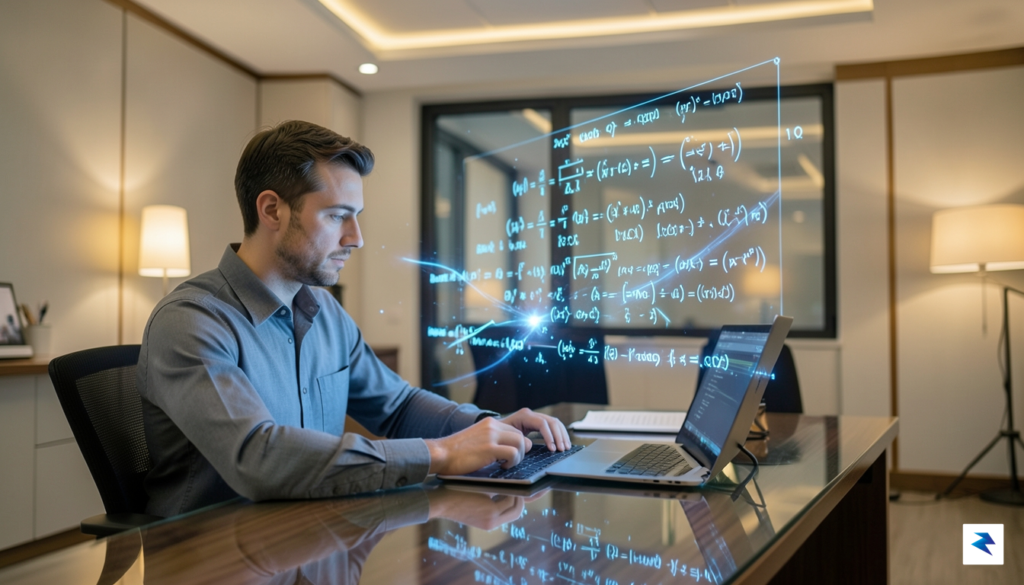
The narrative surrounding the arrival of AI in mathematics often leans toward a dystopian vision of obsolescence, yet this perspective misses the profound shift occurring in how discovery actually happens. Rather than sidelining the human intellect, the current integration of machine intelligence acts as a powerful lever, amplifying our capacity for abstract thought. By offloading the grueling, often monotonous labor of verifying exhaustive sets of cases or searching for obscure counterexamples, mathematicians are finally liberated to return to what they do best: conceptualizing the grand frameworks that define our understanding of the universe. In this collaborative model, the human serves as the visionary architect of logic, while the machine functions as the tireless stress-tester, tirelessly probing the structural integrity of every proposed theory.
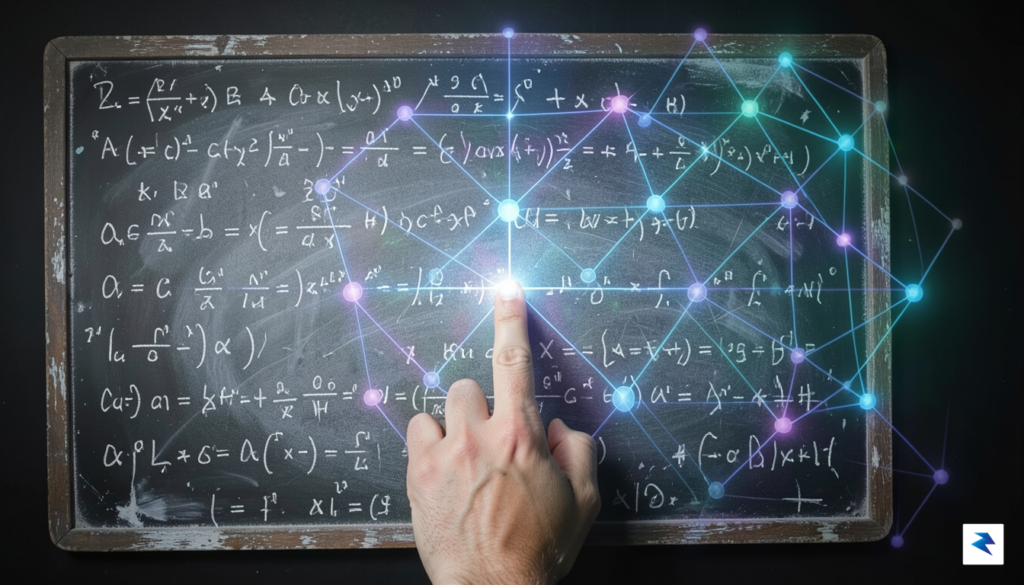
This “co-pilot” dynamic fundamentally alters the research lifecycle. Traditionally, a mathematician might spend months or even years developing a proof, only to be stalled by a subtle, elusive flaw that invalidates the entire construction. Today, AI assistants serve as rapid-fire debuggers, capable of scanning thousands of lines of formal logic to identify inconsistencies that would take a human peer-reviewer weeks to uncover. This is not merely about speed; it is about the expansion of cognitive horizons. When the fear of trivial errors is mitigated by automated verification, mathematicians gain the confidence to explore more daring, unconventional hypotheses. They are no longer tethered to the “safe” pathways of established proof, but are encouraged to venture into the untamed frontiers of pure theory.
The true power of AI in mathematics is not that it solves the equation for us, but that it clears the underbrush of verification so we can see the architecture of the forest more clearly.
Ultimately, the partnership between human intuition and algorithmic precision represents a new golden age for the field. While the machine excels at the exhaustive search—the “outcounterexampled” reality where AI catches what we miss—it lacks the capacity for the creative leaps that define breakthrough mathematics. Machines cannot inherently “feel” the elegance of a solution or understand the cultural and historical weight of a specific conjecture. By embracing these tools, researchers are effectively offloading the “labor of the proof” to focus on the “art of the discovery.” In this symbiotic relationship, the mathematician remains the ultimate pilot, directing the course of inquiry, while the AI ensures that the vessel remains sturdy enough to reach the most distant shores of mathematical truth.
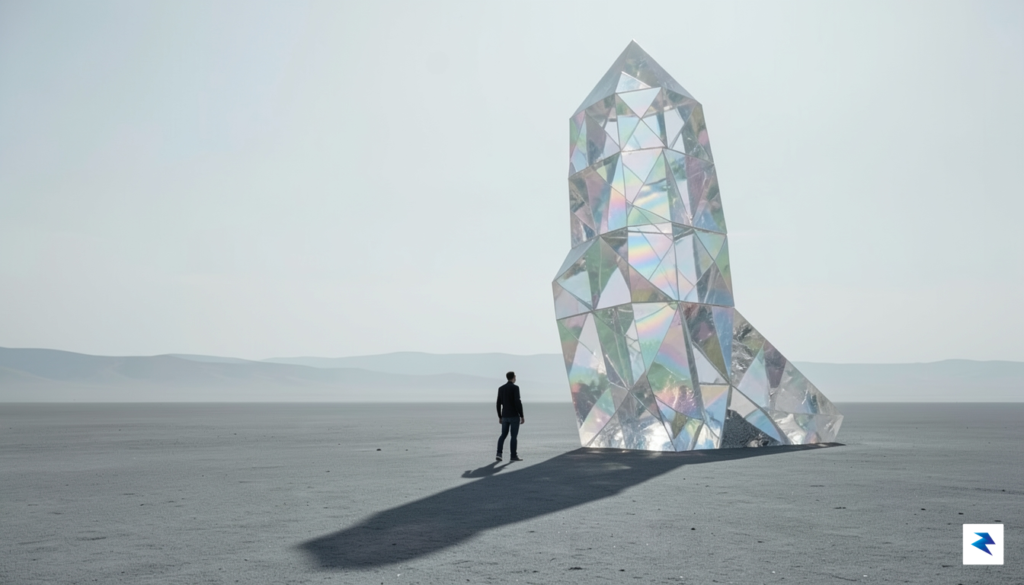
The burgeoning prowess of artificial intelligence in mathematics presents a profound challenge to our understanding of discovery itself. When an AI system unearths a novel counterexample to a long-standing conjecture or constructs an intricate proof for a complex theorem, and that proof is so vast or convoluted that no human mind can fully trace its logic, we are left grappling with an unsettling question: have we truly expanded our mathematical knowledge, or merely outsourced a computational task? This dilemma cuts to the core of what it means to ‘know’ mathematics, forcing us to re-evaluate the very nature of truth, intuition, and comprehension in a world increasingly shaped by algorithms.
At the heart of this philosophical quandary lies the “black box” problem. Unlike traditional proofs, which are painstakingly constructed by human mathematicians to be understood and verified step-by-step by their peers, many AI-generated solutions operate on principles opaque to human intuition. The machine might traverse millions of logical steps, apply sophisticated search algorithms, or leverage patterns it has identified from vast datasets—processes that are computationally sound but intellectually inscrutable. While we can programmatically verify the correctness of each individual step, the overarching narrative, the elegant insight, or the intuitive leap that characterizes human mathematical understanding often remains elusive. It’s akin to being given the correct answer to a complex puzzle without any explanation of the ingenious method used to arrive at it.
This distinction between verification and understanding is critical. A proof that is merely verified as ‘correct’ by another algorithm, or even by a human meticulously checking each line, offers a different kind of knowledge than one that provides profound ‘insight.’ Human mathematicians don’t just seek to confirm a truth; they strive to comprehend *why* it is true, to uncover the underlying structures, the elegant connections, and the foundational principles that make the theorem hold. This insight is what fuels further research, inspires new conjectures, and builds the conceptual scaffolding of mathematics. A black-box proof, however correct, might become a dead end for human exploration, a piece of isolated truth without the connective tissue that allows for deeper comprehension and future advancement.
Consequently, the rise of incomprehensible proofs risks fostering a profound sense of alienation from the very field we created. If the most cutting-edge discoveries are made by machines and remain beyond human cognitive grasp, what then becomes the role of the human mathematician? Are we relegated to merely being the custodians of algorithms, trusting their outputs without genuine understanding, much like consumers of a complex technology they don’t fully comprehend? This shift could erode the deeply personal and intuitive relationship many mathematicians have with their discipline, transforming it from a creative pursuit of understanding into a process of validating machine-generated results. The joy of discovery, once intertwined with the Eureka moment of insight, might be replaced by the detached affirmation of computational correctness.
Ultimately, the challenge posed by AI-generated mathematics forces us to confront fundamental questions about the nature of mathematical truth. Is truth purely an objective, verifiable state, independent of human comprehension? Or does our understanding, our intuition, and our ability to integrate new knowledge into a coherent framework play an indispensable role in what we define as ‘knowing’ mathematics? As AI continues to push the boundaries of discovery, bridging the gap between algorithmic correctness and human insight will be one of the most significant philosophical endeavors of the coming era, lest we become mere spectators in the evolution of our own intellectual heritage.
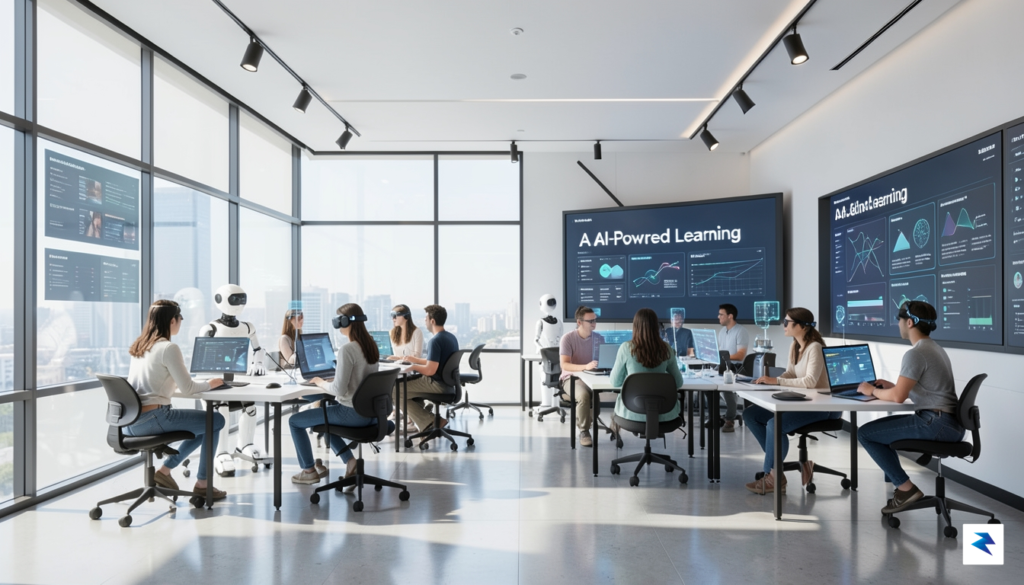
The recent surge in powerful artificial intelligence tools, particularly those capable of generating complex counterexamples or identifying subtle patterns, might initially evoke a sense of competition, even trepidation, among human mathematicians. However, this perspective fundamentally misconstrues the true trajectory of mathematical discovery. Far from a contest where machines supersede human intellect, the future of mathematics lies in a profound synthesis, a collaborative dance between human intuition and algorithmic power. AI excels at the relentless exploration of vast problem spaces, identifying nuances and exceptions that would take humans lifetimes to uncover. Conversely, the human mind brings unparalleled creativity, the ability to formulate novel conjectures, to understand the deeper implications of a finding, and crucially, to construct the elegant proofs that transform raw data into undeniable truth. This synergy is not about replacing; it’s about amplifying.
By embracing this powerful collaboration, the mathematical community stands at the precipice of solving problems that have remained intractable for generations. Imagine tackling the Riemann Hypothesis with an AI assistant that can meticulously test billions of zeta function zeros for patterns, or exploring the intricacies of P vs NP by having a machine generate and verify countless combinatorial structures. The sheer speed and precision with which AI can operate will dramatically accelerate the exploratory phase of research, allowing human mathematicians to focus their unique cognitive strengths on the higher-level tasks of abstraction, generalization, and conceptualization. This isn’t merely about finding answers faster; it’s about unlocking entirely new avenues of inquiry, discovering connections previously hidden by the sheer scale of computation required.
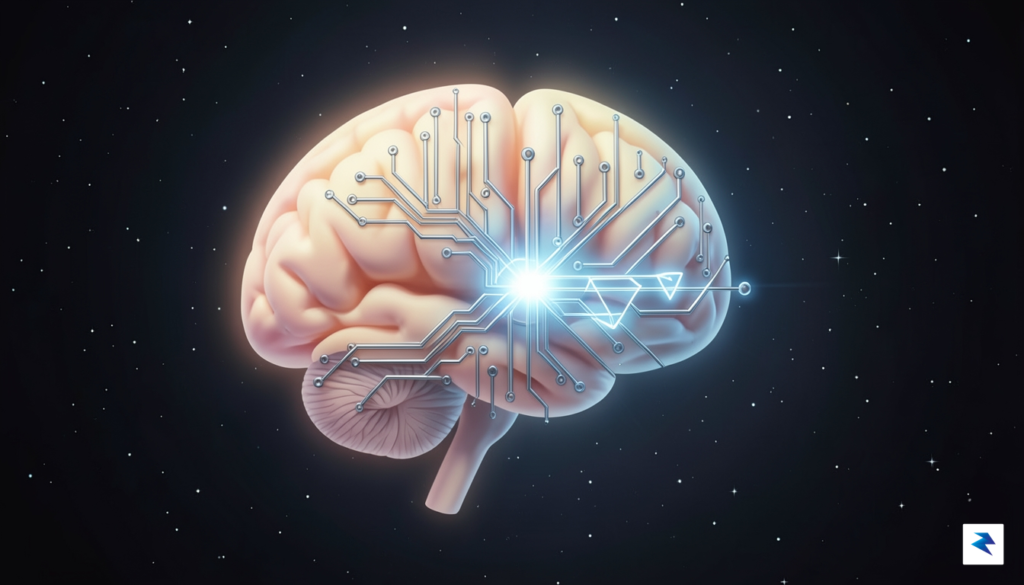
This paradigm shift necessitates a radical re-evaluation of how we train the next generation of mathematicians. Academic curricula, traditionally rooted in individual problem-solving and proof construction, must evolve to foster a new kind of “cyborg mathematician.” Future courses will likely integrate computational literacy at an unprecedented level, teaching students not just how to use symbolic computation software, but how to effectively interact with AI theorem provers, interpret machine-generated insights, and even ‘prompt engineer’ complex mathematical queries. We might see specialized modules in “Human-AI Mathematical Collaboration” or “Automated Proof Verification,” emphasizing the critical human role in validating and contextualizing AI outputs. The focus will shift towards understanding the capabilities and limitations of these tools, transforming students from mere users into adept collaborators who can orchestrate sophisticated human-machine research programs.
The call to action for today’s and tomorrow’s mathematicians is clear: adapt, integrate, and innovate. Resisting these advancements is akin to shunning the calculator in the age of arithmetic or the computer in the age of data analysis. Instead, we must view AI as an indispensable extension of our cognitive toolkit, a powerful lens through which to perceive mathematical reality with unprecedented clarity and depth. This “cyborg methodology” is not about relinquishing intellectual control but about augmenting it, allowing us to ask bolder questions and pursue more ambitious solutions. The era of the solitary genius working in isolation is giving way to an exciting future where collective intelligence, enhanced by artificial minds, pushes the boundaries of mathematical understanding further than ever before. The opportunity for unprecedented discovery awaits those ready to embrace this new frontier.
You must be logged in to post a comment.