
How to Change Music on Old Instagram Posts Without Losing Engagement
The Evolution of Instagram Content Flexibility For the better part of a decade, the Instagram grid functioned much like a digital museum…


Google’s latest expansion of the Gemini ecosystem marks a calculated departure from the “one-size-fits-all” approach to large language models. By introducing Gemini 3.6 Flash, 3.5 Flash-Lite, and the specialized Flash Cyber, the company is signaling a clear shift toward granular, hardware-aware deployment. Rather than simply chasing raw parameter counts or brute-force reasoning capabilities, this new trio is engineered to optimize the trade-off between latency, cost, and computational intensity. This strategic pivot ensures that developers can select the exact tool required for the job, whether they are building a high-frequency trading algorithm, a resource-constrained mobile application, or a deep-dive security analysis suite.

The “Flash” naming convention has become synonymous with Google’s pursuit of high-speed inference, and these three models represent the current zenith of that philosophy. Gemini 3.6 Flash serves as the flagship for performance, balancing substantial context window capabilities with lightning-fast token generation, making it the ideal workhorse for real-time generative tasks. Conversely, Gemini 3.5 Flash-Lite is stripped back to its essentials, designed specifically for environments where memory and power are at a premium. It is the go-to solution for on-device applications that demand responsiveness without taxing the user’s hardware, proving that intelligence does not always require massive data centers.
The true innovation in this lineup isn’t just the speed of the models, but the intentional architectural segmentation that allows AI to function efficiently across a broader spectrum of global hardware constraints.
Rounding out the trio is Flash Cyber, a model that deviates from the standard general-purpose path to focus on the high-stakes domain of cybersecurity. By training specifically on the patterns of threat detection, system vulnerabilities, and code anomalies, Flash Cyber acts as a specialized layer of defense that can process massive volumes of network logs in near real-time. Where 3.6 Flash provides the linguistic versatility to explain a threat, Flash Cyber provides the analytical depth to identify it before it compromises a network. This tiered architecture effectively bridges the gap between high-speed consumer interaction and complex, logic-heavy backend reasoning, providing developers with a toolkit that is as robust as it is specialized.
Ultimately, this release reflects a more mature phase of the AI arms race. As industries move from experimental prototyping to full-scale enterprise integration, the demand for predictable, specialized models has overtaken the desire for monolithic, all-encompassing systems. Google’s commitment to this trifecta demonstrates a sophisticated understanding of the modern developer’s needs, offering a pathway to balance the heavy lifting of machine learning with the practical requirements of everyday digital infrastructure.

The decision to bypass a “3.5 Pro” flagship in favor of a new trio of specialized, efficiency-focused models signals a profound shift in how Google is approaching the AI landscape. Rather than falling into the trap of chasing ever-increasing parameter counts and prohibitively expensive inference costs, Google is leaning into the “Efficiency First” movement that is currently reshaping the industry. Developers and enterprises are no longer solely enamored with the raw, monolithic power of massive language models; instead, they are prioritizing speed, latency, and the practical economics of deploying AI at scale. By doubling down on its Flash architecture, Google is betting that the future of artificial intelligence lies not in the largest possible brain, but in the most agile and affordable tools that can be integrated seamlessly into everyday workflows.

This tactical pivot addresses the primary bottleneck currently facing AI adoption: cost. While top-tier, heavy-duty models offer impressive reasoning capabilities, their price-per-token often makes them prohibitive for high-volume, real-time applications. By refining its Flash-series models, Google is democratizing access to high-performance AI, allowing startups and developers to build sustainable, long-term applications without burning through their operational budgets. This focus on economic accessibility is a direct challenge to competitors who remain tethered to the “bigger is better” paradigm, as it captures the market segment that values utility and integration over sheer, brute-force intelligence.
The true competitive advantage in the current AI arms race is no longer just about who has the smartest model, but who can make that intelligence fast, cheap, and reliable enough to run in the background of every single software product.
Furthermore, the strategic move toward leaner models reflects an understanding of modern user behavior. Users have shown a clear preference for snappy, responsive interfaces over those that require long “thinking” periods for simple tasks. By optimizing its new trio for speed and reliability, Google is ensuring that its ecosystem remains the default choice for developers building everything from customer service chatbots to automated code assistants. Ultimately, this approach turns the absence of a “Pro” successor into a strength; it signals that Google is prioritizing the stability and scalability of its infrastructure over the vanity metrics of traditional model releases. By choosing efficiency, Google isn’t just cutting corners—it is building the foundation for a sustainable AI-first economy that can support widespread integration across the entire digital ecosystem.

Selecting the optimal model from Google’s latest trio requires a nuanced understanding of the trade-offs between latency, computational overhead, and reasoning complexity. Rather than viewing these models as a hierarchy of pure intelligence, engineering teams should approach them as a specialized toolkit where the “best” choice is dictated entirely by the constraints of the specific application. By aligning the model’s architectural strengths with your system’s performance requirements, you can optimize both the user experience and your bottom-line cloud expenditure.
For applications where every millisecond counts, Gemini Flash-Lite serves as the premier choice. It is engineered specifically for high-frequency, low-latency environments such as real-time customer support chatbots, voice-based virtual assistants, or immediate intent classification in search bars. Because it minimizes the computational footprint, developers can deploy it at scale without the performance lag associated with larger, more generalized models. Conversely, Gemini Flash provides the ideal middle ground for high-throughput data processing tasks. Whether you are summarizing massive document repositories, performing bulk sentiment analysis on social media feeds, or extracting structured data from thousands of invoices, Flash offers the necessary reasoning depth to maintain accuracy while sustaining high request volumes.
The third member of the group, Gemini Flash Cyber, addresses a distinct need: specialized security and compliance. This model is fine-tuned to operate within secure, high-stakes environments where identifying vulnerabilities or filtering sensitive information requires a more controlled, hardened approach. Unlike the general-purpose variants, this model is designed to assist security analysts in parsing logs for potential threats without the risk of over-sharing information or hallucinating on critical threat vectors. When your project involves handling PII (Personally Identifiable Information) or proprietary codebases, moving to this specialized tier is the most responsible path forward.
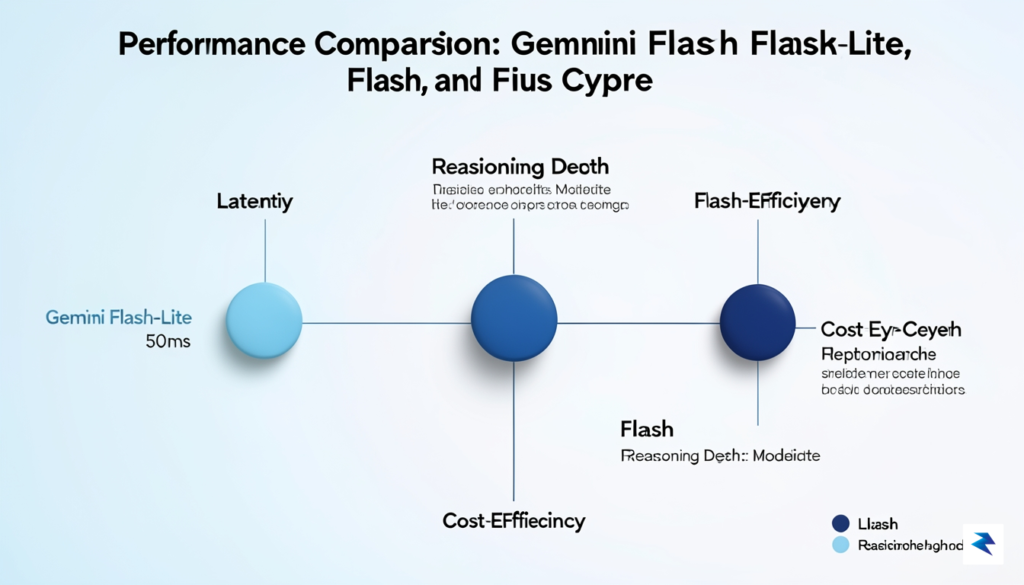
To streamline the selection process, engineering leads should implement a simple decision tree before starting any new integration:
Strategic success in the current AI landscape isn’t about using the biggest model available; it is about using the most efficient model that satisfies the requirements of the specific use case.
Ultimately, the goal is to avoid over-engineering your infrastructure. By matching the model to the task, you reduce unnecessary costs and improve the reliability of your AI-driven products. Regularly auditing your API calls to ensure you haven’t defaulted to a more expensive, deeper-reasoning model for a task that a lighter, faster version could handle is a critical best practice for maintaining a sustainable AI strategy.

Google’s latest unveiling of its diversified Flash lineup, including Gemini 3.6 Flash, 1.5 Flash with expanded context window, and 1.5 Pro with enhanced function calling, marks a significant strategic pivot that directly challenges the prevailing “one-size-fits-all” philosophy dominating much of the foundational AI landscape. Rather than solely pursuing ever-larger, more computationally intensive models, Google is aggressively carving out niches for highly optimized, cost-effective, and specialized AI. This approach directly contrasts with the often generalized, albeit powerful, offerings from key rivals like OpenAI and Anthropic, compelling the entire industry to rethink its development priorities and market strategies.
This strategic move places Google in direct competition with the established giants by offering alternatives that prioritize efficiency and specific applications. OpenAI, for instance, has largely focused on pushing the boundaries of general intelligence with models like GPT-4o and its predecessors, emphasizing broad capabilities that span diverse tasks from creative writing to complex coding. Similarly, Anthropic’s Claude series, while renowned for its safety and robust performance, typically aims for comprehensive, high-quality responses across a wide array of prompts. While immensely powerful, these models can be overkill and prohibitively expensive for simpler, repetitive, or latency-sensitive tasks. Google’s Flash models, in contrast, are engineered to deliver specific functionalities with remarkable speed and at a fraction of the cost, making them ideal for integration into a broader spectrum of applications where generalist behemoths are simply inefficient.
The implications of Google’s diversified Flash strategy extend beyond mere product differentiation; it accelerates the inevitable commoditization of large language models. As AI capabilities become more widespread and accessible, the premium on raw, generalized intelligence begins to diminish. For many common enterprise and consumer applications, the marginal benefit of a slightly more “intelligent” or versatile model does not justify its significantly higher operational costs or slower inference times. Google is effectively signaling that the future lies not just in intelligence, but in intelligent specialization and accessibility. This shift forces a re-evaluation of value propositions across the board, as developers and businesses increasingly seek purpose-built AI solutions that align precisely with their needs without incurring unnecessary overhead.
Consequently, this aggressive play by Google places immense pressure on its competitors, particularly OpenAI and Anthropic, to adapt their own product roadmaps. They are now faced with a stark choice: either significantly lower the pricing of their existing general-purpose models to compete on cost for less demanding tasks, thereby potentially impacting their revenue streams, or rapidly develop and release their own suite of specialized, lightweight, and cost-optimized versions. The latter would require substantial investment in R&D and a strategic reorientation to cater to the burgeoning demand for efficient, purpose-built AI. This competitive dynamic is not merely about model features; it’s about redefining the economic and architectural paradigms of AI development, pushing the industry towards a more diverse, efficient, and ultimately more accessible AI ecosystem.
While the industry is currently captivated by the efficiency and speed of the newly released Flash-tier models, a palpable sense of anticipation remains centered on the elusive next generation of Google’s flagship reasoning engine. Many power users and enterprise developers are asking why Google opted to refine its existing architecture rather than jumping straight to a “3.5 Pro” designation. The current strategy appears to favor stability and integration, suggesting that Google is prioritizing the maturation of its ecosystem—ensuring that developers can reliably build on top of Gemini’s strengths—before introducing a model that shifts the goalposts of compute requirements and reasoning depth once again.
Speculation regarding a future Pro release often revolves around whether Google is waiting for a fundamental breakthrough in reasoning architecture, such as a leap in chain-of-thought processing or enhanced multi-step problem solving. It is entirely possible that the internal development teams are fine-tuning a model that moves beyond traditional token prediction into more robust, verifiable reasoning frameworks. By holding back the “Pro” label, Google avoids the pitfalls of premature releases, allowing the current lineup to establish a baseline of reliability that will serve as the foundation for a much more powerful, compute-heavy successor down the line.

From a technical standpoint, the timing of a future flagship model will likely be dictated by the availability and cost-efficiency of Google’s custom TPU (Tensor Processing Unit) infrastructure. Developing a larger, more capable model is not merely a task of scaling parameters; it requires a delicate balance of latency, inference cost, and hardware optimization. If Google is indeed waiting to launch a more significant jump in intelligence, they are likely aligning that release with the next cycle of hardware upgrades that can handle the increased complexity of such a model without sacrificing the accessibility that has defined the recent Flash updates.
The true measure of the next flagship model will not just be in its parameter count, but in its ability to handle complex, long-context reasoning tasks with a level of accuracy that currently eludes even the most advanced systems.
Ultimately, the absence of a “3.5 Pro” today should be viewed as a calculated strategic pause rather than a lack of progress. Google is playing a long game, focusing on integrating their AI tools deeply into the Google Workspace and Android environments. Once the current ecosystem is sufficiently stabilized and users have fully adopted the speed-focused tiers, we can expect the company to unveil a high-end model that is not just an incremental improvement, but a comprehensive leap in reasoning capability designed to redefine what is possible in enterprise-grade generative AI.
You must be logged in to post a comment.