
Why Apple Canceled the M2 and M3 Extreme Chips for the Mac Pro
The Evolution of Apple Silicon and the Mac Pro Dilemma The transition from Intel’s x86 architecture to Apple’s custom silicon has been nothing…


The meteoric rise of generative AI has fundamentally altered the technological landscape, yet beneath the sleek interfaces and instant conversational responses lies a massive, resource-intensive physical infrastructure. While the global conversation surrounding the environmental impact of technology has long focused on electricity consumption and carbon emissions, a more subtle, yet equally critical, challenge has emerged: the staggering volume of water required to sustain these operations. As AI models become increasingly sophisticated, the servers that power them generate immense amounts of heat. To keep these high-density computing clusters from overheating, data centers rely on sophisticated cooling systems that consume millions of gallons of water annually, effectively turning the digital fuel of our modern age into a literal liquid demand.
At the heart of this issue is the mechanism of evaporative cooling. In many industrial-scale data centers, operators draw water from local municipal supplies to facilitate cooling cycles, where the evaporation of that water helps dissipate the heat generated by thousands of stacked GPUs and CPUs. As large language models (LLMs) grow in complexity, the computational load required for training and inference intensifies, demanding longer uptime and more robust cooling infrastructure. This creates a direct correlation between the sophistication of an AI model and the strain it places on local water tables. In regions already facing drought or water scarcity, this demand is not merely a technical oversight; it is a point of significant friction between tech giants and the local communities that host their massive server farms.
The environmental footprint of AI is no longer just about the energy grid; it is about the stewardship of our most vital natural resource. As data center density increases, the challenge of maintaining operational efficiency without depleting local aquifers has become a defining mission for industry leaders.

This reality has transformed water usage from a background operational cost into a centerpiece of corporate social responsibility. When tech companies expand their infrastructure to keep pace with the insatiable hunger for AI processing power, they are increasingly met with scrutiny from environmental advocates and local governments who fear that the digital revolution may come at the expense of regional water security. Because LLMs require persistent, high-intensity processing, there is no “off-switch” for the cooling systems that support them. Recognizing these criticisms, industry leaders like Google are now attempting to pivot, moving beyond mere efficiency metrics to embrace a strategy of comprehensive water stewardship. This transition represents a necessary evolution in how tech firms measure their environmental impact, acknowledging that the future of artificial intelligence must be as sustainable as it is intelligent.
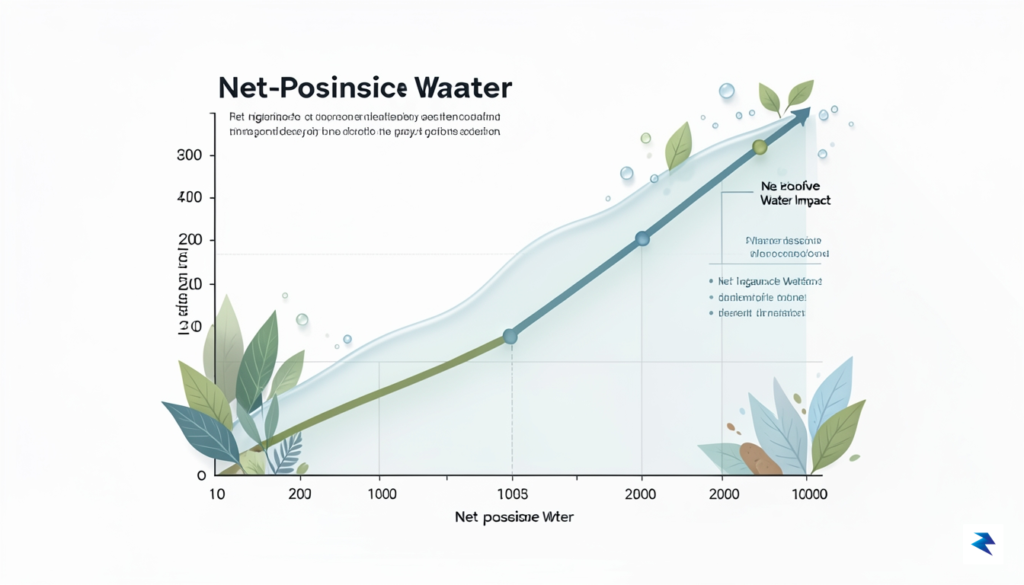
At the heart of Google’s long-term sustainability strategy is a commitment that goes significantly further than traditional corporate conservation efforts: the pledge to become “water positive” by 2030. While many organizations strive for water neutrality—a state where the amount of water withdrawn is perfectly balanced by the amount returned to the source—Google is aiming for a net-positive impact. This means that by the turn of the decade, the company intends to replenish more water than it consumes across its global data center operations. By shifting the focus from simple reduction to active restoration, Google is essentially positioning itself as a net contributor to the health of the local watersheds that sustain both its infrastructure and the surrounding communities.

The transition from neutrality to positivity requires a multifaceted investment strategy that targets both the efficiency of existing hardware and the long-term health of regional ecosystems. This approach involves heavy investment in advanced cooling technologies that minimize the need for evaporation, alongside high-impact projects designed to restore natural water cycles. For instance, the company is actively funding initiatives such as removing invasive, water-thirsty plant species, repairing leaking municipal water infrastructure, and facilitating large-scale reforestation efforts that help replenish groundwater tables. These projects are not merely carbon-offset style additions; they are specific, localized interventions designed to improve water security in regions often stressed by climate change and population growth.
“Becoming water positive is not just about offsetting consumption; it is about ensuring that every gallon of water we use supports a resilient and thriving ecosystem for everyone who shares that resource.”
Beyond the technical metrics, this goal reflects a broader shift in how global tech giants must view their relationship with local resources. As AI workloads continue to demand massive amounts of computing power—and consequently, significant cooling capacity—corporate accountability has become a benchmark for industry standards. By publicly committing to these rigorous, measurable targets, Google is setting a precedent for transparency and stewardship in the tech sector. This strategy acknowledges that the sustainability of the digital age is inextricably linked to the physical world, and that if tech companies intend to build the infrastructure of the future, they must be willing to invest in the basic, life-sustaining resources that local populations depend on every single day.
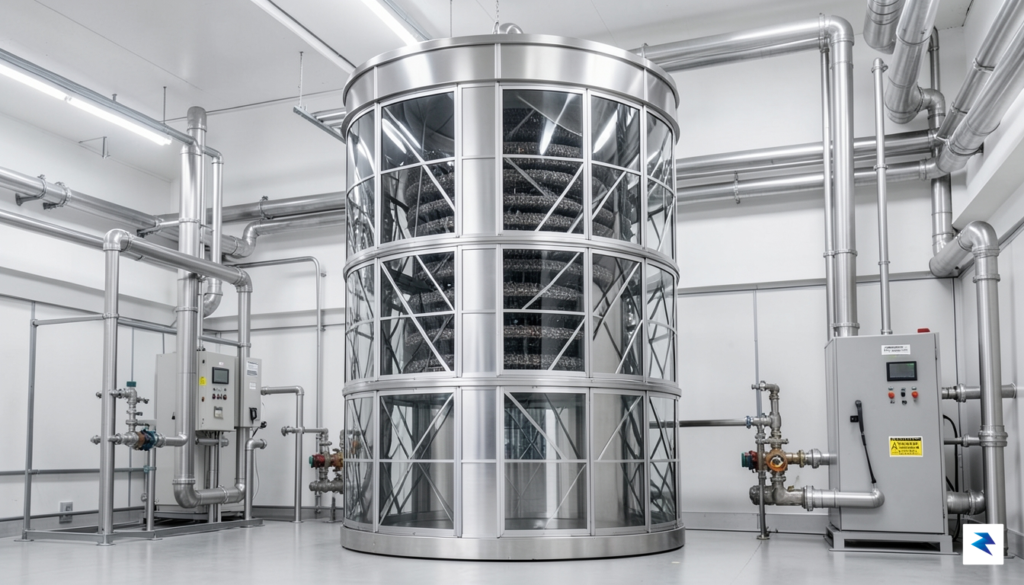
To keep pace with the massive energy demands of artificial intelligence, Google is moving beyond traditional cooling paradigms that have long relied on potable municipal water. Historically, data centers have utilized evaporative cooling—a process that vents water into the atmosphere to dissipate heat—which, while energy-efficient, consumes significant volumes of high-quality water. To mitigate this impact, the company is shifting toward advanced closed-loop cooling systems. These sophisticated circuits circulate coolant internally, capturing and recycling the medium rather than releasing it as vapor. By creating a self-contained environment, Google can drastically reduce the volume of “make-up” water required, effectively insulating its operations from the volatility of local water supplies.
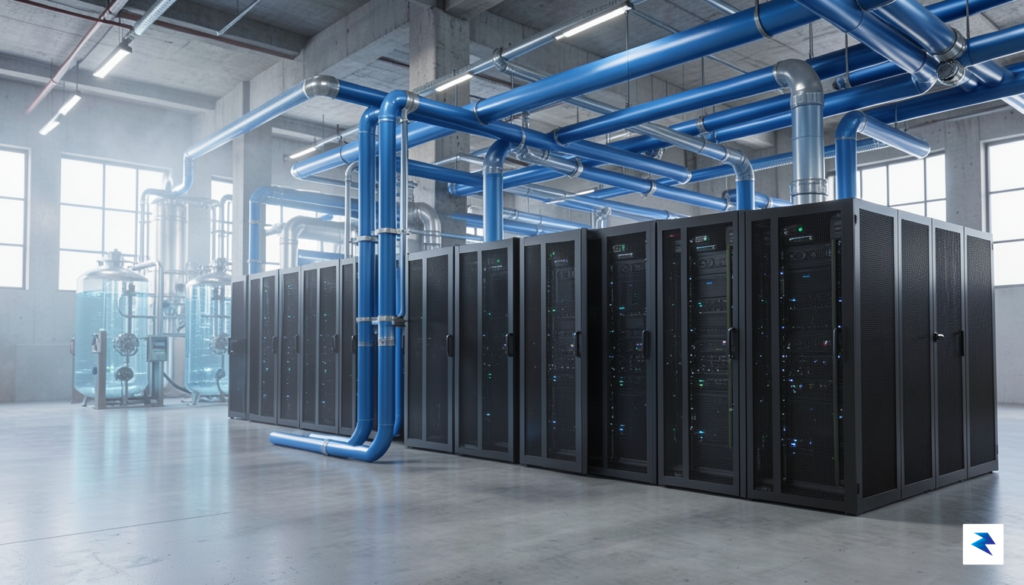
Beyond internal cooling mechanics, Google is actively diversifying its water sources to move away from reliance on drinking-water networks. This strategy involves the integration of non-potable water, such as treated wastewater or industrial runoff, which is repurposed for cooling through specialized onsite filtration plants. By treating water that is otherwise destined for disposal, the tech giant effectively turns a waste stream into a critical operational resource. This transition is not merely an environmental gesture; it is a calculated engineering pivot designed to decouple the growth of hyperscale AI infrastructure from the water security concerns of local municipalities.
The success of these initiatives relies heavily on site-specific engineering that respects the unique hydro-geological context of each facility. In arid regions, for instance, Google employs extreme-efficiency cooling technologies that prioritize minimal water evaporation, while in more temperate zones, the focus shifts toward maximizing the use of ambient air. This delicate balance between server performance and cooling efficiency requires a granular understanding of how hardware reacts to variable thermal conditions. Maintaining optimal temperatures is essential, as even minor fluctuations can impact the longevity of high-performance AI chips, yet Google’s engineers have found that by fine-tuning airflow and cooling cycles, they can maintain stability without the massive liquid-cooling overhead once considered industry standard.
The core of Google’s sustainability strategy lies in the shift from “water consumption” to “water stewardship,” where every drop is treated as a high-value asset managed through a circular, technology-driven lifecycle.
Ultimately, the objective is to reach a state of water-positive impact, where the company restores more water to the local watershed than it consumes through its cooling processes. By deploying these innovations, Google is setting a new benchmark for the tech industry, proving that the compute-heavy requirements of generative AI do not necessarily have to come at the expense of local water tables. Through the continuous refinement of these closed-loop systems and the strategic use of non-potable resources, the company is fundamentally redefining the relationship between high-performance computing and environmental stewardship.

The rapid expansion of artificial intelligence infrastructure has placed a spotlight on a critical, often overlooked commodity: water. As tech giants deploy massive data centers to house the compute power necessary for generative AI, these facilities demand vast quantities of water for cooling systems to prevent hardware overheating. This surge in demand frequently puts these corporate giants in direct competition with local agriculture, municipal water supplies, and residential needs. In regions already grappling with long-term drought or depleting aquifers, the arrival of a massive data center can feel less like an economic boon and more like an existential threat to local resource security.
For years, the tech industry operated under the assumption that infrastructure could be scaled globally without deeply impacting the immediate local environment. However, the current reality of water scarcity is forcing a paradigm shift. Google and other industry leaders are beginning to realize that their “social license to operate”—the ongoing acceptance of their presence by local communities—is inextricably linked to their ability to manage water responsibly. If a facility is perceived as draining a community dry, the resulting friction creates significant regulatory and reputational risks that threaten the stability of the entire AI ecosystem.

To mitigate these tensions, companies are moving beyond simple consumption metrics and toward active watershed stewardship. This involves forming collaborative partnerships with local governments, environmental NGOs, and utility boards to invest in regional water health. Rather than acting as isolated silos, data centers are increasingly being designed to incorporate closed-loop cooling systems or utilize reclaimed gray water, effectively reducing their intake from municipal reservoirs. By funding restoration projects—such as restoring wetlands or improving agricultural irrigation efficiency in the surrounding area—these tech firms are attempting to achieve a “water-positive” status, theoretically returning more water to the watershed than they consume.
True sustainability in the AI era requires moving away from a net-zero mentality toward a regenerative approach, where corporate infrastructure strengthens the resilience of the local water cycle rather than depleting it.
Despite these proactive steps, quantifying the success of such initiatives remains a complex challenge. While global carbon footprints are relatively straightforward to audit, the impact of water usage is highly localized and context-dependent. A gallon of water used in a water-rich region carries a vastly different environmental cost than a gallon drawn from a stressed desert aquifer. Consequently, the industry faces the difficult task of creating standardized reporting metrics that account for these geographical nuances. Without transparent, site-specific data, the promise of “stewardship” remains vulnerable to accusations of greenwashing, underscoring the urgent need for robust, data-backed oversight that respects the unique hydro-geological conditions of every site where AI infrastructure takes root.

The aggressive pursuit of “water-positive” operations by industry leaders like Google is rapidly evolving from a niche corporate social responsibility goal into an essential operational mandate. As AI development accelerates, the sheer demand for high-performance computing creates a thermodynamic reality that cannot be ignored: massive server farms require immense cooling capacity. By setting ambitious benchmarks, Google is effectively forcing a paradigm shift across the tech sector, signaling to competitors and regulators alike that environmental stewardship must be baked into the architectural design of data centers rather than treated as an afterthought. If these models for water replenishment and efficiency prove successful, they will likely become the gold standard, establishing a framework where future infrastructure investments are judged not only by their computational throughput but by their net impact on local watersheds.

However, the transition toward a water-positive model is not without significant hurdles. Critics rightly point out that voluntary commitments can sometimes function as public relations maneuvers if they lack transparent, third-party verification. Furthermore, scaling these solutions across diverse geographic regions—each with distinct hydrological challenges—remains a complex engineering and logistical feat. There is also the inherent tension between the rapid, iterative nature of AI model training and the slower, more methodical pace of ecological restoration. As companies rush to secure a competitive edge in generative AI, the temptation to prioritize speed over sustainable infrastructure remains a constant risk, potentially leading to “greenwashing” accusations if resource consumption outpaces the ability to replenish those same resources.
True technological leadership in the coming decade will be defined by the capacity to decouple exponential AI growth from the depletion of critical natural resources.
Ultimately, the feasibility of balancing AI innovation with climate resilience hinges on the integration of rigorous corporate reporting requirements. We are already witnessing a global move toward standardized ESG (Environmental, Social, and Governance) disclosures, which will make water consumption data as scrutinized as quarterly financial earnings. As this transparency becomes the norm, tech giants will find that their long-term viability is tethered to their ability to innovate within planetary boundaries. If the industry can successfully turn water stewardship into a core competency, it will prove that technological progress and environmental protection are not mutually exclusive, but rather two sides of the same coin in a resource-constrained future.
You must be logged in to post a comment.