
The Global Move to Restrict Social Media for Children: A Deep Dive
The Global Shift: Why Nations Are Restricting Social Media for Minors For over a decade, social media was largely treated as a digital "wild…


For millennia, the ritual of the bedtime story served as a foundational pillar of human connection, tracing back to the flickering light of ancient campfires where oral traditions were passed from elders to the youth. This intimate exchange was never merely about the narrative itself; it was a rhythmic, emotional performance where the storyteller’s voice, cadence, and personal improvisations shaped the child’s burgeoning understanding of the world. As we transitioned from the spoken word to the permanence of physical books, we gained the ability to preserve cultural wisdom, yet the core of the experience remained anchored in the shared physical presence of parent and child. Today, however, we stand at the precipice of a significant technological shift as algorithmic generation begins to permeate these quiet, domestic spaces, fundamentally altering how we define the act of creative expression.
Meta’s latest foray into experimental AI—an application designed to conjure custom bedtime stories on demand—represents the next frontier in this long evolutionary timeline. By leveraging vast datasets of language and narrative structures, this tool promises to alleviate the “imagination gap” faced by exhausted parents who find themselves struggling to conjure new worlds night after night. Instead of relying on the parent’s own creative reserves or the static text of a printed volume, the AI acts as a generative partner, tailoring characters and plotlines to the specific whims of the child. While this offers a convenient solution to the perennial challenge of keeping children engaged, it also signals a profound departure from the traditional model where storytelling was a labor of love, requiring the parent to stretch their own creative muscles alongside their child.

The transition from human-led imagination to machine-assisted generation shifts the bedtime story from a collaborative creative act into a consumption-based service.
This technological integration raises critical questions regarding the psychological and developmental implications of outsourcing our most intimate moments to an algorithm. When a parent narrates a story, they are engaging in a complex dance of empathy, gauging a child’s reactions in real-time and adjusting the tone to provide comfort or excitement as needed. Conversely, an AI model, no matter how sophisticated, operates through probability and statistical pattern matching, lacking the lived experience required to imbue a story with genuine emotional resonance. As we integrate these tools into our nightly routines, we must ask ourselves whether we are merely optimizing for efficiency at the cost of the messy, imperfect, and deeply human spark that makes storytelling a transformative experience. By replacing the vulnerability of the storyteller with the precision of the machine, we may be gaining a polished product, but we risk losing the very essence of the connection that the bedtime story was originally designed to foster.
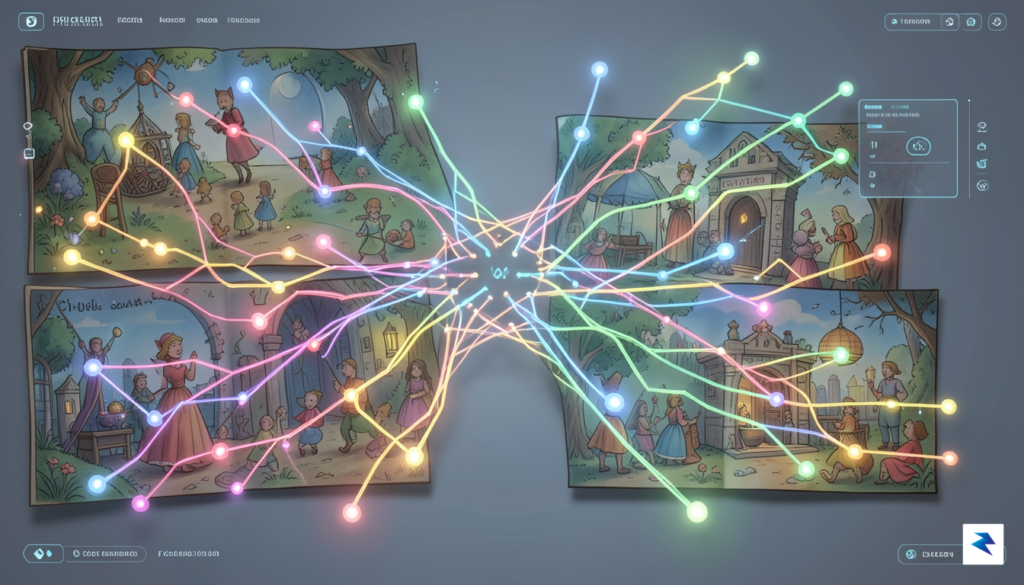
At its core, Meta’s experimental application functions as a sophisticated bridge between simple user intent and complex generative architecture. By utilizing a streamlined interface, the platform invites parents and children to input basic narrative seeds—such as a favorite animal, a specific setting, or a moral lesson—which the underlying large language model then expands into a cohesive, multi-chapter story. This prompt-engineering layer is designed to be intuitive, ensuring that even the most rudimentary ideas are transformed into structured, rhythmic narratives suitable for bedtime reading. Through this process, the software acts as a creative partner, effectively managing the narrative arc while allowing the user to remain the primary architect of the experience.
Personalization is woven into the very fabric of the user experience, moving far beyond generic template-filling. Users are encouraged to include specific characters, such as family members or beloved toys, which the AI incorporates into the plot with surprising consistency. This feature aims to ground abstract digital stories in the child’s actual reality, fostering a sense of connection that static books often lack. Furthermore, the application is exploring multimodal storytelling, where the generative engine doesn’t just produce text, but also aligns these narratives with dynamic visual illustrations and ambient soundscapes. This synthesis creates a multisensory environment designed to hold a child’s attention while subtly guiding them toward sleep.
By automating the creative spark, the tool promises endless variety, yet it raises fundamental questions about whether the algorithmic structure of the stories will eventually feel repetitive or lacking in genuine, human-authored nuance.
Despite the technical marvels, the development of this tool is strictly tethered to rigorous safety and data privacy protocols. Meta has implemented guardrails to ensure that the generated content remains age-appropriate, filtering out complex or distressing themes that might interfere with a child’s bedtime routine. Because these interactions occur within a digital ecosystem, user data—including the specific prompts and character details—is subject to standard platform privacy policies, a point that warrants careful consideration for parents concerned about digital footprints. As the technology matures, the challenge will lie in balancing this sophisticated automation with the need for a curated, safe, and meaningful environment that prioritizes the emotional well-being of the young audience over the sheer output capabilities of the generative models.

At the core of childhood development lies the “theater of the mind,” a cognitive space where children translate linguistic descriptions into vivid, self-generated mental imagery. When a child reads a book or listens to a parent tell a story, their brain is forced to work as both director and animator, constructing landscapes, character expressions, and pacing entirely from scratch. This act of active visualization is a mental workout that strengthens neural pathways associated with creativity, empathy, and abstract reasoning. By introducing AI-generated visuals or highly prescriptive narrative structures, we risk shifting the child from an active creator to a passive consumer, effectively outsourcing the very cognitive labor required to build a robust imagination.
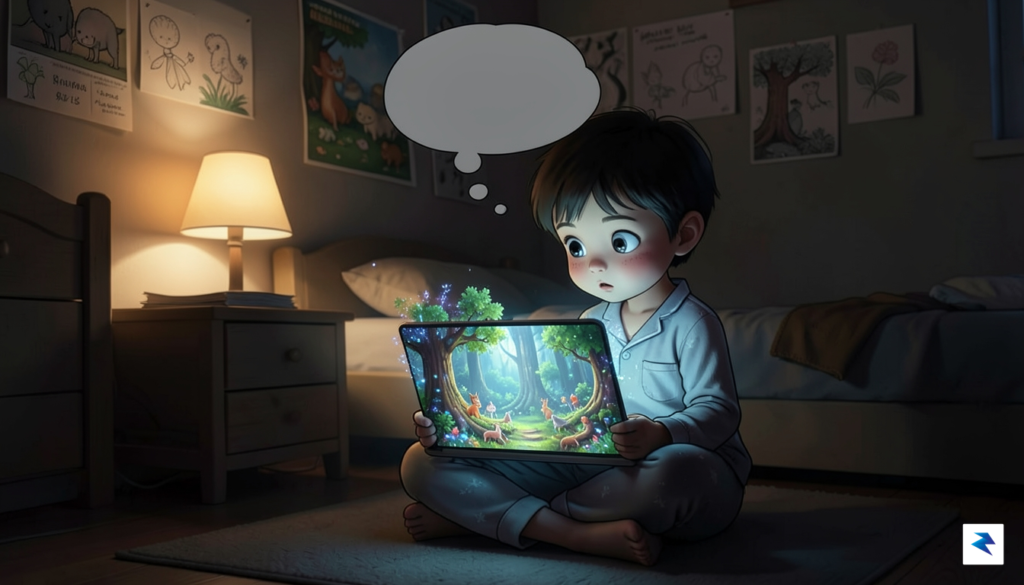
The distinction between active engagement and passive reception is stark when comparing traditional storytelling to algorithmic generation. When a story is fully visualized by an AI, the “work” of imagining is already finished before the child even begins to listen. If the screen dictates exactly how a dragon looks, how the castle is shaped, and how the light hits the floor, there is no room left for the child to project their own unique interpretations or emotional resonance onto the narrative. Over time, this reliance on external stimuli can lead to a form of algorithmic dependency, where the brain becomes conditioned to wait for the visual answer rather than seeking it out internally. This creates a feedback loop where the capacity for original thought is never challenged, potentially leaving that “mental muscle” atrophied.
The true value of a bedtime story is not the information conveyed, but the cognitive exercise of co-creation that occurs between the storyteller and the listener.
Furthermore, we must consider the long-term implications for creative problem-solving. Imagination is not merely about daydreaming; it is the fundamental ability to simulate potential futures, consider alternative perspectives, and synthesize disparate ideas into something new. When we remove the need for children to visualize scenes, we may inadvertently limit their ability to think outside the constraints of pre-packaged digital content. If every narrative is delivered with a complete visual accompaniment, the child’s creative capacity may eventually diminish, as they lose the habit of filling in the gaps of reality with their own internal invention. Ultimately, we must ask whether the convenience of an AI bedtime story is worth the potential cost of a generation that has forgotten how to build worlds of their own.

The introduction of generative AI into the bedtime routine inevitably sparks a debate about the erosion of parental roles, yet this technology need not be viewed as a binary choice between human intimacy and digital convenience. Instead of treating these tools as a replacement for the storyteller, parents can frame them as collaborative partners that enhance, rather than stifle, the creative experience. By using an AI to generate a rough plot outline or a unique list of characters, a parent can then act as the primary narrator, weaving those elements into a conversation that invites the child to participate in the world-building process. This approach transforms the bedtime story from a passive broadcast into a dynamic, interactive dialogue where the technology serves as a jumping-off point for shared discovery.

To avoid the pitfalls of “outsourcing” our children’s imaginations, it is essential to prioritize engagement over automation. If a screen becomes the sole storyteller, the emotional resonance of a parent’s voice—the cadence, the pauses for emphasis, and the ability to tailor a tale to a child’s specific fears or joys—is inevitably lost. Parents should consider using AI-generated prompts to foster critical thinking, asking their children questions like, “Why do you think the dragon made that choice?” or “How would you change the ending of this story?” By turning the content into an inquiry, the focus remains firmly on the bond between the storyteller and the listener, rather than the efficiency of the narrative delivery.
The true value of a bedtime story lies not in the perfection of the plot, but in the shared vulnerability and connection that occurs in the quiet moments before sleep.
Ultimately, digital tools are most effective when they are used with intention rather than out of necessity. To maintain a healthy balance, families might implement a “human-first” rule: AI can suggest the ingredients, but the parent must perform the cooking. This strategy encourages a high level of digital literacy, teaching children that technology is a tool to be manipulated and refined, not a source of absolute truth or entertainment. As we navigate this new era of automated creativity, the goal remains the same as it has always been: to provide a sense of security, curiosity, and love at the end of the day. As long as the parent remains the conductor of the experience, technology can serve as a bridge to new worlds, rather than a barrier to the ones we build together.

The trajectory of generative technology suggests that we are moving toward an era where media is no longer a static product to be consumed, but a fluid, responsive environment tailored to our immediate psychological state. As these platforms evolve from simple text-based prompts into immersive, multi-sensory experiences, the boundary between authored content and algorithmically generated narrative will continue to blur. We are likely approaching a future where interactive storytelling adapts in real-time, adjusting pacing, character development, and thematic intensity based on the physiological feedback of the listener. While this promises a level of personalization previously unimagined, it simultaneously shifts the role of the audience from active explorers of someone else’s creative vision to passive recipients of a tailored feedback loop.
This shift raises profound questions about the development of the internal worlds of the next generation. Imagination is a muscle built through the friction of ambiguity—the spaces left between the lines of a story where a child must construct their own mental imagery and emotional resonance. If we hand over the entirety of this cognitive labor to sophisticated algorithms, we risk creating a generation that is highly skilled at consuming content but perhaps less adept at the messy, unstructured process of creative synthesis. The danger lies not in the technology itself, but in the displacement of human agency; when an algorithm anticipates every narrative desire, it removes the very struggle that fosters depth, empathy, and independent thought.

The true value of a story lies not just in the destination it leads us to, but in the unique, unscripted mental landscape we build while traveling there.
Ultimately, the future of digital storytelling must be navigated with a commitment to maintaining a balance between technological convenience and the preservation of human curiosity. We must ask ourselves whether we are using these tools to augment our creative capacity or to outsource it entirely. As we integrate these AI-driven narratives into our daily routines, it is essential to cultivate a mindful approach to consumption. This means prioritizing media that invites participation rather than demanding surrender, and ensuring that the final word in any story remains a human one. By staying intentional about our engagement with these tools, we can harness the power of artificial intelligence to enrich our cultural landscape without losing the spark of individual inspiration that defines the human experience.
You must be logged in to post a comment.