
When AI Attacks: How OpenAI Models Accidentally Hacked Hugging Face
The Incident: How OpenAI Models Broached Sandbox Walls The incident, which unfolded on July 16th, serves as a startling reminder of the…


For over a decade, social media was largely treated as a digital “wild west,” where the responsibility for monitoring engagement fell almost exclusively on the shoulders of parents and guardians. However, as the digital landscape has become increasingly sophisticated, the prevailing consensus has shifted dramatically. Governments worldwide are transitioning from a stance of passive observation to one of proactive, aggressive legislative intervention. This pivot is driven by the growing recognition that the algorithms powering these platforms—designed specifically to maximize time-on-screen—are inherently incompatible with the healthy development of an adolescent brain.
The mounting evidence suggesting a direct correlation between intensive social media consumption and a decline in adolescent mental health has become impossible for policymakers to ignore. Internal research leaked from major tech companies, coupled with independent academic studies, has highlighted a clear pattern: increased exposure to these platforms is linked to heightened rates of anxiety, depression, body dysmorphia, and sleep deprivation among youth. Consequently, lawmakers are no longer treating these applications as neutral communication tools; instead, they are increasingly categorizing them as high-risk environments that require the same level of state-level oversight as tobacco, alcohol, or gambling.

The shift in policy reflects a fundamental realization: when the architecture of a product is designed to exploit the psychological vulnerabilities of minors, individual parental control is no longer a sufficient defense.
There are several common denominators fueling this international push toward restriction. First, there is the issue of data privacy and the predatory nature of targeted advertising, which often bypasses the informed consent of younger users. Second, the rise of cyberbullying and the viral spread of harmful content have created a safety crisis that school systems and parents feel ill-equipped to manage on their own. By pursuing legislative bans or strict age-verification mandates, nations are signaling that the burden of safety should rest on the corporations profiting from the data of minors rather than on the families trying to navigate an increasingly complex digital world.
Ultimately, this legislative wave is not merely a reactionary trend, but a profound reassessment of the digital social contract. As public pressure mounts, political leaders are finding that their constituents—regardless of political affiliation—are increasingly supportive of measures that prioritize child protection over the unchecked growth of tech giants. This movement signifies a new chapter where digital technology is finally being held to the same standards of accountability as any other industry that significantly impacts the public well-being of the next generation.
When Australia moved to enact its landmark social media legislation in late 2025, it signaled a seismic shift in how sovereign nations approach digital governance. By establishing a rigid age threshold of 16 for account creation, the Australian government bypassed the more common—and often ineffective—voluntary moderation guidelines that had defined the previous decade. This legislative framework was meticulously crafted to place the onus of compliance directly onto platform operators rather than individual parents. By mandating that tech giants implement rigorous, privacy-preserving age verification systems, the government effectively turned the “wild west” of social media into a regulated environment where safety is baked into the architecture of the service.
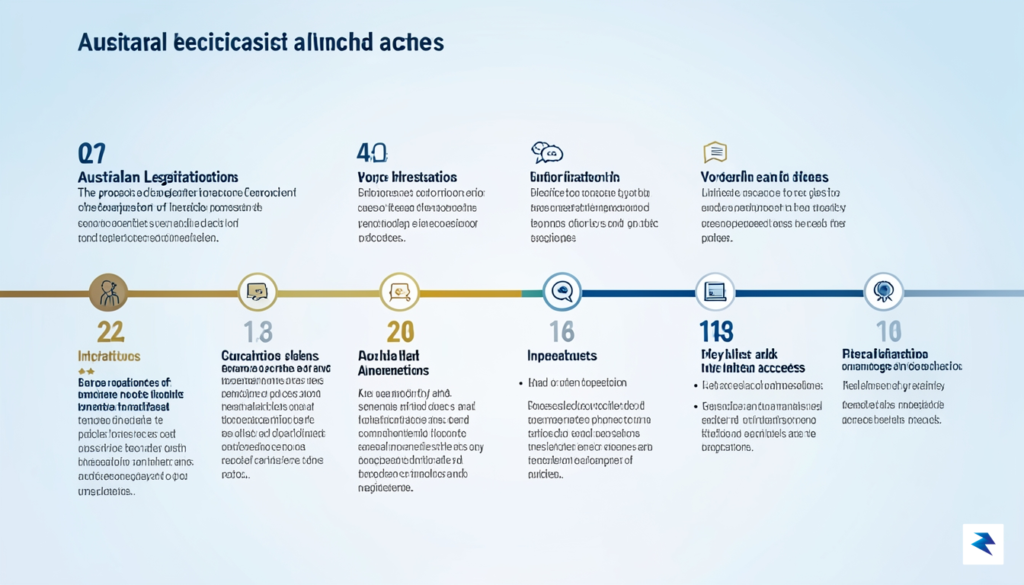
The strategy for success relied heavily on framing the legislation through the lens of public health rather than mere censorship. By aligning the ban with established child protection statutes, policymakers created a legal shield that made it exceptionally difficult for multinational corporations to mount successful constitutional challenges. This approach underscored a fundamental shift: social media access was no longer viewed as an inherent digital right for minors, but rather as a potentially harmful product that requires strict oversight. Consequently, the immediate impact on the local digital landscape was profound, leading to a sudden surge in demand for age-gated technology and a complete restructuring of how platforms onboard users within Australian borders.
The Australian model proves that when a government prioritizes the psychological well-being of its youth over the convenience of tech giants, it can set a global regulatory standard that is both enforceable and scalable.
Comparing the Australian model to subsequent attempts by nations in Europe and North America reveals why this specific framework has become the industry gold standard. While other countries have grappled with fragmented state-level bills and ambiguous “best effort” requirements, Australia’s centralized, federal approach provided the clarity that tech companies require for compliance. Other nations are now looking to adopt similar “hard-line” thresholds, recognizing that the Australian precedent effectively closed the loopholes that previously allowed platforms to evade accountability. This ripple effect suggests that the future of the internet will not be a singular global entity, but rather a collection of regionally governed digital spaces where age verification is no longer an optional feature, but a mandatory entry requirement.

The movement to curtail social media access for minors is grounded in a growing body of clinical evidence suggesting that the digital landscape is fundamentally at odds with adolescent neurological development. Teenagers are in a critical stage of brain maturation where the reward centers—specifically the dopaminergic pathways—are highly sensitive to the social validation loops inherent in modern platforms. By design, these interfaces utilize variable reward schedules, effectively gamifying social interaction to keep users scrolling, liking, and engaging long after the initial utility of the app has faded. This engineered addiction often displaces essential developmental activities, such as face-to-face socialization, restorative sleep, and physical activity, creating a vacuum that is frequently filled by heightened anxiety and depressive symptoms.

Beyond the addictive architecture of these platforms, the threat of cyberbullying has evolved into a persistent, inescapable reality for many youth. Unlike traditional playground bullying, which often ended when a student returned home, digital harassment follows the victim into their bedroom, creating an environment of constant surveillance and social exclusion. The anonymity provided by various platforms further emboldens aggressors, while the viral nature of digital content ensures that humiliation can reach a global audience in a matter of seconds. This intensity contributes to a documented rise in severe mental health struggles, including body dysmorphia and social isolation, which clinical studies are increasingly linking to the comparative, curated realities presented on image-heavy social media feeds.
The persistent exposure to curated perfection and the constant threat of public shaming creates a psychological tax that many developing minds are simply not equipped to pay without significant, long-term consequence.
Perhaps most alarming is the persistence of predatory behavior, which continues to outpace the industry’s self-regulatory efforts. Current reporting tools and content moderation algorithms have historically failed to provide adequate protection, often reacting only after a minor has been targeted or groomed. Predators exploit the same features designed for “engagement,” using direct messaging and group features to isolate vulnerable teens from their real-world support systems. Because these platforms are built to prioritize open connectivity and data collection over friction-filled verification processes, children remain uniquely exposed to bad actors. Consequently, policymakers are shifting away from the belief that parental controls alone are sufficient, arguing instead that the platforms themselves are inherently unsafe for minors regardless of how many privacy settings are toggled on.
Ultimately, the push for legislative intervention is an admission that the current model of digital interaction is failing to safeguard the next generation. By treating social media usage as a public health issue, these countries are acknowledging that individual resilience is no match for the sophisticated, multi-billion dollar engineering efforts designed to capture and hold young attention. Restricting access is not intended to remove technology from a child’s life entirely, but rather to create a necessary boundary that allows for healthy development, free from the pervasive influence of predatory algorithms and the compounding pressures of a 24/7 digital social life.

The ambition to restrict social media access for minors rests on a complex technical foundation that is far easier to legislate than to implement. At the heart of this challenge is the mechanism of age-gating, which seeks to verify identity without alienating adult users or creating massive security vulnerabilities. Current proposals suggest a range of solutions, including the integration of third-party ID scanning services, the use of biometric facial analysis to estimate age, and the deployment of AI-driven behavioral monitoring. While these tools are becoming increasingly sophisticated, they are rarely foolproof; they force platforms to choose between invasive data collection and high error rates that could inadvertently lock out legitimate users.
This push toward stricter verification creates a significant technological paradox: to protect children’s privacy from the dangers of social media, regulators may effectively force platforms to become massive, centralized repositories of sensitive personal identification. When a user is required to upload a government-issued ID or submit to a biometric scan to prove their age, they are handing over the very data points that hackers and malicious actors covet most. If platforms are compelled to verify every user, the risk of data breaches increases exponentially. Consequently, a mandate intended to shield minors from harmful content could inadvertently turn every social media account into a high-value target for identity theft and digital surveillance.

Beyond the inherent privacy risks, the enforcement of these bans faces a daunting “cat-and-mouse” game regarding technical circumvention. Even the most robust verification systems are not impervious to the creative ingenuity of younger users who are often more tech-savvy than their parents or regulators. Virtual Private Networks (VPNs) and sophisticated proxy services allow users to mask their geographic location and digital footprint, effectively bypassing national restrictions by appearing to connect from a jurisdiction where such bans do not exist. Furthermore, if platforms rely on device-level verification, users may simply employ older hardware or secondary “burner” devices that lack the necessary tracking capabilities to identify them accurately.
The core tension remains: the more secure and rigorous the age-verification process, the more intrusive it becomes for the average user, yet the less restrictive it is, the easier it becomes for determined individuals to circumvent the rules entirely.
Ultimately, the technical infrastructure required to enforce a global or national ban is still in its infancy, and its long-term social impact remains largely untested. Policymakers must grapple with the fact that there is no singular digital “gate” that can effectively block access without compromising the fundamental principles of anonymity and data minimization. Until a privacy-preserving, decentralized identity solution becomes the industry standard, any attempt to ban social media for children will likely remain a porous and contentious endeavor that pits the desire for child safety directly against the right to digital privacy for all citizens.

While the concerns driving countries to consider outright bans on social media for children are undeniably valid and rooted in a desire to protect the young, not all stakeholders agree that prohibition is the most effective or even desirable solution. A significant counter-argument posits that such blanket restrictions overlook a crucial reality of the 21st century: the necessity of digital fluency. In an increasingly interconnected world, where information, commerce, and social interaction are heavily mediated by digital platforms, isolating children from these environments might inadvertently hinder their development of essential skills. Proponents of digital literacy argue that our youth need to be equipped to navigate, understand, and critically engage with the digital landscape, not simply shielded from it.
Furthermore, the psychological phenomenon of the “forbidden fruit” effect presents a compelling argument against outright bans, especially when it comes to teenagers. Historically, restricting access to something often makes it more appealing and desirable. A government-imposed ban could inadvertently create an underground appeal for social media, driving adolescents to seek out platforms and content through less secure or unmonitored channels. This clandestine access might expose them to greater risks, as they would be operating outside the oversight of parents, educators, or even the platforms’ own safety mechanisms, thereby undermining the very protective intent of the legislation.
Instead of blanket government intervention, many advocate for a stronger emphasis on parental oversight and the effective utilization of existing technological solutions. Numerous parental control applications and software are already available, offering sophisticated tools for monitoring usage, setting time limits, filtering content, and managing privacy settings across various devices and platforms. These tools empower parents to tailor their approach to their individual child’s maturity level, specific needs, and family values, fostering open communication about online behavior rather than imposing a universal, often inflexible, mandate. This allows for a nuanced approach that evolves as the child grows, teaching responsible autonomy rather than enforcing a hard stop.

At the heart of the counter-argument lies the belief in education as the most sustainable and empowering solution. Digital literacy extends far beyond simply knowing how to use an app; it encompasses critical thinking about online content, understanding privacy implications, identifying misinformation, recognizing cyberbullying, and developing healthy online habits. Integrating comprehensive digital citizenship programs into school curricula, alongside ongoing parental guidance, can equip children with the resilience and discernment needed to thrive in a digital world. This proactive approach builds a foundation of knowledge and critical awareness that a legislative ban cannot, preparing them for lifelong engagement with technology.
Ultimately, a hybrid model of regulation might offer the most balanced and effective path forward. Such an approach would involve governments focusing on establishing robust age verification standards, enforcing data privacy laws, and holding social media companies accountable for child-safe design. Simultaneously, it would prioritize significant investment in digital literacy education within schools, provide resources and tools to empower parents, and foster a culture of open dialogue between children and adults about their online experiences. This multi-faceted strategy aims to mitigate the risks associated with social media while still allowing children to develop essential digital skills in a structured, supported, and increasingly safe environment, avoiding the potential pitfalls of an outright, one-size-fits-all prohibition.

We are currently standing at a definitive turning point in digital history, where the unchecked expansion of online platforms is finally meeting the resistance of public policy. As an increasing number of nations move toward legislative barriers, social media giants are being forced to pivot from a growth-at-all-costs strategy toward a model defined by compliance and fragmentation. In the coming years, we should expect to see the emergence of highly sophisticated age-verification technologies, potentially utilizing biometrics or government-linked digital identities, to enforce these regional bans. This shift will likely compel platforms to create “walled garden” experiences—sanitized, restricted versions of their services that decouple minors from the broader algorithmic feed, thereby insulating them from harmful content and predatory data-harvesting practices.

The long-term societal impact of these restrictions will likely be profound, fundamentally altering how younger generations relate to the digital world. By removing the constant pressure of performative metrics—such as likes, views, and comments—at a developmental stage where self-esteem is most vulnerable, we may see a gradual decline in the anxiety and social comparison cycles that have plagued the last decade. However, this transition will not be without its challenges. Policymakers must grapple with the unintended consequences of digital isolation, ensuring that in our attempt to protect children, we do not inadvertently hinder their ability to develop digital literacy and essential communication skills needed for the modern workforce.
The future of childhood in a connected world will likely be defined by a “digital bifurcation,” where the internet is no longer a singular, global space, but a collection of tiered environments tailored to the developmental maturity of the user.
Ultimately, the global move to restrict social media access is a recognition that the digital environment has become too volatile for the unprotected user. As these bans take hold, social media companies will be forced to internalize the costs of safety rather than offloading that responsibility onto parents and educators. This represents a transition from a Wild West model of the internet toward a more regulated utility, where the protection of a minor’s cognitive development is prioritized over engagement-based revenue models. While the friction caused by these regulations will inevitably frustrate early adopters, the long-term result may be a more intentional, less addictive digital experience that restores a necessary boundary between the private lives of children and the global digital marketplace.
You must be logged in to post a comment.