
Defining the Minimum Viable Unit (MVU)

In the dynamic and often overwhelming world of software development, the quest for efficiency and impactful delivery has led to a significant evolution in our foundational philosophies. For years, the reigning principle was the Minimum Viable Product (MVP), a concept designed to launch a product with just enough features to satisfy early customers and gather feedback for future development. While revolutionary in its time for promoting iteration over perfection, the MVP approach frequently fell prey to scope creep. Developers and stakeholders, eager to please a broader audience or demonstrate potential, often found themselves adding more features, inadvertently creating a “bloated MVP” that was neither truly minimal nor always clearly viable, blurring its initial purpose and delaying valuable market insights.
This challenge has paved the way for a more refined, precise concept: the Minimum Viable Unit (MVU). Unlike an MVP, which is fundamentally a product, an MVU shifts the focus from a collection of features to the most atomic, singular element of value. It represents the smallest, most essential increment of functionality or service that a user is willing to pay for, rely upon, or integrate into their workflow, purely because it solves one specific, undeniable problem better than any alternative. This distinction is crucial; an MVU isn’t just a stripped-down product, but rather a surgical extraction of core utility, designed to deliver undeniable worth in its most unadulterated form.
The embrace of the MVU philosophy underscores a deeper understanding of user needs and market dynamics. By zeroing in on a single unit of value, development teams can achieve unparalleled clarity in their objectives, drastically reducing development time and cost while simultaneously enhancing the speed of iteration. This sharp focus minimizes risk by testing the most critical assumptions first, allowing for rapid validation or invalidation of a core value proposition without the overhead of extraneous features. Consequently, feedback loops become tighter, enabling quicker pivots or expansions based on genuine user engagement with the singular value offering, rather than confusing data from a multifaceted product.
To truly grasp the MVU, consider concrete examples that highlight its singular nature. Instead of building a comprehensive analytics dashboard (an MVP), an MVU might be a single API endpoint that transforms raw data into a specific, crucial metric, perfectly optimized for integration into an existing system. Another instance could be a utility that performs one complex data transformation or validates a specific data type with absolute precision, rather than offering a suite of half-baked data management tools. These MVUs are not fragments of a larger product awaiting completion; they are complete, self-contained solutions to a singular problem, designed to deliver immediate and undeniable value, often acting as building blocks for more extensive systems down the line.
Ultimately, the shift from a product-centric MVP to a value-centric MVU represents a profound evolution in how we conceive and deliver software. It champions the power of precision and the undeniable appeal of solving one problem perfectly, rather than many problems adequately. By committing to the delivery of these atomic units of value, software developers can build trust with users more quickly, establish clear monetization pathways for essential services, and cultivate an agile ecosystem where every component is rigorously validated and truly indispensable. This approach fosters a landscape where less truly is more, leading to more robust, user-centric, and ultimately more successful software solutions.
The Shift from Features to Value Delivery
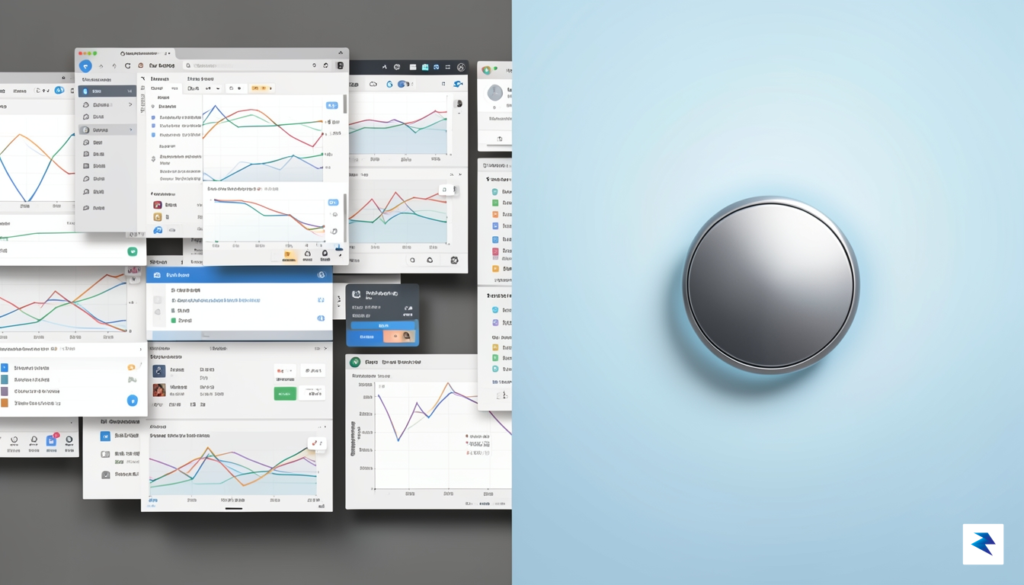
Many software development efforts, despite noble intentions, often fall prey to a common misconception of what constitutes a “Minimum Viable Product.” The term, often abbreviated to MVP, is frequently misinterpreted as simply launching something with the fewest features possible, without adequately scrutinizing whether those features collectively deliver tangible value. This approach inadvertently fosters a ‘feature factory’ mindset, where the team’s success metrics become tied to the sheer volume of functionalities shipped rather than their actual impact on users or the business. Consequently, projects can quickly accumulate extraneous capabilities that complicate the user experience and divert precious resources, leading to an insidious form of ‘feature fatigue’ that benefits no one.
This relentless pursuit of adding more features, without a clear, demonstrable link to core user problems or revenue generation, inevitably leads to an overwhelming product experience. Users, bombarded with an excessive array of options and settings, struggle to identify the core utility that initially attracted them to the product. The essential value proposition becomes buried under layers of complexity, making the software feel cumbersome and less intuitive. Furthermore, each additional feature introduces new pathways for potential bugs, inconsistencies, and usability issues, diminishing the overall quality perception and increasing user frustration, ultimately obscuring the very value the software was meant to provide.
The hidden cost of feature bloat extends significantly to both users and the development team. For users, a crowded interface and a plethora of options impose a substantial cognitive load, forcing them to spend more mental energy navigating and understanding the software rather than achieving their goals efficiently. This can lead to lower adoption rates and increased churn, as users naturally gravitate towards simpler, more focused solutions that respect their time and attention. On the development side, every prematurely launched feature carries a long-term maintenance burden, demanding ongoing bug fixes, security patches, and compatibility updates. This constant upkeep drains resources that could otherwise be allocated to enhancing truly valuable capabilities or innovating new ones, creating a perpetual cycle of reactive development that stifles genuine progress.

Instead of focusing on accumulating features, a more strategic and ultimately more successful approach centers on identifying and delivering the “Minimum Viable Unit” of value. This paradigm shift encourages teams to isolate the single, most potent capability that addresses a critical user need and drives a measurable outcome, whether that’s revenue, engagement, or problem resolution. The objective is not to build a platform with endless possibilities, but to create a compelling, focused solution that demonstrably solves a specific problem. By doing so, developers can ensure that every line of code written, every design decision made, directly contributes to a clear, measurable purpose, making the software inherently more effective and impactful from day one.
This value-centric philosophy means ‘selling’ the solution to a problem, not merely listing the features of a platform. It’s about communicating how a specific, targeted capability fundamentally improves a user’s life or workflow, rather than presenting a myriad of functionalities that may or may not be relevant. When a software product is designed around a core unit of value, it becomes significantly easier for users to understand its purpose, adopt it, and integrate it into their routines without unnecessary friction. This clarity fosters stronger user loyalty and provides a more solid foundation for future, truly valuable expansions, ensuring that growth is intentional and aligned with actual user needs, rather than a mere accumulation of unvalidated features.
Identifying Your Core Unit of Value

To pinpoint your Minimum Viable Unit (MVU), you must strip away the vanity of a comprehensive feature set and focus entirely on the singular point of failure in your customer’s current process. This journey begins by mapping the user’s workflow with brutal honesty. Instead of asking what features you could build, you must observe where the user experiences the most visceral friction. Often, this is a manual, repetitive task that consumes hours of their week or a specific data bottleneck that prevents them from making a critical decision. By identifying this specific, painful knot, you move away from building a generic tool and toward creating a surgical solution.
Once you have isolated that primary bottleneck, your task is to define the smallest possible action that resolves it. This is not the full-scale platform you have envisioned; it is the atomic unit of utility that makes the software indispensable. Consider this a three-step framework for narrowing your focus:
- Map the Bottleneck: Trace the user’s journey until you find the exact moment they stop or get frustrated. Is it a spreadsheet they have to copy-paste manually? Is it a report that takes three hours to compile? Document the exact input and the desired output.
- Define the Atomic Action: Strip away every secondary interface element, notification, or configuration option. If your software can perform one specific action—like automating that single spreadsheet row or generating that one report—does it solve the problem? If the answer is yes, you have found your MVU.
- Validate the Value: Before writing a single line of production-grade code, confirm that the user would pay to have this friction removed. Ask them: “If I could make this specific task disappear, would you pay for it?” If they hesitate, you have not identified a painful enough problem.

The goal of the MVU is not to provide a product, but to provide a shortcut to a result. If your user is willing to pay for the shortcut, you have found your business.
The greatest challenge in this process is the psychological urge to include “nice-to-have” features that make your product look “finished.” Founders and engineers often fear that a simple, single-purpose tool will be perceived as incomplete or amateurish. However, the opposite is usually true; in a market saturated with bloated software, a tool that does one thing perfectly is a breath of fresh air. By relentlessly ignoring features that do not directly alleviate your identified bottleneck, you protect your limited resources and ensure that every line of code serves a clear, profitable purpose. Remember, your users are not paying for the number of buttons on your dashboard—they are paying for the time and stress you remove from their professional lives.
Strategies for Incremental Value Building

Once you have validated your initial Minimum Viable Unit (MVU), the temptation to rapidly expand can be overwhelming. However, the most sustainable path to growth is not found in a chaotic sprawl of features, but in the implementation of “concentric growth.” Imagine your software as a high-quality toolkit rather than an unwieldy, compromised multi-tool. A multi-tool tries to solve every problem with a single, fragile interface, often resulting in a product that does nothing particularly well. In contrast, a toolkit consists of specialized instruments that each perform one function with absolute precision. By building concentric circles of value, you ensure that every new feature serves as an extension of the core unit’s original promise, reinforcing its utility rather than diluting its focus.

To avoid the common trap of feature creep, you must adopt a disciplined approach to user feedback. When customers request new capabilities, the instinctive reaction is often to build whatever is asked for immediately. Instead, filter every suggestion through a simple question: “Does this enhance the utility of the core unit, or does it create a new, separate dependency?” If a feature request pulls the user away from the core value proposition, it should be treated as a candidate for a second, distinct unit. By keeping the initial unit performant and focused, you maintain a “north star” for your development team. This allows you to iterate on the core experience with high confidence, knowing that you aren’t breaking existing workflows to accommodate tangential needs.
True product maturity is not achieved when there is nothing left to add, but when there is nothing left to take away while maintaining the core value.
Adding a second unit is appropriate only when the first unit has reached a high degree of stability and your users are actively hitting a “ceiling” that requires a different type of solution. When you do reach this stage, ensure that the bridge between the two units is seamless—much like how a hammer and a nail are two different tools that work in perfect harmony. The connection should feel intentional and cohesive, allowing the user to transition from one task to the next without feeling like they have entered an entirely different, disconnected application. By treating growth as a series of deliberate, additive layers, you build a robust ecosystem that provides deep, meaningful utility, ensuring your software remains elegant, maintainable, and profoundly useful to your audience.
Avoiding the Trap of Bloated MVPs

The most common path to failure in software development is the slow, creeping accumulation of features that nobody actually asked for. When a product roadmap begins to resemble a junk drawer rather than a strategic document, you are likely drifting away from your Minimum Viable Unit (MVU). Red flags that you have fallen into this trap include long development cycles without a release, a lack of consensus on the primary user problem being solved, and a growing list of “nice-to-have” features that take priority over core functionality. If your team spends more time managing dependencies between disparate modules than refining the user experience of your primary tool, you have officially bloated your product.
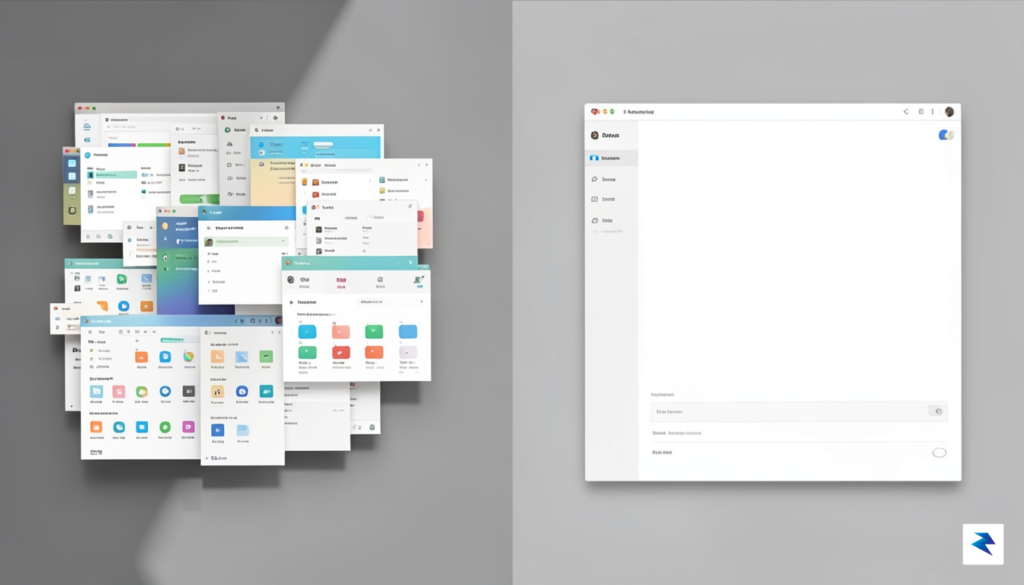
To maintain discipline, you must treat every incoming feature request with healthy skepticism. When a stakeholder or customer suggests a new addition, ask yourself: Does this feature directly support the core value proposition of our MVU, or is it merely an attempt to capture a fringe use case? If the feature doesn’t move the needle on your primary metric, it should be relegated to a “later” bucket or discarded entirely. Learning to say “no” is not about being difficult; it is about protecting the integrity of the product and ensuring that your engineering resources are focused on building something that is undeniably excellent rather than something that is mediocre in ten different ways.
The discipline to exclude is just as important as the ambition to build. A product that does one thing perfectly is almost always more valuable than a product that does ten things poorly.
Furthermore, feature-heavy products are magnets for technical debt. Every new line of code, integration, and user-facing toggle increases the complexity of the entire system, making it harder to test, deploy, and maintain. By adhering to an MVU-first strategy, you keep your codebase lean, which allows for higher velocity and fewer bugs. When you avoid the urge to bloat the software, you retain the architectural flexibility to pivot based on real user feedback rather than being shackled to a mountain of legacy code. Remember, a smaller, high-quality codebase is not a limitation—it is a competitive advantage that allows you to iterate faster and respond more effectively to the actual needs of your market.