Understanding the Government Crackdown on Anthropic: Winners and Losers
The Regulatory Shift: Understanding the Crackdown on Anthropic The recent administrative actions directed toward Anthropic signal a profound…

For over a decade, the promise of self-driving vehicles felt like a perpetual “five years away” horizon, largely defined by high-profile testing in a handful of North American tech hubs. However, the narrative has shifted dramatically as the industry transitions from controlled, experimental pilots to the rigorous demands of large-scale commercial deployment. While Western companies have grappled with complex regulatory hurdles, public skepticism, and a cautious approach to scaling, Chinese urban centers have quietly accelerated their infrastructure and deployment efforts. This divergence has reached a tipping point, effectively moving the global center of gravity for autonomous mobility from Silicon Valley toward the densely populated metropolises of Beijing, Shanghai, and Guangzhou.

The speed at which these autonomous ecosystems are maturing in China is nothing short of transformative. Unlike the fragmented testing environments often found in the West, Chinese municipalities have embraced a top-down strategy, integrating robotaxi fleets into the broader fabric of smart city planning. This involves not just the vehicles themselves, but a comprehensive redesign of urban infrastructure, including vehicle-to-everything (V2X) communication technology and dedicated traffic management systems that prioritize autonomous flow. As a result, companies operating within this environment are accumulating millions of miles of real-world data at a velocity that their international counterparts struggle to match, shortening the feedback loop between software iteration and operational safety.
The true measure of progress in the autonomous sector is no longer just the ability to navigate a suburban street, but the capacity to manage the chaotic, high-density traffic patterns of a global megacity at scale.
Recent analytical data, encapsulated in a new industry-wide scorecard, serves as a sobering benchmark for investors and policymakers who have long assumed Western technological hegemony. By evaluating factors such as fleet size, geographic expansion, safety performance, and regulatory support, this scorecard highlights a clear hierarchy that places China at the forefront of the commercialization curve. For global stakeholders, this is not merely a matter of industrial competition; it represents a fundamental shift in how the future of urban mobility will be engineered, regulated, and consumed. As the gap between experimental potential and mass-market reality narrows, the nations that lead in this space will likely set the global standards for hardware interoperability, safety certification, and the ethical frameworks that govern the next century of transportation.

For years, the industry standard for measuring autonomous progress was a simplistic obsession with “miles driven.” However, counting every mile a test vehicle traverses on a highway is a misleading metric that fails to capture the true complexity of urban navigation. To truly understand why China has surged ahead in the robotaxi race, analysts have shifted toward a more nuanced scorecard that weighs commercial viability and operational maturity over raw testing volume. This new framework evaluates success through a multidimensional lens, prioritizing how effectively a vehicle handles chaotic, high-density traffic rather than simply how long it can stay on the road in ideal conditions.

At the heart of this scorecard are several critical Key Performance Indicators (KPIs) that separate theoretical research from real-world utility. Experts now scrutinize the Operational Design Domain (ODD)—the specific environment, weather, and road types in which a vehicle is designed to operate—as the primary benchmark for success. A system that can navigate the dense, unpredictable streets of a major Chinese metropolis like Beijing or Wuhan under varying weather conditions demonstrates a significantly higher level of technological sophistication than one restricted to the sun-drenched, predictable grids of a suburban testing ground. By assessing fleet density and the frequency of human intervention, researchers can determine whether a platform is ready for mass-market deployment or if it remains trapped in the perpetual cycle of iterative pilot testing.
True autonomous leadership is no longer measured by the distance traveled in a simulator, but by the density of fully driverless rides provided to the public in complex urban environments.
Furthermore, the scorecard incorporates the vital role of regulatory support and public acceptance, two pillars that are often overlooked by technologists but are essential for commercial survival. China’s competitive advantage has been significantly bolstered by a proactive regulatory environment that allows companies to scale their fleets rapidly once specific safety thresholds are met. When these bureaucratic hurdles are lowered, operators can achieve the data-loop velocity necessary to train their machine learning models more effectively than their global peers. This symbiotic relationship between government policy and technological scaling allows for a level of integration that is difficult to replicate in regions where the regulatory framework remains fragmented or overly cautious.
Ultimately, these metrics reveal that the race for autonomous transit is not merely a contest of engineering prowess, but a test of institutional and operational synergy. By moving beyond the vanity metric of total miles driven and focusing on the reliability of the fleet in the most demanding environments, this scorecard provides a transparent, objective view of where the world’s autonomous capabilities truly stand. For the casual observer and the industry insider alike, this shift in measurement confirms that the future of mobility is being written in the high-stakes, high-density testing grounds of the East.

The ascendancy of China in the autonomous vehicle (AV) sector is not a byproduct of chance or singular engineering breakthroughs; rather, it is the result of a meticulously orchestrated national strategy that treats robotaxi deployment as a foundational pillar of future urban infrastructure. Unlike the fragmented, trial-and-error approach seen in many Western markets, the Chinese government has actively curated “smart city” zones where the physical environment is designed to accommodate autonomous transit. By integrating dedicated test zones into urban planning, regulators have allowed companies to iterate rapidly in real-world scenarios while maintaining strict safety oversight, effectively lowering the barrier to entry for large-scale pilot programs.
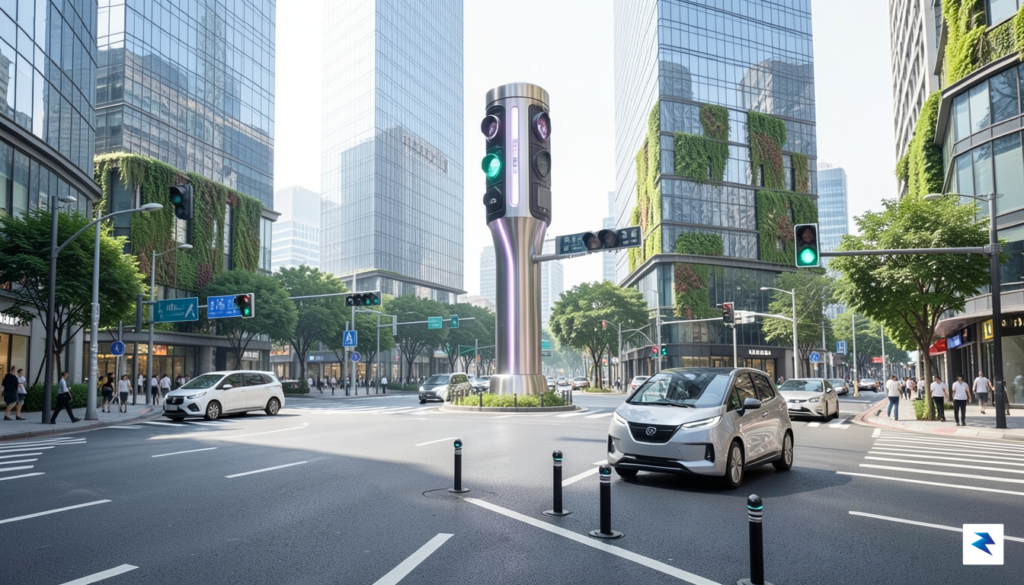
A primary driver of this technical advantage is the country’s aggressive commitment to Vehicle-to-Everything (V2X) connectivity. While many global manufacturers focus heavily on vehicle-centric sensors like LiDAR and onboard cameras, China has simultaneously invested in the “intelligence of the road.” By embedding sensors and communication nodes directly into traffic signals, road signs, and intersections, the infrastructure itself acts as an extended sensory suite for the vehicle. This V2X ecosystem allows robotaxis to “see” around blind corners and receive real-time updates on traffic flow or pedestrian movement, significantly reducing the computational load on the car’s onboard AI while simultaneously increasing safety margins.
The marriage of pervasive 5G connectivity and centralized urban planning has created a digital “nervous system” for roads, allowing vehicles to anticipate hazards long before they enter the direct line of sight of onboard sensors.
Furthermore, the integration of standardized, government-backed high-definition mapping protocols has provided a unified framework that all AV developers can utilize, preventing the siloing of data that often slows progress elsewhere. These maps are updated in real-time through a massive network of connected vehicles, ensuring that robotaxis are always operating with the most current information regarding road closures, construction, or lane changes. By standardizing these safety protocols and mapping requirements, the state has facilitated a level of interoperability and data sharing that has accelerated the maturity of autonomous algorithms. Consequently, this synergy between state-led infrastructure investment and private-sector technological agility has effectively transformed China into a massive, live-action laboratory for the global future of mobility.
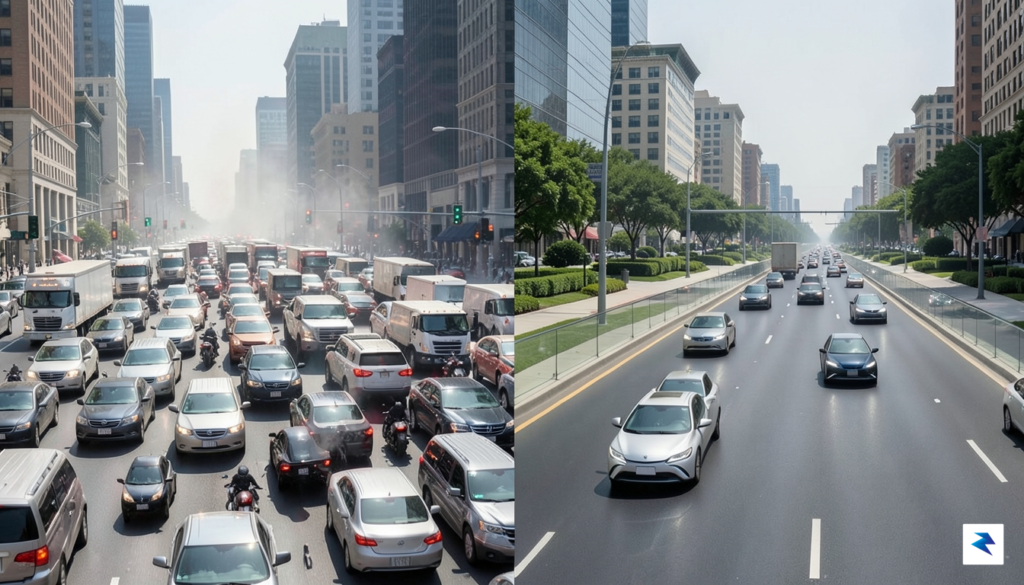
While North American and European firms are widely credited with pioneering the foundational research behind autonomous vehicles (AVs), the path from laboratory breakthroughs to mass-market robotaxi deployment has proven unexpectedly treacherous. Unlike the centralized, top-down approach seen in China, Western developers must navigate a profoundly fragmented regulatory landscape. In the United States, for instance, testing and deployment permissions vary wildly from one state to the next, forcing companies to engage in a patchwork of lobbying efforts and compliance strategies. Europe presents its own unique complexities, where stringent data privacy laws and diverse national transport policies create significant friction for scaling fleets across borders. This lack of a unified regulatory framework slows the iteration cycles that are vital for refining self-driving software, effectively keeping many companies trapped in a permanent state of localized pilot testing.
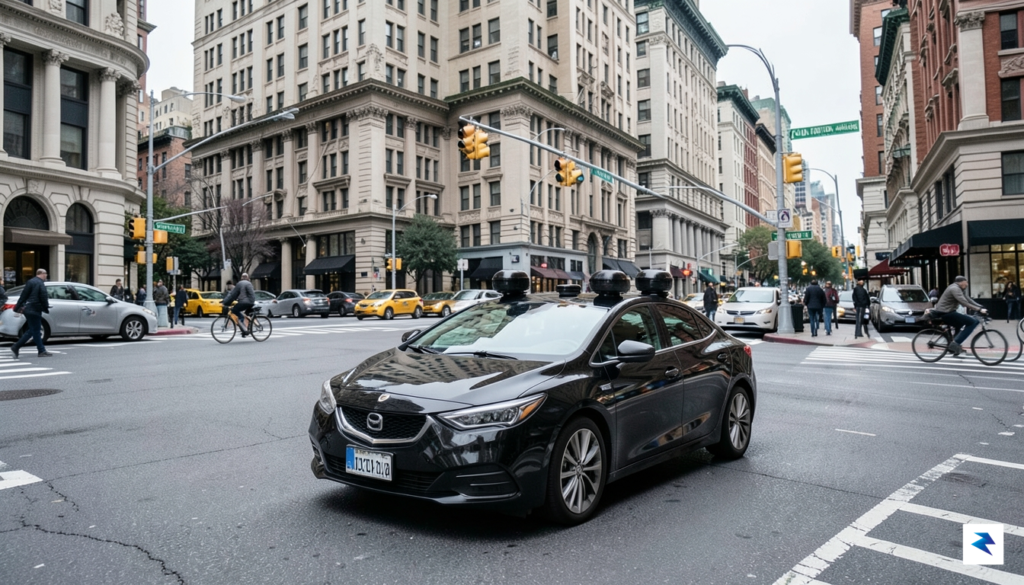
Beyond the legal and bureaucratic hurdles, public trust remains a formidable barrier to widespread adoption. High-profile, headline-grabbing accidents—ranging from stalled vehicles blocking emergency services to more severe collisions—have deeply impacted the public’s perception of AV safety. These incidents often trigger knee-jerk legislative reactions and increased scrutiny from regulators, which can grind testing operations to a halt for months at a time. Because the public tolerance for error in automated systems is significantly lower than for human drivers, a single mistake can erode years of goodwill. This climate of skepticism forces Western firms to invest heavily in safety validation and human-in-the-loop oversight, which, while necessary, inevitably increases the operational costs and slows the pace of full-scale commercialization.
The core challenge for Western developers is not just technological maturity, but winning the ‘social license’ to operate on public roads amidst intense media and regulatory skepticism.
The disparity in funding models further exacerbates these delays. Many Western robotaxi startups rely on venture capital, which demands a relatively rapid path to profitability and high transparency regarding burn rates. Conversely, Chinese competitors often benefit from state-backed support and massive municipal infrastructure investments, allowing them to prioritize long-term scale and data acquisition over immediate financial returns. This structural difference means that while Western firms are constantly pivoting to appease investors or securing capital for the next development phase, their counterparts in China can focus on aggressive, wide-area deployment. Ultimately, the Western transition to autonomous transit is being throttled by a combination of decentralized oversight, an understandably cautious public, and a financial ecosystem that is less forgiving of the long, capital-intensive road to true autonomy.
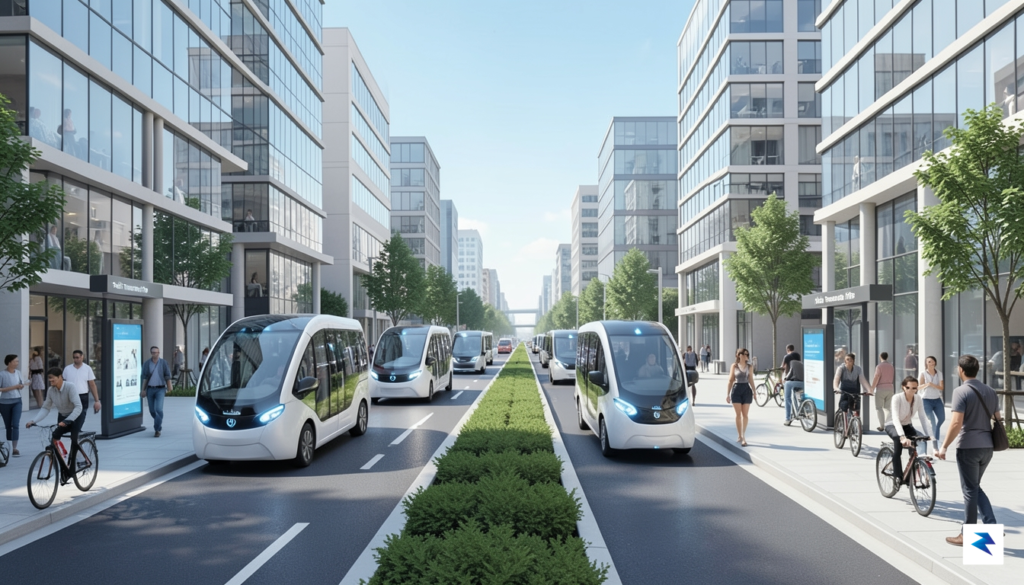
The rapid ascent of China’s autonomous vehicle ecosystem suggests we are standing on the precipice of a bifurcated global technology market. As domestic manufacturers in China achieve unprecedented scale through dense urban testing and supportive regulatory frameworks, they are establishing a blueprint for autonomous transit that may soon become difficult for Western markets to replicate. This divergence is not merely about software algorithms or sensor suites; it represents a fundamental split in how urban infrastructure communicates with vehicles. If global standards for vehicle-to-everything (V2X) communication and safety protocols begin to favor these dominant Eastern models, the rest of the world may find itself forced to choose between adopting a pre-packaged, foreign-made technological stack or investing billions to develop a localized, interoperable alternative from scratch.
This shift carries profound consequences for the future of global automotive manufacturing. For over a century, the automotive industry has relied on a complex, deeply integrated supply chain that favored traditional mechanical engineering prowess. Now, the competitive advantage is rapidly migrating toward artificial intelligence, high-performance computing, and real-time data processing. As robotaxi fleets scale, the primary value proposition of an automobile will no longer be its horsepower or brand prestige, but its ability to operate safely as a service. Countries that fail to cultivate their own autonomous software hubs risk becoming mere assembly points for foreign-designed intelligence, effectively demoting their storied automotive industries to the status of hardware commoditization.
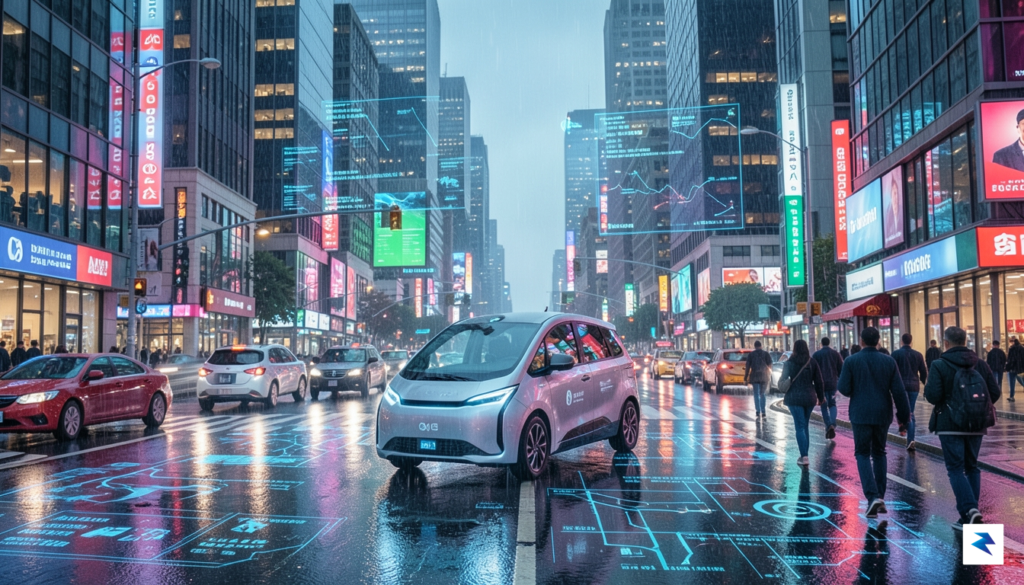
The transition toward autonomous transit is not just a technological upgrade; it is a systemic reorganization of urban life that will eventually render the concept of private vehicle ownership an inefficient relic of the past.
Ultimately, the long-term goal of the robotaxi model is to fundamentally restructure our relationship with urban space. By optimizing transit flow and reducing the need for massive, centrally located parking lots, cities could reclaim vast swaths of land for green spaces, housing, and pedestrian-centric infrastructure. However, the path to this future is dictated by who holds the keys to the data and the underlying operating systems. As the rest of the world watches this competitive gap widen, the pressure will mount on policymakers to either accelerate domestic innovation or establish international regulatory frameworks that ensure autonomous transit remains an open, competitive landscape rather than a fragmented archipelago of proprietary technologies.
You must be logged in to post a comment.