
Why Local LLMs Matter for Data Classification

In an era where data privacy is no longer a luxury but a fundamental requirement, the architectural shift toward local large language models (LLMs) is transforming how businesses approach automated data classification. When organizations rely on massive, general-purpose cloud APIs, they inadvertently open a pipeline of sensitive information to third-party providers. By moving categorization tasks to local infrastructure, companies ensure that proprietary data, customer queries, and internal insights never leave the secure perimeter of their own servers. This “data sovereignty” approach is particularly vital for industries governed by strict compliance standards, such as healthcare, finance, and legal services, where even the temporary exposure of metadata can lead to significant regulatory hurdles.
Beyond the critical necessity of privacy, the economic implications of local deployment are equally compelling. Cloud-based LLM services operate on a per-token pricing model, which can quickly spiral out of control as the volume of incoming questions scales. For a high-traffic support desk or an automated tagging system, these recurring costs often become a significant line item on the IT budget. Conversely, running a local instance requires only an initial investment in hardware—or the allocation of existing compute resources—effectively turning a variable, unpredictable monthly expense into a fixed, manageable operational cost. Over time, the cumulative savings from avoiding millions of API requests can be substantial, allowing teams to redirect those funds toward model optimization and infrastructure improvements.
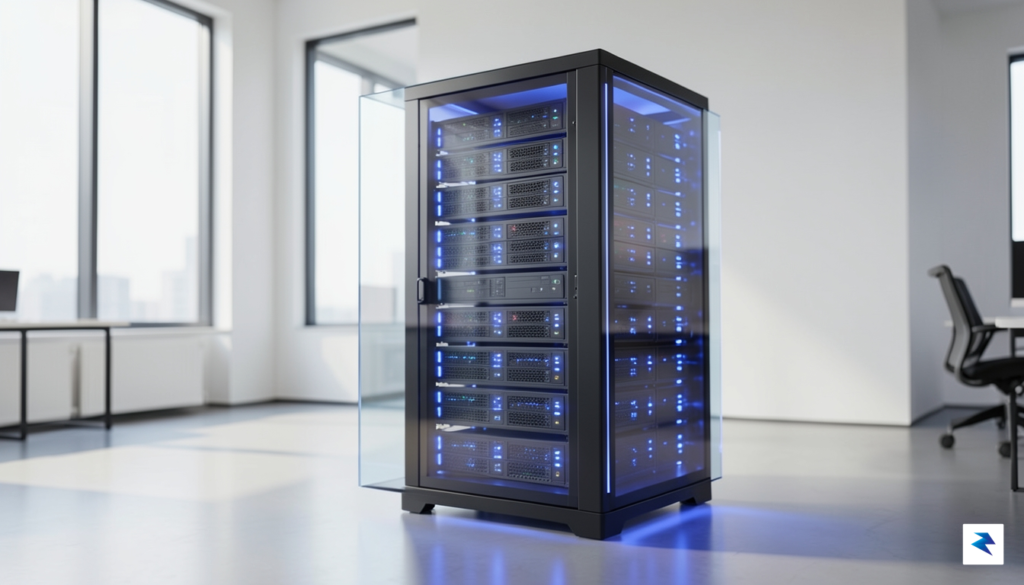
By shifting to smaller, specialized models, organizations can achieve higher accuracy for specific tasks while eliminating the latency and privacy concerns inherent in large-scale cloud services.
The rise of high-performance, compact models—such as the Qwen 0.5B series—challenges the assumption that “bigger is always better” when it comes to classification tasks. While general-purpose giants are designed to handle everything from creative writing to complex coding, they are often over-engineered and inefficient for the binary or categorical sorting of incoming queries. A fine-tuned, lightweight model acts as a precision instrument, focusing its entire parameter space on understanding the nuances of your specific domain. Because these small models are incredibly efficient, they can be deployed on standard consumer-grade hardware or even edge devices, ensuring that your classification system remains fast, responsive, and completely independent of external connectivity. This strategic move toward smaller, fine-tuned models represents a mature evolution in AI adoption, prioritizing efficiency and domain-specific excellence over the blunt-force approach of massive, generic language models.
Selecting the Right Model: The Case for Qwen 2.5 0.5B

It is a pervasive misconception in the rapidly evolving landscape of artificial intelligence that bigger always translates to better. While gargantuan models boasting hundreds of billions or even a trillion parameters certainly excel at open-ended generation, complex reasoning across vast, diverse domains, or tasks requiring extensive world knowledge, this paradigm does not universally apply. For highly focused, specific tasks such as question classification, the sheer scale of a massive model can often become a liability rather than an asset, introducing unnecessary computational overhead and complexity without a proportional gain in performance for the targeted objective.
This is precisely where the concept of “right-sizing” an LLM comes into play, and where models like Qwen 2.5 0.5B demonstrate their profound value. For a task like categorizing incoming questions, the core requirement is not broad creative text generation or intricate multi-turn dialogue, but rather a sharp, nuanced understanding of intent and subject matter within a defined scope. The Qwen 2.5 0.5B model, despite its seemingly modest half-a-billion parameters, provides an exceptional balance of potent linguistic capabilities and remarkable operational efficiency. Its architecture is thoughtfully designed to capture the semantic intricacies necessary for accurate categorization, making it an ideal candidate for fine-tuning on specific datasets.
The Advantages of a Lean Architecture for Focused Tasks
The inherent efficiency of a lightweight model like Qwen 2.5 0.5B presents several distinct advantages. Firstly, its compact footprint means it requires significantly less memory and computational power to run. This is crucial for local deployments where hardware resources might be constrained, enabling organizations to achieve powerful AI capabilities without investing in prohibitively expensive, high-end GPU clusters. This accessibility democratizes advanced natural language processing, allowing more businesses and developers to leverage fine-tuned LLMs for their specific needs, thereby reducing operational costs substantially.
Secondly, and perhaps most critically for real-world applications, is the superior inference speed. In latency-sensitive environments, such as real-time customer support queues, automated helpdesk routing, or immediate content moderation, the ability to process and classify inquiries almost instantaneously is paramount. Massive models, by their very nature, often incur significant latency due due to the sheer volume of computations required for each prediction. Qwen 2.5 0.5B, however, can provide rapid responses, ensuring that users experience minimal wait times and that automated systems can react promptly, thereby enhancing user satisfaction and operational fluidity. This speed is not achieved at the expense of accuracy; rather, through meticulous fine-tuning on domain-specific data, this smaller model learns to discern the subtle nuances of question types with impressive precision, often matching or even exceeding the performance of its larger counterparts on these specialized tasks.
Moreover, the Qwen architecture itself is optimized for performance, even at smaller scales. When paired with targeted fine-tuning, the 0.5B parameter count is more than sufficient to grasp the specific patterns and semantic structures inherent in question categorization. This tailored approach allows the model to become highly specialized, discarding the vast, generalized knowledge that large models acquire (and carry as overhead) in favor of deep expertise in its designated domain. The result is a highly effective, agile, and resource-friendly solution that excels precisely where it matters most for classification tasks, proving definitively that for certain applications, intelligence lies not in sheer size, but in focused design and efficient execution.
Preparing Your Dataset for Efficient Fine-Tuning

The foundation of any successful fine-tuning project—especially when working with compact, sub-1B parameter models like Qwen 0.5B—rests entirely on the integrity of your training data. While larger models can often “reason” their way through noisy or disorganized datasets, smaller models are highly sensitive to the signal-to-noise ratio. To achieve high accuracy in question categorization, you must treat your dataset as a curated collection rather than a raw dump of logs. A clean, balanced, and representative dataset acts as the architectural blueprint for your model’s decision-making process, ensuring it learns the nuances of your specific taxonomy rather than merely memorizing patterns in the noise.
Prioritizing Balance and Representation
One of the most common pitfalls in training is an imbalanced dataset where certain categories are heavily over-represented. If your model sees a thousand examples of “Billing” queries but only fifty for “Technical Support,” it will naturally develop a bias toward the majority class, leading to poor generalization. You should aim for a distribution that reflects the real-world variety of your users’ intent. If you lack sufficient data for a specific category, consider augmenting it with high-quality synthetic examples rather than oversampling the same few queries, as repetition can lead to overfitting and a brittle model that fails on slightly modified inputs.
Quality always triumphs over quantity. A small, perfectly labeled dataset of 500 diverse examples will consistently outperform a massive, noisy set of 50,000 messy entries when working with smaller LLMs.

Data Hygiene and Formatting Best Practices
Before you begin the fine-tuning process, rigorous data cleaning is non-negotiable. Start by scrubbing your dataset for duplicates, as redundant entries provide no additional learning value and can inadvertently reinforce incorrect classification logic. You must also address ambiguity; if a query is too vague to be categorized reliably by a human, it will only confuse the model. Every entry should strictly follow the JSONL format, ensuring consistent input-output pairing that the model can parse without friction. A typical structure should look like this:
{"instruction": "Categorize the following user query.", "input": "How do I reset my password?", "output": "Account Management"}
By keeping your formatting consistent and your inputs clean, you provide the model with a clear “ground truth” that it can map to your labels. If you find your model struggling with specific edge cases, revisit your dataset to ensure those examples are clearly labeled and distinct from one another. Remember that your goal is to teach the model a classification logic, and that logic is only as sharp as the examples you provide. Through careful curation and a “less is more” mindset, you can transform a compact model into a highly efficient and accurate categorization engine tailored to your unique requirements.
Technical Implementation: Training and Infrastructure

Fine-tuning even relatively small local Language Models (LLMs) like Qwen 0.5B for specialized tasks, such as question categorization, might seem daunting at first glance. However, thanks to a rapid evolution in tooling and techniques, this process has become remarkably accessible, enabling developers and researchers to leverage consumer-grade hardware for impressive results. The cornerstone of this accessibility lies in Parameter-Efficient Fine-Tuning (PEFT) methods, particularly Low-Rank Adaptation (LoRA), which drastically reduces the computational and memory demands of training, allowing for efficient iteration and experimentation right on your desktop.
Demystifying LoRA: Efficiency Through Adaptation
At its heart, LoRA is a brilliant technique designed to fine-tune large pre-trained models without modifying all their parameters. Instead of updating the entire model’s vast number of weights, LoRA injects small, trainable low-rank decomposition matrices into each layer of the original transformer architecture. This means that during fine-tuning, only these newly added, tiny matrices are trained, while the vast majority of the pre-trained model’s weights remain frozen. The implications for resource consumption are profound: memory usage is dramatically reduced because you no longer need to store gradients for millions or billions of parameters, and training speed sees a significant boost. For models like Qwen 0.5B, this method transforms what might have been a multi-GPU server task into something feasible on a single, powerful consumer GPU, democratizing access to powerful customization capabilities.
The Essential Software Stack for Local LLM Fine-Tuning
Embarking on a local LLM fine-tuning journey requires a robust yet accessible software toolkit. Python serves as the primary programming language, offering an extensive ecosystem of libraries crucial for deep learning. Central to this ecosystem are Hugging Face’s `transformers` library, which provides easy access to pre-trained models like Qwen and their tokenizers, and PyTorch, the underlying deep learning framework that powers the computations. To further optimize memory usage, especially on consumer GPUs, the `bitsandbytes` library is indispensable, enabling efficient 4-bit quantization of models, effectively compressing their size without significant performance degradation. Finally, the Hugging Face `PEFT` library, often used in conjunction with performance optimizers like Unsloth, provides the seamless implementation of LoRA, abstracting away much of the complexity involved in injecting and training the adapter layers.
Preparing Your Data: The Foundation of Learning
Before any training can commence, a meticulously prepared dataset is paramount. For question categorization, this means gathering a collection of questions, each accurately labeled with its corresponding category. The quality and diversity of this dataset directly impact the fine-tuned model’s ability to generalize and categorize new, unseen questions effectively. Once collected, these textual questions need to be transformed into a numerical format that the LLM can understand, a process known as tokenization. Using the tokenizer specific to the Qwen 0.5B model ensures that the input text is broken down into tokens and mapped to numerical IDs consistently with how the original model was pre-trained, maintaining linguistic integrity and preparing the data for the learning process.
Configuring the Training Environment and LoRA Adapters
With the data prepared, the next step involves loading the base Qwen 0.5B model and configuring the LoRA adapters. Leveraging `bitsandbytes`, the model is typically loaded in a quantized format (e.g., 4-bit or 8-bit), which significantly reduces its memory footprint while maintaining most of its performance. This quantized model then serves as the bedrock onto which the LoRA adapters are attached. Crucial LoRA parameters, such as `r` (the rank of the update matrices, controlling expressiveness), `lora_alpha` (a scaling factor), and `lora_dropout` (a regularization technique), are carefully chosen. These parameters dictate the capacity and regularization of the adapter layers, directly influencing the fine-tuning process’s efficiency and the quality of the learned adaptations. Tools like Unsloth streamline this setup, often providing sensible defaults and optimized implementations for faster execution.
The Conceptual Walkthrough of the Training Loop
Once the model and LoRA adapters are configured, the actual training loop begins, typically orchestrated by a high-level API like Hugging Face’s `Trainer`. This loop involves repeatedly feeding batches of tokenized questions and their corresponding category labels to the model. For each batch, the model performs a “forward pass,” generating predictions for the categories. These predictions are then compared against the true labels using a predefined loss function, which quantifies the discrepancy between the model’s output and the desired outcome. The calculated loss is then used in a “backward pass” to compute gradients, but crucially, only for the small LoRA adapter parameters. An optimizer, such as AdamW, then uses these gradients to adjust the LoRA weights, iteratively nudging the model towards better categorization performance.
Hyperparameter Tuning: Guiding the Learning Process
Several key hyperparameters govern the training process and significantly influence the model’s convergence and final performance. The `learning rate` dictates the size of the steps taken by the optimizer when adjusting LoRA weights; a rate too high can cause instability, while one too low can lead to slow convergence. The `batch size` determines how many samples are processed before a single update to the LoRA weights occurs, impacting memory usage and the smoothness of the gradient estimations. Finally, the number of `epochs` specifies how many times the entire dataset is passed through the training loop. Careful selection and tuning of these hyperparameters, often through experimentation and monitoring of validation metrics like accuracy and F1-score, are essential to achieve optimal results and prevent issues like overfitting or underfitting.
Through this streamlined workflow, where only a minuscule fraction of the model’s parameters are updated, the fine
Optimizing for Production: Latency and Accuracy Trade-offs
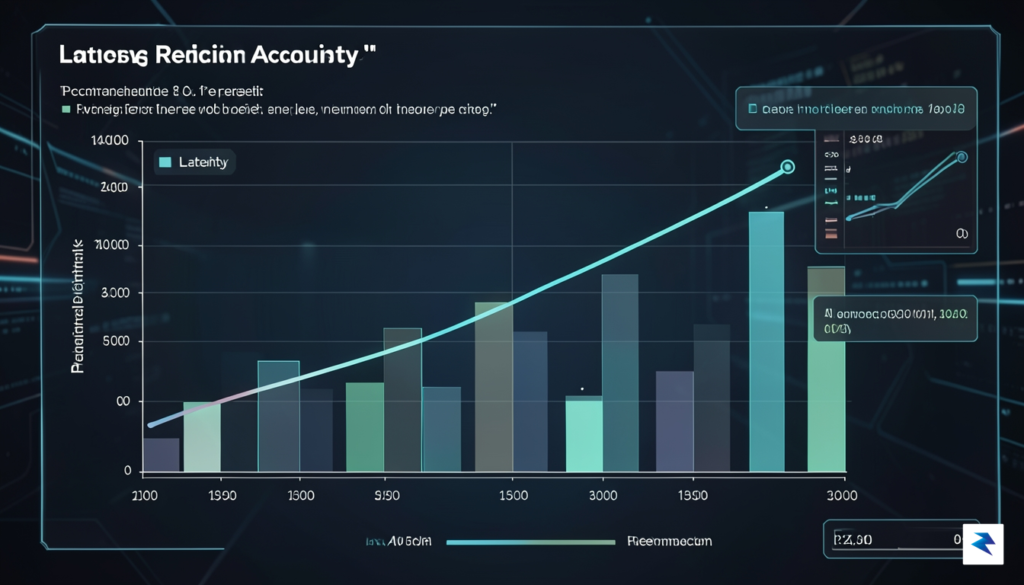
Training a specialized model like Qwen-0.5B is a significant technical milestone, but the transition from a research notebook to a production environment requires a rigorous focus on efficiency and reliability. Once your model achieves the desired accuracy during training, the next step is to shrink its memory footprint for deployment. By utilizing GGUF quantization, you can compress the model weights from floating-point precision down to 4-bit or even 3-bit integers. This process drastically reduces the VRAM requirements, allowing your categorization engine to run comfortably on modest hardware or even edge devices without sacrificing the semantic understanding of the original model. For high-throughput applications, this optimization is not just a luxury; it is the key to minimizing token-generation latency.
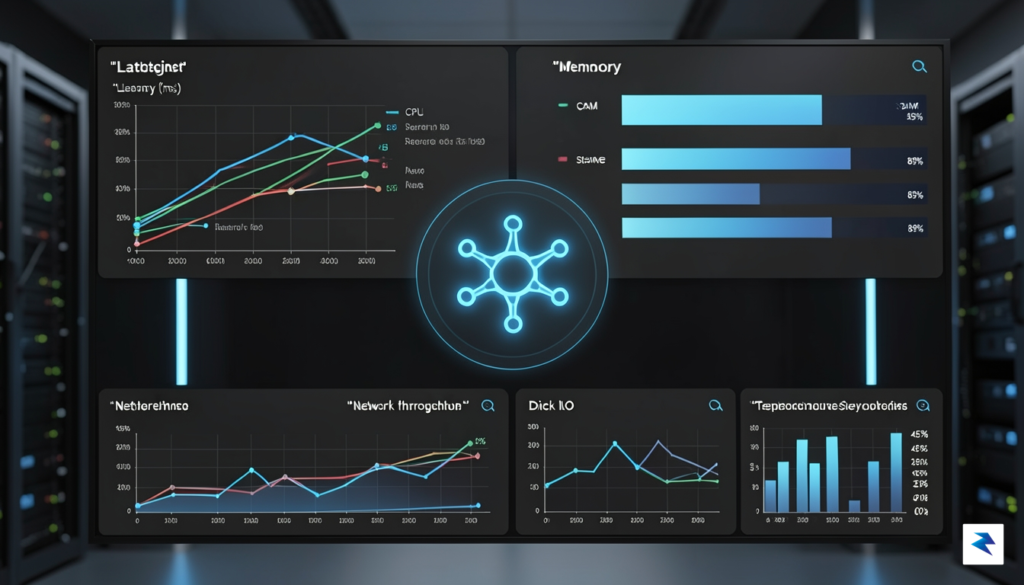
Beyond raw performance, you must establish a robust feedback loop to ensure long-term stability. A common pitfall in local deployment is “model drift,” where the incoming user queries begin to deviate from the distribution of your original training data. To mitigate this, you should maintain a dedicated, evolving validation set. By periodically testing your deployed model against this set, you can mathematically quantify if the categorization performance is degrading over time. If accuracy dips below a predefined threshold, it serves as an early warning sign that the model requires fine-tuning on newer, representative data to stay aligned with shifting user intent.
Implementing Human-in-the-Loop Safeguards
Even the most well-trained model will eventually encounter an ambiguous or edge-case query that it cannot categorize with high certainty. Rather than forcing the model to make an educated guess that might lead to an incorrect downstream process, it is best practice to implement a confidence threshold. By analyzing the logit outputs of the final layer, you can determine the model’s “probability score” for a given category. When the model falls below a specific threshold—say, 75% confidence—the system should automatically trigger a “human-in-the-loop” flag. This allows human operators to manually categorize the difficult query while simultaneously providing a high-quality data point to be added to your future training set.
The goal of local AI deployment is not to achieve absolute automation, but to create a system that knows exactly when to ask for help. By combining 4-bit quantization with a robust confidence-scoring mechanism, you build a resilient pipeline that is both fast enough for real-time needs and intelligent enough to handle uncertainty.
Ultimately, the future of local AI lies in these specialized, lightweight deployments that prioritize specific business logic over broad, general-purpose capabilities. As quantization tools become more sophisticated and hardware acceleration becomes more accessible, the barriers to deploying highly accurate, private, and low-latency categorization services will continue to disappear. By focusing on these deployment best practices today, you are positioning your infrastructure to remain agile and performant as the landscape of small language models continues to evolve at breakneck speed.