
The Case for Sovereign AI Infrastructure

As foundation models rapidly transform into the underlying operating systems of our modern digital society, the concentration of power within a small handful of proprietary providers has become a significant point of vulnerability. When critical infrastructure—ranging from healthcare diagnostics to financial modeling and public administration—relies entirely on black-box systems owned by external entities, organizations and nations alike face the profound risk of vendor lock-in. This dependency is not merely a technical challenge; it is a strategic liability. If a single provider decides to shift its pricing models, alter its API access, or deprecate core functionalities, the downstream impact on dependent organizations can be catastrophic, effectively paralyzing innovation and eroding operational autonomy.

Sovereign AI represents a fundamental pivot away from this centralized dependence, advocating for a model where infrastructure remains under local control, transparent oversight, and regional stewardship. The core philosophy of sovereign AI is to ensure that the tools powering society are not beholden to the fluctuating priorities of foreign corporations or distant cloud monopolies. By investing in localized, open-source alternatives, nations and large enterprises can ensure that their data remains within their legal jurisdictions, mitigating the risks associated with cross-border data flows and foreign surveillance. This transition is essential for preserving the ability to audit models, understand their decision-making processes, and adapt them to specific regional linguistic or cultural requirements.
Sovereign AI is the strategic imperative to own the intelligence that powers our future, ensuring that the critical algorithms defining our digital lives remain accountable, transparent, and aligned with local values.
The security and geopolitical implications of our current reliance on centralized cloud-hosted models cannot be overstated. When a nation’s intellectual property, personal citizen data, or critical infrastructure management is processed through models trained and maintained by external, opaque entities, the risk of data leakage and geopolitical leverage increases exponentially. By fostering a domestic or self-hosted ecosystem of open foundation models, organizations can regain sovereignty over their digital destiny. This shift does not imply a rejection of progress, but rather a commitment to a resilient, distributed architecture where the intelligence underpinning modern life is robust, auditable, and firmly within the control of those who rely on it most. Embracing this open approach is the only way to build a future where AI acts as a public good rather than a proprietary instrument of control.
Understanding the Apertus Open Foundation Model

In an era increasingly dominated by opaque, proprietary artificial intelligence systems, Apertus has emerged as a vital counterweight, repositioning the foundation model as a public utility rather than a gated corporate asset. The mission of the Apertus foundation is rooted in the conviction that the most powerful tools of our time should not be locked behind the “black boxes” of a few dominant tech giants. By fostering an ecosystem built on radical transparency and verifiable methodologies, Apertus empowers organizations to transcend vendor lock-in. This shift is not merely technical; it is a strategic imperative for entities that require total control over their data, their security architecture, and the fundamental logic governing their AI-driven applications.
What sets Apertus apart from traditional industry behemoths is its uncompromising commitment to true open-source principles. While many companies market their models as “open,” they often keep the underlying training data, fine-tuning processes, or even the weights themselves under restrictive licenses. Apertus, conversely, treats openness as a primary design requirement rather than an afterthought. By providing high-performance models with accessible weights and transparent datasets, they enable developers and researchers to audit, inspect, and refine the technology at every layer of the stack. This level of granularity ensures that the AI behaves predictably, allowing for the deep integration necessary for industries—such as healthcare, finance, and defense—where accountability is a non-negotiable requirement.

“Sovereign AI is not just about ownership; it is about the freedom to innovate without the limitations imposed by a centralized authority.”
The broader goal of the Apertus initiative is to facilitate democratic access to high-performance AI, ensuring that the next generation of technological progress is not concentrated within the silos of Silicon Valley. By prioritizing interoperability, Apertus allows these powerful models to function across diverse cloud infrastructures and on-premises environments, granting organizations the autonomy to scale according to their specific strategic needs. This commitment to decentralization means that smaller institutions and emerging markets can now leverage world-class foundation models without ceding their sovereignty to a third party. Ultimately, Apertus serves as the foundational infrastructure for a new digital landscape where AI is a collaborative resource, designed to be inspected, improved, and utilized by everyone, rather than being controlled by a select few.
- Verifiability: Every layer of the model architecture is open to third-party audits to ensure safety and ethical alignment.
- Interoperability: Built to run on heterogeneous hardware, reducing reliance on proprietary cloud ecosystems.
- Strategic Independence: Enables companies to retain full ownership over their proprietary datasets and model refinements.
Why Open Source is Essential for AI Independence

The reliance on proprietary artificial intelligence models creates a dangerous “black box” architecture, where the fundamental decision-making processes of a system remain shielded from the end-user. When organizations outsource their intelligence to private entities, they effectively surrender control over the logic, biases, and data provenance embedded within those systems. In sectors where the cost of error is high—such as healthcare diagnostics, legal processing, and financial risk assessment—this lack of visibility is not merely a technical inconvenience; it is a profound ethical risk. Open source models dismantle this opacity by allowing developers and researchers to inspect the training weights, data curation processes, and architectural choices, ensuring that the technology is transparent, accountable, and aligned with human values.

Beyond the ethical necessity of transparency, the technical advantages of an open ecosystem are unparalleled. Proprietary models are restricted by the internal limitations and specific priorities of a single corporation, which often results in slower innovation cycles and limited platform interoperability. Conversely, an open-source model benefits from the collective intelligence of a global community. When thousands of developers have the ability to audit code, they discover and remediate security vulnerabilities far faster than a siloed internal team ever could. Furthermore, this collaborative pressure leads to rapid performance optimizations, enabling models to run on more efficient hardware and reducing the energy footprint required for large-scale deployments.
True sovereignty in AI cannot exist if the foundational intelligence is locked behind a proprietary gate; it requires the freedom to inspect, adapt, and deploy without permission.
Fostering a healthy competitive landscape is perhaps the most significant outcome of embracing open infrastructure. When foundational models are available as open resources, it levels the playing field for startups, academic institutions, and smaller nations that would otherwise be priced out of the AI revolution by giant conglomerates. By democratizing access to high-performance models, we prevent the centralization of power and ensure that AI innovation serves a diverse array of stakeholders rather than a select few. This shift from monolithic, closed-source systems to a collaborative, open foundation model is the only path toward creating a truly sovereign digital future, where technology remains a tool for empowerment rather than a mechanism for platform dependency.
The transition toward an open foundation for AI rests on three core pillars of community-driven progress:
- Auditable Transparency: The ability to conduct deep-dive reviews of model weights to identify and correct systemic biases before they propagate into critical societal applications.
- Collaborative Security: A decentralized approach to patching where vulnerabilities are identified and mitigated by a global network, rather than waiting for a single vendor to issue an update.
- Interoperable Innovation: Removing vendor lock-in allows users to port their sovereign AI solutions across different infrastructures, ensuring long-term institutional resilience.
Technical Architecture and Transparency

At the core of the Apertus initiative is a commitment to radical architectural transparency, serving as a direct counterweight to the “black box” nature of proprietary artificial intelligence. Unlike closed-source competitors that rely on opaque, API-only delivery models, Apertus empowers developers by documenting every stage of the training pipeline. This granular approach to data lineage allows engineers to trace the evolution of model weights, ensuring that the underlying data integrity is verifiable rather than assumed. By providing clear visibility into how these models are structured and trained, Apertus equips developers with the context necessary to fine-tune systems for specialized tasks with absolute confidence in their reliability and safety.
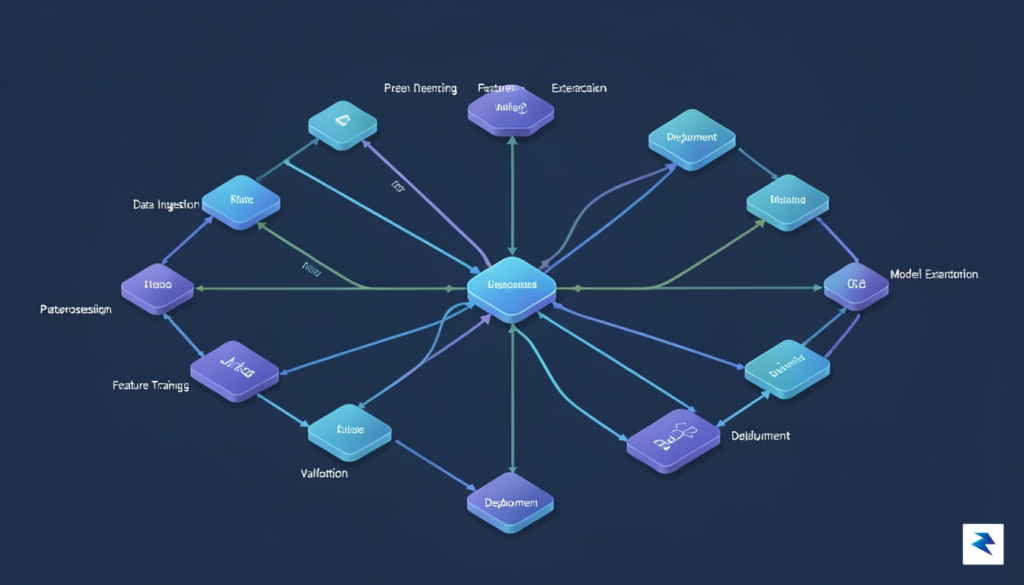
The structural design of Apertus is purposefully modular, acknowledging that a one-size-fits-all model rarely meets the rigorous requirements of diverse industries. This architecture allows organizations to strip away unnecessary layers or integrate domain-specific modules, effectively tailoring the model’s footprint to suit highly regulated environments like healthcare, finance, or government infrastructure. Because the architecture is open and modular, it facilitates seamless local deployment and edge computing. Instead of relying on a constant, latency-prone connection to a vendor’s server, Apertus models can be deployed on-premises or at the network edge. This not only preserves data sovereignty but also ensures that critical operations remain functional even in offline or bandwidth-constrained scenarios.
By prioritizing transparency and modularity over restrictive gatekeeping, Apertus transforms the AI development process from a dependency-driven model into one defined by autonomy and structural integrity.
This approach stands in stark contrast to the dominant industry trend, where closed-source providers maintain total control over their models through restricted APIs. When a business relies on a closed-source API, they are subject to the provider’s deprecation cycles, usage limitations, and hidden data filtering policies. Apertus eliminates these risks by placing the infrastructure directly into the hands of the user. By offering a transparent, inspectable, and deployable framework, the platform fosters an ecosystem where AI is treated as a piece of reliable infrastructure rather than a rented service. Ultimately, this structural transparency is what enables true Sovereign AI, allowing organizations to build, scale, and maintain their own intelligence systems without compromising on control or security.
Navigating the Future of Sovereign AI Deployment

Transitioning to a sovereign AI model is not merely a technical upgrade; it is a fundamental shift in how an organization handles its most valuable digital assets. To successfully integrate Apertus into your existing stack, leadership must first evaluate their current data posture and infrastructure readiness. Unlike closed-source alternatives that function as “black boxes,” Apertus provides the transparency necessary for organizations to maintain full control over their proprietary data, ensuring that sensitive information never leaves the local perimeter. This necessitates a move toward localized deployment, where hardware requirements must be carefully scaled to support the computational demands of large-scale inference while maintaining low latency across internal networks.

Implementing this technology effectively requires a nuanced strategy that addresses the persistent talent gap within the AI sector. Organizations need to pivot their focus from merely managing third-party APIs to fostering internal expertise in model fine-tuning, quantization, and ethical deployment. By building a team comfortable with the Apertus ecosystem, companies can customize their models to meet industry-specific requirements that generic, off-the-shelf solutions simply cannot address. This internal capacity-building is essential for maintaining a competitive edge, as it allows technical teams to iterate faster and deploy specialized agents tailored to unique corporate workflows.
True sovereignty is not just about ownership; it is about the agility to adapt your intelligence layer without waiting for third-party vendors to catch up to your regulatory and operational realities.
Looking ahead, Apertus is positioned to become a cornerstone of future industry standards. As governments and regulatory bodies continue to tighten frameworks around data privacy and algorithmic accountability, the open nature of the Apertus foundation model provides a clear pathway to compliance that closed systems struggle to match. By adopting an open-source approach now, organizations are future-proofing their operations against the volatility of the rapidly changing AI landscape. Companies that lean into these open frameworks will be better positioned to influence the ethical trajectory of AI development, ensuring that their specific business values are baked into the very foundation of their computational infrastructure.
Key Strategic Considerations for Adoption
- Infrastructure Audit: Evaluate current on-premises or private cloud hardware to ensure compatibility with high-performance inference requirements.
- Skillset Mapping: Identify gaps in current data science and DevOps teams, prioritizing training in model orchestration and local deployment security.
- Regulatory Alignment: Leverage the transparency of open models to create internal compliance documentation that satisfies evolving regional data protection laws.
- Iterative Integration: Start with small, internal-facing use cases to refine deployment pipelines before scaling Apertus to customer-facing applications.