The Greenspan Legacy: Defining Modern Central Banking

Spanning nearly two decades from 1987 to 2006, the tenure of Alan Greenspan fundamentally recalibrated the DNA of the Federal Reserve, elevating it from a bureaucratic institution to the undisputed global anchor of economic stability. When Greenspan assumed the chairmanship, he inherited an economy still grappling with the volatile ghosts of the 1970s, yet he navigated the subsequent years with a blend of technocratic precision and pragmatic intuition. His approach to inflation targeting became the gold standard for central banks worldwide, emphasizing a forward-looking strategy that prioritized long-term price stability over short-term political pressures. By successfully balancing the competing demands of moderate growth and tempered inflation, he cultivated an era of relative prosperity that fundamentally altered public expectations of what a central bank could—and should—achieve.
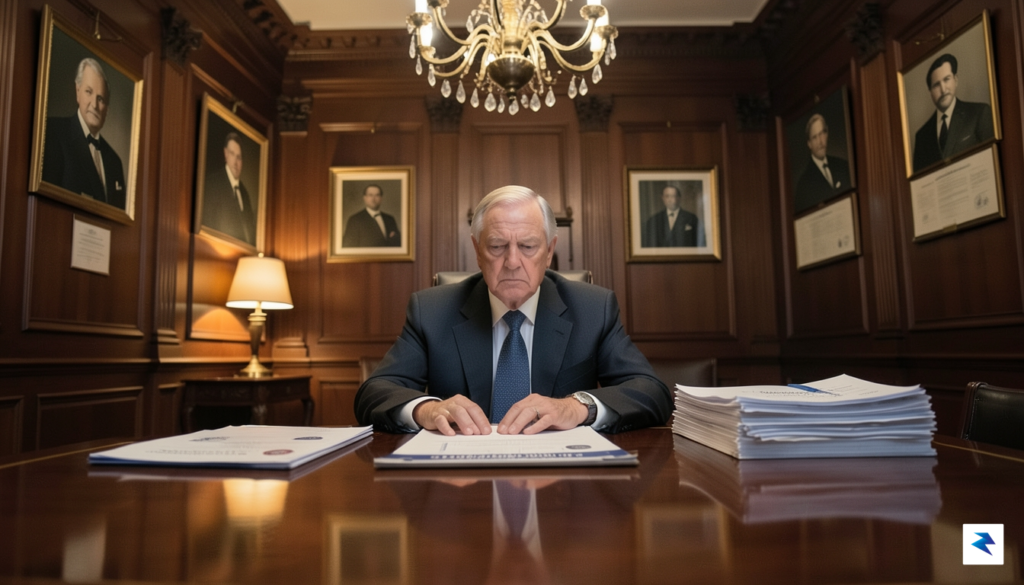
Central to Greenspan’s influence was his unique reputation as a master of nuance, often referred to as “the Maestro” for his ability to signal shifts in monetary policy through carefully calibrated rhetoric. Unlike his predecessors, who often relied on rigid, formulaic responses to market fluctuations, Greenspan understood that the modern financial landscape was increasingly driven by human psychology, information flow, and complex, interconnected market derivatives. He mastered the art of “Fed-speak,” a deliberate, often enigmatic style of communication that allowed him to guide market expectations without inducing unnecessary panic. This ability to steer the global economy through subtle adjustments in interest rates proved vital during the transition from a traditional, manufacturing-heavy banking environment to a fast-paced, digital era defined by globalized capital markets.
The true measure of a central bank is not just in the interest rates it sets, but in the confidence it inspires when the global financial architecture is under duress.
Ultimately, the “Greenspan Era” established the blueprint for modern central banking by proving that the Fed could serve as a proactive guardian of stability rather than a reactive bystander. His tenure forced the institution to evolve alongside the rapid innovation of financial instruments, ensuring that the regulatory framework kept pace with the increasing velocity of money. By the time he stepped down, the Federal Reserve had become the most consequential economic institution in the world, serving as the final arbiter of systemic risk. It is this legacy of intellectual independence and disciplined, data-driven policymaking that continues to serve as the structural model for those, like Kevin Warsh, who seek to lead the Federal Reserve through the volatile challenges of the 21st century.
Kevin Warsh's Philosophical Alignment with Greenspan

For Kevin Warsh, the tenure of Alan Greenspan represents a masterclass in the art of central banking, serving as a blueprint for how a leader should navigate the treacherous intersection of high finance and political volatility. During his own formative years on the Federal Reserve Board of Governors, Warsh observed that Greenspan’s greatest strength was not merely his technical proficiency, but his unwavering commitment to intellectual autonomy. Warsh has frequently pointed to the former Chairman’s ability to remain detached from the immediate, often deafening, political noise of Washington as a defining trait of effective leadership. By prioritizing long-term economic stability over the fleeting demands of partisan agendas, Greenspan established a standard of independence that Warsh has sought to emulate throughout his own career.
The philosophical intersection between the two men is most evident in their shared skepticism toward rigid, rules-based monetary policy. While many modern economists advocate for relying strictly on algorithmic frameworks—such as the Taylor Rule—to dictate interest rate decisions, Warsh aligns with Greenspan’s long-held belief that such models are insufficient to capture the nuanced realities of a globalized economy. Instead, they both emphasize the necessity of human judgment and the synthesis of disparate market signals. Warsh often argues that the economy is far too dynamic to be distilled into a single equation, mirroring Greenspan’s approach of gathering “real-time” data from the ground level to inform his intuition. This reliance on market-based indicators allows a central banker to act as a steward of the economy, capable of pivoting when conventional wisdom fails to account for emerging systemic risks.
“The central banker’s most important tool is not a spreadsheet, but the ability to discern the difference between a temporary market tremor and a structural shift in the bedrock of the economy.”
This perspective has profound implications for how Warsh views the role of the Fed in modern governance. He views the institution as a bulwark against the short-termism that plagues legislative branches, suggesting that the Fed’s credibility hinges on its willingness to make unpopular decisions that ensure future prosperity. By championing this Greenspan-esque philosophy, Warsh advocates for a return to a more discretionary, high-level approach to oversight. He believes that the primary duty of a Fed official is to cultivate a deep understanding of market psychology rather than simply reacting to volatile data points. Ultimately, his admiration for Greenspan is rooted in a shared conviction: that the stability of the global financial system requires leaders who possess the courage to be guided by their own rigorous analysis rather than the prevailing political winds.

The Art of Discretion: Navigating Economic Uncertainty

At the heart of the “Greenspanian” philosophy lies a profound skepticism toward rigid, algorithmic governance in the complex theater of global finance. Alan Greenspan famously operated under the belief that the economy is a living, breathing system—one far too nuanced to be shackled by a predetermined set of mathematical rules or static targets. Instead, he championed the art of discretion, an approach that prioritizes the seasoned judgment of central bankers over the cold, predictable output of automated policy models. For Kevin Warsh, this legacy represents a vital counterweight to the modern obsession with transparency and rule-based frameworks, which he argues often leave institutions paralyzed when faced with the unpredictable realities of the market.
In an era where many economists advocate for strict “monetary policy rules” to curb bias and ensure consistency, the reliance on human discretion can appear risky or even archaic. However, the true strength of the Greenspan approach reveals itself during “black swan” events—those rare, high-impact anomalies that no historical model could have possibly anticipated. When a sudden systemic shock hits the financial markets, a rigid rule-based system may lack the agility to pivot, whereas a discretionary leader can synthesize disparate data points and intangible market sentiments to formulate an immediate, bespoke response. This flexibility allows the central bank to act as a fire-brigade, deploying unconventional tools exactly when and where they are needed most.

The hallmark of effective central banking is not the perfection of a formula, but the wisdom to discern when the formula has ceased to reflect the reality on the ground.
Adopting this discretionary mantle, however, is not without significant peril. By placing such heavy emphasis on the judgment of a single individual at the helm of the economy, the approach inevitably introduces the risk of human fallibility. If the decision-maker misreads the underlying currents of the economy or allows personal bias to cloud their analysis, the lack of a rigid framework provides no safety net to catch the resulting errors. Furthermore, this style of leadership demands an extraordinary level of credibility and market trust; the public must believe that the leader’s “gut feeling” is actually the product of unparalleled expertise rather than mere guesswork. Ultimately, for Warsh, the goal is to balance the rigor of data-driven insights with the intuitive, human-centered decision-making that characterized the Greenspan era, ensuring that the Federal Reserve remains a thoughtful steward rather than a mere calculator.
Institutional Continuity and the Future of the Fed

The enduring legacy of Alan Greenspan acts as a silent architect for the modern Federal Reserve, casting a long shadow over how prospective leaders envision their own tenure. For figures like Kevin Warsh, the Greenspan era represents more than just a period of economic expansion; it serves as a masterclass in the delicate art of institutional authority. By aligning his philosophy with this historical benchmark, Warsh suggests that the path toward a stable economic future is paved not with radical experimentation, but with a steadfast commitment to the gravity and predictability that defined the Greenspan years. This preference for continuity signals a desire to restore a sense of traditional central banking that prioritizes market confidence through steady, authoritative stewardship.

However, the tension between maintaining these time-honored traditions and the urgent need for innovation creates a complex challenge for the institution. Critics often argue that tethering the Fed’s identity too closely to the past may hinder its ability to respond to the unprecedented, high-velocity crises of the 21st century. Despite these concerns, advocates for the Greenspan-style model maintain that the Fed’s greatest asset is its reputation for deliberate, measured decision-making. By embracing this continuity, proponents argue that the central bank can mitigate the volatility of political cycles, ensuring that the institution remains an island of stability even when the surrounding economic landscape is subject to rapid disruption.
The true strength of a central bank lies in its ability to act as a tether, grounding market expectations in a philosophy of consistency that transcends the personality of any single chair.
Looking ahead, this philosophical alignment fundamentally shapes the criteria for future appointments and the anticipated trajectory of monetary policy. If the “Greenspan Standard” continues to serve as the blueprint for leadership, we should expect a continued emphasis on institutional prestige, communication transparency, and a cautious approach to systemic reform. For the Federal Reserve, the future is therefore not about reinventing the wheel, but about perfecting the mechanism of influence that has historically defined its power. By choosing a path of continuity over radical systemic overhaul, the Fed reinforces its role as the ultimate arbiter of economic order, betting that the most effective way to navigate an uncertain future is to remain firmly rooted in the lessons of the past.
Critiquing the Greenspan Model in a Volatile Era

While the reverence for Alan Greenspan’s tenure as Federal Reserve Chairman remains a foundational element of Kevin Warsh’s economic philosophy, it is impossible to ignore the shadows cast by the 2008 financial crisis. For many economists, the “Maestro” era is synonymous with a hands-off approach to financial regulation—a period characterized by the belief that markets are inherently self-correcting and that government oversight often does more harm than good. Critics argue that this laissez-faire philosophy allowed speculative bubbles to inflate unchecked, particularly in the housing and derivatives markets, ultimately leading to a systemic collapse that required unprecedented government intervention to resolve.
Kevin Warsh, who served as a Fed governor during the turbulent transition into the Great Recession, has had to navigate the complex task of reconciling his professional admiration for Greenspan’s intellectual rigor with the harsh hindsight of the post-2008 landscape. Rather than adopting a blanket endorsement of every historical policy choice, Warsh often focuses on the process of Greenspan’s leadership: his ability to synthesize vast amounts of incoming data, his mastery of nuance, and his profound understanding of market psychology. Warsh posits that the failure was not necessarily in the model of central banking itself, but perhaps in an incomplete appreciation for how global interconnectedness and technological shifts could amplify risks that were invisible in earlier decades.

Applying a 20th-century leadership model to the current 21st-century digital economy presents significant pitfalls that cannot be overlooked. In Greenspan’s time, the Federal Reserve’s influence operated through traditional banking channels and slower-moving, physical economic indicators. Today, however, high-frequency trading, decentralized finance, and the lightning-fast spread of information via social media mean that market panics can trigger and evolve in a matter of seconds rather than days. A leadership style that relies on deliberation and incremental adjustments may find itself perpetually behind the curve in an era where liquidity can vanish from global markets at the click of a button.
The challenge for the modern central banker is to honor the institutional wisdom of the past while remaining agile enough to manage a financial ecosystem that is fundamentally more volatile and decentralized than the one that existed during the Great Moderation.
Ultimately, the debate over the Greenspan legacy serves as a vital case study for future policymakers. The goal for someone like Warsh is not to replicate the specific policies of the 1990s, but to emulate the discipline of the Greenspan era while integrating a more modern, robust framework for financial stability. If the future of monetary policy is to succeed, it must balance the analytical depth of the past with a proactive, technologically-aware approach to oversight that recognizes that modern fragility is often found in the unseen connections of our globalized economy.