Understanding the Sokolskyfilm v. Messiah Ruling

The legal battle in Sokolskyfilm v. Messiah began when a professional photographer filed a lawsuit against a digital publisher, alleging that the unauthorized use of a copyrighted photograph constituted a direct violation of intellectual property rights. The photographer argued that the image was used without permission or compensation, asserting that the act of republishing the work on a blog stripped away the value of their original creative labor. This claim placed the blogger in a precarious position, as it challenged the common digital practice of using imagery to accompany editorial content. At the heart of the dispute was the question of whether the photographer’s exclusive rights to display their work could be balanced against the public interest in commentary and critique.
In his defense, the blogger contended that his use of the photograph was protected under the principle of fair use. He argued that the image was not merely displayed for aesthetic purposes, but rather served as a vital component of a broader critical discussion. By providing context, analysis, and a specific critique of the visual elements present in the work, the blogger claimed that his usage was transformative—meaning it added a new meaning or message that differed significantly from the photographer’s original intent. This distinction is crucial in copyright law, as it determines whether a piece of content is simply being copied or if it is being repurposed to create something entirely new and socially valuable.

The court’s ultimate decision in favor of the blogger represents a significant victory for independent media and online creators who frequently rely on existing imagery to illustrate their arguments. The presiding judge emphasized that the blogger’s intent was not to exploit the photographer’s work for commercial gain but to facilitate a public conversation about the subject matter depicted in the photo. By ruling that the usage was transformative, the court recognized that the digital landscape requires a level of flexibility in how copyrighted materials are referenced in editorial formats. This decision provides a much-needed layer of protection for writers and bloggers who utilize visual references to bolster their commentary.
The court’s ruling reinforces the principle that copyright protection is not absolute, especially when the usage serves a legitimate, transformative purpose in public discourse.
Ultimately, this case serves as a vital precedent for the future of digital publishing, signaling that independent creators are not necessarily defenseless against aggressive copyright litigation. It clarifies that when an image is used to educate, criticize, or analyze, the law is more likely to view that usage as protected expression rather than infringement. For bloggers and digital journalists, this is an encouraging development that underscores the importance of adding original value to the content they curate. Moving forward, creators should remain diligent in how they integrate imagery, ensuring that their work does more than just display a photo—it must engage with it in a way that contributes something new to the cultural dialogue.
The Fair Use Defense in Digital Content Creation
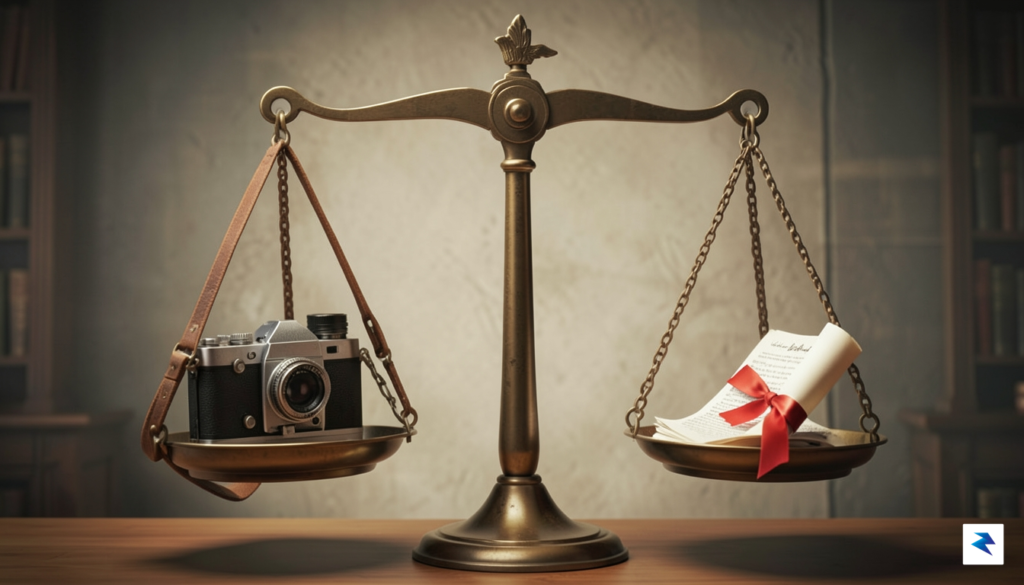
Many digital creators operate under the dangerous misconception that fair use is a universal “get out of jail free” card, assuming that simply citing a photographer or posting a small image thumbnail provides legal immunity. In reality, fair use is a nuanced legal doctrine that serves as an affirmative defense rather than a blanket permission slip. To determine whether the use of copyrighted material is protected, courts evaluate four distinct factors: the purpose and character of the use, the nature of the copyrighted work, the amount and substantiality of the portion used, and the effect of the use upon the potential market for the original work.

In the recent legal battle between a photographer and a blogger, the court’s decision hinged primarily on the concept of “transformativeness.” Under the first factor, the court analyzed whether the blogger merely reproduced the photo for aesthetic reasons or if they added something new, with a further purpose or different character. The judge concluded that the blogger’s specific contextualization—using the image to critique, comment upon, or illustrate a distinct narrative point—altered the original image’s intent. By transforming the photo into a vehicle for social or critical commentary, the blogger moved the needle from simple reproduction toward a protected, transformative use that serves the public interest of discourse.
The core of a successful fair use defense often lies in whether the new work adds value, insight, or a critical lens that the original photograph lacked on its own.
It is vital to recognize that not every blog post featuring a third-party image will pass this legal threshold. If a blogger uses a professional photographer’s image solely to make their website look more visually appealing without providing any meaningful commentary, criticism, or educational context, they remain highly vulnerable to copyright infringement claims. The third and fourth factors of fair use—amount used and market effect—are particularly unforgiving to those who merely “decorate” their posts. If a high-resolution image is used in its entirety and that use potentially discourages a reader from visiting the photographer’s own portfolio or purchasing a license, the defense typically crumbles.
Ultimately, the legal victory in this case underscores that fair use is not a static rule but a flexible, fact-specific balancing act. While the blogger successfully argued that their work created a new, transformative purpose, this protection is not a loophole for lazy content creation. Creators should treat copyrighted imagery with extreme caution, prioritizing original photography or licensed assets whenever possible. Relying on fair use should always be a last resort, backed by a clear intention to critique or add significant educational value, rather than a strategy for sourcing free visual assets.
Why Attribution Doesn't Substitute for Licensing
One of the most persistent and dangerous misconceptions in the digital sphere is the belief that simply citing a photographer’s name beneath an image acts as a legal “get out of jail free” card. Many bloggers operate under the assumption that as long as they provide a link back to the original source or mention the creator, they are respecting the artist’s rights and avoiding potential infringement. However, from a legal standpoint, attribution and licensing are two fundamentally different concepts that serve entirely separate purposes. Attribution is merely a professional courtesy, whereas a license is a legally binding contract that grants you specific, authorized permissions to display or distribute someone else’s creative work.
When you post an image on your website without a formal license, you are infringing upon the photographer’s exclusive rights, regardless of whether you included a credit line. Courts have consistently and unequivocally rejected the defense of “I gave them credit” because copyright law is designed to protect the economic interests of creators, not just their reputation. By displaying a photo without permission, you are effectively depriving the artist of the opportunity to negotiate a fee or control how their work is utilized. Providing a link or a caption does not compensate the creator, nor does it demonstrate that you had the legal authority to publish that content in the first place.

Attribution is an acknowledgment of authorship, not an authorization of use. Unless you have secured a license or have explicit written permission, attribution does not mitigate your liability for copyright infringement.
If you want to ensure your blog remains legally protected, you must understand what actually constitutes valid permission. True authorization typically takes the form of a signed license agreement, a clear confirmation from a stock photography service, or a direct email exchange where the copyright holder explicitly grants you the right to use the image under specific conditions. If you cannot produce a paper trail—or a digital equivalent—that proves you were granted these rights, you are operating at significant risk. Relying on the false protection of attribution is a strategic error that leaves your website vulnerable to expensive legal demands, statutory damages, and the forced removal of your content.
Ultimately, the burden of verifying rights rests entirely on the publisher. Instead of hoping that a caption will shield you from legal trouble, you should adopt a proactive approach to content acquisition. This means using reputable stock photography platforms where licensing is built into the transaction, commissioning original work from photographers, or utilizing images released under clearly defined Creative Commons licenses that explicitly allow for digital use. By shifting your mindset away from the myth of “credit equals permission,” you protect yourself from the harsh realities of copyright litigation and foster a more professional, sustainable blogging practice.
Practical Steps for Bloggers to Protect Their Work

Even when a legal defense proves successful, the emotional and financial toll of copyright litigation can be devastating for an independent creator. Rather than relying on the hope that a court will rule in your favor, the most effective defense is a proactive, airtight strategy for image procurement. By implementing rigorous standards for how you source visual content, you can virtually eliminate the risk of inadvertent infringement claims before they ever reach a lawyer’s desk.

Mastering Licensing and Attribution
The safest path for any blogger is to utilize high-quality stock photography platforms that provide clear, commercial-use licenses. Sites such as Unsplash, Pexels, or paid subscription services like Adobe Stock offer libraries where the legal status of the imagery is explicitly defined. However, simply downloading an image is not enough; you must familiarize yourself with the specific terms of the license. Some platforms require attribution—giving credit to the photographer—while others allow for royalty-free usage without such requirements. Failing to meet these specific contractual obligations can technically constitute a breach of the license agreement, potentially opening the door to legal disputes.
Furthermore, navigating Creative Commons (CC) licenses requires a nuanced understanding of their various tiers. While CC-BY allows you to share and adapt content, it strictly mandates that you provide appropriate credit and indicate if changes were made. Other variations, such as CC-BY-NC, strictly prohibit commercial use, which can be a trap for bloggers who monetize their sites through advertisements or affiliate links. Always verify the exact license version attached to an image, as these terms are not universal and can be updated by the creator at any time.
The best way to avoid copyright infringement is to cultivate a habit of meticulous documentation. If you cannot prove where an image came from and that you had permission to use it, you are vulnerable.
Building an Original Content Pipeline
Beyond licensing, the most bulletproof approach is to generate your own original imagery whenever possible. Using your own photography or custom illustrations not only provides you with full ownership but also helps establish a unique brand identity that stock imagery simply cannot replicate. If you lack the resources to shoot professional photos, consider utilizing public domain repositories like the Library of Congress or Wikimedia Commons. Content in the public domain is free from copyright restrictions, allowing you to use it without fear, though it is always professional practice to verify the status of the work before publishing.
Finally, maintaining an organized digital archive of your image permissions is a critical administrative step. Create a spreadsheet or a dedicated folder that stores the original link, the name of the photographer, the license type, and the date of download for every third-party image on your blog. Should a dispute ever arise, having this “paper trail” ready to present immediately can often resolve a misunderstanding before it escalates into a formal demand. By treating image management with the same seriousness as your written content, you protect both your reputation and your bottom line.
The Future of Copyright Enforcement in Blogging

The digital landscape is constantly evolving, and with it, the complexities surrounding copyright enforcement. As technology advances, particularly in the realm of artificial intelligence, bloggers and independent content creators face increasingly sophisticated automated copyright detection tools. These AI-driven bots are designed to tirelessly scan the vast expanse of the internet, flagging any content that might resemble copyrighted material, often without fully grasping the nuances of context, fair use, or transformative work. This creates a challenging environment for independent bloggers who frequently engage in commentary, critique, or the creative reinterpretation of existing content, often operating under legitimate fair use principles. The sheer scale and speed of these automated systems can lead to disproportionate power dynamics, where individual creators can be overwhelmed by takedown notices or legal threats from large content owners, even for minor or permissible uses.
In this challenging environment, legal victories like the Sokolskyfilm v. Messiah ruling emerge as critical precedents. This particular case provides a much-needed counterbalance to the aggressive, often indiscriminate, nature of automated copyright enforcement. By setting clear boundaries on what constitutes actionable infringement, it reinforces the importance of human judgment and legal interpretation over algorithmic detection. Such rulings are vital in curbing the practice of “copyright trolling,” where entities might leverage automated systems to pursue trivial or questionable claims, imposing a chilling effect on legitimate online expression. The judgment effectively reminds us that while copyright owners have rights, those rights are not absolute and must be balanced against principles of fair use and the public interest in commentary and critique.
The Sokolskyfilm v. Messiah ruling serves as a powerful reminder that the spirit of copyright law, which aims to foster creativity, must not be overshadowed by overly aggressive, automated enforcement that stifles free expression and innovation.
For the broader blogging ecosystem, this ruling carries significant implications, offering a beacon of hope and a measure of protection for independent voices. It empowers bloggers to continue their work of analysis, review, and creative adaptation without the constant apprehension of unfounded legal challenges. When the threat of costly litigation for minor or fair use instances is reduced, it fosters a more vibrant and diverse online community where ideas can be freely exchanged and debated. This clarity helps to define the playing field, ensuring that the legal system supports a healthy balance between protecting original creators and enabling the transformative and critical engagement that drives much of the internet’s value. Ultimately, such decisions are instrumental in safeguarding the ability of content creators to contribute meaningfully to public discourse.
Looking ahead, the balance between creator rights and free expression will remain a dynamic and crucial tension in the digital age. While it is imperative to protect the intellectual property of artists and creators, it is equally important to cultivate an environment where commentary, parody, education, and other forms of transformative use can flourish. The Sokolskyfilm v. Messiah case contributes significantly to this ongoing dialogue by reiterating that copyright law is not a tool for blanket suppression, but a framework designed to encourage creativity within a broader societal context. Future developments in copyright enforcement will undoubtedly continue to grapple with technological advancements, making landmark rulings like this indispensable in shaping a digital landscape that is both fair to creators and conducive to the free flow of information and ideas.