
How OpenAI’s New AI Security Initiative Is Changing Open Source Forever
The Critical Vulnerability of Open Source Ecosystems Modern digital infrastructure is built upon a foundation that is as vast as it is…


The technology sector of 2026 is defined by a stark transition from the post-pandemic era of aggressive expansion to a more sober landscape dominated by operational efficiency. While the industry previously prioritized headcount growth to capture market share in a hyper-competitive digital economy, the narrative has fundamentally changed. Today, the integration of artificial intelligence is no longer merely a secondary productivity experiment; it has become a central pillar of corporate restructuring strategies. As companies grapple with maturing business models, they are increasingly pointing to AI capabilities not just as tools to augment existing staff, but as viable substitutes for specific operational roles that were once considered essential to human oversight.

This shift represents a fundamental realignment of how tech organizations value labor versus algorithmic output. During the early 2020s, layoffs were primarily reactionary, aimed at correcting the over-hiring that occurred during the remote-work boom. However, the current wave of reductions reflects a more intentional, proactive strategy. By deploying large language models and autonomous agents, leadership teams are identifying entire functional workflows—such as junior-level coding, routine data analysis, and basic customer support—that can be handled by AI systems with significantly lower overhead costs. Consequently, 2026 has become the year where the “efficiency-first” mandate is being measured by the successful replacement of human-driven processes with AI-native architecture.
The core of the 2026 layoff trend lies in a corporate pivot: shifting from using AI to help employees work faster, to using AI to rethink whether certain roles are necessary at all.
To understand this shift, we must look beyond simple cost-cutting measures and recognize the data-driven justification companies are providing to their shareholders. Firms are increasingly transparent about their capital allocation, arguing that the ROI of AI infrastructure is higher than the long-term investment in maintaining large human teams for tasks now categorized as “automatable.” This creates a difficult environment for the workforce, as job security is no longer tied solely to performance, but to the nature of the tasks themselves. As we analyze the ongoing trends in the industry, it becomes clear that the companies citing AI in their layoff announcements are setting a new standard for corporate operation, signaling a permanent change in how tech talent is recruited, retained, and eventually phased out in favor of silicon-based alternatives.

When major tech corporations explicitly link workforce reductions to the integration of artificial intelligence, they are engaging in a sophisticated form of corporate signaling that reaches far beyond simple human resources management. For investors, the mention of AI acts as a signal of forward-thinking agility; it suggests that a company is not merely cutting costs, but is aggressively pivoting toward a more efficient, technology-first operational model. However, for the workforce, this narrative often feels like a convenient shroud for broader, more traditional financial restructuring. By framing layoffs as a necessary evolution dictated by technological progress, CEOs can often soften the blow to their stock price, effectively rebranding a standard cost-cutting exercise as a strategic investment in the future of productivity.
To understand this phenomenon, we must differentiate between AI-driven redundancy and AI-leveraged restructuring. In the case of genuine redundancy, specific tasks—such as routine coding, basic data entry, or customer support triage—are being systematically offloaded to large language models and automated agents. This represents a tangible shift in labor demand where the technology directly displaces the need for human input. Conversely, AI-leveraged restructuring occurs when companies utilize the current cultural obsession with AI as a narrative shield. In these instances, a firm might be facing stagnant growth or bloated overheads that have nothing to do with automation, yet they cite AI as the catalyst for layoffs to satisfy Wall Street’s current appetite for “AI-ready” companies. This allows leadership to trim their balance sheets while simultaneously appearing to be on the cutting edge of the industry’s technological shift.

The strategic use of AI as a justification for layoffs serves a dual purpose: it signals technical modernization to shareholders while providing a contemporary rationale for organizational downsizing that feels inevitable rather than elective.
Market reactions to these disclosures are telling, as they often reveal a cynical alignment between investors and corporate strategy. When a tech giant announces a layoff tied to AI implementation, the stock price frequently remains stable or even increases, regardless of the underlying financial health of the organization. This reaction confirms that the market rewards the narrative of AI-enabled efficiency almost as much as the actual implementation of the software itself. By successfully positioning their layoffs as a reaction to a “technological imperative,” CEOs transform a potentially negative PR event into a statement of intent. Ultimately, while AI is undoubtedly changing the nature of work, discerning whether a company is truly optimizing for intelligence or simply using the technology as a scapegoat remains one of the most critical challenges for stakeholders and employees alike.
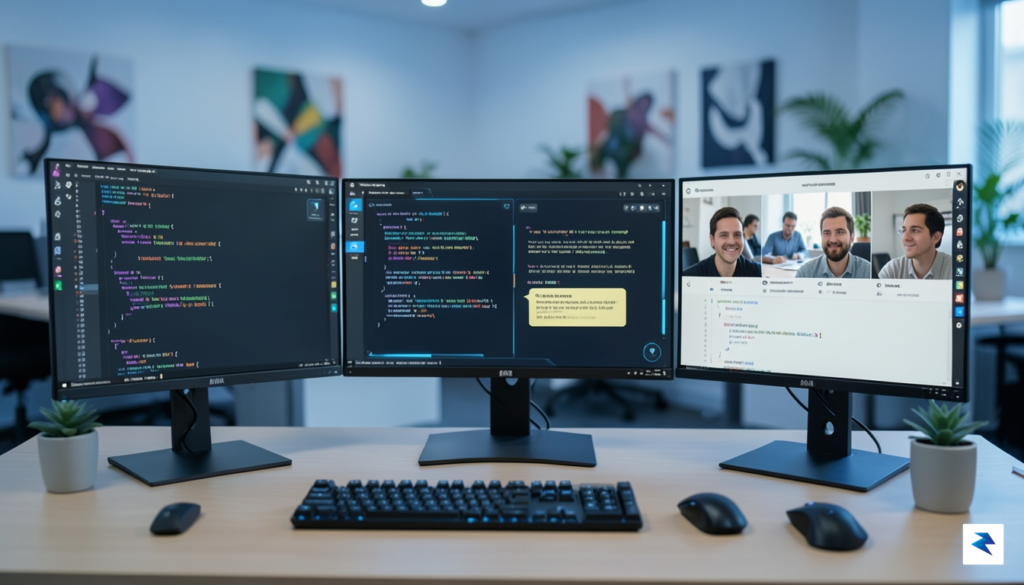
The widespread integration of artificial intelligence into business operations is creating a clear bifurcation in the workforce, disproportionately affecting certain departments and job functions. While AI promises increased efficiency and innovation across the board, its immediate impact on human roles is most acutely felt in areas characterized by repetitive tasks, predictable data processing, and standardized interactions. Companies are strategically deploying AI to optimize these functions, often leading to a reduction in headcount as machine capabilities mature and become more reliable. This shift isn’t just about automation; it’s about a fundamental re-evaluation of where human intervention is truly indispensable.
One of the most immediate and visible areas experiencing significant transformation is customer support and content moderation. AI-powered chatbots and virtual assistants have grown sophisticated enough to handle a vast array of common customer inquiries, from troubleshooting basic technical issues to processing routine transactions and providing instant information. These systems offer 24/7 availability and can scale effortlessly to manage high volumes, drastically reducing the need for large teams of human agents dedicated to entry-level support tiers. Similarly, in content moderation, AI algorithms are becoming increasingly adept at identifying and flagging objectionable material—be it spam, hate speech, or inappropriate imagery—allowing companies to automate the initial screening process and significantly lessen the burden on human moderators, who are now often reserved for highly nuanced or ambiguous cases.
Furthermore, the very entry point into the tech industry, particularly for aspiring software developers, is undergoing a profound change. Large Language Models (LLMs) are rapidly evolving into powerful coding assistants, capable of generating boilerplate code, suggesting optimizations, identifying bugs, and even writing entire functions based on natural language prompts. This extraordinary capability directly impacts junior-level programming roles, where much of the work historically involved writing repetitive code, debugging simpler issues, or integrating standard API calls. As LLMs become more integrated into development pipelines, the demand for entry-level coders performing these foundational tasks diminishes, instead shifting the need towards more experienced developers who can architect complex systems, manage AI-generated code, and focus on higher-level problem-solving and innovation.
Beyond these high-profile areas, several other administrative and data-centric roles are also feeling the pressure. Tasks like data entry, routine report generation, scheduling, and basic financial reconciliation, which traditionally required human effort to meticulously process structured information, are increasingly being handled by intelligent automation tools. Robotic Process Automation (RPA) combined with AI can ingest documents, extract relevant data, and populate databases with minimal human oversight, leading to greater accuracy and speed. Consequently, departments reliant on such administrative support are streamlining operations and, in some cases, scaling back their human teams as these AI solutions mature.
However, it is crucial to recognize that the impact of AI is not a blanket eradication of roles but often a redefinition. While AI excels at efficiency and scale for routine tasks, the “human-in-the-loop” remains vital for complex problem-solving, ethical considerations, strategic decision-making, and tasks requiring empathy or deep contextual understanding. For instance, while AI can screen content, human moderators are still essential for interpreting cultural nuances or adjudicating borderline cases. Similarly, in software development, AI assists, but human architects and senior engineers are indispensable for designing innovative systems, ensuring security, and making critical architectural choices that demand creativity and profound domain expertise. The workforce is therefore shifting towards roles that leverage uniquely human capabilities, working in conjunction with AI rather than being entirely replaced by it.

The 2026 labor market has moved far beyond the initial shock of AI-driven workforce reductions, revealing a professional landscape undergoing a permanent structural shift. For the average tech worker, the era of generalist roles is rapidly receding, replaced by a mandate for the “AI-augmented worker.” This paradigm shift means that technical proficiency is no longer measured solely by one’s ability to write code or manage infrastructure, but by one’s capacity to orchestrate AI agents to perform those tasks at scale. As organizations refine their operations to favor lean, high-output teams, those who view AI as a collaborative partner rather than a replacement are finding their value proposition significantly enhanced.

Salary trends are simultaneously recalibrating to reflect this newfound specialization. We are witnessing a bifurcation in compensation: while entry-level and repetitive technical tasks face downward wage pressure due to automation, roles that require high-level cognitive synthesis, AI governance, and strategic human-in-the-loop oversight are seeing significant premiums. Employers are increasingly willing to pay a high price for talent that can bridge the gap between legacy systems and cutting-edge generative tools. Consequently, the market is becoming less hospitable to those with stagnant skill sets, forcing a professional environment where continuous, rapid upskilling is the only viable hedge against obsolescence.
The most successful professionals of 2026 are not those who compete against AI, but those who utilize it to expand the boundaries of their own productivity and creative problem-solving.
However, this transition is not without significant human costs. The widespread economic uncertainty, compounded by the frequency of layoffs cited as AI-driven, has created a pervasive sense of instability that is impacting the mental health and morale of the tech workforce. Employees are reporting higher levels of burnout as they attempt to balance their existing workloads with the urgent need to acquire new AI-related proficiencies during off-hours. This pressure underscores the necessity for a more proactive approach to career management.
To navigate this volatility, tech workers must prioritize the cultivation of “AI-resilient” skills—traits that AI cannot easily replicate. These include:
Ultimately, the long-term health of the tech sector depends on a workforce that embraces this evolution with intentionality. By shifting focus toward these specialized capabilities, professionals can move from a posture of defensive survival to one of long-term career growth, ensuring they remain essential components of the digital economy regardless of how the underlying technology shifts.

The volatile employment landscape has made one truth abundantly clear: adaptability is no longer just a desirable trait, but the absolute currency of survival in the modern workforce. Instead of viewing artificial intelligence as an existential threat destined to replace human labor, forward-thinking professionals must reframe these advanced systems as powerful collaborative partners. By shifting our mindset from competition to co-evolution, we can learn to steer these technologies to augment our own capabilities. Navigating this transition successfully requires a proactive commitment to continuous learning, ensuring that our skill sets evolve at a pace that matches—or even exceeds—the rapid development of automation tools.
To remain indispensable, professionals must actively pivot toward high-value skills that sit at the intersection of human ingenuity and technological oversight. While basic coding and routine data analysis are increasingly automated, high-level domains such as systems architecture, complex problem-solving, and AI ethics are experiencing unprecedented demand. Understanding how disparate digital systems integrate, how to architect secure and scalable infrastructure, and how to navigate the complex ethical dilemmas of algorithmic bias are capabilities that machine learning cannot self-generate. Cultivating expertise in these niche areas ensures that you are not the one being replaced by a machine, but rather the strategist who designs, directs, and monitors the machine’s operations.
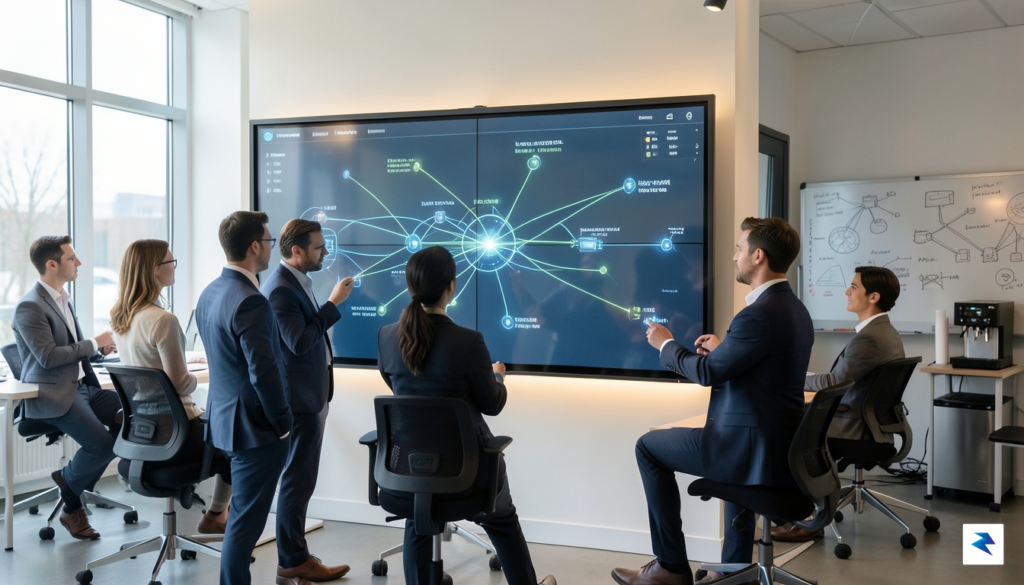
While technical prowess is vital, the value of robust, genuine professional networking has never been higher in an automated job market. As traditional application processes become increasingly filtered by automated tracking systems and AI recruiters, personal referrals and industry reputation serve as the ultimate bypass to these digital gatekeepers. Building deep, meaningful relationships within your professional community through industry conferences, collaborative open-source projects, and active mentorship programs creates a resilient safety net. These human-to-human connections foster trust and open doors to hidden opportunities that algorithms simply cannot access or predict, proving that who you know remains just as critical as what you know.
Ultimately, the strongest shield against automation lies in our inherent humanity. Soft skills like emotional intelligence, cross-functional leadership, ethical negotiation, and deep empathy represent cognitive territories that AI cannot truly replicate or understand. While a language model can synthesize vast amounts of information to generate a report, it cannot navigate the delicate nuances of client relationships, inspire a demoralized team, or resolve complex interpersonal conflicts within an organization. Double down on these uniquely human attributes by seeking out leadership opportunities, practicing active listening, and championing collaborative team cultures, as these are the very qualities that organizations will always desperately need at the helm.
“The professionals who thrive in this era of rapid disruption will not be those who try to out-compute the machines, but those who master the uniquely human skills of empathy, ethical judgment, and complex systems thinking to guide them.”
You must be logged in to post a comment.