
Tesla Autopilot Under Scrutiny: What the Texas Crash Tells Us About Data and Safety
Understanding the Tesla Autopilot Investigation The tragic incident in Spring, Texas, in April 2021 cast an immediate and intense spotlight on…


In a span of just seventy-two hours, the aerospace industry witnessed an unprecedented financial tremor that sent shockwaves through the global investment community. SpaceX, a company long heralded as the gold standard for private sector innovation and exponential growth, saw a staggering $600 billion vanish from its estimated valuation. To put this figure into perspective, the sheer magnitude of the loss is equivalent to nearly half of Bitcoin’s total market capitalization at its peak. This abrupt evaporation of capital did not merely represent a routine market adjustment; it functioned as a violent recalibration of investor sentiment that challenged the long-term assumptions surrounding the space economy.

The timeline of this three-day decline reveals a rapid transition from high-octane optimism to a climate of intense scrutiny. For years, SpaceX’s trajectory was defined by an almost linear ascent, fueled by successful launches, government contracts, and the successful deployment of the Starlink constellation. Investors had grown accustomed to a narrative of limitless scalability and dominance in the launch services sector. However, the events of these three days shattered that narrative, as a confluence of macroeconomic pressures and internal operational questions triggered a sell-off that caught even the most seasoned analysts off guard. The speed at which this value dissipated underscores the fragile nature of private equity when it becomes untethered from traditional valuation metrics.
The $600 billion plunge serves as a stark reminder that even the most ambitious technological disruption is not immune to the gravitational pull of market reality.
This event serves as a pivotal case study at the intersection of aerospace ambition and public market volatility. While SpaceX operates as a private entity, the ripple effects of its valuation shift have prompted broader questions about how we price the future of space exploration. When such a colossal amount of wealth evaporates in such a condensed window, it forces stakeholders to re-examine the risk-to-reward ratio of capital-intensive ventures. Moving forward, the conversation has shifted from celebrating mere technical milestones to questioning the sustainability of the capital structures that support them. As we dissect the mechanics behind this decline, it becomes clear that we are witnessing the end of an era of unfettered speculation, replaced by a new, more cautious era of fiscal accountability in the final frontier.

At the heart of the recent market turbulence lies a tactical shift in SpaceX’s capital structure that caught many institutional investors off guard. When a company of such immense private valuation decides to initiate a significant bond sale, it inevitably sends a ripple through the financial ecosystem, signaling that the organization is moving from a phase of purely equity-backed growth toward a more complex debt-servicing model. For many, this announcement acted as a psychological tipping point, shifting the narrative from a story of limitless innovation to one of immediate balance-sheet pressure. Investors began to scrutinize the firm’s cash flow requirements, questioning whether the reliance on external debt indicates a potential slowdown in organic revenue or a need to cover ballooning operational costs associated with the Starship program and the expansion of the Starlink constellation.
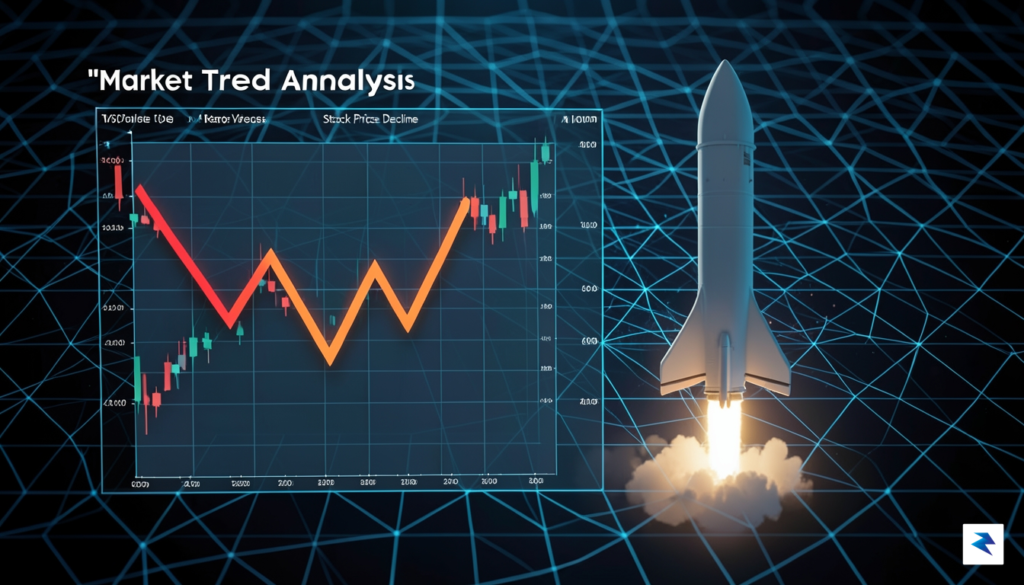
The negative reaction was not merely a reaction to the debt itself, but rather to what the debt represents in the current macroeconomic climate. As interest rates remain elevated, taking on new debt obligations increases the risk profile of any company, regardless of its industry dominance. Market participants are increasingly sensitive to leverage, fearing that if the cost of servicing this new capital exceeds projected returns, the company could face liquidity constraints that might jeopardize its long-term project timelines. Consequently, the sell-off reflected a growing apprehension that SpaceX might be prioritizing aggressive capital expenditure over fiscal stability, prompting a swift re-evaluation of its risk-adjusted valuation.
The sudden shift in market sentiment serves as a stark reminder that even the most ambitious private enterprises are not immune to the cold, hard realities of debt-market dynamics and investor risk tolerance.
Whether this massive erasure of value constitutes a rational correction or a panicked overreaction remains a subject of intense debate among analysts. On one hand, the move could be viewed as a prudent strategic play to secure liquidity while the company is in a position of strength, effectively insulating its operations against future market volatility. On the other hand, the sheer speed of the sell-off suggests that institutional shareholders may be losing their appetite for the capital-intensive nature of space exploration. Ultimately, the market’s response highlights a fundamental tension: the requirement for massive, sustained funding versus the growing desire for predictable, debt-averse financial performance in a cooling global economy.
The recent financial tremors surrounding SpaceX’s valuation adjustment serve as a fascinating case study in how modern markets process sudden, high-magnitude shocks. While the sudden evaporation of $600 billion in implied market value sent ripples of uncertainty through private equity and aerospace-adjacent sectors, the reaction in the broader financial landscape was far from uniform. Perhaps most striking was the stark divergence between this traditional equity-style correction and the behavior of the cryptocurrency market. During the three-day window when SpaceX’s valuation faced intense scrutiny, Bitcoin—an asset historically characterized by its extreme sensitivity to macroeconomic headwinds—demonstrated a surprising degree of resilience, recording a decline of less than 1%.
This decoupling suggests a fundamental shift in how investors currently perceive the risk profile of digital assets compared to speculative private equity. Historically, Bitcoin has often traded as a “risk-on” asset, mirroring the movements of tech-heavy indices like the Nasdaq. However, the stability observed during this specific market event indicates that Bitcoin may be beginning to carve out a distinct narrative as an independent hedge. While institutional sentiment soured on the private aerospace sector due to concerns over valuation multiples and liquidity, Bitcoin’s ability to remain flat suggests that its holder base has become increasingly hardened, prioritizing long-term structural value over the short-term panic that often defines traditional equity sell-offs.

The contrast highlights a critical evolution in investor behavior regarding the classification of “risk-off” assets. Traditionally, investors pull capital out of digital currencies during periods of market stress to flee toward cash or government bonds. Yet, the current economic climate is proving that these correlations are not immutable laws. When large-scale private entities face valuation corrections, the capital flight is not necessarily migrating toward traditional safe havens; rather, it is staying stagnant in digital assets that have already been “de-risked” through previous market cycles. This suggests that the market is becoming more nuanced, with investors choosing to treat established cryptocurrencies as a form of “digital gold” that operates on a separate frequency from the speculative peaks of the private tech sector.
The resilience of Bitcoin during this period of private equity volatility points toward a maturing market where digital assets are no longer tethered strictly to the sentiment of the broader tech startup ecosystem.
Ultimately, this divergence provides a meaningful lens through which to view the current volatility in the global economy. As investors grapple with the reality that even the most prestigious private companies are susceptible to massive valuation haircuts, the relative stability of Bitcoin acts as a stabilizer in a portfolio that might otherwise be reeling from tech-centric exposure. Whether this trend toward decoupling continues remains to be seen, but the data from these three days confirms that the traditional “risk-on” classification for Bitcoin is being challenged by a new reality of investor independence and asset class maturity.

For the average retail investor, the staggering $600 billion valuation swing serves as a masterclass in the volatile nature of high-growth, speculative assets. When high-profile entities experience such rapid, large-scale corrections, the immediate instinct is often to panic, leading to reactionary selling that can lock in losses during a temporary dip. However, this event underscores a critical reality of modern markets: price discovery in private or highly liquid high-growth sectors is frequently driven by sentiment and liquidity rather than purely linear business progress. Investors must recognize that when a company’s valuation scales to astronomical heights, the velocity of its price movement will inevitably increase, creating a landscape where volatility becomes a feature, not a bug, of the asset.
The most vital lesson for portfolio management in this environment is the distinction between short-term price action and long-term business fundamentals. While headlines about vanishing billions are designed to grab attention, they rarely reflect an instantaneous destruction of the underlying operational capacity or the long-term mission of the company. Investors should prioritize evaluating whether the core thesis of their investment—whether it be technological innovation, market disruption, or strategic dominance—remains intact despite the noise. If the fundamental value proposition has not shifted, a sudden market correction is often merely a change in the price tag, not a change in the asset’s intrinsic worth.
To succeed in high-volatility markets, investors must transition from a mindset of daily tracking to one of multi-year horizon planning, effectively filtering out the “market static” that serves only to incite emotional decision-making.
To avoid the pitfalls of overreacting to news cycles, it is essential to cultivate a disciplined investment framework. This includes maintaining a diversified portfolio that does not rely too heavily on any single high-volatility asset, ensuring that even significant drawdowns in one area do not compromise one’s overall financial health. Furthermore, investors should treat sudden valuation swings as opportunities to reassess their risk tolerance and rebalance their holdings if necessary, rather than as a signal to flee the market entirely. By focusing on the structural health of the business and maintaining a long-term perspective, individual investors can move past the fear-driven narratives that dominate the headlines and instead make decisions grounded in logic, patience, and sound financial strategy.

You must be logged in to post a comment.