
SpaceX Market Dive: Why $600 Billion Vanished in Three Days
The SpaceX Market Correction: Anatomy of a $600 Billion Dive In a span of just seventy-two hours, the aerospace industry witnessed an…


America’s quest for universal broadband connectivity is undergoing a dramatic transformation, shifting its gaze from the intricate network of terrestrial fiber-optic cables to the vast expanse above. For decades, satellite internet was often a last resort, characterized by high latency, limited bandwidth, and prohibitive costs, primarily serving remote locations where no other option existed. However, a revolutionary technological leap is now propelling the internet into low Earth orbit (LEO), fundamentally reshaping the landscape and promising to deliver high-speed, low-latency broadband even to the most underserved corners of the nation.
This paradigm shift is driven by the deployment of massive LEO satellite constellations, a stark contrast to the singular, geostationary satellites of old. By orbiting much closer to Earth, these new arrays drastically reduce signal travel time, virtually eliminating the notorious lag that plagued earlier satellite services. This innovation unlocks the potential for truly competitive broadband speeds in rural and remote communities, areas historically neglected by traditional internet service providers due to the immense cost and logistical challenges of extending physical infrastructure like fiber. The promise is clear: an end to the digital divide, offering residents and businesses in previously disconnected areas access to the same online opportunities as their urban counterparts.
At the forefront of this burgeoning “new space race” are ambitious private ventures, most notably SpaceX’s Starlink and Amazon’s Project Kuiper. These companies are investing billions into manufacturing and launching thousands of satellites, each designed to beam high-speed internet directly to user terminals on the ground. Their strategic importance extends beyond mere technological prowess; they represent a bold, privatized push to dominate a critical utility, aiming to capture a significant share of the global internet market. This intense competition is not just about technological supremacy, but about establishing long-term market control over essential communication infrastructure.
Crucially, the success and expansion of these private satellite constellations are deeply intertwined with government infrastructure policy and public funding. Billions of dollars in federal subsidies, such as those allocated through the FCC’s Rural Digital Opportunity Fund (RDOF) and subsequent broadband infrastructure programs, are earmarked to bridge the digital divide. These massive public investments, intended to ensure equitable access to high-speed internet for all Americans, become a critical battleground where private satellite providers vie for contracts and allocations. The intersection of cutting-edge space technology and foundational government policy thus sets the stage for complex debates over market fairness, competition, and the ultimate control of America’s future broadband landscape.

At the heart of modern infrastructure policy lies the Broadband Equity, Access, and Deployment (BEAD) program, a monumental $42.45 billion federal initiative designed to bridge the digital divide once and for all. The core objective is clear: to ensure that every unserved and underserved household in the United States gains access to reliable, high-speed internet. However, as the funds begin to flow from the National Telecommunications and Information Administration (NTIA) to individual states, the program has become a battlefield for competing technological visions and corporate interests. The stakes are immense, as the outcome of this funding cycle will likely dictate the backbone of American connectivity for the next several decades.
The primary point of contention revolves around the selection of technology: should the government prioritize the permanent, future-proof reliability of fiber-optic cables, or should it embrace the rapid, flexible deployment of satellite constellations? Proponents of fiber argue that it is the “gold standard” of connectivity, capable of handling exponential increases in data demand without the latency issues that often plague satellite-based systems. Conversely, satellite advocates—most notably those linked to low-earth orbit (LEO) providers—argue that the logistical nightmare of burying fiber in remote, mountainous, or sparsely populated terrain makes satellite the only viable solution for immediate deployment. This divide has pitted traditional telecommunications giants, which have spent years building local copper and fiber networks, against newer, aggressive tech players eager to capture market share through high-tech aerial solutions.
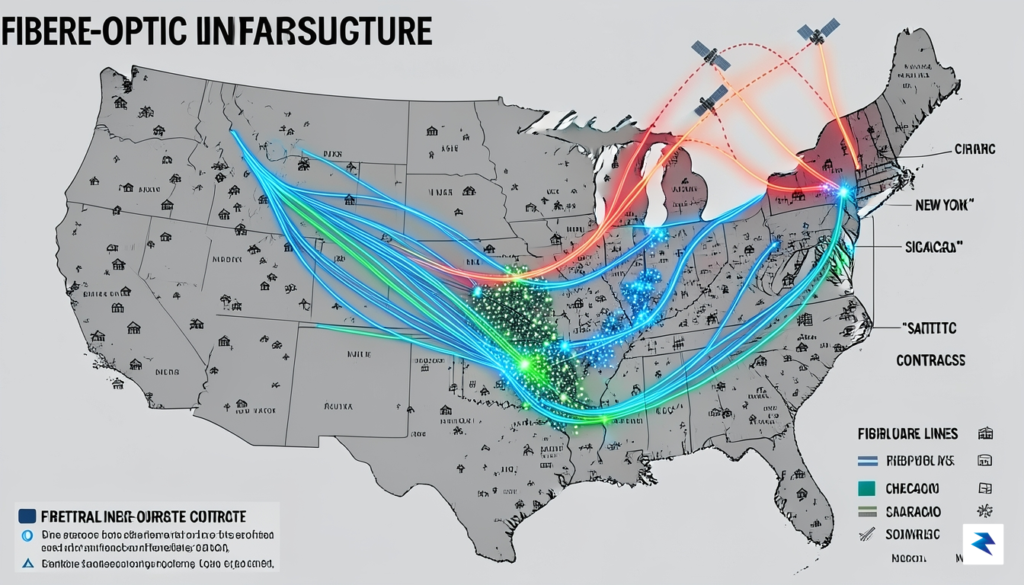
The debate over BEAD funding is not merely about technical specifications; it is a fundamental disagreement over whether the government should subsidize long-term national infrastructure or prioritize the immediate, short-term needs of disconnected citizens.
This technological tug-of-war is further complicated by intense lobbying efforts. Tech corporations and telecom coalitions are pouring record sums into Washington, aiming to influence how state-level BEAD grants are structured and awarded. Large ISPs (Internet Service Providers) often push for requirements that favor their existing high-capacity infrastructure, while satellite operators lobby to ensure that “alternative technologies” remain eligible for subsidies in areas where fiber is deemed too costly. These efforts are not happening in a vacuum; they are deeply intertwined with the current political administration’s goals. By framing internet access as a civil right akin to electricity, the government has moved the issue to the forefront of its legislative agenda, effectively turning broadband policy into a powerful tool for political maneuvering and economic regional development.
Ultimately, the allocation of these subsidies reflects a broader shift in how the government manages public-private partnerships. The administration’s preference for fiber-first policies aims to create high-paying union jobs and ensure that rural America is not left behind in the digital economy. However, critics argue that such mandates may lead to inefficient spending, potentially wasting billions on projects that could have been solved more cheaply by satellite alternatives. As states finalize their specific implementation plans, the tension between speed, cost, and long-term sustainability continues to define the landscape of this high-stakes struggle for rural internet supremacy.

The race to dominate low-Earth orbit (LEO) has transformed from a scientific endeavor into a high-stakes commercial clash between SpaceX’s Starlink and Amazon’s Project Kuiper. SpaceX currently holds a commanding lead, having already deployed thousands of operational satellites that provide active broadband coverage to hundreds of thousands of users across the globe. By leveraging its own fleet of reusable Falcon 9 rockets, SpaceX has maintained an aggressive, rapid-fire launch cadence that its competitors struggle to match. This vertical integration—owning both the launch vehicle and the satellite network—has allowed Musk’s venture to bypass traditional supply chain bottlenecks, effectively setting the industry standard for latency and download speeds in previously unreachable rural locations.

In contrast, Amazon’s Project Kuiper is currently in a critical development phase, focusing on the meticulous engineering of its hardware before commencing large-scale deployment. While the project has secured launch capacity through partnerships with heavy-lift providers like Blue Origin, United Launch Alliance, and Arianespace, it has yet to reach the orbital density required for global service. Amazon’s strategy is deeply rooted in its existing ecosystem; the company intends to leverage its massive cloud infrastructure, Amazon Web Services (AWS), to provide enterprise-grade connectivity and edge computing capabilities. This suggests a market strategy that prioritizes high-value corporate and governmental contracts over the purely residential focus that defined Starlink’s early expansion.
The competition between these two titans is not merely about providing internet to remote regions; it is a fundamental battle to establish the backbone of the next generation of global telecommunications infrastructure.
Technically, both systems rely on advanced phased-array antennas to maintain low latency, a crucial requirement for real-time applications like video conferencing and remote surgery. However, the operational differences are stark. Starlink is already iterating through its second and third generations of satellite hardware, constantly refining its laser-interlink technology to reduce reliance on ground stations. Meanwhile, Kuiper is placing a heavy emphasis on reliability and power efficiency, banking on the idea that the late-mover advantage will allow them to integrate more sophisticated onboard processing from the outset. As these two giants vie for federal subsidies and regulatory approval, the outcome will likely hinge on which company can navigate the complexities of orbital debris management and international spectrum licensing while keeping consumer costs low enough to disrupt traditional terrestrial service providers.

While the promise of high-speed satellite internet feels like a technological miracle, the reality of deploying a massive constellation of low Earth orbit (LEO) satellites is tethered to the slow-moving gears of federal bureaucracy. The Federal Communications Commission (FCC) currently sits at the center of a complex balancing act, tasked with managing the finite radio frequency spectrum while simultaneously fast-tracking the infrastructure required to bridge the digital divide. Licensing thousands of satellites requires more than just technical prowess; it necessitates a rigorous review of how these signals impact existing terrestrial services, potentially creating interference for cellular networks or radio astronomy. For the average user, these regulatory hurdles represent the thin line between a revolutionary shift in rural connectivity and a congested, unreliable service model that struggles under the weight of its own ambition.

Beyond the immediate concerns of signal allocation, regulators are grappling with the looming environmental crisis of orbital debris. As companies like SpaceX accelerate their launch cadences, the risk of the “Kessler Syndrome”—a chain reaction of collisions that could render low Earth orbit unusable—has moved from a theoretical nightmare to a tangible policy concern. The FCC and international space agencies are now under immense pressure to establish binding guidelines for de-orbiting defunct hardware. If these regulations are too lax, we risk polluting our skies with junk; if they are too stringent, they may stifle the rapid deployment necessary to provide affordable broadband to the millions of Americans currently stuck on the wrong side of the digital divide. Striking this balance is not just a matter of safety, but a prerequisite for the long-term sustainability of the entire satellite-based internet industry.
The true test of universal access will not be the first million subscribers, but whether satellite broadband can remain an affordable, long-term utility rather than a luxury niche for the wealthy.
Ultimately, the impact on the average consumer hinges on whether the government can foster a competitive environment that prioritizes digital equity over corporate dominance. If the regulatory framework favors a single, monopolistic provider, rural users may find themselves locked into expensive contracts with little recourse for service outages or price hikes. However, if the FCC successfully encourages a diverse, multi-provider marketplace, the competitive pressure could drive down costs and force rapid technological improvements. As we look toward the future, the goal must remain clear: satellite internet should serve as a bridge to equality, not a digital gatekeeper that reinforces existing economic disparities. Success will require a steadfast commitment to transparency, robust debris mitigation standards, and a regulatory roadmap that keeps the needs of the underserved at the forefront of the space race.
You must be logged in to post a comment.