
The Rise of Decentralized Information Markets

Prediction markets have long been relegated to the fringes of the financial world, often dismissed as little more than sophisticated forms of gambling. However, we are currently witnessing a profound shift in how both institutions and the public perceive these platforms. Far from being mere speculative games, prediction markets are rapidly maturing into robust, high-stakes engines for forecasting real-world events ranging from geopolitical shifts to technological breakthroughs. By allowing participants to trade shares in the outcome of specific future events, these markets synthesize fragmented pieces of data into a single, quantifiable probability, effectively transforming raw information into actionable intelligence.

The core mechanism that powers this evolution is the “wisdom of the crowd”—the idea that a large, diverse group of people, when incentivized to provide accurate information, can outperform the forecasts of even the most seasoned individual experts. Unlike traditional opinion polling, which often suffers from self-selection bias, social desirability pressure, and the inherent limitations of human psychology, prediction markets demand “skin in the game.” When participants must commit capital to their beliefs, they are incentivized to conduct rigorous research and set aside personal biases to arrive at the most likely outcome. This structural necessity filters out noise and centers the market price on a reality-based assessment of the future.
The true power of decentralized forecasting lies not in the perfection of any single participant, but in the aggregate accuracy of the collective, where individual mistakes are often canceled out by the informed consensus of the many.
When comparing prediction market outcomes against conventional expert polling, the differences are often stark. Traditional surveys are static, capturing a snapshot of public sentiment at a specific point in time, and they are notoriously susceptible to misleading framing. In contrast, prediction markets are dynamic, living systems that incorporate new information in real-time. As global events unfold, participants adjust their positions instantaneously, causing the probability of an outcome to fluctuate to reflect the most current state of knowledge. This continuous refinement makes these platforms an incredibly powerful tool for decision-makers who need to navigate complex, fast-moving environments where static data sets become obsolete almost as soon as they are published.
As these markets move into the mainstream, they are beginning to solve some of the most persistent failures in modern data analysis. By decentralizing the process of forecasting, they dismantle the “echo chamber” effect often found in centralized expert panels. When a platform is open and transparent, it allows for a diverse array of perspectives to weigh in, ensuring that the final forecast is not beholden to the blind spots of a single organization or viewpoint. The result is a democratized, highly efficient information ecosystem that provides a clearer window into what is likely to happen next, fundamentally changing the landscape of strategic planning in the modern age.
Meta's Vision for a Standalone Prediction Platform

By decoupling a dedicated prediction market from the noise of the Facebook and Instagram ecosystem, Mark Zuckerberg is signaling a strategic shift toward specialized utility. The social media landscape is often defined by ephemeral engagement, algorithmic echo chambers, and high-velocity content, which are fundamentally at odds with the deliberative, analytical mindset required for accurate forecasting. By launching a standalone application, Meta creates a controlled environment where the primary currency is not just attention, but accuracy. This siloed approach allows for the implementation of unique incentive structures and UI elements that prioritize data integrity, shielding the platform from the chaotic behavioral patterns that typically dominate massive, ad-supported social networks.
The strategic rationale for this independence is rooted in user psychology and brand perception. When users participate in prediction markets, they are performing a cognitive task that demands focus and objectivity, qualities that are easily lost amidst the endless scrolling of a traditional feed. Furthermore, a standalone app allows Meta to leverage its massive existing user base through seamless deep-linking and authentication protocols. By utilizing single sign-on capabilities, the company can lower the barrier to entry, enabling millions of users to migrate from their social profiles to the forecasting platform without friction, all while maintaining the professional or analytical identity required for such a serious endeavor.
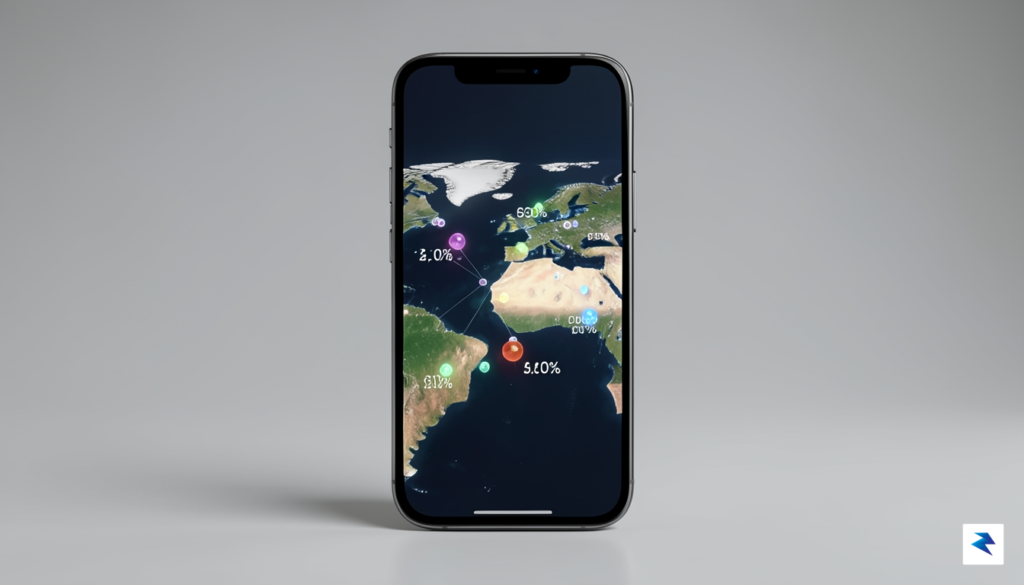
A standalone prediction market is not just a feature; it is an attempt to turn human intuition into a high-fidelity data asset that could redefine how the company understands global trends.
From an architectural standpoint, the technical infrastructure required for such a platform is vastly different from that of a standard social media app. Prediction markets necessitate a robust backend capable of processing complex probabilistic models, managing real-time settlement of outcomes, and maintaining a high level of security to prevent market manipulation. Building this as a separate entity allows Meta to iterate on these specific technical challenges without risking the stability of their core products. Additionally, it offers a testing ground for integrating sophisticated AI agents that can participate alongside humans, potentially creating a hybrid environment where human intuition and machine learning converge to produce the most accurate forecasts available in the digital age.
Ultimately, the challenge lies in balancing mass-market accessibility with the technical rigor necessary to keep a prediction market meaningful. If the platform becomes too dense or academic, it risks alienation; if it becomes too gamified, it loses its analytical credibility. By keeping the project separate, Meta gains the flexibility to refine this delicate balance, catering to the casual enthusiast while providing the analytical tools demanded by power users. This pivot suggests that Meta is no longer content with merely connecting people; they are positioning themselves to become the primary architects of collective intelligence, aiming to structure the way the world anticipates the future.
Navigating the Regulatory and Ethical Landscape

Launching a prediction market at the scale of Meta is a high-stakes endeavor that extends far beyond the technical challenges of building a functional platform. The primary hurdle lies in the complex web of global financial regulations, particularly in the United States, where the Commodity Futures Trading Commission (CFTC) maintains rigorous oversight over event contracts. By enabling users to wager on real-world outcomes, Meta would effectively be entering the realm of financial services, subjecting itself to stringent anti-money laundering protocols, “know your customer” (KYC) requirements, and strict prohibitions against unregulated gambling. Navigating this landscape requires more than just innovative software; it demands a robust legal infrastructure capable of satisfying federal regulators who are increasingly wary of how retail-facing betting platforms impact the broader stability of financial markets.
Beyond the legal framework, Meta faces the daunting challenge of market integrity, specifically concerning the potential for manipulation by powerful actors. In any prediction market, the incentives for bad actors to influence the outcome of an event—or to spread false information to move the market in their favor—are immense. If a platform as influential as Meta allows users to bet on election results or geopolitical shifts, the site could inadvertently become a lightning rod for state-sponsored disinformation campaigns. These actors do not merely seek to predict the future; they seek to engineer it, turning the platform into a tool for artificial sentiment manipulation that could distort public perception and undermine the very data accuracy that such markets are intended to provide.

The issue of misinformation is further exacerbated by the platform’s inherent algorithmic structure, which often prioritizes engagement over objective truth. In a prediction market, where sentiment can shift rapidly based on rumors and inflammatory content, the risk of “information cascades”—where users follow the crowd rather than objective reality—is significantly elevated. Meta must grapple with the ethical burden of content moderation in a environment where data is the currency. Unlike traditional social media posts, which can be flagged or labeled as misinformation, prediction market data is inherently numerical; suppressing or adjusting this data could be interpreted as platform-driven bias, potentially leading to accusations that Meta is tilting the scales of its own market to favor specific political or social outcomes.
The core tension for Meta lies in the trade-off between the decentralized nature of prediction markets and the centralized responsibility the company holds as the world’s largest social media steward.
Ultimately, Meta will need to develop an entirely new layer of governance to oversee these markets, moving away from passive hosting toward active, transparent surveillance. This would likely involve implementing strict limits on position sizes, deploying sophisticated AI-driven tools to detect non-organic trading patterns, and creating clear, enforceable policies on how political discourse is treated within the betting ecosystem. Whether the company can balance the freedom of a prediction market with the necessary safeguards to prevent social volatility remains the defining question of this ambitious initiative. Without these protections, the platform risks becoming a catalyst for the very polarization and instability that regulators are tasked with preventing.
How Prediction Markets Shape Public Discourse

When an entity as pervasive and influential as Meta ventures into hosting a prediction market, it’s not merely creating a new data repository; it’s fundamentally altering the landscape of public discourse and perception. This move could profoundly impact how individuals engage with information, evaluate uncertainty, and ultimately, how they perceive the trajectory of political, social, and even economic events. The sheer scale and integration of Meta’s platforms mean that these crowd-sourced probabilities could become deeply embedded in the daily information consumption habits of billions, shifting the very foundation upon which collective understanding is built.
The psychological impact of seeing ‘crowd-sourced’ probabilities attached to trending news or future events cannot be overstated. Imagine browsing your feed and encountering a headline accompanied by a statistically framed prediction: “Market suggests 75% chance of [X political outcome]” or “Users predict 60% likelihood of [Y social trend].” These numbers, presented with the veneer of objective data, can act as powerful anchors, subtly influencing individual beliefs and perceptions of probability, risk, and even inevitability. People may begin to internalize these figures, granting them an authority that belies their speculative, market-driven nature, thereby potentially diminishing critical thinking and independent assessment of complex issues.
Furthermore, there’s a significant risk of echo chambers forming around financialized predictions, exacerbating existing polarization within online communities. When users have a financial stake in a particular outcome, they are naturally incentivized to promote information that supports their investment and dismiss or suppress contradictory viewpoints. This dynamic could transform discussions from a search for truth into a battle of financial interests, where communities coalesce not around shared values or reasoned debate, but around collective bets. The social validation inherent in Meta’s platforms, combined with the financial incentive of a prediction market, could create powerful feedback loops, cementing preconceived notions and making it even harder for dissenting opinions or nuanced perspectives to gain traction.
Perhaps one of the most significant sociological shifts could occur if Meta’s prediction market becomes a primary source for journalists and policymakers. In an era hungry for real-time data and actionable intelligence, the apparent objectivity and immediacy of a large-scale prediction market could prove irresistible. Journalists might begin citing market probabilities as authoritative indicators of future events, inadvertently lending credibility to what is, at its core, a collective speculative wager. Similarly, policymakers, under pressure to make data-driven decisions, might turn to these markets as a barometer of public sentiment or expert consensus, potentially allowing corporate-controlled algorithms and market dynamics to subtly influence governmental strategy and public policy. This would raise critical questions about who truly shapes our collective future: independent analysis, or the financialized predictions traded on a corporate platform?
Ultimately, Meta’s foray into prediction markets represents a profound experiment in social engineering. It has the potential to redefine how we collectively forecast the future, but it also carries the substantial risk of manipulating public perception, deepening societal divides through financial incentives, and centralizing the power to define probable outcomes within the hands of a single, immensely powerful corporation. The sociological ripple effects of such a system would be wide-ranging, necessitating careful consideration of its design, oversight, and ethical implications.

The Future of Meta's Social Ecosystem

At its core, the push into prediction markets represents Meta’s strategic evolution from a mere facilitator of social interaction to an architect of global information synthesis. By integrating forecasting capabilities into its massive ecosystem, the company is effectively attempting to claim ownership over the infrastructure of truth. The vision is to transform the user experience from one defined by passive scrolling to one defined by active, data-driven participation. As users engage with these markets, Meta gains unprecedented insights into collective human sentiment, potentially creating a feedback loop where social connection informs prediction, and prediction, in turn, shapes future social behavior.

The long-term potential of this strategy lies in the seamless cross-pollination of data across Meta’s various platforms. By leveraging the vast behavioral history of billions of users, the company can refine its predictive algorithms with a level of precision that smaller, standalone forecasting sites simply cannot match. This shift toward ‘predictive social media’ suggests a future where your news feed is not just a chronological list of updates, but a curated dashboard of likely outcomes regarding politics, economics, and cultural shifts. If Meta succeeds, it will no longer just be a venue for sharing content; it will become the primary utility for understanding what is likely to happen next in the world.
The ultimate power of a prediction market lies in its ability to aggregate disparate pieces of information into a single, quantifiable probability, turning the chaos of public opinion into actionable intelligence.
However, the question remains whether a tech giant with a track record of controversy can act as a truly neutral arbiter in such a sensitive domain. While the math behind prediction markets is often touted as objective, the design of the platforms, the rules of engagement, and the moderation of underlying data will always be subject to the company’s internal priorities. If Meta manages to position itself as the definitive source for ‘truth,’ it will face mounting pressure to navigate the thin line between facilitating open debate and policing the boundaries of reality. Whether the public will trust a corporate entity to hold the scales of global forecasting—or whether they will see this as an attempt to consolidate power over the truth itself—will ultimately determine if this new frontier becomes a revolutionary public utility or a cautionary tale of platform overreach.