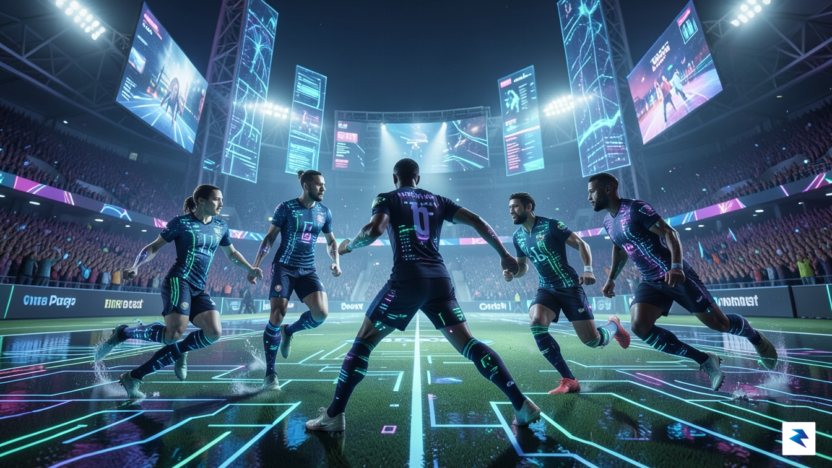
The New Era of Data-Driven Football

The beautiful game is undergoing a profound transformation, moving beyond the raw athleticism and tactical genius that have long defined it. As the countdown to the 2026 World Cup intensifies, international football is rapidly evolving into a complex battleground where algorithms and data insights are proving just as crucial as a striker’s finishing touch or a defender’s last-ditch tackle. This paradigm shift signals a new era, where success on the pitch is increasingly dictated by intelligence off it, fundamentally reshaping how elite teams prepare, strategize, and ultimately perform on the global stage.
For decades, football analytics largely centered on descriptive statistics: goals scored, assists provided, passes completed, and possession percentages. While these figures offered valuable post-match summaries and basic player performance indicators, their predictive power was inherently limited, often serving more as a rearview mirror than a forward-looking compass. Scouts and coaches primarily relied on their trained eyes, intuition, and extensive networks to identify talent and formulate game plans, a system rich in human judgment but inherently susceptible to biases and incomplete information that could leave crucial blind spots.
However, the digital revolution catalyzed a dramatic expansion of these capabilities, propelling sports analytics far beyond simple tracking. Modern data analysis quickly moved into sophisticated predictive modeling, leveraging vast datasets from every touch, sprint, and tackle captured by advanced camera systems and wearable technology. Today, teams analyze everything from intricate player movement patterns and passing networks to opponent pressing schemes and expected goal (xG) metrics, not merely to understand what happened, but to forecast future scenarios, optimize player matchups, and even predict injury likelihood long before symptoms manifest, allowing for proactive intervention.
This advanced analytical framework now serves as the bedrock for the next frontier: artificial intelligence and machine learning. Unlike traditional analytics, which often requires human definition of parameters and hypotheses, AI systems can autonomously sift through unimaginable volumes of data to uncover hidden patterns, subtle correlations, and complex causal relationships that even the most seasoned human analyst might miss. Machine learning algorithms can learn and adapt continuously, refining their predictions and recommendations with every new piece of information, offering a dynamic and evolving intelligence that can optimize training regimens, fine-tune tactical formations in real-time, and even guide substitutions for peak performance under pressure.
The implications for national teams are immense. With the 2026 World Cup on the horizon, the ability to harness these cutting-edge technologies is no longer a mere luxury but a fundamental competitive imperative for any nation aspiring to lift the trophy. Those teams that successfully integrate sophisticated AI tools into their scouting operations, player development pathways, tactical planning, and match-day strategies will undoubtedly gain an undeniable edge, transforming the beautiful game into an intellectual arms race where data-driven decisions are as vital as athletic prowess and raw talent. The battle for global football supremacy is now just as likely to be won in the data center as it is on the pitch.
FIFA’s AI Initiative: Democratizing Performance Analytics

In a bold move to safeguard the competitive spirit of the beautiful game, FIFA has introduced a standardized artificial intelligence agent, a groundbreaking initiative designed to level the playing field for all participating nations in upcoming World Cup tournaments. This bespoke AI tool represents a significant departure from traditional resource-dependent analytics, offering every federation, irrespective of its financial might, access to a baseline yet powerful suite of performance analytics and tactical insights. The goal is clear: to ensure that success on the pitch is driven by talent, strategy, and execution, rather than solely by a nation’s ability to invest millions in proprietary data science infrastructure.
At its core, FIFA’s AI agent is an incredibly sophisticated analytical engine. It ingests vast quantities of data, including historical match footage, real-time player tracking information, biometric data, and even environmental factors, to provide granular insights into team performance and individual player capabilities. Teams can utilize this agent to dissect opponent strategies, identifying common attacking patterns, defensive vulnerabilities, and set-piece tendencies. Furthermore, it offers predictive analytics on player fatigue, potential injury risks, and optimal substitution timings, empowering coaching staff with data-driven decision support previously only available to the wealthiest national teams.
The impact of this universal AI agent is particularly profound for smaller nations, many of whom have historically struggled to compete with the analytical depth of footballing giants. These federations often lack the multi-million dollar budgets required to hire dedicated data scientists, invest in advanced tracking technologies, or develop custom analytical software. Consequently, their match preparation was often reliant on traditional scouting and coaching intuition. Now, armed with FIFA’s AI, a team from a developing football nation can approach a match against a powerhouse with an unprecedented level of tactical understanding, enabling them to craft more informed game plans and exploit weaknesses that might otherwise have gone unnoticed.
This initiative represents a genuine democratization of performance analytics, fundamentally altering the competitive landscape of international football. While resource-rich federations will undoubtedly continue to push the boundaries of AI integration with their own advanced systems, FIFA’s baseline tool significantly narrows the gap in foundational analytical capabilities. It allows emerging footballing nations to punch above their weight, not just with passion and grit, but with scientifically backed strategies. This could lead to more unpredictable results, foster greater tactical innovation across the board, and ultimately make the World Cup an even more thrilling and genuinely global spectacle, where any team truly has a chance to surprise.
The Hidden Gap: Proprietary Tech vs. Standard Tools

While FIFA’s centralized efforts to provide standardized performance tracking tools represent a commendable leap toward democratizing technology, these utilities function more as a baseline than a competitive ceiling. Standardized software offers every participating nation a uniform lens through which to view match statistics, ensuring that basic metrics like heat maps and passing accuracy are available to all. However, this uniformity inadvertently masks a growing chasm in the footballing world: the divide between teams operating with off-the-shelf analytical suites and those wielding bespoke, proprietary AI infrastructure. For elite footballing nations, the real battle is no longer about gathering data—it is about the sophistication of the algorithms used to interpret it.
Top-tier national teams are increasingly functioning like Silicon Valley tech startups, hiring small armies of dedicated data scientists to build custom machine learning models. Unlike standardized tools, which rely on publicly available match data, these proprietary systems are fed with years of internal, highly sensitive performance metrics. These models can predict player fatigue with granular precision, simulate thousands of tactical variations against specific opponents, and identify subtle physiological weaknesses that are invisible to the naked eye. Consequently, teams with the resources to develop their own infrastructure are not just playing the game; they are engineering it.

This reliance on internal secret data creates a tiered system of performance insight that threatens to widen the gap between the sport’s wealthiest nations and the rest of the pack. When a team uses a custom-built AI to dictate their training intensity or rotation strategy, they are operating with a degree of certainty that their opponents simply cannot match. This creates an environment where the “unfair advantage” is no longer found in a better scouting report, but in the proprietary code that optimizes every movement on the pitch. While FIFA’s tools provide the foundational building blocks for every federation, the true competitive edge is now hidden behind the encrypted firewalls of private, high-end tech stacks.
The disparity in AI investment is creating a new hierarchy in international football, where the effectiveness of a national team is increasingly tied to the proprietary depth of their data science operations rather than just the raw talent on the field.
Ultimately, the race for AI dominance will likely dictate the outcome of the 2026 World Cup as much as any individual striker or goalkeeper. As these custom systems become more advanced, the ability to synthesize massive datasets into actionable, real-time tactical adjustments will define the next generation of footballing giants. Unless standardized tools evolve to provide the same level of predictive power as these private models, the gap between the “data-rich” and the “data-poor” is destined to become the defining narrative of the modern era.
Beyond the Pitch: Scouting, Recovery, and Tactical Evolution
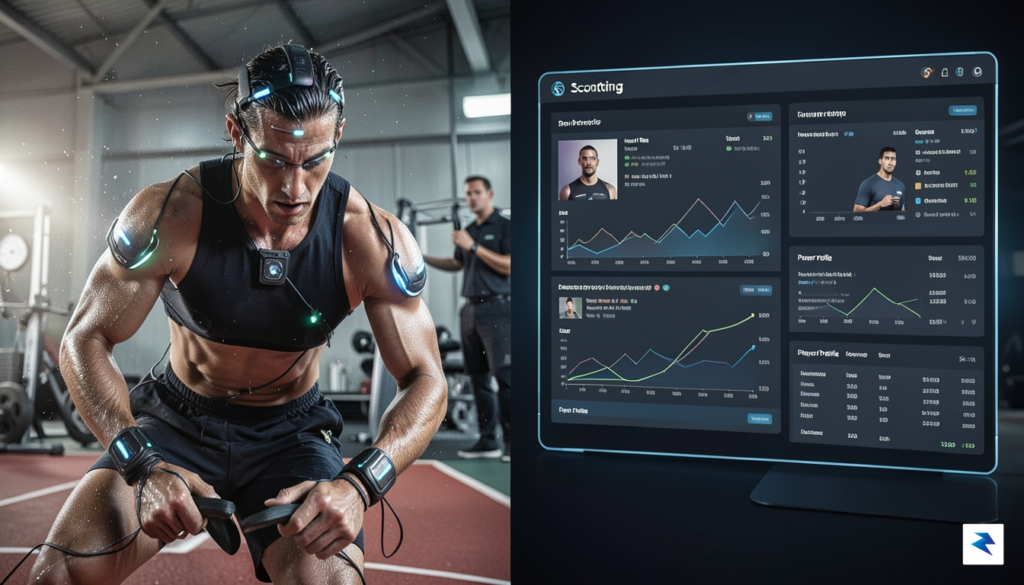
While the drama of the World Cup is defined by the tension of the final whistle, the true battle for supremacy is increasingly won in the quiet, data-rich environments of the training ground. AI has transcended its role as a mere analytical tool, becoming a foundational pillar for player welfare and long-term development. By utilizing advanced biometric sensors and wearable technology, medical teams now monitor everything from heart rate variability to sleep quality and metabolic expenditure in real-time. This granular level of oversight allows staff to implement precision load management, ensuring that players reach peak physical condition exactly when the tournament schedule demands it, rather than burning out during the grueling qualifying rounds.

Predicting the Unpredictable
Perhaps the most significant contribution of artificial intelligence to modern football is its ability to forecast and prevent physical setbacks before they manifest. Deep learning models now ingest massive historical datasets—ranging from grass surface conditions to a player’s historical sprint patterns—to identify subtle physical imbalances that indicate a high risk of injury. Instead of reactive rehabilitation, coaches are now alerted to “micro-fatigue” markers, allowing them to adjust training intensity proactively. This predictive capability is a game-changer for national teams, as it protects their most valuable assets from the devastating prospect of missing the world’s biggest stage due to avoidable strain.
The integration of AI into scouting and health protocols means that a national team’s success is no longer just about talent; it is about the scientific optimization of that talent.
Beyond the physical health of the squad, AI is fundamentally reshaping how nations identify the next generation of superstars. Global scouting networks, once reliant on the subjective intuition of scouts traveling across continents, are now augmented by computer vision systems that track thousands of youth prospects simultaneously. These algorithms can flag specific technical traits—such as the velocity of a cross or the efficiency of a defensive transition—that might be missed by the human eye. By analyzing these data points, federations can unearth hidden gems from underrepresented leagues, ensuring that the 2026 World Cup rosters are comprised of the most technically proficient players globally, rather than just the most famous.
Finally, the tactical evolution of the sport has moved into the realm of virtual simulation. Coaches are now leveraging sophisticated deep learning models to “war-game” specific tactical scenarios, testing how a high-press defensive structure might hold up against a counter-attacking opponent long before the whistle blows. These models allow management teams to simulate thousands of match outcomes, providing data-driven insights into which formation variations offer the highest probability of success against specific international rivals. Consequently, the tactical preparation for a match has transformed from a gut-feeling exercise into a rigorous, evidence-based simulation, giving managers the confidence to make daring decisions when the stakes are at their highest.
The Future of Coaching: Will AI Replace Human Intuition?

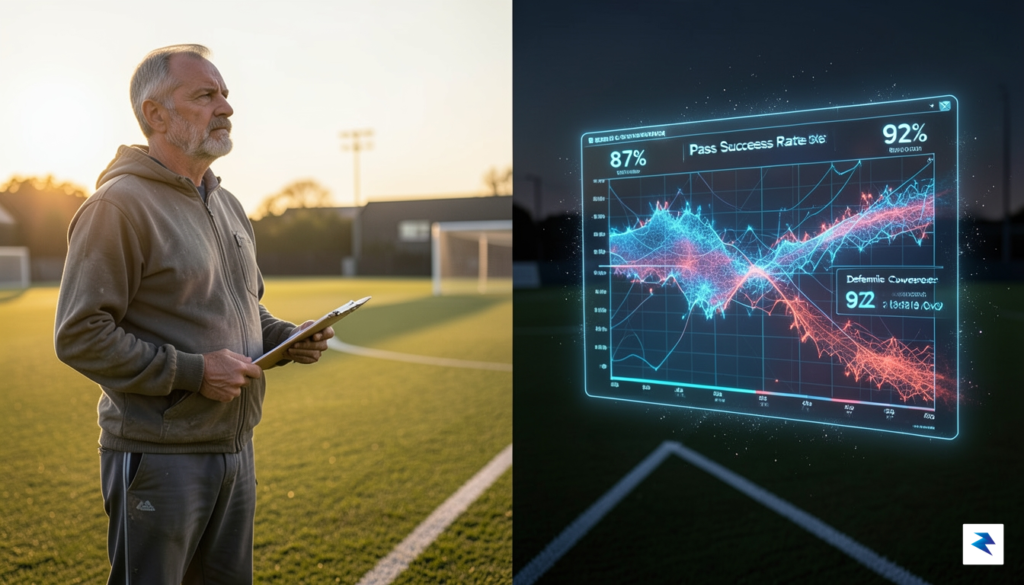
The integration of artificial intelligence into professional soccer has sparked a profound debate regarding the sanctity of the manager’s “gut feeling.” For decades, the legendary coach was defined by an almost mystical ability to sense when a player was flagging or when a tactical shift was required, relying on years of experience and subconscious pattern recognition. Today, however, that intuition is increasingly being cross-referenced against millions of data points. While algorithms can predict the probability of a successful pass or the optimal timing for a substitution based on fatigue metrics, they lack the capacity to understand the psychological weight of a high-pressure moment. The question is no longer whether data is useful, but whether it should be the final arbiter of truth in the heat of a World Cup match.
History is replete with moments where a manager’s counter-intuitive decision—defying the cold logic of the statistics—yielded legendary results. Sometimes, a player’s presence on the pitch transcends their numerical output; a leader might offer a calming influence or a burst of inspiration that no spreadsheet can quantify. If a coach were to rely solely on the output of an AI model, they might inadvertently ignore the “intangibles”—the morale of the squad, the specific chemistry between two players, or the sheer adrenaline of a tournament knockout stage. Consequently, the most successful managers of the 2026 World Cup era will likely be those who treat data as a high-fidelity compass rather than an autopilot system.
The future of elite coaching lies not in the obsolescence of the human manager, but in the synthesis of machine precision and human empathy.
Ultimately, the role of the manager is evolving into that of a master interpreter. A coach must possess the unique ability to weigh the cold, hard reality of predictive analytics against the fluid, unpredictable nature of human emotion. This synergy between data analysts and tactical leaders is becoming the new gold standard for national teams. When the clock is ticking down in the final minutes of a final, the AI can provide the options, but the manager must provide the conviction. By bridging the gap between computational intelligence and the seasoned wisdom of a veteran leader, soccer is entering an era where the most effective strategy is a blend of scientific rigor and the irreplaceable spark of human intuition.
Maintaining the Spirit of the Game
As the global football community hurtles towards the 2026 World Cup, an event increasingly shaped by the sophisticated algorithms and predictive power of artificial intelligence, a fundamental question emerges: how will this technological revolution intersect with the very soul of the beautiful game? Teams are indeed in a race for AI dominance, deploying advanced analytics to scrutinize every pass, predict every movement, and refine every strategy. Yet, amidst this impressive technological surge, the ultimate challenge for FIFA and all involved parties remains ensuring that the enduring spirit of football—its raw passion, exhilarating unpredictability, and undeniable human excellence—not only survives but thrives. The promise is clear: AI can offer unprecedented insights and fairness, but its true value will lie in its ability to serve as a powerful tool, not as the game itself.
Indeed, the potential for AI to enhance the viewing experience and the sport’s integrity is vast and compelling. Imagine more accurate offside calls delivered in real-time, personalized viewing angles for every fan, or even in-depth tactical breakdowns generated on the fly, enriching our understanding of the game’s complexities. These innovations can undoubtedly deepen engagement and provide a level of analytical precision previously unattainable, allowing fans to appreciate the strategic genius and athletic prowess on display with greater clarity. However, this pursuit of perfection must be carefully balanced with the recognition that football’s magnetic appeal often stems from its inherent imperfections and the unpredictable ebb and flow of human endeavor.
The “spirit of the game” is an elusive yet potent concept, encompassing the visceral roar of the crowd, the spontaneous burst of individual brilliance, the heart-wrenching agony of defeat, and the euphoric ecstasy of victory. It’s the unexpected underdog triumph, the controversial referee decision that sparks passionate debate for years, and the sheer, unscripted drama that unfolds over ninety minutes. These elements, often born from human intuition, emotion, and even error, are what imbue football with its universal resonance and make it more than just a contest of physical and technical skill. They are the narratives that captivate billions, transcending language and culture, weaving a rich tapestry of shared human experience.
Therefore, as AI systems become increasingly sophisticated, capable of optimizing player performance and even predicting match outcomes with startling accuracy, the delicate task for administrators and coaches will be to harness this power without inadvertently stifling the very human drama that defines the sport. There’s a fine line between providing referees with better tools for objective decisions and eroding the organic flow of the game with constant interruptions. Similarly, while data-driven insights can undoubtedly inform strategy, they should not overshadow the creative genius of a player’s improvisation or the inspiring leadership of a captain on the pitch. The goal should be to elevate the human element, not to diminish it by an overreliance on cold, hard data.
Ultimately, the integration of AI into the World Cup, and football at large, presents a profound opportunity to refine and enrich the sport, yet it also carries the responsibility to safeguard its most cherished attributes. The true triumph will not be measured by how many decisions AI correctly makes or how efficiently data is processed, but by how effectively technology serves to amplify the passion, preserve the unpredictability, and celebrate the unparalleled human excellence that has always been at the heart of the world’s most beloved game. The 2026 World Cup will stand as a testament to whether we can truly embrace an AI-powered future while maintaining the beautiful, unpredictable, and deeply human essence of football.