
Understanding the Evolution of Cloudflare Access

For years, Cloudflare Access has served as a cornerstone of the modern zero-trust architecture, effectively replacing cumbersome legacy VPNs with a streamlined, identity-aware proxy. By abstracting the complexities of network security, it allowed organizations to secure internal applications behind a single, unified gateway. However, this ease of use historically came with a rigid dependency on a predefined set of managed identity providers. While this “plug-and-play” approach worked seamlessly for standard enterprise setups, it often left security teams and developers feeling constrained by the limitations of those third-party integrations, particularly when dealing with specialized protocols or custom authentication requirements.
The traditional model of identity management forced organizations into a “walled garden” where they were tethered to the features and constraints of their chosen identity provider (IdP). If a team needed to implement custom claims, niche authentication flows, or proprietary security headers, they were often met with a brick wall. This rigidity created a friction point between the agility of the DevOps lifecycle and the stringent demands of enterprise security. As organizations began migrating more of their critical infrastructure to the cloud, the need for a more customizable, programmatic approach to identity became undeniable. Developers were effectively asking for the ability to treat identity as code—a flexible, malleable component of their stack rather than a static configuration.

The strategic shift toward self-managed OAuth marks a significant turning point in the Cloudflare ecosystem, signaling an era of granular control. By empowering teams to configure their own OAuth providers, Cloudflare is essentially decoupling the security layer from the identity provider, allowing for a bespoke authentication experience that fits specific organizational needs. This evolution allows security architects to maintain rigorous zero-trust policies without compromising on the unique requirements of their internal applications or user base. It is no longer about forcing every application to conform to a single standard, but about creating an infrastructure that adapts to the diverse and evolving authentication landscape of the modern web.
The transition to self-managed OAuth represents a fundamental change in philosophy: moving away from a prescriptive “one-size-fits-all” security model toward a modular framework that treats identity orchestration as a core development capability.
Ultimately, this change is not merely a feature update; it is an architectural empowerment. By providing developers with the tools to manage their own OAuth workflows, Cloudflare is acknowledging that modern security is not a static destination, but a fluid process. Teams can now integrate legacy internal systems, custom-built applications, and specialized partner portals with a level of precision that was previously impossible. This newfound flexibility ensures that security teams can iterate faster, reduce technical debt associated with identity middleware, and maintain a robust, zero-trust posture that grows alongside their technological footprint.
The Mechanics of Self-Managed OAuth
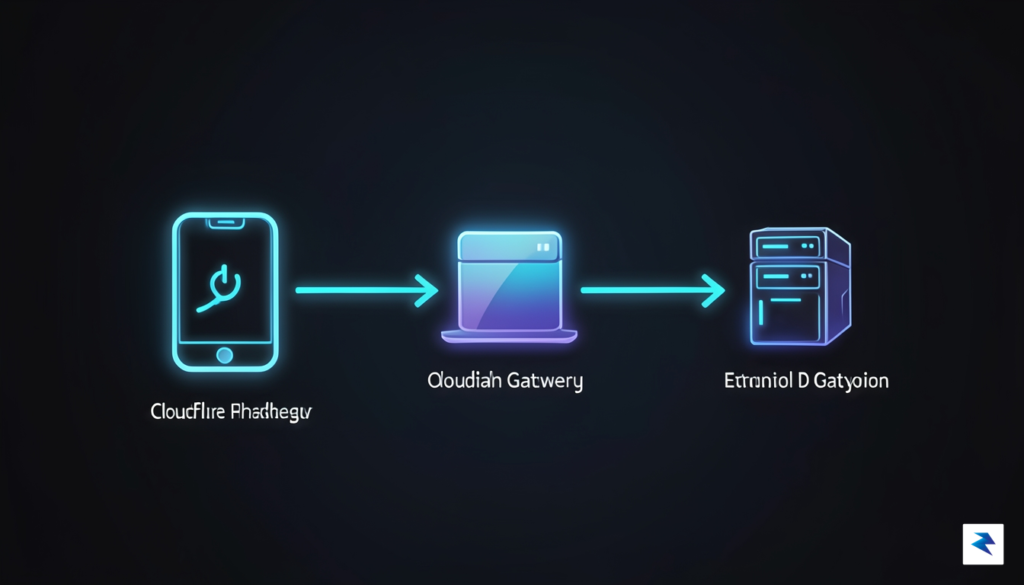
At its core, the shift toward self-managed OAuth within the Cloudflare ecosystem represents a fundamental move from rigid, pre-built integrations to a flexible, standards-based architecture. By leveraging the OpenID Connect (OIDC) protocol, Cloudflare has effectively decoupled itself from the need for proprietary connectors that often lag behind the rapid update cycles of modern identity providers. This means that if an identity provider adheres to the standard OIDC discovery document—typically hosted at a /.well-known/openid-configuration endpoint—it can now be plugged directly into the Cloudflare Access workflow. Organizations no longer have to wait for vendor-specific support; instead, they act as the primary architect of their authentication pipeline, defining the specific scopes, claims, and token validation parameters that suit their unique security posture.
The technical handshake begins when a user attempts to access a protected resource, triggering a redirect to the organization’s chosen identity provider. To facilitate this, security teams must configure two essential components within the Cloudflare dashboard: the Client ID and the Client Secret. These credentials serve as the digital handshake between the two platforms, ensuring that only authenticated requests are processed. Once the user provides their credentials to the external provider, the provider issues an authorization code, which Cloudflare then exchanges for an ID token and an access token. Because Cloudflare dynamically consumes the provider’s public keys through the discovery endpoint, it can verify the integrity of these tokens in real-time without needing a hard-coded, static trust relationship.
Streamlining Configuration and Security
A critical aspect of this self-managed model is the precision required when defining redirect URIs. During the setup process, Cloudflare generates a unique callback URL that must be registered within the administrative console of the identity provider. This URI acts as the destination for the authentication response; if it does not match exactly, the provider will reject the request, preventing potential man-in-the-middle attacks or malicious redirections. By mandating this level of precision, the system ensures that the token exchange remains encapsulated within a secure, pre-authorized environment, effectively mitigating the risk of credential leakage during the handoff process.
Key Takeaway: Self-managed OAuth eliminates the “vendor lock-in” bottleneck, allowing security teams to implement robust, OIDC-compliant authentication for niche or internal identity providers without waiting for native platform support.
Beyond the initial handshake, the true power of this functionality lies in Cloudflare’s ability to parse and validate custom claims within the ID token. Rather than relying on generic user information, organizations can now pass specific identity attributes—such as departmental tags, clearance levels, or hardware device IDs—directly through the OIDC flow. These claims are then ingested by Cloudflare Access and can be utilized to build granular, context-aware authorization policies. By moving the heavy lifting of token validation to the edge, Cloudflare ensures that access decisions are enforced at lightning speed, all while maintaining the strict compliance requirements necessitated by modern enterprise security architectures.
Why Self-Managed OAuth Matters for Security Teams

For security teams, the launch of self-managed OAuth capabilities by Cloudflare marks a significant shift towards enhanced control and visibility over critical authentication processes. This development fundamentally alters the landscape of how organizations connect their workforce to applications, moving away from reliance on potentially opaque third-party integrations. Instead, it empowers internal security operations to dictate the terms of engagement between users and services, directly integrating their chosen identity providers (IdPs) without intermediation. This increased autonomy is not merely a convenience; it’s a strategic advantage, allowing security professionals to build a more robust and resilient security perimeter from the ground up, ensuring every access point aligns with enterprise security standards.
One of the most pressing challenges for modern security teams is the proliferation of “shadow IT”—unauthorized applications and services adopted by employees without official IT oversight. These rogue integrations often utilize their own, unmanaged authentication mechanisms, creating significant blind spots and potential vectors for compromise. With self-managed OAuth, security teams can proactively mitigate this risk by funneling all application access through their centralized, approved identity providers. This ensures that every user attempting to access a resource, whether sanctioned or unsanctioned, is authenticated against corporate policies, thereby bringing previously hidden access points under the watchful eye of the security team and significantly reducing the attack surface for potential exploits.
Centralized identity management is a cornerstone of any effective Zero Trust architecture, and self-managed OAuth plays a pivotal role in strengthening this posture. By enabling direct integration with an organization’s existing identity provider, it establishes a single source of truth for user identities and access policies. This means that security teams can enforce consistent authentication rules, multi-factor authentication (MFA) requirements, and granular access controls across all integrated applications, irrespective of their hosting environment. This unified approach eliminates the fragmented identity silos that often plague complex environments, ensuring that every access request is explicitly verified and authorized before trust is granted, aligning perfectly with the “never trust, always verify” principle of Zero Trust.
The ability to manage identity providers internally also offers substantial advantages for regulatory compliance. Modern compliance frameworks, such as SOC 2, ISO 27001, HIPAA, and GDPR, demand stringent controls over user access, data handling, and audit trails. By centralizing authentication through self-managed OAuth, organizations gain unparalleled visibility into who accessed what, when, and how. This granular logging and consistent policy enforcement simplify the process of demonstrating compliance to auditors, providing clear evidence of controlled access mechanisms and robust security practices. Furthermore, it helps avoid the complexities and potential liabilities associated with relying on third-party IdP compliance attestations for critical authentication flows, offering greater control over the audit narrative.
Traditionally, integrating applications with security services often involved relying on pre-built connectors or pre-configured integrations provided by third parties. While convenient, these connectors can sometimes introduce their own set of security considerations, including potential vulnerabilities within the connector itself, limited configurability, or a lack of transparency regarding their underlying security mechanisms. Self-managed OAuth empowers security teams to bypass these black-box integrations. Instead, they can configure the authentication flow directly, tailoring it to their precise security requirements, leveraging
Technical Implementation and Best Practices

Transitioning to self-managed OAuth within the Cloudflare dashboard requires a methodical approach to ensure that your identity provider (IdP) integration remains both secure and highly available. Administrators should begin by navigating to the Access settings, where the new custom provider option allows for granular control over authentication flows. Before finalizing the configuration, you must define the exact scopes required for your specific applications, such as openid, profile, and email. By tailoring these scopes to the principle of least privilege, you ensure that your applications only request the information necessary for user verification, thereby minimizing the surface area for potential data exposure.
Once the initial connection is established, the focus must shift to robust token management and validation. It is essential to configure your IdP to handle token expiration gracefully, ensuring that your Cloudflare-protected resources do not experience abrupt session terminations for legitimate users. To achieve this, administrators should implement a strategy that includes frequent token refresh cycles and strict validation of the JSON Web Tokens (JWTs) issued by the provider. Furthermore, integrating proper error handling within your authentication middleware is critical; your system should be capable of logging failed attempts in detail while providing clear, non-sensitive feedback to users when an authentication handshake fails.
Pro-Tip: Always treat your Client Secret as highly sensitive material. Store it in a secure vault rather than hardcoding it into your configuration files, and rotate these credentials on a predetermined schedule to limit the impact of any potential credential leakage.
Finally, avoiding lockout scenarios is perhaps the most vital aspect of a successful deployment. Even with a perfectly configured OAuth provider, unforeseen outages or misconfigurations can prevent users from accessing critical infrastructure. To mitigate this risk, IT teams should establish a secondary fallback authentication method, such as a bypass policy or a secondary, independent identity provider. By maintaining these redundant paths, you ensure that your security posture remains resilient without sacrificing operational continuity. Regularly testing these failover mechanisms during scheduled maintenance windows will provide the assurance needed to deploy self-managed OAuth with confidence.
- Verify Redirect URIs: Ensure your Cloudflare-provided callback URL is explicitly whitelisted in your IdP’s console to prevent unauthorized redirection attempts.
- Implement RBAC: Map OAuth claims to Cloudflare groups to automate access control, ensuring that user permissions update dynamically based on their attributes in your central directory.
- Monitor Logs: Utilize Cloudflare Access logs to monitor authentication success and failure rates, allowing for proactive troubleshooting before users report widespread access issues.
Comparing Managed vs. Self-Managed Identity Providers
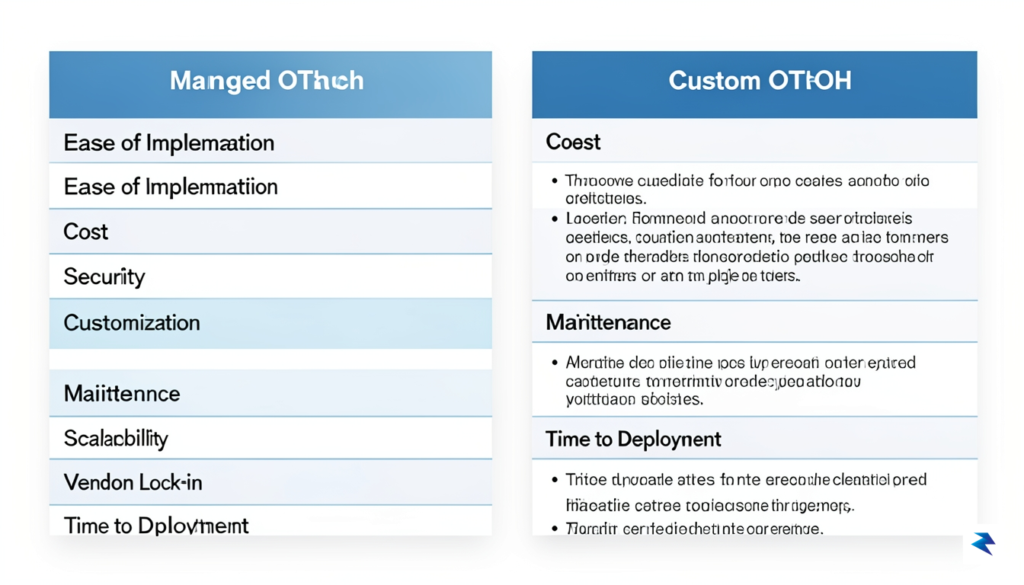
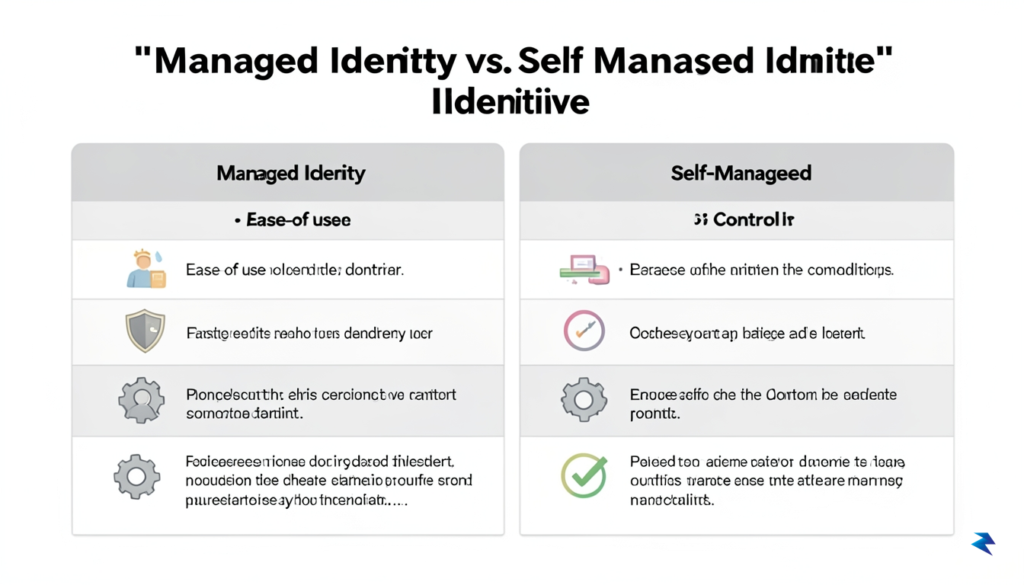
Deciding between a managed identity provider and a self-managed OAuth solution is essentially a trade-off between operational friction and architectural sovereignty. Managed services—such as those provided by Auth0, Okta, or Google—function as a turnkey utility. They offload the heavy lifting of security compliance, patch management, and uptime guarantees to a dedicated team of experts. For organizations prioritizing speed-to-market or those with limited dedicated identity engineering resources, this “as-a-service” model is often the path of least resistance, as it minimizes the risk of misconfiguration while providing a predictable, albeit recurring, cost structure.
Conversely, moving toward a self-managed OAuth model, now increasingly viable through platforms like Cloudflare, shifts the burden—and the power—directly into your hands. This approach is not merely about avoiding subscription fees; it is about decoupling your authentication layer from vendor-specific constraints. When you manage your own identity infrastructure, you gain granular control over data residency, custom authentication flows, and the ability to integrate legacy systems that might not align with standard managed service APIs. However, this flexibility comes with the non-trivial cost of maintenance. Your engineering team becomes responsible for the full lifecycle of the identity service, including complex security audits, high-availability scaling, and the diligent patching of vulnerabilities that could otherwise expose your entire user base to credential stuffing or unauthorized access.
Evaluating Your Organizational Readiness
To determine which model aligns with your current infrastructure, IT leaders should weigh their risk tolerance against their technical bandwidth. If your organization operates in a highly regulated industry where data sovereignty is paramount, or if you maintain specialized proprietary applications that require non-standard OAuth scopes, the self-managed route offers a necessary degree of customization that out-of-the-box providers simply cannot match. On the other hand, if your primary goal is to minimize the “attack surface” of your own internal tools, sticking to a managed provider reduces the likelihood of human error, as the service provider handles the complexities of secure token handling and rotation automatically.
The core of the decision lies in your definition of “control.” Are you looking for the ability to modify the inner workings of your auth flow, or are you looking for the assurance that someone else has vetted every security protocol on your behalf?
Ultimately, the choice should be guided by a clear-eyed assessment of your team’s capacity to manage technical debt. Self-managed OAuth is a powerful tool for those with the infrastructure to support it, but it requires a mature security posture to handle the increased complexity of configuration management. Before making the leap, ensure your team is prepared to treat identity as a critical engineering product rather than a secondary utility. By balancing the need for agility against the realities of maintenance, you can select an identity architecture that supports your business growth without becoming an unexpected bottleneck.