
The Genesis of the Kraken vs. PowerTrade Dispute

A significant legal confrontation has recently emerged within the digital asset landscape, pitting one of the industry’s most established infrastructure providers against a burgeoning derivatives platform. Kraken, a global cryptocurrency exchange recognized for its long-standing commitment to regulatory compliance and security, has initiated a formal lawsuit against PowerTrade, a platform specialized in crypto options and derivatives trading. This high-stakes litigation, which surfaced in legal filings, centers on serious allegations of financial impropriety that threaten to disrupt the operational relationship between the two firms. At the heart of the conflict is a multi-million dollar dispute regarding the handling and alleged misappropriation of funds, a claim that Kraken asserts is central to the integrity of its institutional service model.
The severity of this legal action cannot be overstated, as it highlights the increasing friction that can occur when centralized exchange giants and specialized niche platforms interact in the fast-paced world of decentralized finance. Kraken’s move to seek judicial intervention suggests that private negotiations or arbitration attempts may have reached an impasse, leaving the court to untangle complex allegations of financial mismanagement. For Kraken, which has spent over a decade building a reputation for solvency and strict asset management, such claims are not merely fiscal grievances but potential threats to its professional standing within the ecosystem. Conversely, PowerTrade now finds itself in a precarious position, tasked with defending its reputation against a formidable adversary that possesses significant resources and a deep interest in protecting its institutional footprint.

The core of the dispute rests on specific allegations that funds entrusted to PowerTrade were not handled according to the agreed-upon terms, prompting Kraken to take decisive action to reclaim assets and safeguard its market position.
The broader crypto ecosystem should pay close attention to the unfolding details of this case, as it serves as a stark reminder of the risks inherent in inter-platform connectivity. As derivatives markets continue to grow in complexity, the mechanisms governing how collateral and liquidity are managed become increasingly critical to the stability of the wider crypto economy. If the court finds merit in Kraken’s claims of misappropriated capital, it could set a precedent for how exchange platforms vet and monitor their partners, potentially leading to more stringent oversight and tighter contractual controls across the industry. This case is not just about a private dispute between two companies; it acts as a stress test for the accountability frameworks currently supporting the digital asset derivatives market.
Understanding the Allegations: Unauthorized Adjustments and Financial Discrepancies
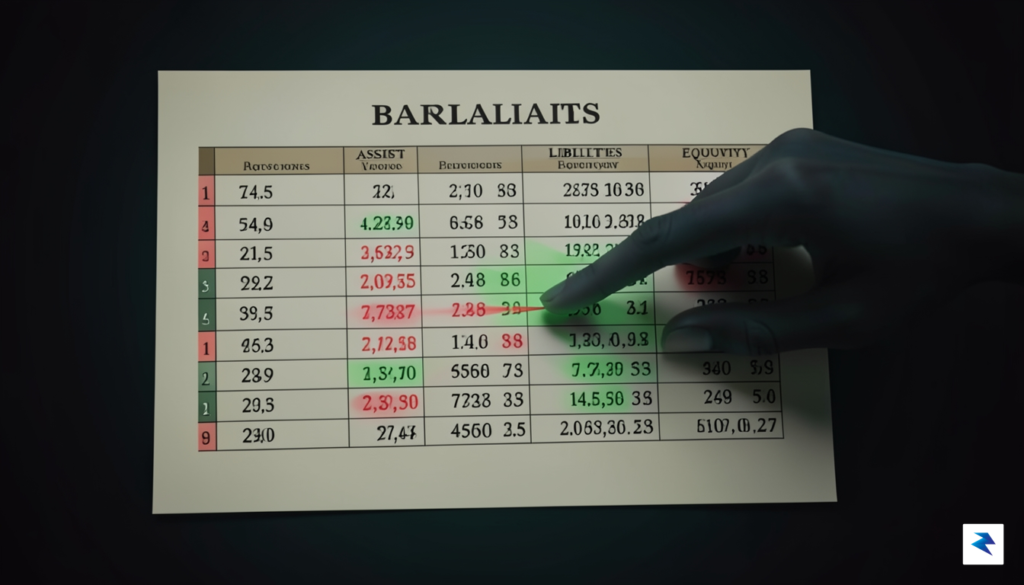
The core of the legal confrontation between Kraken and PowerTrade centers on a dramatic and highly contested pivot in financial accounting. According to the lawsuit, Kraken maintained a positive balance of approximately $7 million within its PowerTrade account, a figure that ostensibly represented the realized gains and deposited capital within the derivatives platform. However, the situation deteriorated rapidly when PowerTrade allegedly executed a series of unilateral, retroactive adjustments to these balances. This move effectively wiped out the surplus and plunged the account into a deficit of nearly $2 million, sparking immediate alarm regarding the platform’s internal control mechanisms and its adherence to standard trading protocols.
The technical crux of the dispute lies in how PowerTrade handled trades that had already reached their maturity date. Kraken claims that the platform retroactively modified the terms or outcomes of positions that were long settled, effectively “clawing back” funds under the guise of correcting previous errors. By applying these adjustments to expired trades, PowerTrade allegedly bypassed the standard dispute resolution processes that would typically govern market-making and derivatives trading. This behavior, if proven, suggests a fundamental breakdown in the immutable nature of trade settlement, raising significant questions about whether a platform can unilaterally alter the financial reality of a user’s ledger after the fact.

In its legal filings, Kraken characterizes these actions not as mere clerical errors, but as “misappropriation” of client assets and “unauthorized corrections.” The legal language employed here is deliberate, as it seeks to distinguish between standard margin calls or legitimate risk management and what the exchange describes as an unlawful seizure of funds. Kraken argues that by unilaterally altering balances without a contractual basis or prior notification, PowerTrade acted outside the bounds of their service agreement. This has turned the dispute into a broader inquiry into the autonomy of centralized exchanges and the extent to which they can wield power over the assets entrusted to their custody.
The core of the dispute rests on the assertion that PowerTrade lacked the contractual authority to retroactively adjust settled trades, effectively rewriting history to the detriment of its institutional clients.
Furthermore, the magnitude of the swing—from a $7 million surplus to a $2 million liability—highlights the extreme volatility risk that can arise when a platform’s internal accounting logic deviates from market expectations. For institutional participants, the ability to rely on settled balances is a fundamental prerequisite for liquidity management and risk assessment. Kraken’s lawsuit serves as a stark warning to the industry that even in the sophisticated world of crypto derivatives, technical disputes over account reconciliation can quickly escalate into high-stakes litigation if there is no transparency regarding how and when adjustments are permitted to occur.
The Mechanics of Crypto Derivatives and Trade Settlement Risks

At their core, crypto derivatives are financial contracts that derive their value from the performance of an underlying digital asset, such as Bitcoin or Ethereum. Unlike spot trading, where an investor buys the actual asset, derivatives allow traders to speculate on price movements through futures, options, or perpetual swaps. The settlement process serves as the vital bridge between this speculative activity and the actual ledger of accounts. When a trade expires or is liquidated, the platform must execute a precise reconciliation: calculating profits or losses, updating account balances, and ensuring that the collateral held in escrow is correctly distributed to the winning party. Ideally, this process should be instantaneous and immutable, acting as a final “seal” on the transaction that signals the end of the contractual obligation.
The concept of “post-settlement corrections” introduces a significant, often contentious, friction point in this workflow. In a perfect digital ecosystem, once a trade is closed and the balance is updated, that data should be considered final and tamper-proof. However, when a platform attempts to retroactively adjust these balances—claiming, for instance, that a technical glitch or an oracle error resulted in an incorrect payout—it undermines the very trust upon which institutional crypto markets are built. For institutional players who manage massive liquidity, the ability to rely on the stated value of their ledger is paramount. When a counterparty decides to claw back funds or modify historical trade data after the fact, it introduces systemic uncertainty that can disrupt hedging strategies and capital management.

Trust acts as the primary currency in these institutional markets, yet cross-platform interactions are inherently fraught with risk. When large-scale funds move between disparate exchanges or clearinghouses, the complexity of the underlying software infrastructure increases the likelihood of human or algorithmic error. If a platform lacks robust, automated reconciliation protocols, it may be forced to rely on manual interventions or retroactive “corrections” to rectify imbalances. These actions are rarely viewed as neutral accounting fixes by the affected parties; instead, they are often interpreted as a breach of the fundamental agreement that defines a closed trade. Consequently, what may seem like a minor technical adjustment to a platform’s internal ledger can quickly escalate into a high-stakes legal dispute, as the affected party views the platform’s interference as an unauthorized encroachment on their assets.
The integrity of a derivatives market hinges on the principle of finality; once a settlement is processed, the movement of value must be treated as absolute to maintain market confidence.
Ultimately, the friction often stems from a fundamental disagreement over where the liability lies when a system fails. Platforms argue that they have an inherent right to correct systemic errors to maintain the health of their order books, while institutional traders maintain that the platform’s software must be held accountable for its own output. As crypto derivatives continue to mature, the industry must grapple with these settlement risks by moving toward more transparent, perhaps even decentralized, clearing mechanisms. Until such standards are universally adopted, the threat of post-settlement interference will remain a looming risk for those who hold significant capital in the digital asset space.
Legal Implications for Institutional Crypto Trading

The legal battle between Kraken and PowerTrade serves as a critical stress test for the operational frameworks currently governing the institutional crypto-derivatives market. At its core, this dispute underscores the urgent necessity for more robust, standardized service-level agreements (SLAs) that explicitly dictate the mechanics of collateral management, liquidation triggers, and dispute resolution. In the traditional financial world, these protocols are ironclad, yet the crypto ecosystem has historically relied on a mix of smart contract automation and informal trust-based arrangements. This case highlights how quickly those blurred lines can lead to multi-million dollar litigation when digital assets are moved or adjusted without a mutual understanding of the underlying contractual obligations.

When courts are called upon to adjudicate disputes involving digital assets that have been unilaterally moved or re-hypothecated, they often struggle to map 20th-century contract law onto 21st-century decentralized protocols. Traditionally, judges look for clear evidence of intent, control, and ownership, but the fluid nature of liquidity pools and cross-exchange derivatives complicates these definitions significantly. By litigating these issues, Kraken is effectively forcing the judicial system to refine its interpretation of digital custody and the legal status of funds held within proprietary trading platforms. The resulting precedents will likely influence how future exchanges structure their terms of service, moving away from vague “platform discretion” clauses toward more rigid, legally defensible definitions of asset movement and counter-party liability.
The outcome of this lawsuit will likely serve as a foundational reference point for how institutional exchanges manage counter-party risk, potentially triggering a shift toward increased regulatory oversight in the derivatives sector.
Furthermore, this high-profile conflict is almost certain to invite closer scrutiny from global financial regulators who have long been skeptical of the derivatives market’s opacity. As exchanges continue to offer increasingly complex leveraged products to sophisticated clients, the potential for systemic risk grows, necessitating a more rigorous regulatory environment. We should expect to see a push for mandatory reporting standards, clearer separation of client and platform funds, and standardized arbitration protocols that minimize the need for public litigation. Ultimately, this case marks a maturation point for the industry; it signals that the “wild west” era of crypto-derivatives is being replaced by a more disciplined, litigious, and legally structured institutional landscape where the fine print of every contract carries significant weight.
What This Means for the Future of Exchange Accountability

As the dust settles on this high-stakes legal confrontation, the broader crypto derivatives market faces a critical inflection point. For too long, the industry has operated under a “trust-but-verify” model that often lacked the robust safeguards common in traditional finance. This dispute serves as a stark reminder that as digital asset ecosystems attract increasingly sophisticated institutional capital, the margin for operational error—or alleged misappropriation—becomes virtually non-existent. Moving forward, we can expect a seismic shift toward mandatory, real-time transparency, where the ability to prove solvency and fund segregation is no longer a marketing advantage, but a baseline requirement for market participation.

The evolution of risk management will likely center on the widespread adoption of automated, on-chain auditing. Rather than relying on periodic, manual reports that can be manipulated or delayed, institutional players will increasingly demand platforms that utilize cryptographic proofs to verify collateral status in real-time. By leveraging automated protocols, exchanges can provide a continuous, verifiable snapshot of their financial health, effectively eliminating the opacity that often allows disputes over misappropriated funds to fester for months. This transition is essential for maturation; without verifiable proof of reserves and liabilities, derivatives platforms will find it progressively harder to attract the heavy-hitter liquidity providers necessary for long-term growth.
The future of crypto exchange stability hinges on moving away from human-led reporting toward machine-verified, immutable financial transparency.
For traders and institutional investors, this case underscores a vital shift in due diligence protocols. It is no longer sufficient to evaluate a platform based on its trading volume or user interface; the focus must shift toward the legal and structural integrity of the exchange’s custody arrangements. Market participants must now prioritize platforms that demonstrate clear regulatory compliance and robust third-party oversight. As the regulatory climate tightens globally, the platforms that survive will be those that treat transparency not as a bureaucratic hurdle, but as a core product feature. Ultimately, this legal battle acts as a catalyst for a more disciplined era, forcing all market participants to prioritize accountability to survive in an increasingly scrutinized financial landscape.