The Current State of U.S. Inflation
For several months, a sense of cautious optimism permeated the economic landscape, driven by the belief that the aggressive interest rate hikes implemented by the Federal Reserve would swiftly guide the economy back to pre-pandemic price stability. However, as the latest round of economic data continues to roll in, that initial narrative is increasingly being challenged by a more complex reality. Rather than a clean, downward trajectory, the path toward the two-percent target has proven to be uneven and deceptive. It is becoming clear that the battle against inflation is not merely a matter of cooling demand, but rather a transition into a more stubborn, entrenched phase that resists the conventional remedies that worked in previous decades.
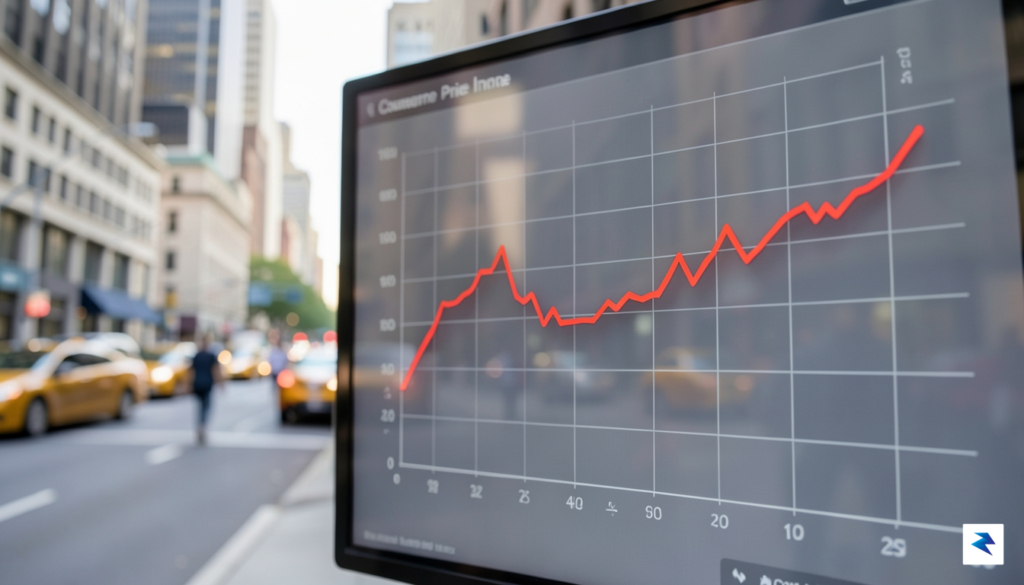
The failure of the “transitory” narrative—the once-popular theory that price surges were merely temporary disruptions caused by pandemic-era lockdowns—serves as a sobering lesson for policymakers and investors alike. While it is true that global supply chain bottlenecks have largely eased, the normalization process has hit a definitive plateau. The logistical snarls that defined 2021 and 2022 have been replaced by deeper, structural shifts in how goods and services are valued. Companies that initially raised prices to compensate for shipping costs have found little incentive to lower them, leading to a new, higher baseline for consumer expenses that has become baked into the economy.
The persistence of inflation is less about external shocks today and more about the internal mechanics of the service economy, where wage growth and labor shortages continue to exert upward pressure on prices.
Perhaps the most concerning aspect of the current climate is the stickiness of service-sector inflation. Unlike volatile energy or commodity prices, which tend to fluctuate based on global geopolitical events, service inflation—encompassing everything from insurance premiums to healthcare and dining—is inherently linked to wage growth and domestic demand. Because the labor market remains historically tight, businesses are forced to pay higher wages to attract and retain talent, a cost they inevitably pass on to the consumer. This creates a feedback loop that is notoriously difficult to break without causing significant collateral damage to employment levels. As a result, the economy finds itself in a precarious position where the “last mile” of disinflation is proving to be far more arduous than the initial descent, leaving households to contend with a cost-of-living crisis that refuses to dissipate.
The Federal Reserve's Policy Dilemma

At the heart of the current economic uncertainty lies the Federal Reserve’s dual mandate: the obligation to maintain price stability while simultaneously fostering maximum sustainable employment. This creates a notoriously difficult tightrope walk for policymakers who must decide how much pain the labor market can endure in the service of cooling down an overheated economy. If the central bank keeps interest rates elevated for too long, they risk suffocating business investment and triggering a sharp rise in unemployment. Conversely, if they pivot toward monetary easing too early, they risk allowing inflation to become deeply entrenched in the consumer mindset, potentially leading to a volatile wage-price spiral that could take years to fully dismantle.
Within the halls of the Fed, this tension has birthed a palpable divide regarding the “higher for longer” interest rate strategy. While some officials advocate for a persistent, hawkish stance to ensure inflation returns decisively to the two-percent target, others express growing concern that the cumulative effect of past rate hikes has not yet fully rippled through the financial system. These dissenting voices argue that monetary policy operates with a notoriously long and variable lag, meaning the most severe consequences of recent tightening might still be lurking just over the horizon. This internal debate is not merely academic; it represents a fundamental disagreement on whether the economy is robust enough to weather continued high borrowing costs or if the foundation is beginning to crack under the pressure.
The psychological impact of the Fed’s communication strategy further complicates this delicate balancing act. Because financial markets are essentially forward-looking machines, every statement, speech, or set of meeting minutes acts as a signal that dictates how investors allocate capital. When the Fed hints at further tightening, bond yields often spike and equity markets experience heightened volatility, which can inadvertently tighten financial conditions faster than the Fed intended. Conversely, any hint of a dovish pivot can trigger an immediate rally in asset prices, potentially loosening financial conditions and undermining the very inflationary cooling that the central bank is attempting to achieve.
The core of the Fed’s challenge is not just calculating numbers, but managing market expectations. If the public and investors lose faith in the Fed’s commitment to price stability, inflation expectations can become unanchored, making the eventual task of controlling prices significantly more painful for the average household.
Ultimately, the Federal Reserve is trapped in a feedback loop where its own signals are as powerful as its policy tools. Navigating this environment requires an extraordinary degree of precision, as they must convince the public that they are serious about fighting inflation without signaling that they are indifferent to a potential recession. As the economic data continues to provide conflicting signals—with some sectors showing resilience while others show signs of exhaustion—the Fed remains in a state of watchful waiting, ready to adjust course but wary of making a policy error that could have lasting consequences for the American economy.
Understanding the PCE Index vs. CPI
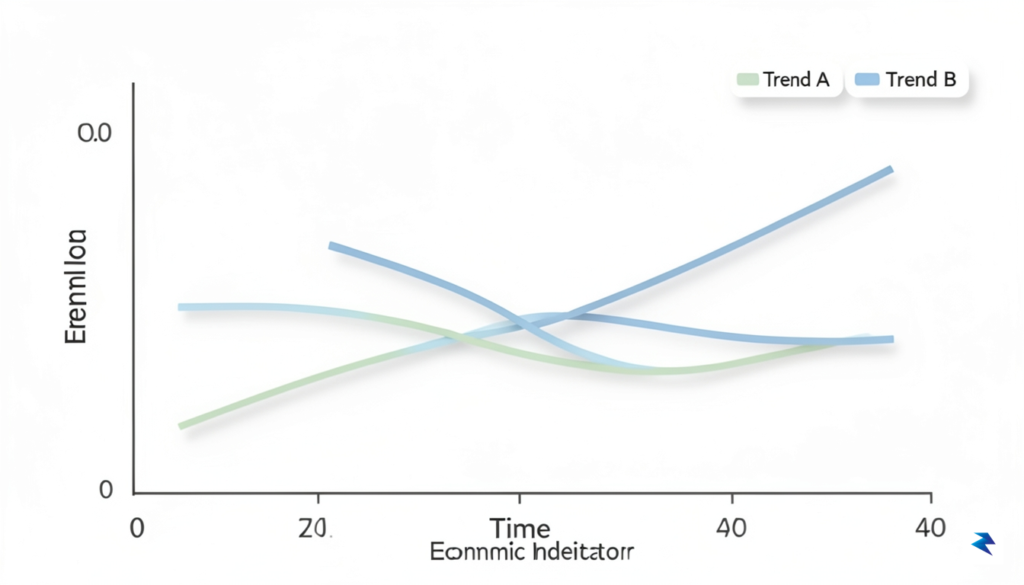
To decipher the Federal Reserve’s trajectory, one must look beyond the headlines that typically dominate financial news. While the Consumer Price Index (CPI) is the most widely recognized gauge of inflation—frequently cited in grocery stores and media reports—the central bank places significantly more weight on the Personal Consumption Expenditures (PCE) index. Understanding the divergence between these two metrics is essential for grasping why policymakers often seem to perceive the economic landscape differently than the average consumer. While both indices track price changes, they differ in scope, weight, and, most importantly, how they account for the way people actually adjust their spending habits when prices rise.
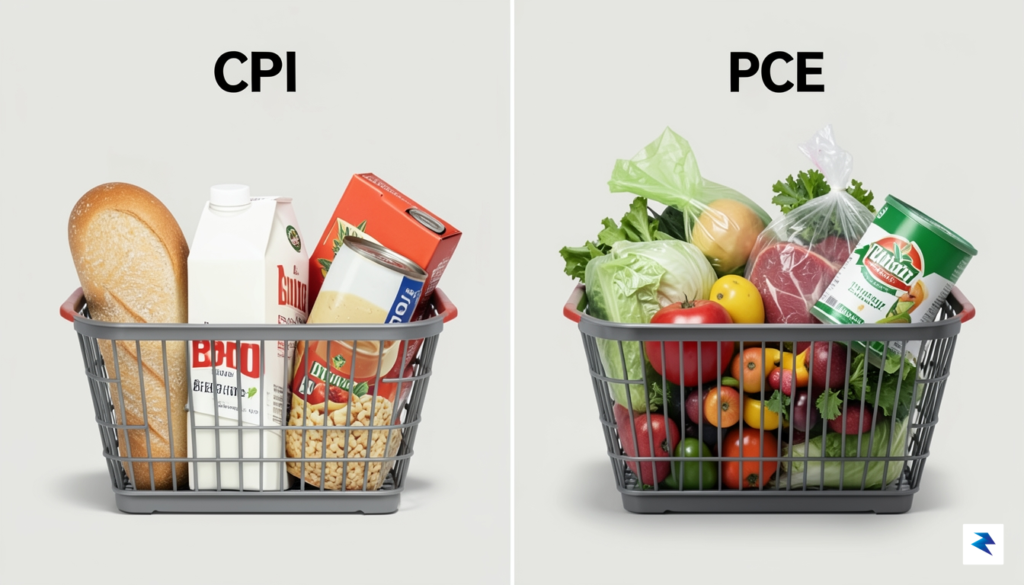
The primary distinction lies in what economists call the “substitution effect.” The CPI is calculated using a fixed basket of goods and services, based on a survey of what consumers bought years ago. If the price of premium coffee beans spikes, the CPI continues to measure the cost of those specific beans, assuming the consumer will continue to buy them regardless of the price. In contrast, the PCE index is dynamic; it accounts for the fact that when a specific item becomes too expensive, consumers naturally pivot to cheaper alternatives—such as switching from name-brand coffee to a store brand or opting for a different grocery item entirely. Because the PCE captures this shift in real-time, it is generally considered a more accurate reflection of modern, flexible spending behavior.
The Federal Reserve prefers the PCE because it captures the evolving nature of consumer choice, providing a more realistic picture of how household budgets adapt to inflationary pressures.
Furthermore, the scope of these indices differs significantly, leading to varying outcomes in inflation data. The CPI tracks out-of-pocket expenditures made directly by urban consumers, whereas the PCE is much broader, including expenditures made on behalf of households by third parties, such as employer-paid health insurance or Medicare. Because the PCE accounts for these indirect costs, it offers a more comprehensive view of the total price environment. When the Federal Reserve sets interest rates, they rely on this broader, more nuanced data to determine if inflation is becoming entrenched. By acknowledging that consumers constantly adjust their behavior, the Fed uses the PCE to make more informed policy decisions, ensuring that rate hikes or cuts are based on a realistic assessment of economic health rather than a static list of prices.
The Impact of Borrowing Costs on the Average Consumer

When the Federal Reserve initiates discussions about raising the federal funds rate, these deliberations are far more than abstract economic theory; they represent the direct calibration of the cost of living for every American household. The federal funds rate serves as the foundational benchmark for the prime rate, which in turn dictates the interest rates commercial banks charge their most creditworthy customers. Consequently, when the central bank pushes these rates higher to combat persistent inflation, it creates an immediate ripple effect that cascades down to your personal credit card statements, variable-rate lines of credit, and home equity loans. For the average consumer, this means that the cost of carrying debt becomes significantly more expensive, effectively shrinking your monthly disposable income as a larger portion of every dollar goes toward servicing interest rather than principal.
The housing market remains the most visible casualty of this high-interest environment, as mortgage rates are inextricably linked to broader economic trends. Prospective homebuyers are currently navigating a landscape where the dream of homeownership is being squeezed by both elevated property values and the highest borrowing costs in over a decade. Even for those who already own a home, the refinancing market has effectively frozen, leaving many trapped in older, higher-rate loans with little opportunity to lower their monthly obligations. This stagnation in the real estate sector has broad implications, as it limits labor mobility and creates a “lock-in” effect where homeowners are hesitant to move, further tightening the supply of available housing for those entering the market.

To navigate this challenging fiscal reality, households must pivot toward more disciplined debt management strategies. In a high-interest environment, the primary goal should be to aggressively pay down high-interest, variable-rate debt, such as credit card balances, before interest charges compound further. It is also a prudent time to prioritize building an emergency savings fund, as the volatility in borrowing costs can be compounded by broader economic uncertainty. Consider these actionable steps to protect your personal balance sheet:
- Prioritize High-Interest Debt: Focus on eliminating balances on credit cards where interest rates can exceed 20% or more, as these are the first to adjust upward when the Fed acts.
- Consolidate Where Possible: If your credit score allows, look for fixed-rate consolidation loans that can lock in a predictable payment schedule and shield you from future rate hikes.
- Audit Your Subscriptions and Variable Expenses: With less room for error in your monthly budget, trimming non-essential recurring costs can provide the necessary cushion to keep up with essential debt obligations.
The “wealth effect”—the psychological phenomenon where consumers feel more confident spending as their assets appreciate—is currently working in reverse, as stagnant home values and cooling stock markets discourage discretionary spending, which serves as a powerful brake on economic growth.
Ultimately, the Fed’s tightening cycle is designed to slow down consumer demand to bring inflation back to their target levels. While this is necessary for macroeconomic stability, the short-term reality is a cooling of the “wealth effect.” As borrowing costs remain elevated, consumers are inherently more cautious, leading to reduced spending on big-ticket items like automobiles, furniture, and luxury goods. This shift in behavior is essential for cooling the economy, but it requires households to be more vigilant than ever regarding their financial planning, ensuring that they are not overextended in an era where the price of capital is no longer cheap.
Economic Outlook: What to Expect in the Coming Months

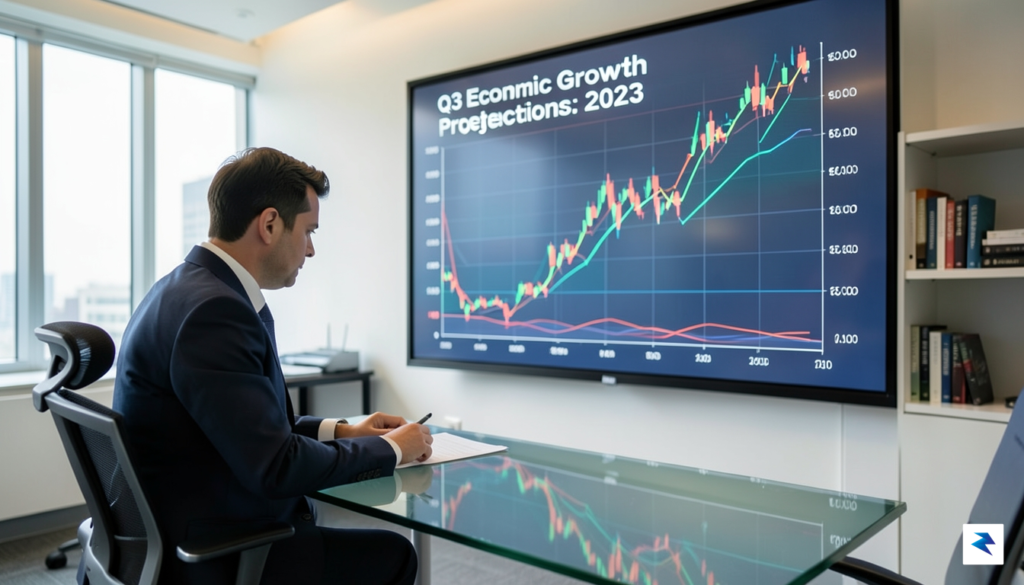
As we navigate the remainder of the year, the U.S. economy finds itself at a precarious crossroads, with the debate between a “soft landing” and a potential recession intensifying among analysts. On one hand, proponents of a soft landing point to the surprising durability of consumer spending and a cooling, yet stable, labor market as evidence that the Federal Reserve may successfully curb inflation without inducing a severe contraction. Conversely, skeptics argue that the cumulative effect of high interest rates has yet to fully permeate the broader economy, suggesting that a delayed recession could still be on the horizon. This tug-of-war between optimism and caution makes it increasingly difficult to discern a clear trajectory for the coming quarters.

To gain a clearer perspective on where we are headed, observers must keep a close watch on several high-frequency economic indicators. The monthly jobs reports remain perhaps the most vital data point; a sudden spike in unemployment or a significant deceleration in wage growth could signal that the labor market—the primary engine of our current resilience—is beginning to fatigue. Simultaneously, the Personal Consumption Expenditures (PCE) price index, which serves as the Federal Reserve’s preferred measure of inflation, will be critical in determining whether price pressures are truly anchored or merely plateauing at an uncomfortably high level. These reports do not act in isolation; rather, they form a cohesive narrative of how businesses and households are adapting to a new era of higher borrowing costs.
The true test of the U.S. economy’s resilience lies not just in its current strength, but in its ability to withstand the lagging effects of monetary policy tightening that have historically taken months, if not years, to fully materialize.
Ultimately, the narrative for the months ahead is one of cautious, measured adaptation. While the U.S. economy has demonstrated a remarkable capacity to absorb shocks that might have derailed it in previous decades, the persistent nature of underlying inflation suggests that stability will not be achieved overnight. Long-term economic health will likely depend on the Fed’s ability to remain data-dependent while avoiding the trap of premature policy shifts. For the average reader, this means preparing for a period of ongoing transition where market volatility remains a constant companion. By staying informed through these key indicators and maintaining a balanced view of our financial landscape, individuals can better position themselves to weather the uncertainties that lie ahead.