Why Inflation Remains a Persistent Challenge for the U.S. Economy
The Current State of U.S. Inflation For several months, a sense of cautious optimism permeated the economic landscape, driven by the belief…
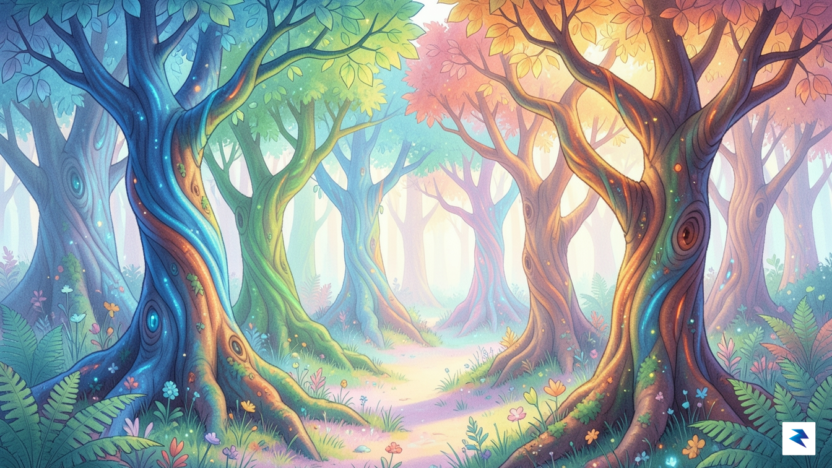
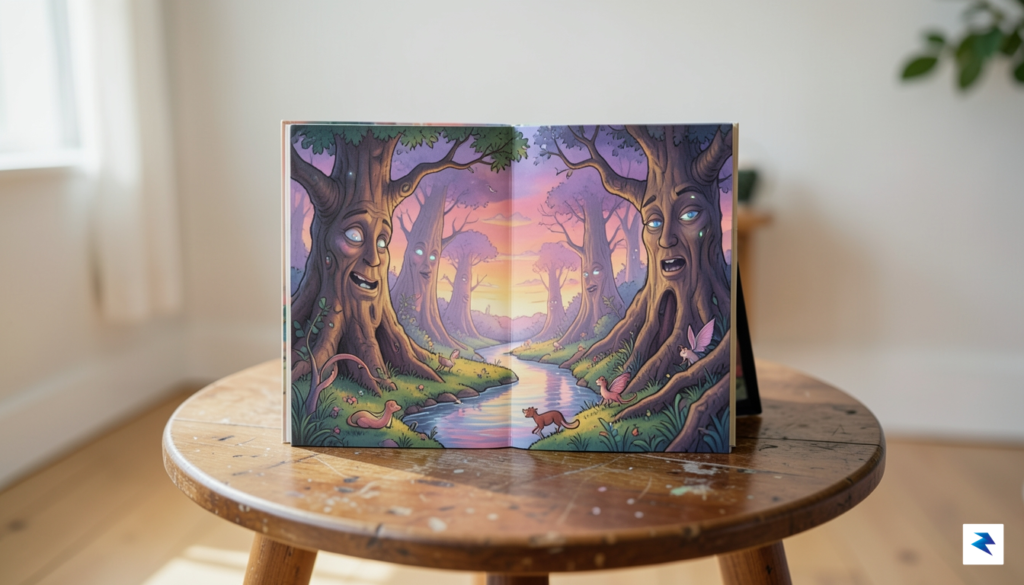
The digital marketplace has become flooded with a new genre of literature: the AI-authored children’s book. Platforms like Amazon KDP have made it frictionless for anyone to leverage generative tools to churn out stories in a matter of hours, turning the publishing process into a high-speed production line. While the promise of democratized storytelling is alluring, the reality is often far more grotesque than the whimsical tales these books intend to convey. As the technology attempts to mimic the warmth of traditional illustration, it frequently stumbles, resulting in visual anomalies that feel less like bedtime stories and more like entries in a surrealist nightmare.
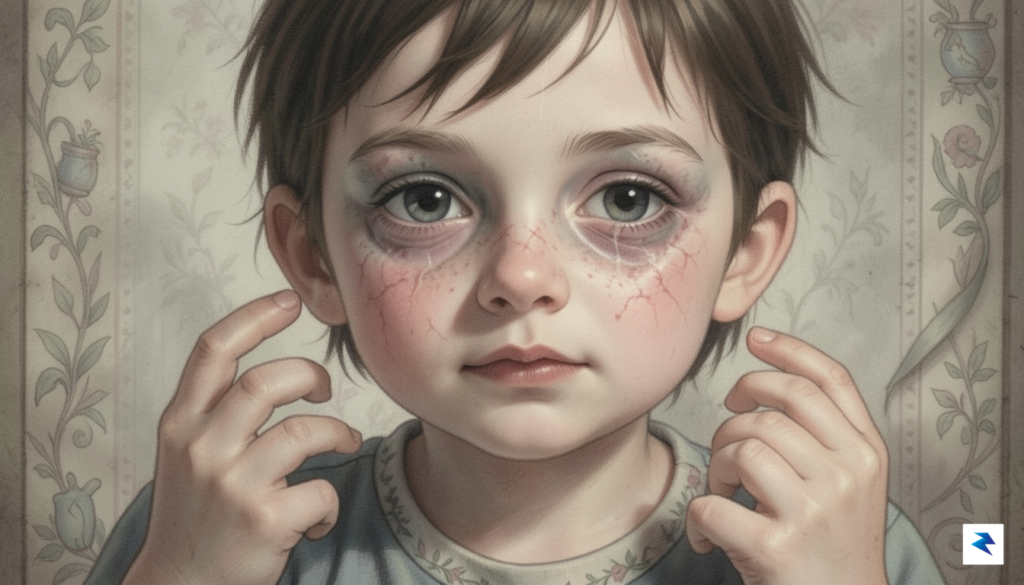
This phenomenon is a textbook example of the “uncanny valley”—that specific, uncomfortable emotional response humans experience when an artificial object looks nearly, but not quite, like a real person. In the context of children’s literature, this is particularly jarring. When a friendly animal character is depicted with an extra, vestigial limb or a human child’s smile stretches into a row of jagged, teeth-like polygons, the brain triggers a visceral alarm. These aren’t just aesthetic glitches; they are fundamental failures of anatomical intuition. Because generative AI models don’t “understand” biology or the physical constraints of the human form, they treat faces and limbs as mere textures to be arranged, often resulting in nightmarish compositions where joints bend in impossible directions and eyes seem to exist in a state of perpetual, soul-piercing vacancy.
“The danger lies in the disconnect between the innocent intent of the author and the haunting, synthetic output of the machine, which inadvertently introduces a sense of existential dread into the very books meant to provide comfort.”
The lack of anatomical logic in these illustrations creates a cognitive dissonance that is impossible to ignore. A child may not be able to articulate why a character looks “wrong,” yet they intuitively sense that something about the creature’s anatomy is fundamentally broken. When we replace the purposeful, human-led choices of an illustrator with the probabilistic guessing games of a machine, we lose the essential empathy that defines great children’s art. What remains is a hollow, uncanny shell—a body-horror aesthetic that lingers in the mind long after the page is turned, transforming a simple story into a bizarre encounter with the limits of synthetic creativity.
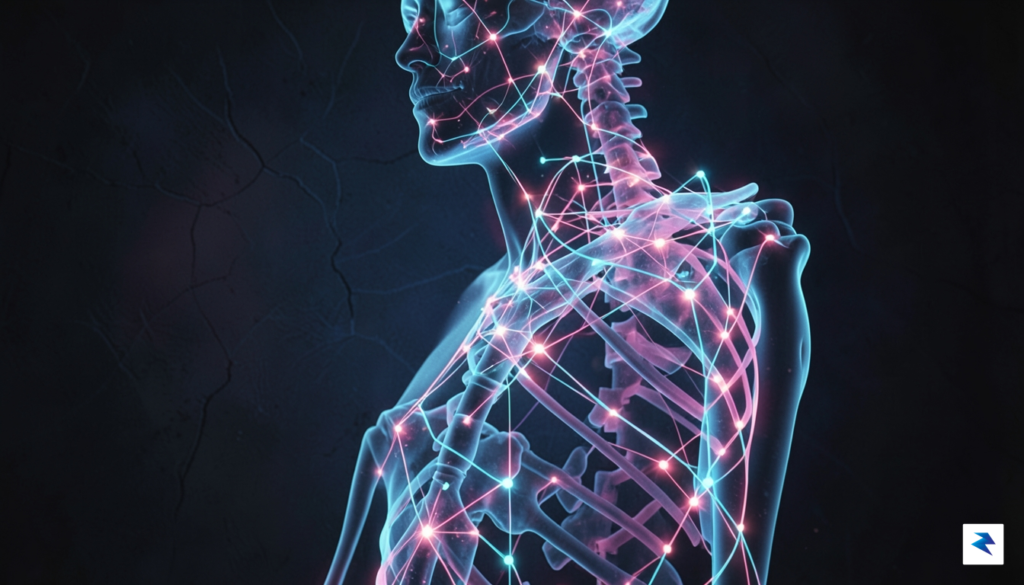
To understand why a simple bedtime story about a bunny can devolve into a scene of visceral unease, one must first recognize that diffusion models do not “see” the world in the way humans do. When an AI generates an image, it is not referencing a mental model of a skeleton, muscle groups, or the interconnected nature of joints. Instead, it operates entirely within the realm of statistical probability, predicting which pixel colors should follow one another based on vast datasets of scraped imagery. It treats a human arm with the same logical framework as a floating leaf or a brick wall, lacking any inherent “knowledge” that a limb must be attached to a shoulder or that a hand generally requires five fingers to function correctly.
This lack of biological grounding is exacerbated by the nature of latent space—the multidimensional mathematical map where AI models store their conceptual understanding of images. Within this space, concepts like “smiling child” and “waving hand” are merely clusters of data points. When the model attempts to synthesize these concepts, it often struggles to enforce rigid physical constraints. Because there is no underlying wireframe or skeletal logic to hold the composition together, the model prioritizes visual texture and aesthetic coherence over structural integrity. The result is a phenomenon where features bleed into one another; limbs may emerge from impossible angles, or faces may fuse with surrounding objects, creating a haunting lack of symmetry that feels fundamentally alien to the human observer.
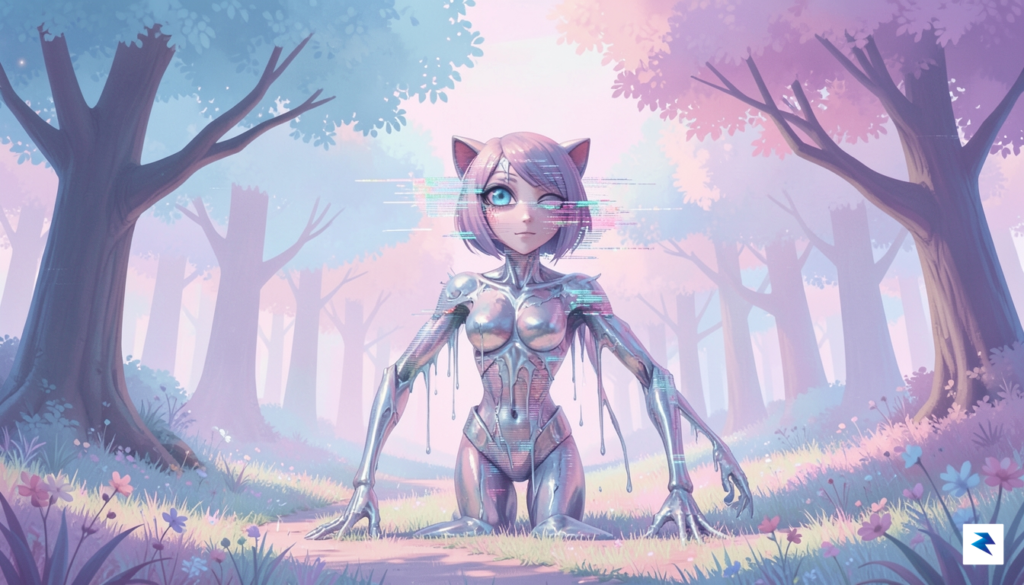
The unsettling nature of AI-generated body horror stems from the “uncanny valley,” a psychological response triggered when an object looks nearly human but deviates in ways that suggest a breakdown of organic life.
While surrealist art of the twentieth century purposefully distorted human forms to evoke emotion or critique reality, those works were born of intentionality. The artist understood the rules of anatomy perfectly and chose to break them. In contrast, modern generative models produce distortions as accidental byproducts of their own limitations. This is precisely why these images feel so jarring to our brains. Humans are evolutionarily hardwired to detect patterns in faces and bodies; we are hyper-attuned to biological errors because they signal illness or danger. When an AI produces a face with an extra tooth or a hand that blends into a torso, our subconscious mind flags it immediately as “wrong.” Unlike the deliberate, thought-provoking ambiguity of a Dali painting, the “body horror” of AI children’s books feels like a broken machine attempting to simulate life, leaving us with a visceral sense of unease that disrupts the innocence of the narrative.
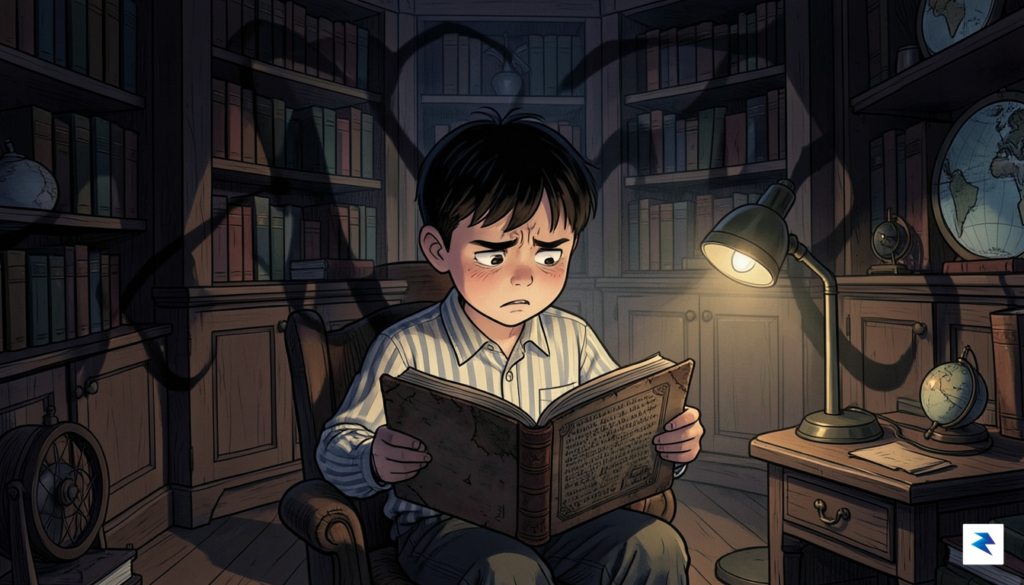
In the formative stages of child development, visual consistency acts as a fundamental anchor for learning and emotional regulation. When children interact with traditional literature, they rely on stable character designs to map out narrative arcs and develop empathy; a protagonist’s face remains constant, allowing the young reader to project feelings and intentions onto that character. However, AI-generated imagery often introduces a chaotic, shifting logic where limbs might merge with backgrounds or facial features drift into non-humanoid configurations. This lack of anatomical permanence creates a cognitive dissonance that may hinder a child’s ability to build a meaningful connection with the story. Instead of focusing on the moral or educational lesson, the child’s brain is forced to process a series of visual glitches that disrupt the narrative flow and induce a state of low-level, persistent anxiety.
The “uncanny valley”—that unsettling space where an image is almost, but not quite, human—is particularly potent for developing minds. While a child might easily accept a whimsical, hand-drawn monster from a classic picture book, the hyper-realistic yet fundamentally broken anatomy produced by algorithms can trigger a primal fear response. When a character’s eyes are misaligned or their fingers possess impossible joints, the brain struggles to categorize the figure as either “friend” or “threat.” This ambiguity is rarely productive for a young audience, as it transforms the act of reading into an exercise in visual discomfort rather than imaginative exploration. Consequently, the child may begin to associate storytelling with a sense of apprehension, which can dampen their enthusiasm for literature as a safe, exploratory space.
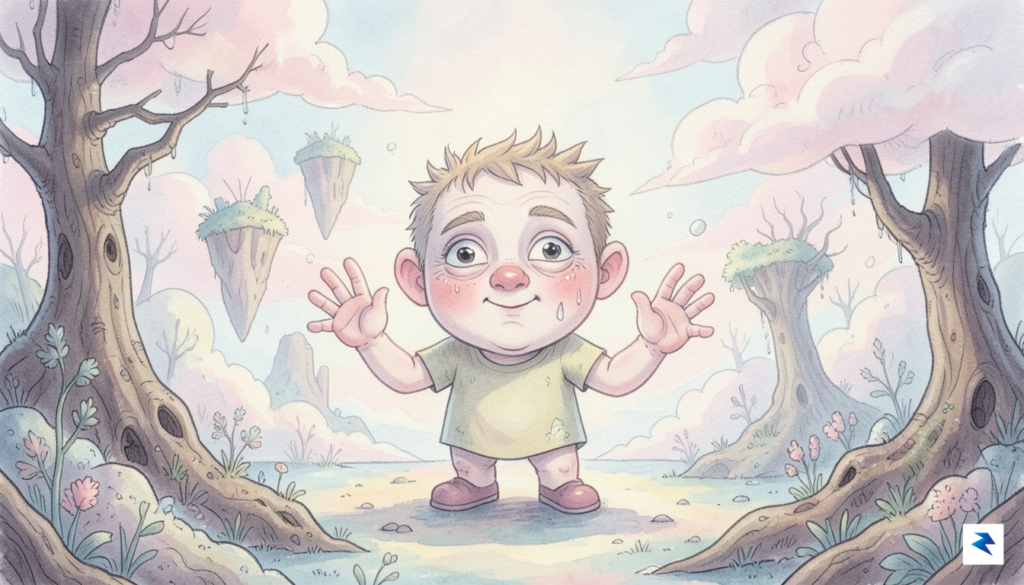
There exists a delicate, yet critical, line between intentional artistic abstraction and the accidental distortions of machine learning. Great children’s illustrators utilize deliberate exaggeration—like the oversized features of a character to denote kindness or curiosity—to communicate emotional truths. Conversely, AI-driven distortions are rarely intentional; they are artifacts of a machine trying to bridge gaps in its dataset. When a child encounters these unintentional errors, they are not engaging with an artist’s vision, but with a mathematical hallucination. This distinction is vital because it strips away the human “heart” of the illustration, leaving the reader with a hollow, eerie shell that lacks the intentionality required to build trust and emotional resonance between the book and the child.
The core of children’s literature is a contract of trust; when visual consistency breaks down, so too does the reader’s willingness to inhabit the world the author has created.
Ultimately, the long-term impact of exposing children to this type of algorithmically generated body horror remains an open question in child psychology. By consistently presenting reality as something that can melt, merge, or fracture, we risk normalizing a fragmented perception of the physical world. If children are conditioned to accept these distorted visuals as standard, we may inadvertently alter their expectations for how characters—and perhaps even people—should look and behave. Ensuring that the media we provide to children prioritizes clarity and intentionality is not merely an aesthetic choice; it is a necessary safeguard for their psychological well-being and their ongoing development of empathy.

The democratization of publishing through generative tools has fundamentally outpaced our collective capacity for quality control. While the ability to conjure a narrative from a few text prompts feels like a creative revolution, it has simultaneously lowered the barrier to entry to a point where speed is prioritized over substance. In the rush to saturate online marketplaces with AI-generated titles, many creators have bypassed the essential editorial rigor that defines traditional children’s literature. This lack of human curation results in a flood of content that lacks the emotional intelligence, narrative cohesion, and artistic intentionality that young readers require to make sense of the world around them.
The ethical implications of this mass-production model are particularly stark when the technology falters. AI models often struggle with anatomical consistency, leading to illustrations that feature distorted limbs, merging faces, or surreal, nightmarish expressions that were never intended by the author. When these images are published without human vetting, they can expose children to imagery that is at best confusing and at worst genuinely traumatic. A book meant to comfort a child before sleep should not be a landscape of psychological unrest, yet the convenience of automated generation has tempted some to treat the vetting process as an optional administrative burden rather than a moral imperative.
True creative responsibility lies in the recognition that a machine can generate thousands of images in a minute, but a human must be the one to decide which of those images—if any—are suitable for a child’s developing psyche.
To navigate this new landscape, we must adopt a strict “human-in-the-loop” philosophy. This approach demands that every pixel and every word be scrutinized by a person who understands the weight of the material. Responsible creation requires more than just generating a draft; it requires an iterative process of refinement, manual correction of glitches, and a sincere commitment to narrative safety. Creators should adhere to a few foundational principles:

Ultimately, the value of a children’s book does not lie in how quickly it was produced, but in the connection it fosters between the reader and the story. By reclaiming the role of the editor and the curator, we can ensure that AI remains a supportive tool for creativity rather than a shortcut that undermines the sanctity of literature. We owe it to our youngest readers to provide them with stories that are crafted with care, foresight, and a profound respect for their emotional well-being, ensuring that the digital age enhances, rather than degrades, the quality of their library.

When we look past the unsettling, multi-fingered hallucinations and the uncanny, melting landscapes that currently define the “AI children’s book” genre, we begin to see a shift in how we perceive the creative process. Rather than viewing artificial intelligence as an autonomous author capable of weaving tales of wonder, we must categorize it as a sophisticated, high-speed drafting tool. Like a digital sketchpad or a complex rhyming dictionary, AI can serve as a relentless brainstorming partner, capable of generating hundreds of plot permutations or character concepts in a fraction of the time it takes a human to warm up their keyboard. The potential for this technology to act as a catalyst for human imagination is immense, provided we understand that the machine is merely an instrument, not the visionary.
The core issue with the current wave of “body horror” children’s books is not the technology itself, but the absence of intentional artistic curation. An AI can generate a sequence of images or a string of sentences based on pattern recognition, but it lacks the internal moral compass and emotional depth required to understand what makes a story resonate with a child. A human author brings the “why” to the page—the subtle understanding of empathy, the pacing of a gentle bedtime story, and the visual consistency that allows a child to trust the world they are entering. Without that human filter, the AI simply fills space with whatever statistical probability dictates, which often results in the jarring, distorted imagery that parents find so deeply off-putting.
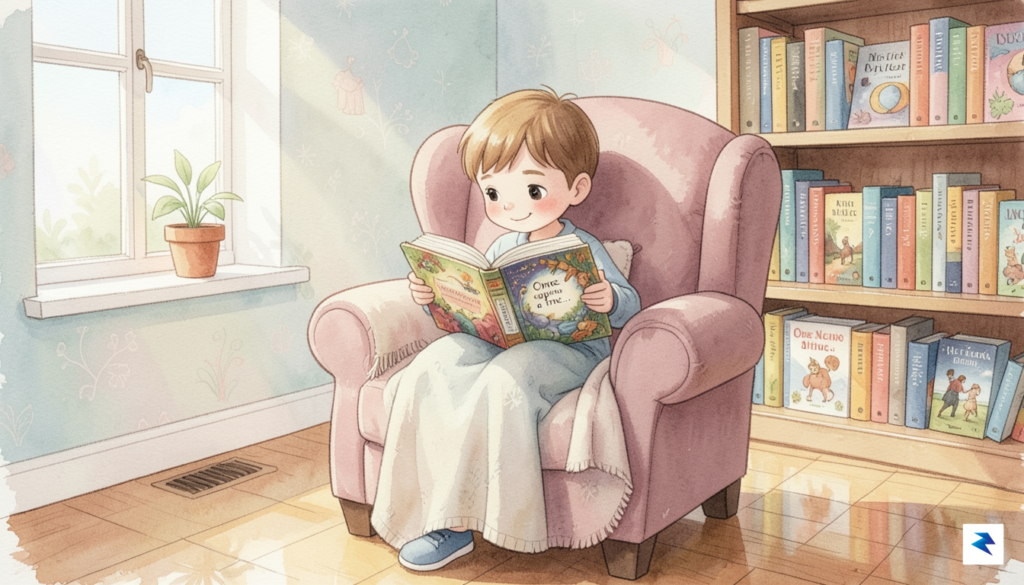
True creativity is not found in the output of an algorithm, but in the human choice to select, refine, and imbue that output with meaning.
Ultimately, the future of the publishing industry lies in a collaborative model where technology handles the heavy lifting of visual iteration and linguistic experimentation, while the human creator remains the final arbiter of taste and tone. We are moving toward an era where writers and illustrators can produce richer, more interactive, and more personalized stories, provided they maintain a firm hand on the tiller. By keeping the “human touch” at the center of the creative process, we ensure that the digital storytelling of tomorrow remains a source of genuine wonder rather than a collection of accidental, existential glitches. The goal is to evolve beyond the current phase of uncanny experiments, ensuring that our stories remain grounded in the warmth and clarity that children deserve.
You must be logged in to post a comment.