The GPT-5.6 Arrival: Understanding Sol, Terra, and Luna
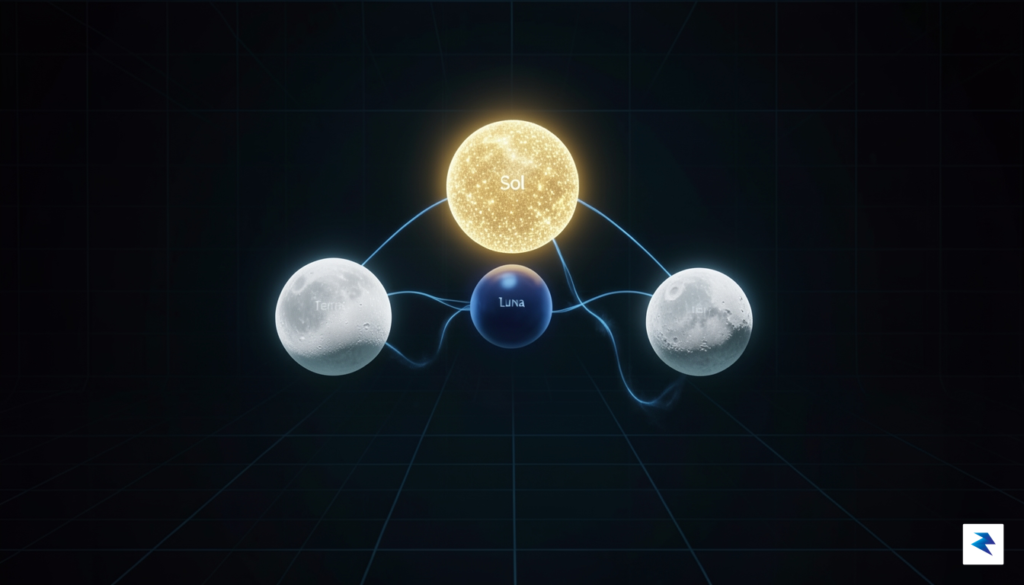
OpenAI has officially shattered the status quo with the release of the GPT-5.6 suite, marking a definitive departure from the company’s previous reliance on a monolithic, one-size-fits-all model architecture. By introducing a tiered ecosystem, the organization is acknowledging that modern artificial intelligence applications require a spectrum of capabilities ranging from intense logical deduction to instantaneous, lightweight response times. This strategic pivot moves beyond the singular “next-generation” narrative, instead offering users and enterprises a precision-engineered toolkit designed to align computational power with specific operational demands.
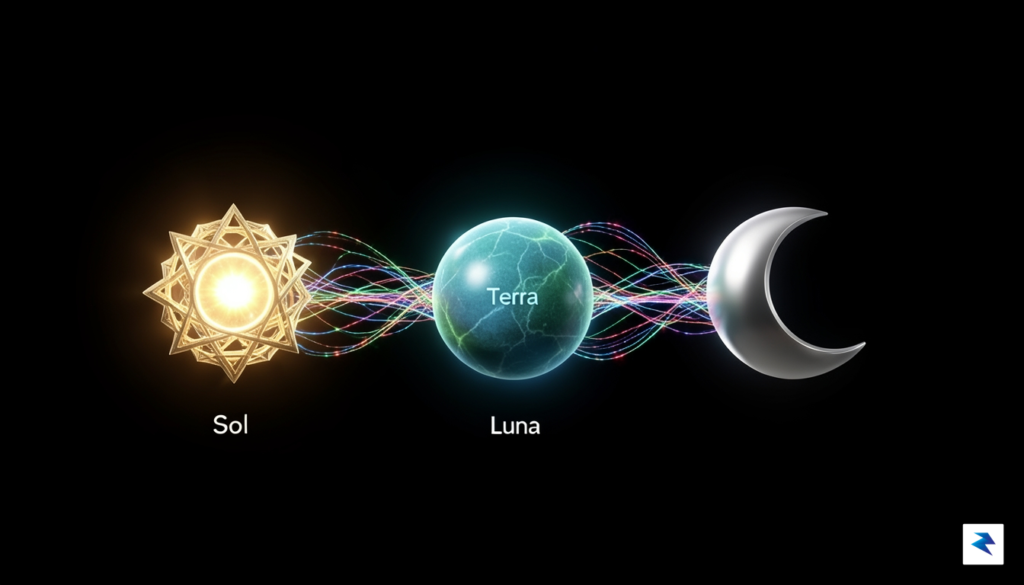
At the pinnacle of this new hierarchy sits Sol, the flagship reasoning engine designed to tackle the most complex, multi-layered challenges. Sol is engineered for deep research, high-stakes coding projects, and nuanced creative synthesis, acting as the primary brain for users who require unparalleled accuracy and logical depth. Unlike its predecessors, Sol leverages an expanded context window and refined chain-of-thought processing, allowing it to navigate intricate scenarios that would typically overwhelm smaller models. It represents the absolute ceiling of OpenAI’s current technological prowess, serving as the heavy lifter for enterprise-grade automation and scientific discovery.
Occupying the vital middle ground is Terra, an efficiency-focused iteration that strikes a masterful balance between performance and resource consumption. Terra is envisioned as the workhorse for standard business operations, such as summarizing long-form documentation, drafting complex emails, or performing data analysis tasks that require consistent reliability without the immense energy cost of the flagship model. By optimizing the architecture to favor a high performance-to-cost ratio, OpenAI has created a model that is likely to become the default choice for developers and corporate users who need robust intelligence that remains fast and economically viable at scale.
Rounding out the trio is Luna, the lightweight, high-speed iteration built for agility and real-time interaction. Luna is stripped of the excess parameter overhead found in its siblings, focusing entirely on low-latency response times that are critical for mobile applications, voice assistants, and instantaneous customer support interfaces. While it may not possess the profound reasoning capabilities of Sol, Luna provides the speed necessary for fluid conversational experiences where waiting even a few seconds for a response would disrupt the user flow. This tiered strategy fundamentally changes how businesses deploy AI, allowing them to route tasks dynamically to the specific model best suited for the job at hand.
The shift toward a tiered model strategy signifies that the era of ‘general-purpose’ AI is evolving into an era of ‘purpose-built’ intelligence, where efficiency and output quality are tailored to the immediate task requirements.
Navigating the Regulatory Climate: OpenAI and the White House

The unveiling of GPT-5.6 arrives at a pivotal intersection of technological ambition and high-stakes political maneuvering. It has become increasingly clear that the rollout strategy for this model is not merely a technical choice, but a direct response to a series of intense, behind-the-scenes negotiations between OpenAI and the Trump administration. Unlike previous rapid-fire deployments, this generation is being introduced via a staggered release, a move that reflects a growing consensus within federal circles that the unchecked velocity of generative AI could pose unforeseen risks to national stability. By working in tandem with the White House, OpenAI is effectively piloting a new framework for “regulated innovation,” where the pace of public access is tethered to the government’s comfort level regarding safety benchmarks and oversight protocols.

This strategic deceleration serves as a buffer against the mounting geopolitical pressure to maintain American dominance in the global AI race while simultaneously addressing concerns about systemic vulnerabilities. The administration has made it clear that the integration of such powerful intelligence into public and private spheres must be methodical rather than explosive. By opting for a phased distribution, the company is attempting to prove that it can serve as a responsible steward of transformative technology without sacrificing its competitive edge. This tension between the need for breakthrough innovation and the mandate for regulatory compliance is perhaps the defining challenge of the current era, as policymakers grapple with the dual reality that AI is both an essential economic engine and a potential national security hazard.
The future of AI deployment will not be defined by who reaches the finish line first, but by who can safely sustain the momentum without destabilizing the infrastructure of the digital age.
Ultimately, the choice to slow the deployment of GPT-5.6 signals a departure from the “move fast and break things” ethos that dominated the previous decade of Silicon Valley development. Instead, the current landscape suggests a future where AI companies function more like utility providers, operating under the watchful eye of federal regulators to ensure that every iterative leap is vetted for security, bias, and alignment with democratic values. This shift is not just about slowing down; it is about establishing a sustainable rhythm for technological integration that the public can trust. Whether this cautious approach will satisfy international critics and domestic watchdogs remains to be seen, but it certainly marks the beginning of a more measured, state-aligned era for the development of artificial general intelligence.
Technical Capabilities: What Sets the New Suite Apart

The transition from previous iterations to the GPT-5.6 architecture marks a departure from simple scale-based improvements toward a more nuanced, modular approach to intelligence. While earlier models relied heavily on massive parameter counts to brute-force linguistic patterns, GPT-5.6 introduces a bifurcated engine strategy that optimizes for specific cognitive tasks. By decoupling the reasoning heavy-lifting from the rapid-response generation, OpenAI has effectively solved the long-standing trade-off between depth and speed that plagued earlier versions of the platform.

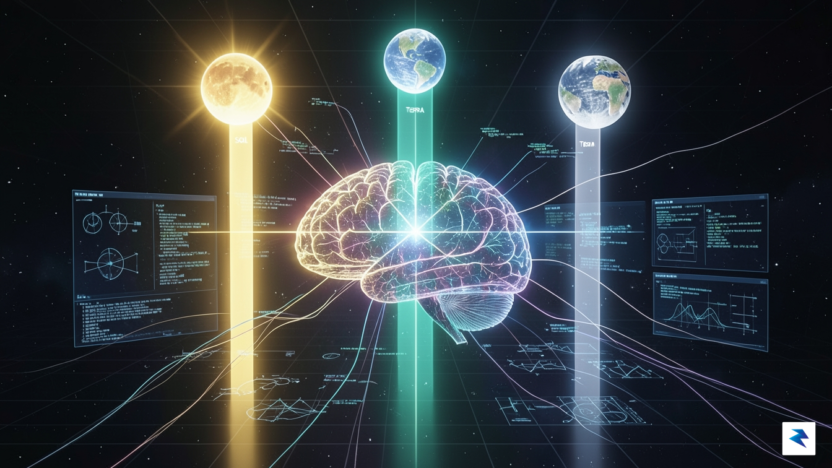
At the heart of this advancement are the specialized models: Sol and Terra. Sol functions as the architectural anchor for complex logic, employing a chain-of-thought verification layer that cross-references facts against a dynamic knowledge graph before outputting a response. This deliberate, step-by-step reasoning process significantly lowers hallucination rates, as the model is now forced to “self-correct” during the inference phase rather than simply predicting the next most likely token. Conversely, Terra is engineered for high-throughput interaction, prioritizing latency reduction through a streamlined distillation process that retains 95% of the reasoning capability of Sol while operating at a fraction of the computational overhead.
“The breakthrough in GPT-5.6 isn’t just about the breadth of information it holds, but the surgical precision with which it applies logic to ambiguous, multi-layered prompts.”
Beyond these distinct engine profiles, the most tangible improvement for end-users lies in the revamped context window management. GPT-5.6 utilizes a sophisticated retrieval-augmented attention mechanism that allows the model to prioritize relevant data segments without being distracted by extraneous information buried deep within a massive document. This means that users can upload entire codebases or hundreds of pages of legal documentation and receive answers that remain highly accurate and context-aware. Furthermore, the instruction-following capabilities have been significantly refined; the model now displays a superior ability to adhere to complex stylistic constraints and formatting requirements, even when those instructions are provided across multiple turns of a conversation.
Ultimately, these advancements represent a maturity in generative AI. By allowing the system to switch dynamically between the deep-thinking capabilities of Sol and the rapid-fire utility of Terra, OpenAI has created a versatile environment that adapts to the user’s intent. Whether you are debugging an intricate piece of software or drafting a complex strategy document, the underlying architecture now ensures that the model is operating at the exact level of cognitive intensity required for the task at hand.
Practical Applications for Enterprise and Creative Workflows

The introduction of the GPT-5.6 suite marks a paradigm shift in how organizations integrate artificial intelligence into their existing technical stacks. Rather than forcing a one-size-fits-all solution, OpenAI has segmented these capabilities into three distinct tiers—Sol, Terra, and Luna—each tailored to specific operational demands. By strategically mapping these models to your business requirements, you can optimize for both performance and computational expenditure, ensuring that your AI investment delivers a tangible return on investment.

Strategic Alignment: Choosing Your AI Model
For complex R&D projects and high-level strategic planning, Sol serves as the flagship model, offering unparalleled reasoning depth and nuanced synthesis capabilities. It is best deployed in environments where accuracy is paramount, such as financial forecasting, legal document review, or long-term product roadmap development. Because Sol handles highly abstract reasoning tasks with ease, it acts as a force multiplier for expert teams that require deep intellectual synthesis rather than high-volume throughput.
Conversely, Terra functions as the backbone for heavy-duty enterprise operations, specifically designed for large-scale data processing and CRM automation. Businesses struggling with fragmented customer data or massive document repositories will find Terra’s efficiency unmatched for cleaning, classifying, and extracting actionable insights from unstructured datasets. It bridges the gap between high-level logic and high-volume execution, making it the ideal candidate for automating intricate workflows that span multiple departments.
Finally, Luna is engineered for the high-velocity world of real-time interaction. With its focus on low-latency API responses, this model is the optimal choice for customer support chatbots and live interface features that demand instantaneous feedback. By offloading routine queries to Luna, companies can significantly reduce their infrastructure overhead while maintaining a seamless user experience that feels human-like and immediate.
To select the right model, businesses should evaluate their workflows based on three variables: the necessity of deep logic, the volume of data processed, and the required response speed.
To implement this framework effectively, organizations should conduct a brief audit of their current AI usage. Start by identifying your most expensive API calls or the most time-consuming manual processes within your team. If your bottleneck is slow customer response times, migrate those endpoints to Luna. If your team is buried in data-entry tasks that require consistency, Terra is your most cost-effective path forward. By reserving Sol exclusively for high-stakes, strategic decision-making, you balance your computational budget while maximizing the unique strengths of the GPT-5.6 ecosystem.
The Future of Staggered AI Releases

The strategic rollout of GPT-5.6 marks a definitive shift in how the industry approaches the deployment of frontier models, suggesting that the era of “move fast and break things” is being replaced by a more cautious, deliberate methodology. By opting for a staggered release—an approach heavily influenced by the current climate of intense scrutiny from the Trump administration—OpenAI is effectively testing the waters of government-sanctioned AI development. This model, which emphasizes phased availability and rigorous safety checks, may soon become the gold standard for foundational models. If this precedent holds, companies will no longer be able to simply drop a powerful new intelligence onto the web; instead, they will be forced to navigate a complex labyrinth of bureaucratic gatekeeping and regulatory compliance before their products reach the masses.
Increased government oversight, while often criticized by accelerationists as a bottleneck, is fundamentally altering the velocity of AI progress. By forcing a slower, more transparent release cycle, regulators are ensuring that companies take the time to identify potential harms before they manifest at scale. However, this friction creates a double-edged sword: while it mitigates risks like misinformation and systemic bias, it also potentially hampers the competitive edge of American firms against international rivals who may not operate under the same legislative constraints. The delicate balance between safety and speed is no longer just a technical hurdle; it is now a geopolitical one, where every “preview” release is essentially a negotiation between innovation and state-mandated caution.

The transition toward staggered releases signals that we have entered the “maturity phase” of artificial intelligence, where societal impact is weighed as heavily as raw computational capability.
Looking ahead, the public can expect a vastly different experience as these models transition from limited previews to general availability. Gone are the days of instant, universal access to the absolute cutting edge of AI development. Instead, users will likely encounter a tier-based system where access is granted based on verified safety metrics, enterprise needs, and regulatory clearance. This transition phase is designed to build public trust, allowing for real-time feedback loops that help developers harden their systems against adversarial misuse. As these models move through their staggered stages—from restricted laboratory environments to public-facing applications—the industry will essentially be performing a massive, ongoing clinical trial on the fabric of our digital society, ensuring that when the full weight of a model like GPT-5.6 is finally unleashed, the infrastructure is equipped to handle the shift.