
The Panopticon Promise: Understanding the Tech Elite’s Surveillance Vision
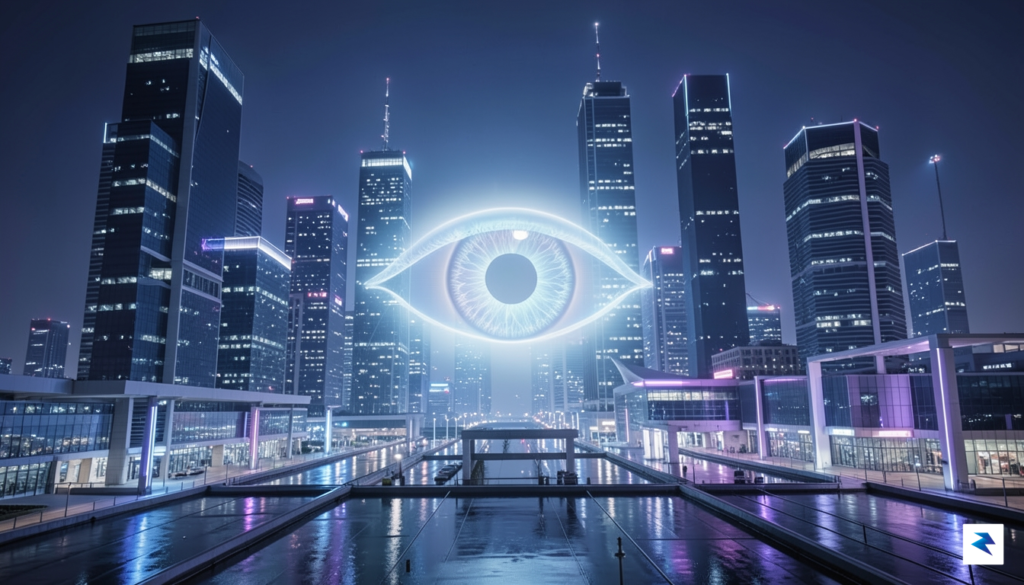
A fascinating paradigm shift is quietly gaining momentum among some of Silicon Valley’s most influential thinkers: the idea that pervasive observation, far from being a threat to freedom, could actually be a potent catalyst for human improvement. This perspective challenges long-held notions of privacy, suggesting that a future where our actions are more visible might lead to a more ethical, accountable, and ultimately, better society. It’s a vision that re-frames surveillance not as an oppressive force, but as a benign mechanism designed to unlock humanity’s prosocial potential.
Historically, the concept of constant, unseen monitoring has evoked images of George Orwell’s dystopia or Jeremy Bentham’s Panopticon prison design, where the mere possibility of being watched compels conformity. Yet, in the digital age, this “Panopticon effect” is being re-envisioned. Leaders in the tech sphere are articulating a future where ubiquitous cameras, digital footprints, and advanced analytics create a societal transparency that, they argue, intrinsically encourages better behavior. The underlying premise is simple yet profound: when individuals know their conduct is being observed, they are naturally inclined to act with greater integrity, responsibility, and consideration for others.
This viewpoint marks a significant departure from traditional privacy-centric values, moving towards a utility-centric approach where the benefits of collective transparency are prioritized. Proponents suggest that in a world where actions are transparent, corruption would diminish, public safety would improve, and individuals would be more motivated to contribute positively to their communities. They envision a global society where accountability is the default, fostered by an environment of undeniable visibility. This isn’t about shaming or punishment, they contend, but about creating an intrinsic incentive structure for ethical conduct, allowing humanity to transcend its baser instincts and build a more trustworthy civilization.
Indeed, the argument posits that visibility fosters integrity at every level, from individual interactions to global governance. When leaders, corporations, and even everyday citizens are aware that their actions are subject to observation, the likelihood of deceit, negligence, or harmful behavior purportedly decreases dramatically. This emerging philosophy sets the stage for a compelling debate: can a future built on pervasive, transparent observation truly uplift humanity, or does it risk eroding fundamental freedoms and individual autonomy in unforeseen ways? It’s a vision that demands careful scrutiny, inviting us to weigh the promise of a more virtuous world against the complex implications of living under a constant, watchful gaze.
Accountability vs. Privacy: The Philosophical Trade-off

The argument that human behavior improves under the gaze of an omnipresent observer relies heavily on a utilitarian calculus: if total transparency effectively mitigates corruption, reduces crime, and encourages pro-social habits, then the sacrifice of individual privacy is a small price to pay for a more harmonious society. From this perspective, the “greatest good for the greatest number” justifies the erosion of anonymity. Proponents of this view suggest that if an individual has nothing to hide, they have nothing to fear. By creating a digital panopticon where every action is recorded and audited, we theoretically eliminate the moral hazards that arise when people believe they are acting in the shadows, potentially ushering in an era of unprecedented civic integrity.

However, this utilitarian optimism clashes directly with deontological ethics, which prioritizes the inherent rights and dignity of the individual over collective outcomes. From a deontological standpoint, privacy is not merely a preference; it is a fundamental pillar of autonomy. When we are constantly watched, we are no longer free agents acting on our own moral compasses, but rather performers constrained by the fear of judgment or punitive repercussions. This transformation of human behavior is not necessarily an evolution of character; instead, it is a form of social conditioning. If our “good behavior” is merely a reaction to being monitored, we lose the capacity for genuine moral choice, as virtue requires the possibility of doing wrong in private.
True moral character is revealed not by how we act when we are being watched, but by the integrity we maintain when we believe we are entirely alone.
Furthermore, we must critically examine who possesses the authority to define what constitutes “better” behavior. Surveillance infrastructure is never neutral; it is designed and maintained by those in power, reflecting their specific cultural, political, and economic biases. When we normalize the concept that being watched makes us better, we tacitly accept that those holding the cameras are the final arbiters of morality. This creates a dangerous feedback loop where dissent, unconventional lifestyles, or disruptive innovation can be flagged as “bad behavior” simply because they deviate from the established norm. If we sacrifice our privacy on the altar of accountability, we may find that we have built a system that enforces conformity rather than fostering genuine human progress.
Ultimately, the tension between transparency and liberty forces us to ask whether we are creating a safer world or merely a more compliant one. If the price of a crime-free society is the total surveillance of the populace, the loss of private life may lead to a profound stagnation of the human spirit. Privacy provides the essential “breathing room” required for creativity, personal growth, and the development of unique identities. By stripping away this sanctuary, we risk trading the messy, unpredictable, and vibrant reality of human freedom for a sterile, calculated version of existence that satisfies the metrics of efficiency but fails the test of human flourishing.
The Technology Behind the Watchful Eye

Behind the seemingly straightforward assertion that people behave better under observation lies an extraordinarily intricate and continually evolving technological ecosystem. This isn’t merely about static cameras capturing footage; it’s about a sophisticated, interconnected stack of artificial intelligence, ubiquitous sensors, and advanced data analytics designed to create a comprehensive, real-time understanding of human activity and, crucially, intent. The transition from simple ‘watching’ to ‘analyzing’ and ‘predicting’ represents a fundamental shift in the capabilities of modern surveillance, transforming public and even private spaces into data-rich environments.
At the foundation of this infrastructure are countless Internet of Things (IoT) devices, forming a vast network of digital eyes and ears. High-resolution CCTV cameras, often equipped with night vision and thermal imaging, are pervasive, but the network extends far beyond them. Smart city sensors monitor traffic flow and pedestrian movements, public microphones can detect specific keywords or emotional tones, and even personal devices like smartphones and wearables contribute to the data stream, often unwittingly. These devices act as continuous data conduits, collecting everything from precise location data and biometric markers to nuanced behavioral patterns, all funneled into centralized processing hubs.
Once collected, this torrent of raw data is fed into powerful AI systems, which specialize in pattern recognition and biometric tracking. Facial recognition technology, for instance, has advanced beyond simple identification; it can track individuals across different locations, analyze micro-expressions to infer emotional states, and even identify people based on partial views or older images. Complementing this are gait analysis algorithms, which can identify individuals by their unique walking patterns, and voice recognition systems that not only identify speakers but can also assess their mood or stress levels. These AI capabilities transform disparate data points into coherent, actionable profiles, enabling persistent and granular tracking of individuals within monitored environments.
The true power, however, emerges with behavioral analytics and predictive modeling. This layer of AI moves beyond merely identifying who someone is or where they are, to deciphering what they are doing and, more chillingly, what they might do next. Algorithms are trained on vast datasets of human interactions and activities to detect anomalies, identify recurring patterns, and infer intentions. For example, unusual loitering, specific sequences of movements, or interactions with certain objects can be flagged as potential precursors to undesirable actions. This creates a proactive surveillance paradigm, where the system attempts to anticipate and potentially intervene before an event even occurs, effectively establishing a predictive social environment.
Fueling these advanced AI systems is the sheer scale of big data. Every captured image, every recorded sound, every tracked movement contributes to an ever-growing repository of information. This massive dataset is not just stored; it is continuously processed and analyzed to refine the AI models, making their recognition capabilities more accurate and their predictions more precise. The integration of these components—from the distributed IoT sensors collecting data, through the AI-driven biometric and behavioral analysis, to the predictive models—creates a seamless and pervasive monitoring capability. It’s an infrastructure designed not just to observe, but to understand, categorize, and ultimately influence human behavior at an unprecedented scale.
Societal Implications: Can Constant Monitoring Truly Improve Behavior?

The assumption that transparency breeds virtue is rooted in the psychological concept known as the Hawthorne Effect, which suggests that individuals modify their behavior simply because they are aware they are being observed. In controlled experiments, this phenomenon often leads to temporary spikes in productivity or social compliance. However, applying this logic to a permanent, digital surveillance state ignores a fundamental distinction: the difference between internalizing moral values and merely performing for an audience. When the “gaze” of an observer becomes constant, behavior often shifts from authentic ethical action toward a strategic, performative compliance designed solely to avoid social or algorithmic punishment.
Living under a digital microscope creates a high-pressure environment where the cost of a mistake—or even a misunderstood gesture—is potentially permanent. This leads to a phenomenon often described as “chilling effects,” where individuals suppress their natural inclinations, experimental ideas, and unconventional viewpoints to fit into a sanitized, predictable mold. Authentic moral growth requires the freedom to stumble, reflect, and choose the right path without the looming threat of public scrutiny or social credit repercussions. When we replace genuine character development with a curated exterior meant to appease the watchful eye, we risk losing the very nuance and dissent that drive human progress.

True moral integrity is defined by what we do when we believe no one is looking; surveillance, by contrast, only guarantees that we will act as if someone always is.
Furthermore, the long-term societal consequences of living under constant observation extend deep into the realms of creativity and innovation. Human creativity flourishes in the messy, unstructured spaces of private thought where ideas can be tested without the pressure of immediate social validation or critique. If our digital spaces become panopticons where every action is logged, categorized, and analyzed, the natural result is a homogenization of thought. By prioritizing a “well-behaved” society through technological monitoring, we may inadvertently trade our capacity for radical creativity and healthy dissent for a sterile, predictable existence that values conformity over the vibrant, sometimes chaotic, reality of human potential.
Ultimately, while surveillance might successfully curb overt antisocial behavior, it fails to cultivate the internal conscience required for a thriving, ethical civilization. Instead of fostering a culture of trust, constant monitoring signals a lack of it, potentially eroding the social cohesion that true community requires. If we build our future on the premise that humans must be watched to behave, we risk creating a world that is not necessarily better, but merely more efficient at masking our flaws.
Ethical Risks and the Future of Human Autonomy

As we accelerate toward a future characterized by total visibility, we must confront the sobering reality of power concentration. When private corporations and government entities hold the keys to a digital infrastructure that tracks our every movement, the potential for systemic abuse grows exponentially. The danger lies not merely in the collection of data, but in the inevitable transition from “observing for safety” to “engineering for compliance.” When algorithms are granted the power to curate our choices and penalize our deviations, we risk drifting toward a rigid, social credit-style architecture where individual agency is sacrificed at the altar of behavioral optimization.

The implementation of these systems often carries the hidden weight of algorithmic bias, which can automate prejudice under the guise of objective calculation. Without transparent boundaries and strict oversight, technology firms may inadvertently create feedback loops that punish marginalized populations or suppress dissent by labeling non-conformity as a risk factor. If we normalize the idea that our behavior should be constantly monitored to ensure “better” outcomes, we effectively outsource our moral development to lines of code. This shift threatens to dismantle the very foundations of privacy that allow for personal growth, intellectual experimentation, and the pursuit of a unique identity.
True autonomy cannot exist in a space where every action is weighed, measured, and judged by an invisible authority. The erosion of the private sphere is not just a loss of secrecy; it is a loss of the freedom to be human.
Ultimately, the future of human autonomy depends on our ability to draw a firm line between necessary public safety and intrusive digital control. We must demand that technology serves to empower the individual rather than manage the population as a series of data points. By establishing robust legal frameworks and ethical guardrails, we can resist the trend toward centralized surveillance that threatens to turn our society into a feedback-driven echo chamber. Maintaining human agency requires that we remain vigilant against the seductive promise of an “optimized” life, ensuring that our choices remain our own in an increasingly observable world. If we fail to protect the sanctity of the private self, we risk creating a world where we are perpetually performing for an audience that we can never truly see, yet can never escape.