
The Case of Edward Nalwamba: A Humanitarian Crisis

At 78 years old, Edward Nalwamba has spent the better part of his life in service to others, working as a retired pastor who provided spiritual guidance and stability to his community. Yet, today, he finds himself trapped in a precarious legal limbo, confined within the sterile, unforgiving walls of a United States immigration detention center. What began as a complex immigration dispute has transformed into a desperate fight for survival, as Nalwamba’s physical health deteriorates under the strain of prolonged incarceration. His advocates argue that the environment of detention is fundamentally unsuitable for a man of his age, noting that his mobility has declined and his chronic health conditions have become increasingly difficult to manage without specialized, consistent care.
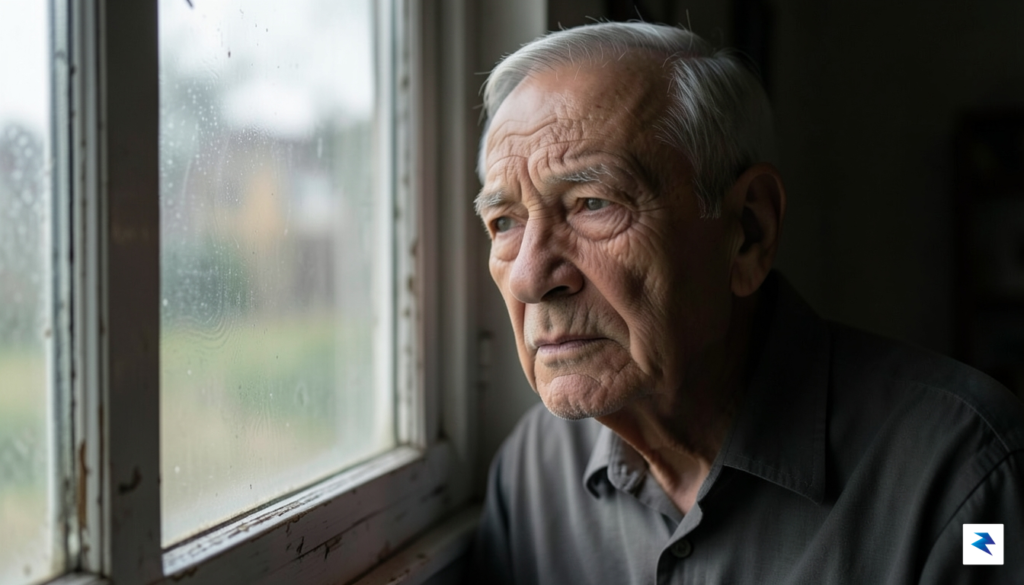
The urgency of his situation is compounded by a looming deportation order that would see him returned to a region currently gripped by a severe and volatile Ebola outbreak. While immigration authorities often view deportation through a lens of administrative necessity, this specific case presents a profound humanitarian dilemma that transcends standard policy. Returning a frail, elderly man to a zone where basic healthcare infrastructure is already buckling under the pressure of a lethal epidemic is, by many accounts, a death sentence. The risk is not merely theoretical; it is a concrete threat to his life that his legal team contends federal officials have failed to adequately weigh against his decades of peaceful residence in the United States.
The intersection of aging, chronic illness, and the threat of forced removal to an active health crisis zone suggests that the standard bureaucratic processes of immigration enforcement are fundamentally failing to account for basic human vulnerability.
As his supporters rally to highlight the injustice of his circumstances, the broader question remains: what responsibility does the government hold when its administrative actions place an individual directly in the path of a public health catastrophe? Nalwamba is not merely a name on a docket; he is a human being whose vulnerability is being amplified by a system that seems unable to pivot in the face of extraordinary, life-threatening developments. His story serves as a stark reminder that behind every immigration statistic lies a complex individual whose safety and dignity should remain a priority, even—and especially—when the world outside those detention walls becomes increasingly dangerous.
The Intersection of Immigration Detention and Public Health

The United States immigration detention apparatus was primarily designed for short-term processing and enforcement, not as a long-term medical facility capable of managing the complex, chronic conditions that often accompany aging. For detainees who have entered their later years, the sterile, high-stress environment of a detention center can accelerate physical and cognitive decline. These individuals frequently suffer from age-related ailments—such as cardiovascular disease, diabetes, or reduced immune function—that require consistent, specialized monitoring. When the system fails to provide adequate geriatric care, it not only violates basic humanitarian standards but also creates a precarious baseline of health that leaves these individuals profoundly vulnerable to external environmental threats.

The tragedy of this situation deepens significantly when the legal machinery of deportation collides with the chaotic reality of active public health crises. Sending an aging, medically fragile individual into a region currently grappling with an outbreak like Ebola is not merely an administrative transfer; it is a life-threatening decision that ignores the fundamental duty of care. In areas where health infrastructure has been decimated by disease, the resources required to protect or treat a vulnerable person simply do not exist. By forcing an individual into such a landscape, the state effectively strips them of their ability to survive, turning a deportation order into a sentence of profound medical abandonment.
The intersection of aging in custody and deportation to crisis zones creates a unique moral failing: we are returning people to environments where the risk of infection is not merely a possibility, but a statistical likelihood, all while depriving them of the medical stability they require to resist it.
From a broader public health perspective, these deportations are shortsighted and potentially dangerous. When nations are battling infectious outbreaks, the movement of vulnerable, non-immune individuals into those regions can complicate containment efforts, as these individuals often lack the local support networks or financial resources needed to self-isolate or seek proper medical intervention. Instead of viewing these cases through a narrow lens of immigration compliance, policymakers must acknowledge that deporting an elderly detainee into a hot zone is a violation of the “do no harm” principle. Ultimately, the systemic inability to provide for the aging in detention, combined with the reckless disregard for the hazards of post-deportation environments, signals a critical need for a more compassionate, evidence-based approach to immigration policy.
The Legal and Ethical Dilemma of Deportation Amidst Outbreaks

Current U.S. immigration policy operates on a rigid, often automated framework that prioritizes the enforcement of removal orders over the nuanced, real-time realities of global health crises. When the government issues a deportation order, the legal mechanism for pausing that process—the stay-of-removal request—is notoriously difficult to secure, typically requiring proof of immediate, individualized persecution rather than general environmental or biological instability. This creates a dangerous “blind spot” in the system, where a person can be legally cleared for return to a country even when that nation is experiencing a catastrophic viral outbreak that effectively turns the destination into a site of imminent physical danger.
The ethical threshold for returning a vulnerable individual to a zone of biological risk remains largely undefined within federal statute. While humanitarian parole exists as a potential safety valve, its application is discretionary and frequently inconsistent, leaving the fate of deportees to the opaque decisions of administrative officials rather than clear, health-informed guidelines. By failing to integrate epidemiological data into the deportation assessment process, the state risks turning administrative procedure into a life-threatening sentence. We must grapple with a difficult question: if the state holds the power to decide who remains in the country, does it also hold a moral obligation to ensure that those it forcibly removes are not being sent into a situation where their fundamental right to survival is actively undermined by an uncontrolled contagion?

The absence of a health-based humanitarian exception in deportation law suggests that the state views its role as purely bureaucratic, ignoring the reality that biological crises ignore borders and affect the basic humanity of the returnee.
This systemic lack of flexibility is particularly concerning because it treats global health emergencies as external variables that are separate from the safety of the migrant. In practice, however, returning someone to the epicenter of an Ebola crisis is not merely a matter of administrative processing; it is a calculated risk of exposure to a lethal, fast-moving virus. To rectify this, there is an urgent need for the Department of Homeland Security to adopt a more sophisticated approach to humanitarian relief, one that recognizes that public health emergencies constitute a legitimate form of “danger” under international human rights standards. Without such reforms, the U.S. continues to expose vulnerable individuals to conditions that far exceed the intent of standard immigration enforcement, effectively weaponizing the bureaucratic process against those already caught in the crosshairs of a global health catastrophe.
The Challenges of Advocacy in the US Immigration System

For legal advocates and immigration attorneys, the fight to halt an imminent deportation is rarely a straightforward legal battle; it is a high-stakes race against a bureaucratic machine designed for speed rather than nuance. In cases involving individuals like Edward Nalwamba, the clock serves as the primary adversary, transforming every procedural delay into a potential tragedy. Advocates must navigate an opaque system where administrative deadlines often feel like arbitrary barriers to justice, leaving little room for the lengthy, evidence-heavy appeals required to prove that a return to a specific country—especially one embroiled in an active health crisis—is tantamount to a death sentence.
Gathering the necessary evidence to support a medical-based appeal in these circumstances is an Herculean task. When a client faces deportation to a region struggling with an epidemic like Ebola, attorneys must secure verified, up-to-date documentation from areas where infrastructure has often crumbled under the weight of the crisis. Coordination with international health organizations and local NGOs is fraught with delays, as the very turmoil that makes the return dangerous also makes the collection of reliable data nearly impossible. These advocates are tasked with bridging the gap between a sterile, fast-moving courtroom in the United States and the chaotic, volatile reality of a crisis zone on the ground, all while the government maintains that the individual is fit for travel and return.

Furthermore, the reliance on administrative discretion means that legal arguments alone are frequently insufficient to shift the needle. In high-stakes cases, public awareness becomes a vital, if not decisive, component of the advocacy strategy. When legal pathways are exhausted or ignored, attorneys and activists often turn to the court of public opinion to exert pressure on the Department of Homeland Security or the Executive Office for Immigration Review. By humanizing the statistics and highlighting the existential threat posed by an active epidemic, advocates hope to trigger a stay of removal that the rigid, cold logic of standard immigration policy might otherwise deny.
The tragedy of the current system is that justice often relies on the ability to generate public outcry, rather than the intrinsic merits of a life-or-death protection claim.
Ultimately, the battle for someone like Nalwamba is a testament to the exhaustion experienced by those working within the immigration defense community. They are fighting to prove that the law should account for the unpredictable, life-threatening instability of the outside world, even when the system is optimized to ignore those external factors in favor of swift processing. Every victory in this arena is hard-won, requiring a relentless combination of legal maneuvering, international networking, and the moral fortitude to keep fighting even when the systemic odds are stacked heavily in favor of a deportation order.
Broader Implications for Global Health and Human Rights
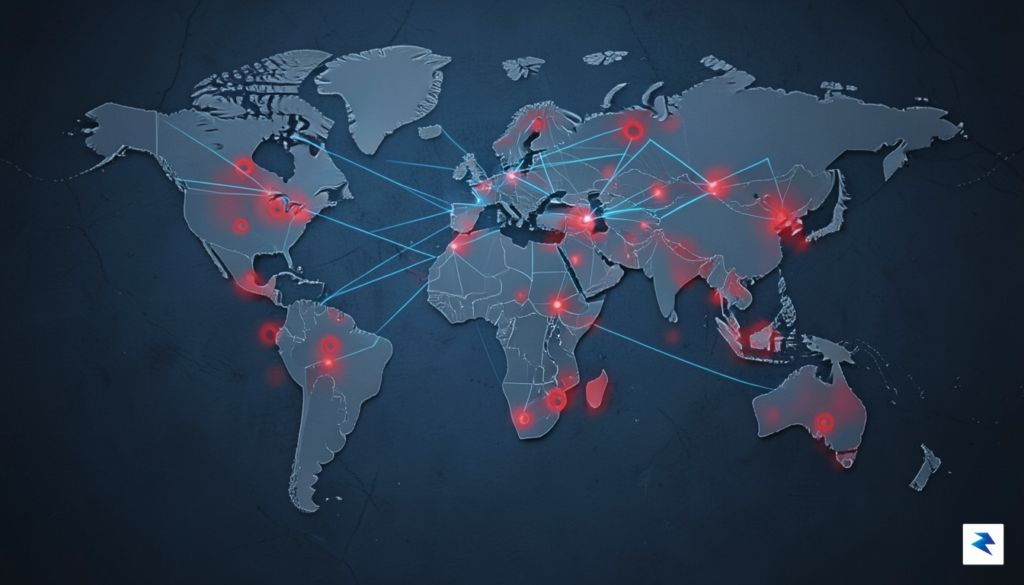
The case of Edward Nalwamba serves as a sobering outlier today, yet it threatens to become a common precursor for a future defined by the volatile intersection of migration and climate-driven or biological instability. As global mobility increases in the face of rising geopolitical unrest and the accelerating emergence of zoonotic diseases, the rigid bureaucratic machinery of immigration enforcement appears increasingly ill-equipped to handle the nuance of humanitarian crises. When national security policies operate in a vacuum, ignoring the real-time, ground-level risks of active public health outbreaks, they inadvertently transform immigration enforcement into a tool of potential harm. We must recognize that the integrity of our international order depends on harmonizing border security with a robust commitment to global health security, ensuring that vulnerable individuals are not returned to environments where their survival is compromised by systemic health failures.
To navigate this emerging reality, policy reform must move beyond binary debates over domestic enforcement and toward a framework that integrates regional public health data into the deportation process. Immigration authorities should be required to collaborate with international health agencies to assess whether a destination country is experiencing an active, uncontained disease outbreak that could be exacerbated by the forced return of individuals.
True border security cannot be achieved by ignoring the interconnected nature of our global ecosystem; policies that force individuals into the epicenter of a health crisis not only fail the individual but also undermine the collective efforts to contain global disease transmission.
By institutionalizing a “public health impact assessment” for deportation orders, nations can ensure that their legal proceedings do not inadvertently facilitate the spread of infectious disease or place individuals in circumstances that violate fundamental human rights.
Furthermore, the role of international humanitarian organizations must be elevated from passive observers to active monitors in the oversight of deportation procedures. These organizations possess the expertise and the reach to provide the oversight necessary to verify that individuals are not being deported into “death traps” where state infrastructure has collapsed under the weight of an epidemic. We must advocate for a shift toward a model of “humanitarian due diligence,” where the duty of care extends to the safety of the individual upon arrival in their home territory. Ultimately, the stability of our global community depends on our ability to craft policies that view health and human rights as mutually reinforcing, rather than competing, interests. If we fail to adapt our immigration systems to the realities of a changing world, we risk losing the very principles of dignity and safety that form the bedrock of a stable international society.