
Overview of the Incident in Beijing's Business District

At approximately 2:15 p.m. local time, a small, single-engine private aircraft collided with the upper levels of a skyscraper located in the heart of Beijing’s Central Business District (CBD). The incident occurred during a period of high pedestrian and vehicular traffic, immediately drawing the attention of office workers and residents in the surrounding area. Emergency services, including multiple fire departments and specialized search-and-rescue teams, were dispatched to the scene within minutes of the initial impact. Authorities have cordoned off a multi-block radius to facilitate the safe movement of emergency vehicles and to prevent potential debris from causing further harm to those on the ground.
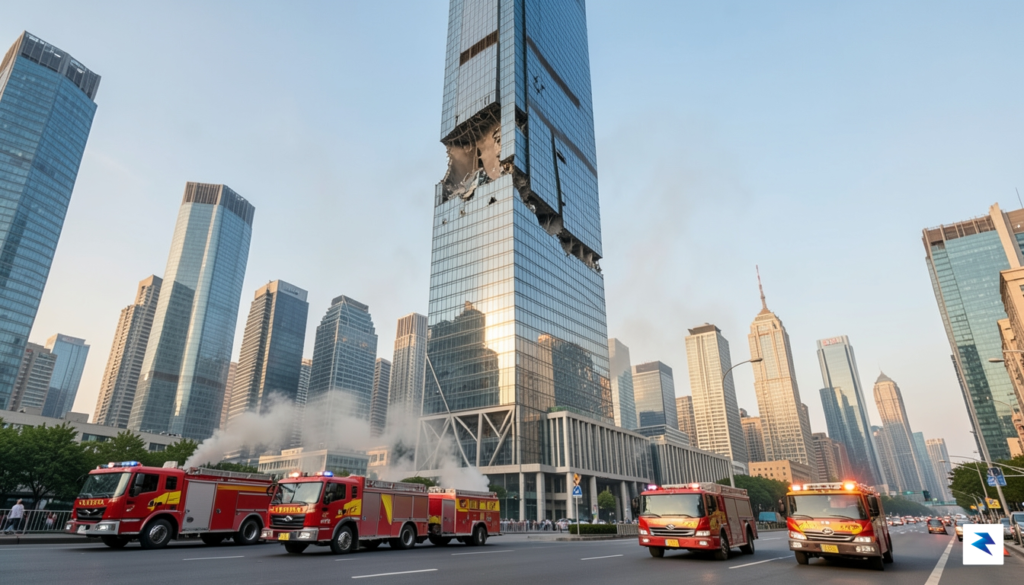
The collision has triggered a massive safety operation, leading to the rapid and orderly evacuation of the affected building and several adjacent structures. As a precautionary measure, local transit authorities have adjusted traffic patterns to keep the streets clear for ambulances and specialized heavy equipment. While the investigation into the flight path and technical status of the aircraft remains ongoing, officials have prioritized the stabilization of the structure and the search for any individuals who may have been present in the impacted office suites. The sheer density of the CBD presents unique challenges for responders, necessitating a highly coordinated effort to manage both the structural integrity of the site and the safety of the thousands of people who work in the immediate vicinity.
The primary focus at this stage remains the verification of the site’s safety and the provision of immediate medical support for any affected individuals. Emergency personnel continue to work methodically through the upper floors to ensure all building occupants have been accounted for.
Regarding the status of those involved, reports from the municipal government confirm that the pilot was recovered from the wreckage; however, their condition remains under official review as medical teams provide urgent care. Ground-level reports indicate that while there is damage to the exterior facade and surrounding infrastructure, there have been no confirmed fatalities among the building’s occupants at this time. Authorities have urged the public to avoid the area to allow emergency crews to perform their duties without interference. Further updates will be provided as civil aviation experts and urban safety inspectors gather more data on the flight’s trajectory and the mechanical circumstances that led to this unprecedented event in the capital’s busiest district.
Emergency Response and Public Safety Operations
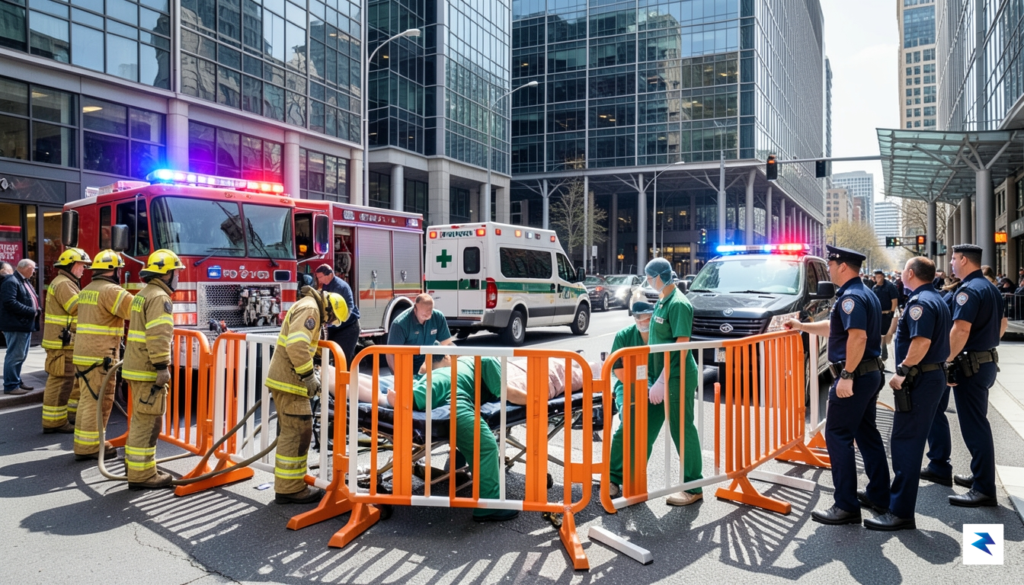
The immediate mobilization following the aerial incident in Beijing’s central business district serves as a definitive case study in China’s highly centralized and hyper-efficient disaster management framework. Within mere minutes of the impact, a sophisticated, multi-tiered emergency protocol was activated, triggering a seamless integration of municipal police, specialized fire rescue units, and advanced medical response teams. This rapid deployment is facilitated by the country’s state-of-the-art urban command centers, which utilize real-time satellite surveillance and high-definition traffic monitoring to pinpoint the exact coordinates of the crash while simultaneously rerouting emergency vehicles through cleared corridors. By prioritizing the stabilization of the site before the secondary effects of structural damage could escalate, the authorities demonstrated a rigorous adherence to established crisis protocols that emphasize speed as the primary defense against urban catastrophe.
Coordination between local government agencies remains the cornerstone of this operational success, as diverse departments—ranging from public utility managers to civil aviation authorities—work in a synchronized fashion to secure the perimeter. Once the initial rescue phase was underway, the focus immediately shifted to containment and site mitigation to prevent further casualties. Specialized teams were tasked with the delicate balance of suppressing localized fires while ensuring the structural integrity of the surrounding skyline. This level of inter-agency cooperation is not accidental; it is the result of frequent, large-scale drills that simulate high-density urban emergencies, ensuring that every responder understands their role in the broader hierarchy of command. This systemic cohesion allows the city to transition from an “all-hands-on-deck” rescue mission to a controlled, methodical investigation without bureaucratic delays.
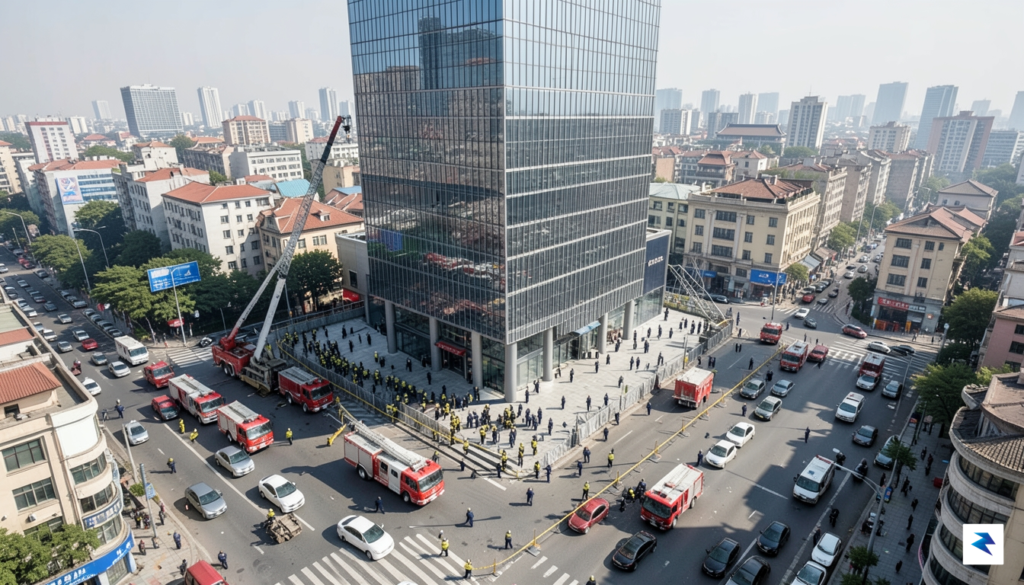
The efficiency of the response is a testament to the city’s ability to turn administrative hierarchy into rapid, on-the-ground action, effectively minimizing the chaos that typically accompanies such high-profile urban incidents.
Beyond the immediate medical and fire suppression efforts, the management of the general public and debris control was equally critical to maintaining order in such a densely populated corridor. Law enforcement personnel effectively deployed a multi-layered security grid, establishing cordons to keep onlookers at a safe distance from potential falling debris while ensuring that emergency logistical channels remained unobstructed. Public safety operations extended to the swift dissemination of information through digital platforms, which served to prevent the spread of misinformation and panic among the millions of residents and workers in the vicinity. By controlling the flow of pedestrian and vehicular traffic with such precision, the authorities were able to protect the civilian population while providing the necessary clearance for heavy machinery and specialized recovery teams to access the affected building floors.
Aviation Safety and Airspace Restrictions in China
Operating a general aviation aircraft within the borders of the People’s Republic of China is a process governed by some of the most rigorous regulatory frameworks in the world. Unlike many Western nations where private pilot ownership and recreational flying are widespread, the Chinese aviation environment is characterized by strict state oversight and a highly centralized management system. This is particularly pronounced in urban centers like Beijing, where the integration of low-altitude flight paths is heavily restricted to protect high-density populations and critical infrastructure. The Civil Aviation Administration of China (CAAC) enforces these mandates with the primary goal of ensuring public safety, meaning that unauthorized entry into restricted urban airspace is treated as a significant breach of national security and safety protocols.
Flying over a metropolitan area as vast and densely packed as Beijing requires more than just standard flight clearance; it necessitates a complex coordination between the pilot, local air traffic control (ATC), and the military, which maintains primary authority over the nation’s entire airspace. Every flight plan must be meticulously vetted and approved well in advance, detailing specific altitude requirements, flight corridors, and emergency contingency plans. Furthermore, the “low-altitude” zones are subject to dynamic changes, often closed off entirely to civilian traffic without specific, time-sensitive permits. Because Beijing serves as the political and administrative heart of the country, the density of government buildings and sensitive zones means that the margin for error is effectively zero, making any errant flight path a matter of immediate concern for regional monitoring systems.
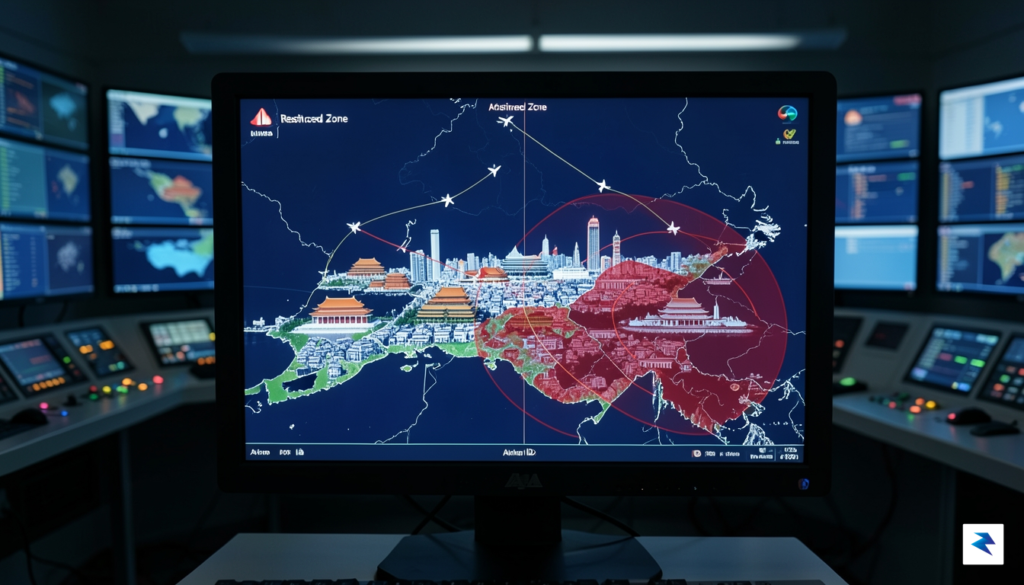
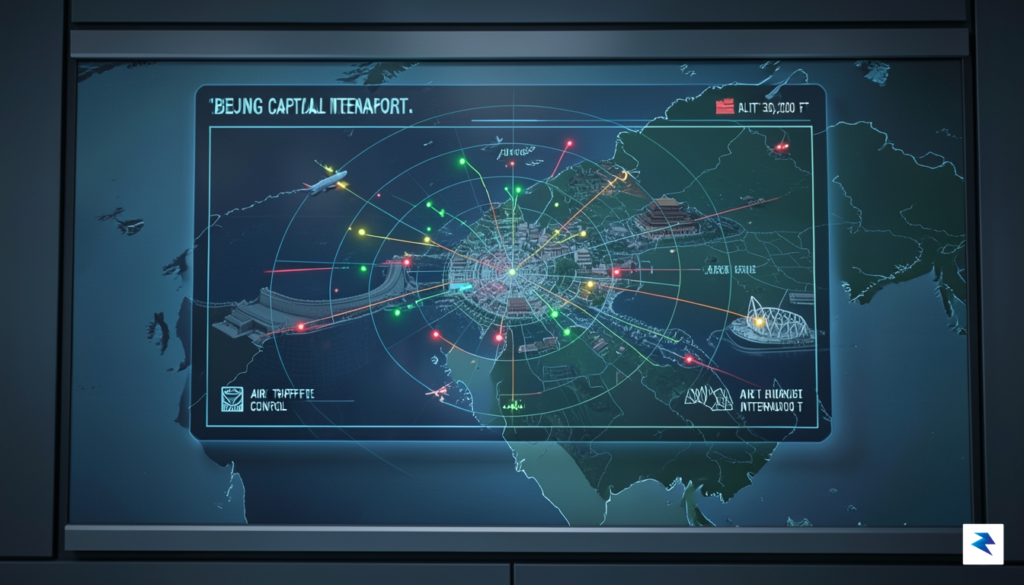
To maintain order within these high-density zones, Chinese authorities utilize a combination of sophisticated radar arrays and satellite-based tracking systems to monitor every registered craft currently in the air. Any aircraft that deviates from its approved flight path—or worse, enters restricted airspace without a transponder signal—triggers an immediate response from air traffic controllers and regional defense sectors. These monitoring capabilities are designed to identify and intercept unauthorized movements long before they pose a threat to civilian infrastructure. The system is built on the premise that constant, watchful oversight is the only way to mitigate the inherent risks of small-plane navigation in an era of rapid urbanization and vertical growth.
The stringent nature of China’s airspace regulations reflects a philosophy that prioritizes collective security over individual recreational access, particularly in capital zones where the density of human life and critical architecture demands uncompromising vigilance.
Ultimately, the regulatory environment serves as a vital firewall against the unpredictable nature of general aviation in urban settings. By enforcing strict adherence to flight plans and maintaining constant communication with ground control, the authorities aim to prevent the very scenarios that could jeopardize the stability of the city’s skyline. As the general aviation sector continues to evolve in China, the balance between fostering private flight and maintaining absolute control over the skies remains a cornerstone of the nation’s aviation safety strategy, emphasizing that the sky above Beijing is not an open resource, but a strictly managed space.
Impact on Urban Planning and High-Rise Security

The recent aerial incident in the heart of Beijing’s Central Business District serves as a sobering catalyst for reevaluating how global metropolises integrate aviation safety into their vertical growth strategies. As cities continue to reach unprecedented heights, the traditional focus of urban planning—centered primarily on ground-level traffic, fire safety, and seismic resilience—must now expand to address the complex reality of aerial threats. Architects and city planners are increasingly faced with the challenge of designing “resilient verticality,” where the structural integrity of a skyscraper is no longer just about standing against wind and gravity, but about surviving the kinetic energy of an unexpected aerial collision.

Modern engineering has already made significant strides in structural resilience, utilizing advanced materials and braced-tube designs that allow buildings to remain stable even when individual structural members are compromised. However, the intersection of architecture and security requires a shift toward a more holistic approach that considers the density of human occupancy within these towers. Planners are now exploring the integration of specialized evacuation zones, reinforced core designs, and non-flammable facade materials that prevent the rapid spread of fire following a structural impact. By incorporating these elements into the earliest design phases, architects can ensure that high-rises serve as safe havens rather than vulnerabilities in the event of an aviation accident.
True urban resilience in the 21st century requires that we treat the sky not just as a space for aesthetic expansion, but as a dynamic environment that necessitates proactive defense and safety infrastructure.
Furthermore, the layout of public spaces surrounding these massive structures is undergoing a quiet revolution. Urban planners are increasingly designing buffer zones and strategic pedestrian routing that account for the potential debris patterns of tall-building emergencies. This involves placing critical infrastructure—such as power substations and emergency response hubs—at a distance from high-risk perimeters. As Beijing and other global capitals learn from this incident, the dialogue between aviation authorities and civil engineers will likely become more frequent, leading to stricter airspace regulations and the potential implementation of drone-detection and alert systems that provide ground-level occupants with precious seconds of warning. Ultimately, the goal is to weave safety into the very fabric of our urban environment, ensuring that as our buildings rise, our ability to protect those within them rises just as high.
Ongoing Investigation and Media Transparency

As the immediate aftermath gives way to a more structured response, a meticulous and multi-faceted investigation into the incident’s technical and logistical underpinnings is now fully underway. Air safety authorities, in collaboration with experienced aviation experts, are meticulously collecting and analyzing every piece of available evidence. This initial phase is crucial, focusing on securing the crash site, retrieving critical components such as flight recorders—commonly known as black boxes—and documenting the scene with painstaking detail to reconstruct the sequence of events leading up to the impact.
The investigative process is comprehensive, extending far beyond the immediate wreckage. Investigators are carefully examining maintenance records of the aircraft, scrutinizing pilot qualifications and flight hours, reviewing air traffic control communications, and interviewing any eyewitnesses who may provide valuable insights. The flight data recorder will offer precise information on the plane’s performance parameters, while the cockpit voice recorder will capture crucial audio exchanges, both of which are vital for understanding the operational context and potential contributing factors. Every fragment of information, from meteorological data to the aircraft’s flight path, is being cross-referenced to build a cohesive and accurate picture of the circumstances.
Given the high-profile nature and urban setting of the crash, the investigation is naturally subject to significant international observation. Relevant international aviation bodies, often including experts from the aircraft’s country of manufacture, are likely monitoring the findings closely, and may even provide technical assistance or independent oversight. This international participation is not merely observational; it serves to ensure that the investigation adheres to established global standards and protocols for air accident inquiry, thereby lending credibility to the eventual conclusions and fostering broader trust in the investigative process and its outcomes.
Crucially, the transparency of the reporting process throughout this complex inquiry remains paramount for maintaining public confidence, both domestically and internationally. Government entities and the lead investigative body bear a significant responsibility to provide timely, accurate, and consistent communication. This involves regular updates on the progress, clarification of preliminary findings where appropriate, and a commitment to address public concerns directly. Open channels of information are essential to counter speculation and misinformation, which can quickly erode trust and create unnecessary anxiety in the absence of authoritative statements.
Ultimately, the objective is not just to ascertain what happened, but also to understand why it happened, to prevent similar incidents in the future. Therefore, the importance of robust and transparent communication cannot be overstated. By openly sharing the investigative methodology, the challenges encountered, and ultimately the root causes and contributing factors, authorities can demonstrate their commitment to safety and accountability. This commitment to transparency strengthens the integrity of the process and ensures that the lessons learned from this unfortunate incident contribute meaningfully to global aviation safety standards.