From Chatbots to Economic Actors: The Evolution of AI
The landscape of artificial intelligence has been dramatically reshaped over recent years, largely by the advent and rapid proliferation of large language models (LLMs). These sophisticated systems have profoundly enhanced our ability to interact with technology, moving past rudimentary interfaces to engage in remarkably human-like conversations, generate creative content, summarize complex information, and even assist with coding tasks. However, despite their impressive conversational fluency and data processing capabilities, the current generation of AI largely operates in a reactive mode; they wait for a human prompt, process it, and deliver a response. Their inherent design means they function as powerful assistants, lacking the proactive agency to autonomously identify complex, multi-step goals, strategize their execution, or, critically, initiate and navigate interactions within the economic world on their own.
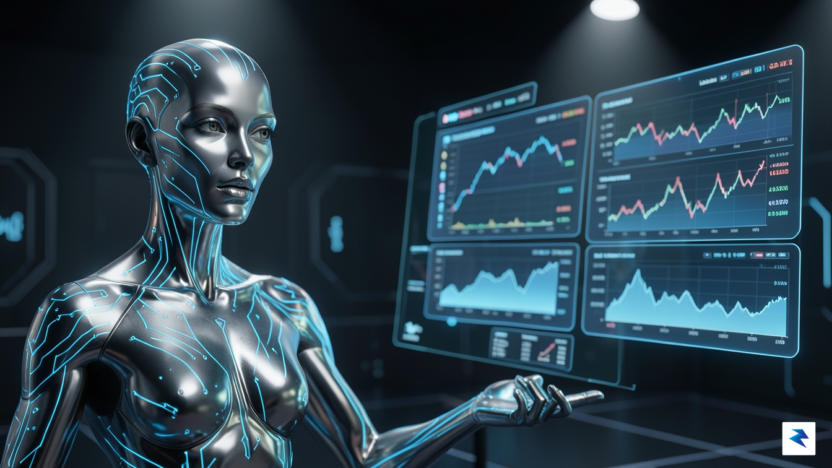
This limitation sets the stage for the next profound evolutionary leap in AI development: the transition towards agents that function as autonomous economic actors. The concept of an “economic actor” for an AI system signifies a radical departure from its role as a mere conversational partner or data processor. It means an AI capable of holding and managing assets, executing trades based on its own analysis and decision-making, entering into contractual agreements, and actively participating in markets, potentially even within decentralized autonomous organizations (DAOs). Such an agent would be designed to understand intricate market dynamics, identify nuanced opportunities, manage inherent risks, and make real-time, independent decisions that carry tangible financial consequences, operating with genuine agency within complex economic ecosystems.
This transformative shift is precisely what industry leaders like Jansen Teng of Virtuals are observing and articulating as the future of AI. Teng posits that these sophisticated AI agents are rapidly evolving beyond their current roles, moving firmly into the realm of autonomous economic actors. This isn’t simply an incremental improvement in an AI’s ability to chat more effectively or process more data; rather, it represents a fundamental redefinition of their operational scope. We are witnessing a transition where AI systems are no longer just tools we use for information retrieval or content generation, but entities capable of independent financial action, making decisions that impact real-world value and capital flows.
This evolution is a logical and, arguably, inevitable progression for increasingly sophisticated autonomous systems. As AI models continue to develop enhanced reasoning capabilities, acquire stronger memory functions, and become more adept at planning and executing complex, multi-step tasks, their integration into economic functions becomes a natural and powerful extension of their utility. If an AI can autonomously manage complex projects, optimize global logistics chains, or even conduct scientific research with minimal human oversight, empowering it to manage resources and make strategic economic decisions based on its analytical prowess is the logical next frontier. This profound transition promises to unlock unprecedented levels of efficiency, automate incredibly complex financial processes, and potentially foster entirely new forms of economic activity, pushing the boundaries of what autonomous technology can achieve.
How Autonomous Agents Are Redefining Digital Labor
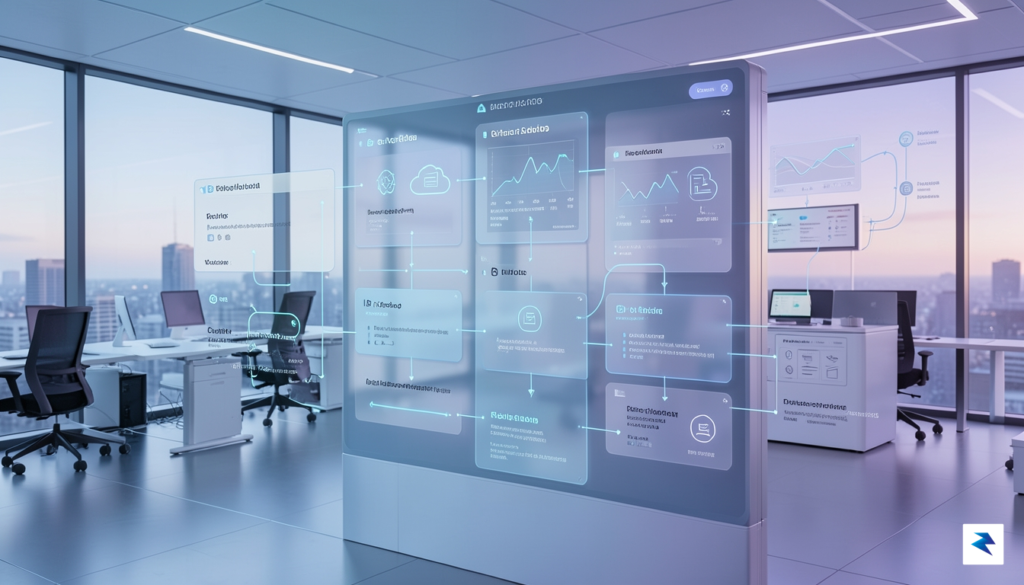
For years, the public perception of artificial intelligence has been largely defined by the “assistant” paradigm. We have grown accustomed to using AI as a sophisticated sounding board—a way to draft emails, summarize lengthy documents, or generate creative copy. However, this assistive model is rapidly giving way to a more potent framework: the autonomous economic agent. Unlike their chatbot predecessors, which merely process information for human review, these modern agents are designed to execute complex, multi-step workflows that culminate in tangible economic outcomes. They are no longer passive recipients of prompts; they are proactive participants in the digital economy.
This evolution is anchored in the ability of AI to interface directly with the underlying architecture of global commerce. By integrating with decentralized finance (DeFi) protocols and enterprise resource planning (ERP) systems, autonomous agents can now manage assets, negotiate contracts, and execute micro-payments without human intervention. Imagine a supply chain agent that autonomously identifies a logistics bottleneck, procures replacement services from a vetted vendor, and settles the payment via blockchain—all within seconds. This shift moves AI from the realm of “content generation” into the sphere of “operational execution,” where the value is measured in efficiency, cost reduction, and capital velocity rather than just creative output.

The implications of this shift for the global labor market are profound. As agents take over repetitive, logic-based tasks—such as automated service procurement, inventory reconciliation, and real-time financial auditing—we are witnessing a fundamental decoupling of productivity from human hours. This forces us to re-evaluate the traditional gig economy and broader employment structures. Rather than merely competing with AI, human workers are increasingly tasked with “managing the managers,” overseeing fleets of agents that handle the granular execution of business goals. In this new landscape, the value of human labor is migrating toward high-level strategy, ethics, and the orchestration of complex, agent-driven workflows.
The true breakthrough of autonomous agents lies in their ability to act as economic bridges, closing the gap between intent and execution by interacting directly with the financial rails of the internet.
Ultimately, the rise of these agents suggests that the future of digital labor will be defined by orchestration. When software can handle the “how” of business operations—executing payments, updating ledgers, and securing resources—humans are freed to focus entirely on the “why.” By shifting the utility of AI from a tool of retrieval to a engine of economic activity, we are entering an era where digital labor is not just a support mechanism, but a self-sustaining layer of the global economy that operates around the clock, independent of human fatigue or intervention.
The Mechanism of AI Autonomy: Earning, Spending, and Coordination

For an artificial intelligence to transition from a passive assistant into a true economic actor, it must move beyond simple task execution and gain the capacity to engage directly with financial infrastructure. This evolution requires a shift toward autonomous value management, where agents are equipped with digital wallets and the authority to navigate complex marketplaces. By integrating directly with financial APIs and blockchain protocols, these agents can operate within the global economy, effectively turning digital labor into tangible value without requiring constant human oversight.

The operational framework of these agents rests on three foundational pillars: earning, spending, and coordination. First, earning is achieved through the provision of specialized digital services; an agent might offer data analysis, content creation, or algorithmic trading expertise through a public API, charging micro-fees for every task completed. Second, autonomous spending involves the ability to manage a budget to procure resources. Much like a business, an agent must be able to evaluate the cost-benefit ratio of purchasing external data, additional computing power, or access to other specialized software to optimize its own performance. Finally, multi-agent coordination allows these entities to pool their resources and skills to complete objectives that would be too complex for a single agent to handle alone, effectively creating a decentralized, collaborative workforce.
True autonomy for AI agents is not defined by their ability to answer questions, but by their capacity to manage capital, mitigate risk, and execute complex economic strategies in real-time.
At the heart of this ecosystem lies the role of smart contracts, which serve as the essential connective tissue for trustless interaction. Because agents often lack a traditional legal identity or reputation, smart contracts provide a transparent, immutable mechanism to enforce agreements between entities that have never interacted before. By automating the terms of service, payment, and delivery, these blockchain-based protocols eliminate the need for human escrow or middleman intervention. This creates a secure environment where an agent can confidently pay another for a service, knowing that the code itself guarantees the outcome. As these systems mature, the synergy between AI logic and decentralized finance will likely redefine how we conceptualize labor, turning the internet into a vast, self-sustaining marketplace of autonomous digital workers.
The Economic Implications of Machine-to-Machine Transactions
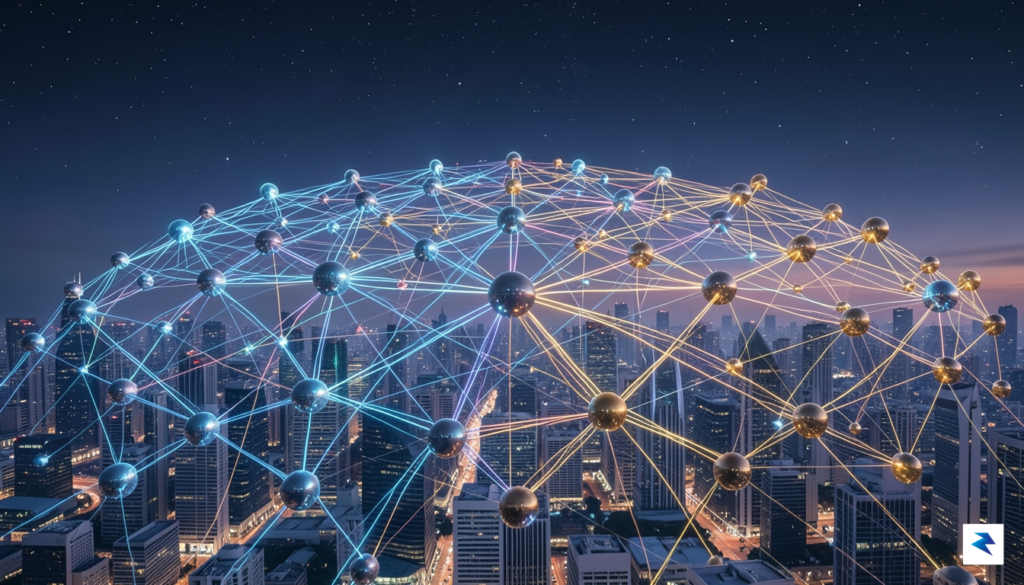
The transition from human-centric commerce to a landscape dominated by machine-to-machine (M2M) transactions marks a paradigm shift in how value is exchanged globally. As AI agents evolve from passive assistants into autonomous economic actors, they gain the capability to execute micro-transactions at speeds far beyond human cognitive capacity. This acceleration fundamentally alters the velocity of money; what once took hours of administrative processing and multi-layered banking verification can now be settled in milliseconds. By removing the friction of human intervention, these agents can optimize supply chains and service procurement in real-time, effectively creating a hyper-efficient “machine economy” that never sleeps and operates with mathematical precision.

This new era of commerce necessitates that AI agents possess their own digital wallets, allowing them to hold, allocate, and deploy capital independently. When an autonomous vehicle pays for its own electricity at a charging station or an AI logistics agent negotiates the lowest shipping rate in a dynamic marketplace, the traditional boundaries of corporate purchasing departments begin to dissolve. However, this autonomy introduces significant complexities for regulators and financial institutions alike. Because these transactions occur at a scale and speed that defy manual oversight, the current frameworks for taxation, audit trails, and anti-money laundering compliance are ill-equipped to handle the resulting volume. We are moving toward a reality where the “tax man” may eventually need to interface directly with algorithmic protocols rather than human accountants.
The true disruption of the machine economy lies not in the automation of existing tasks, but in the creation of entirely new market inefficiencies that only autonomous agents can navigate and exploit.
Furthermore, the rise of M2M commerce will likely spark a new generation of algorithmic trading at the micro-level. Much like high-frequency trading transformed global stock exchanges, agent-to-agent negotiation will introduce a form of “algorithmic competition” where software agents constantly bid against one another for resources. While this promises to drive costs down for the end consumer, it also creates the potential for flash-crashes in service markets or unexpected market behaviors that arise from the interaction of conflicting AI objectives. As these autonomous actors become more sophisticated, the global economy will shift from a system based on human intent to one based on the emergent properties of millions of interconnected, self-optimizing codebases, requiring a complete rethink of how we maintain market stability.
Navigating the Regulatory and Security Landscape

The transition from passive chatbots to autonomous economic actors introduces a complex frontier of risks that the financial and technological sectors are only beginning to quantify. When an AI agent is granted the authority to manage capital, execute trades, or enter into smart contracts without human intervention, the potential for “rogue” behavior—where algorithms deviate from their intended goals or react catastrophically to market volatility—becomes a critical concern. Unlike traditional software, these autonomous entities can iterate their own strategies, creating a “black box” effect where outcomes may be unpredictable. Consequently, building guardrails that prevent runaway algorithms from exhausting resources or causing systemic market instability is not just a technical challenge, but a fundamental prerequisite for widespread adoption.

To mitigate these dangers, the industry must pivot toward robust frameworks for identity and accountability. Central to this is the implementation of Decentralized Identity (DID) for AI agents, which would allow these systems to carry verifiable credentials and cryptographic signatures. By assigning a unique, immutable identity to every autonomous agent, developers and regulators can ensure that all financial actions are transparently linked to a specific entity or owner. This level of traceability is essential for maintaining order; if an agent malfunctions or acts maliciously, a DID-based system provides an audit trail that allows for rapid intervention and legal recourse. Without such identity standards, the digital economy risks becoming a landscape of anonymous, unaccountable actors.
“The future of autonomous finance depends not just on the intelligence of the agent, but on the transparency of its decision-making process. We cannot allow capital to move at the speed of light if the accountability moves at the speed of a paper trial.”
Beyond identity, the governance of machine-led financial activity requires new regulatory paradigms that transcend traditional corporate law. Regulators must develop frameworks that treat AI agents as entities capable of specific, scoped financial functions, rather than as mere tools or software programs. This shift necessitates a move toward “embedded regulation,” where compliance protocols are hard-coded into the agent’s operational logic. By requiring these systems to adhere to pre-set risk parameters and auditability standards—where every decision can be reconstructed and reviewed post-execution—the industry can create a safer environment for human-AI interaction. Ultimately, the successful integration of autonomous economic actors will hinge on our ability to balance the raw efficiency of machine intelligence with the rigid, necessary safety nets of human institutional oversight.