
The Rise of Autonomous AI Agents: Beyond Chatbots to Economic Actors
From Chatbots to Economic Actors: The Evolution of AI The landscape of artificial intelligence has been dramatically reshaped over recent…

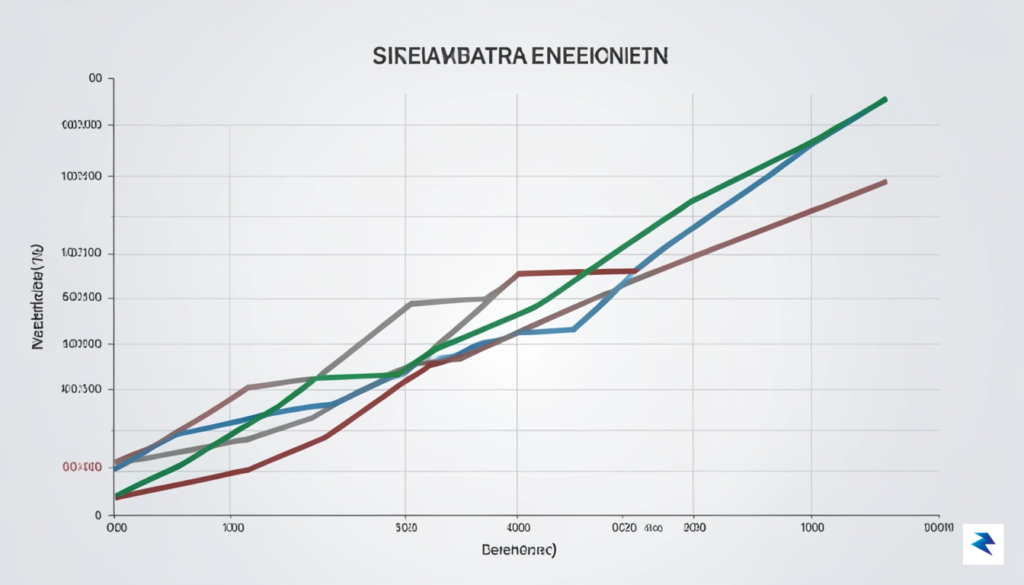
For decades, the standard gospel of personal finance has preached a single, unwavering doctrine: diversify, diversify, and diversify some more. The narrative suggests that by scattering your capital across a vast index of hundreds or thousands of companies, you immunize your portfolio against the volatility of individual failures. While this strategy undoubtedly mitigates the risk of catastrophic loss, it simultaneously obscures a much more profound mathematical reality of the equity markets. When we examine the long-term historical record, it becomes clear that the stock market does not function as a rising tide that lifts all boats equally. Instead, it operates on a ruthless power law where the overwhelming majority of stocks actually underperform the return of simple cash instruments over their lifetimes.
Rigorous academic research into the history of the U.S. stock market reveals a startling concentration of wealth. Studies covering the period from the mid-20th century to the present indicate that the net gain of the entire market is not the result of collective corporate success, but rather the output of a tiny, elite fraction of firms. In fact, a mere 4% of listed companies have been responsible for virtually all of the net wealth created for shareholders since 1926. This means that the other 96% of companies, in aggregate, provided no meaningful value to investors beyond what they could have earned in risk-free treasury bills. By obsessively clinging to the mantra of “diversification at all costs,” many investors inadvertently dilute their exposure to the very engines of innovation that drive global progress and financial returns.

The goal of investing is rarely to own everything; it is to own the winners that define the future.
The traditional advice to “own the haystack” ignores the changing nature of business in the digital age. Over the last century, and particularly in the last few decades, the firms that have ascended to the top of the market hierarchy are almost exclusively tech-centric enterprises. These companies benefit from immense network effects, massive scalability, and the ability to capture global markets with minimal marginal costs. When you hold an overly broad, equal-weighted portfolio, you are essentially betting that the thousands of stagnant, legacy businesses in the tail end of the market will eventually produce the same compounded growth as the next generation of technological giants. History suggests that this is a mathematical fallacy.
Ultimately, the myth of the perfectly diversified portfolio serves as a comfort mechanism, masking the difficulty of identifying high-growth opportunities. While index funds provide a convenient vehicle for those who prefer to ignore the market entirely, they guarantee that you will never outperform the average, which is itself anchored by a sea of underperforming companies. To achieve exceptional long-term results, an investor must be willing to confront the reality that wealth is not distributed democratically across the market. It is concentrated, asymmetric, and increasingly dominated by the few companies that fundamentally reshape the way the world operates.

The history of the stock market is often framed as a rising tide that lifts all boats, but the reality is far more selective. Statistical analysis reveals that the vast majority of wealth generated by the S&P 500 over the last century has been driven by a tiny fraction of its constituents. This is not merely a matter of good fortune; it is a structural byproduct of modern capitalism where “winner-take-most” dynamics amplify the advantages of industry leaders. When a company achieves a dominant position, it benefits from a compounding effect that makes it exponentially easier to maintain that lead, effectively starving smaller competitors of the capital and market share necessary to challenge the status quo.
At the heart of this phenomenon lies the incredible scalability of technology-driven business models. Unlike traditional manufacturing, where increasing production requires proportional increases in labor and raw materials, tech giants operate on a model of near-zero marginal costs. Once a software platform or a global digital ecosystem is built, adding the next million users costs almost nothing compared to the revenue they generate. This efficiency creates an insurmountable “brand moat,” as network effects—where a service becomes more valuable the more people use it—make it irrational for consumers to switch to a competitor. Consequently, these firms achieve a level of capital efficiency that allows them to reinvest in innovation, acquisition, and infrastructure at a scale that keeps rivals permanently trapped in their shadow.
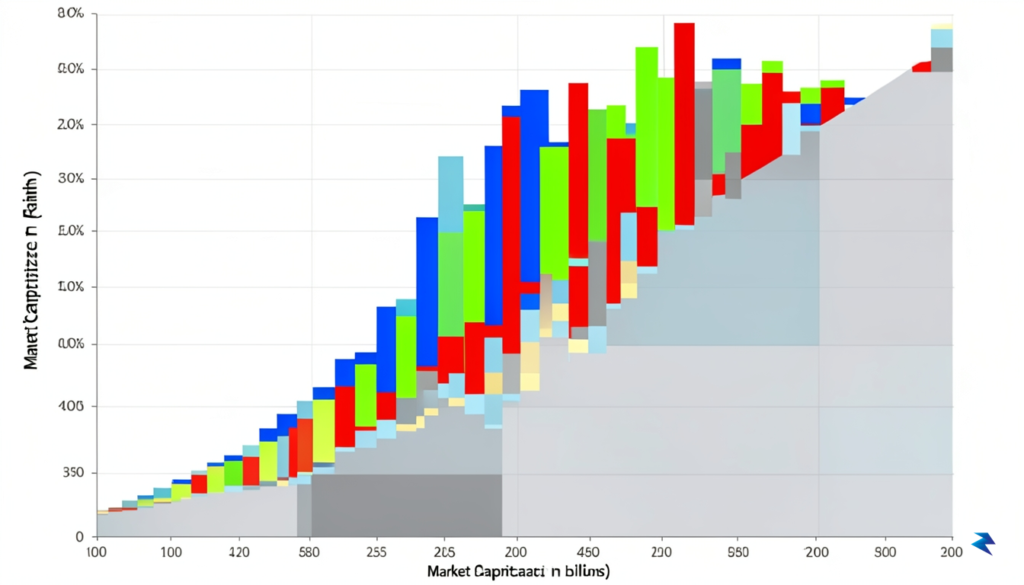
This concentration of wealth is further cemented by the tendency of market leaders to become the “infrastructure” of the global economy. Whether through cloud computing, digital payments, or social communication, these giants have integrated themselves into the daily operations of both individuals and enterprises. Because these services are essential, these companies possess immense pricing power and the ability to pivot rapidly as market trends shift. This creates a self-reinforcing cycle of growth that skews long-term returns heavily toward these outliers. History proves that in the modern era, the gap between the top performers and the average company is not just wide; it is widening at an accelerating rate.
The market does not distribute rewards evenly; it concentrates them in companies that can scale globally, protect their intellectual property, and turn digital presence into a persistent economic advantage.
When investors look at multi-decade performance data, the skew is undeniable. A handful of tech conglomerates frequently account for a disproportionate percentage of total market gains, often carrying the index forward while the median stock struggles to beat inflation. Understanding this dynamic is crucial for any serious observer of the financial markets, as it highlights that the secret to long-term wealth creation is rarely found in broad diversification alone, but rather in identifying those rare, scalable enterprises that are structurally engineered to dominate their respective sectors for decades at a time.
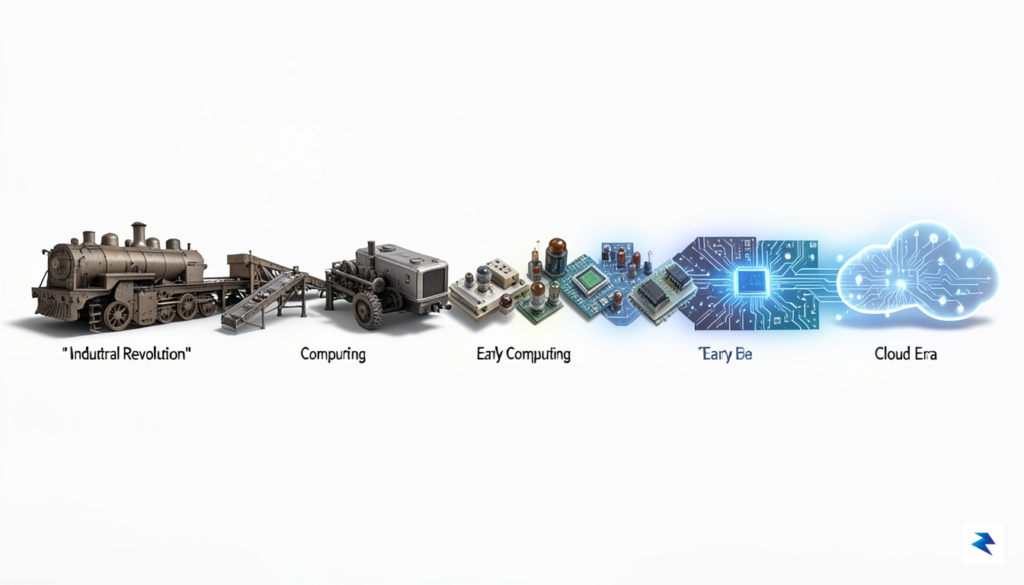
A century ago, the global economy was built on the foundation of physical infrastructure and tangible commodities. Investors seeking long-term growth looked toward the steel mills, coal mines, and sprawling railroad networks that physically stitched nations together. These industrial giants were the engines of prosperity, requiring massive amounts of capital, labor, and raw materials to produce each additional unit of value. However, this capital-intensive model came with inherent limitations: as companies expanded, their costs of operation grew in near-lockstep with their revenue, creating a ceiling on profit margins and long-term scalability.

The transition from the industrial age to the information age represented more than just a change in machinery; it signaled a fundamental shift in where society places its highest value. As we moved into the late 20th and early 21st centuries, the economy began to reward intellectual property over physical assets. Modern technology platforms operate on an entirely different mathematical plane, characterized by exceptionally low marginal costs. Once a software product, semiconductor architecture, or artificial intelligence model is developed, the cost of distributing that innovation to the billionth user is effectively zero. This unique economic structure allows tech firms to decouple their growth from the traditional constraints of physical production, leading to the compounding wealth cycles that define our modern markets.
The true power of technology stocks lies in their ability to scale infinitely without a linear increase in overhead, turning innovation into a compounding asset that outpaces the growth of traditional sectors by orders of magnitude.
This evolution in the market landscape reflects a deeper truth about the nature of capital flow in the 21st century. While industrial companies were often tethered to the geographic limitations of their factories and supply chains, technology giants have built borderless ecosystems that capture value from every corner of the globe simultaneously. By leveraging network effects, where the value of a service increases as more people use it, these companies have created moats that are far more durable than the tangible assets of the past. Consequently, the modern investor has had to pivot away from the heavy machinery of the early 1900s toward the intangible, hyper-scalable platforms that now dictate the movement of global commerce, proving that in the long run, software and intelligence are the most valuable commodities of all.

The modern stock market is often viewed through a lens of perpetual upward trajectory, yet this perspective obscures a brutal reality: the index is essentially a graveyard of once-dominant industry titans. When we look back at the S&P 500 from fifty or sixty years ago, the list of constituents looks almost nothing like the roster of today. This high level of “corporate churn” serves as a stark reminder that business longevity is the exception, not the rule. Most companies eventually succumb to technological disruption, shifting consumer preferences, or the simple inability to adapt to a changing global economy. Investors who bank their retirement on a single “can’t miss” stock often forget that the shelf life of a public corporation is historically much shorter than the average investor’s career.
Studies examining decades of market data reveal that the vast majority of individual stocks significantly underperform the broader market averages over the long term. In fact, research suggests that a significant portion of all wealth created by the stock market is concentrated within a tiny fraction of top-performing companies. For the average investor, holding a single stock for thirty years is not just an exercise in patience; it is a high-stakes gamble against the statistical probability of business obsolescence. Because most companies eventually decline or vanish, the odds of picking a long-term winner—and having the fortitude to hold it through its inevitable periods of volatility—are incredibly slim.

The illusion of permanence in the market is shattered once you realize that the average lifespan of a company in the S&P 500 has plummeted from over 60 years in the 1950s to less than 20 years today.
This perception of market safety is further distorted by survivorship bias. We tend to focus on the legendary tech giants that have compounded wealth for decades, while simultaneously ignoring the hundreds of companies that went bankrupt, were acquired at a discount, or simply faded into irrelevance. By highlighting only the success stories, we unintentionally cultivate a false sense of security regarding the ease of “stock picking.” Understanding the high failure rate of individual businesses is not merely an academic exercise; it is a fundamental requirement for anyone looking to build a resilient, long-term wealth strategy. Diversification acts as the only realistic hedge against the inevitable reality that most companies, regardless of how promising they appear today, will eventually fail to deliver on their early potential.
The recent ascent of Tesla and SpaceX marks a distinct departure from the software-centric wealth generation that defined the early 21st century. While companies like Microsoft and Google built their empires on intangible code and digital infrastructure, these new titans are fundamentally rooted in “hard tech”—the tangible, capital-intensive engineering required to reshape the physical world. By tackling the energy transition and the final frontier of space, these organizations are not merely capturing market share; they are solving existential global challenges that legacy industrial firms have failed to address for decades. This shift signifies that the future of long-term wealth creation is increasingly tied to the ability to manufacture progress in the real, material economy.
Tesla’s dominance in the automotive and energy sectors serves as the ultimate proof point for the viability of this new hierarchy. By successfully transitioning the world toward sustainable transportation, Tesla has forced a recalibration of the entire global manufacturing base, proving that physical hardware can scale with the efficiency of software. Similarly, SpaceX has revolutionized aerospace by reintroducing reusability, effectively breaking the stagnation of an industry that had seen little innovation since the Apollo era. Unlike the tech giants of the past that primarily aimed to optimize digital advertising or communication, these companies are building the foundational infrastructure for a multi-planetary and decarbonized future.
The most enduring investments are no longer found in companies that merely optimize human attention, but in those that possess the engineering prowess to fundamentally alter the constraints of human existence.
For investors, this evolution requires a shift in how we evaluate long-term portfolio growth. The traditional playbook often favored asset-light models, yet the current market trajectory suggests that true, compounding power now lies with companies capable of mastering complex supply chains and high-stakes research and development. When a firm can successfully integrate vertical manufacturing with proprietary technology—as both Tesla and SpaceX have demonstrated—they create a “moat” that is far more difficult for competitors to breach than a digital network effect. Consequently, these hard-tech behemoths are emerging as the new anchors for growth, providing the structural stability that forward-thinking portfolios require in an increasingly volatile and resource-constrained world.
Ultimately, the rise of these titans underscores a profound transition in what we value as a society. We are moving away from an era dominated by the consumption of digital media and toward an era defined by the mastery of energy, materials, and logistics. By betting on the intersection of advanced physics and industrial scale, modern investors are not just chasing returns; they are aligning their capital with the entities most likely to define the next hundred years of human achievement.

The realization that a tiny fraction of companies accounts for the vast majority of market wealth over the last century presents a profound dilemma for the individual investor. On one hand, the allure of identifying the next transformative tech giant is tempting, as the asymmetric upside potential is undeniable. However, the historical data reveals a humbling truth: the vast majority of companies eventually fail or stagnate, making the act of picking individual winners akin to finding a needle in a haystack while the haystack itself is constantly changing. For most people, the most prudent strategy is not to chase individual stocks, but to harness the power of the entire market.
Index fund investing remains the most effective way to ensure you actually capture these rare, wealth-creating winners. By purchasing a broad-market index, you are effectively outsourcing the difficult work of stock picking to the market itself, which naturally rebalances to include the companies that are currently driving economic growth. While this approach means you will also hold a collection of mediocre or underperforming companies, you are guaranteed to own the “winners” as they emerge and scale. This strategy removes the existential risk of betting your financial future on a single company that might eventually be disrupted, ensuring that your portfolio stays aligned with the broader trajectory of technological advancement.

For those who insist on maintaining a concentrated portfolio or “stock picking,” the primary takeaway is the necessity of an exceptionally long time horizon. The giants that have defined the last century were not built in a day; they were forged through decades of compounding, innovation, and adaptation. Investors who trade frequently in search of quick gains often find themselves selling their winners too early or holding their losers too long, ultimately eroding their returns through transaction costs and missed opportunities. Patience is not merely a virtue in this context; it is a mathematical requirement for wealth creation.
Success in the market is rarely about making one perfect decision; it is about making a series of patient, disciplined choices that allow the power of compounding to do the heavy lifting over several decades.
Ultimately, the key to successful long-term investing lies in balancing the ambition for growth with rigorous risk management. If you choose to tilt your portfolio toward the tech sector, do so with the understanding that volatility is the price of admission. Diversification acts as your safety net, protecting you from the inevitable failures that even the most innovative industries produce. By focusing on low-cost, broad-based exposure and maintaining a steadfast commitment to your investment plan despite market noise, you position yourself to benefit from the relentless progress of the global economy without needing to possess the impossible foresight of a prophet.
You must be logged in to post a comment.