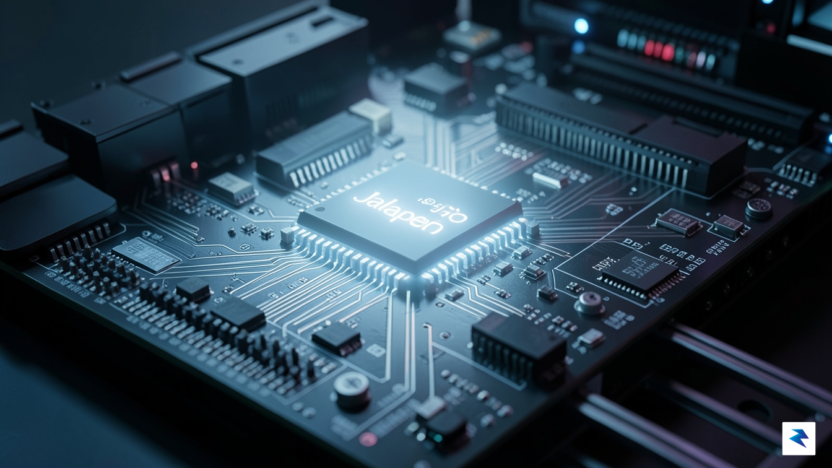
Introduction: The Shift Toward Vertical Integration

For over a decade, the artificial intelligence landscape has been defined by a clear division of labor: software researchers built the models, while hardware giants provided the engines to run them. However, OpenAI’s recent pivot toward developing its own custom silicon—internally codenamed “Jalapeño”—marks a definitive end to that era. This move signals a profound transition from being a software-focused research powerhouse to becoming a vertically integrated infrastructure titan. By taking control of the physical architecture that powers its neural networks, OpenAI is no longer content to simply optimize its algorithms for off-the-shelf hardware; it is now architecting the very foundation of its future computing capabilities.
The decision to enter the chip-making arena does not happen in a vacuum. Industry leaders like Google, Amazon, and Microsoft have already laid the groundwork for this transition, demonstrating that once a company achieves a certain scale of AI deployment, relying exclusively on third-party providers becomes a strategic bottleneck. For OpenAI, the shift is an urgent response to the skyrocketing costs and supply chain constraints associated with high-end GPUs. As the complexity of large language models continues to grow exponentially, the limitations of general-purpose hardware become increasingly apparent. By designing chips specifically tailored for the unique mathematical demands of transformer-based architectures, the company aims to achieve levels of energy efficiency and computational throughput that traditional hardware simply cannot match.

This pivot toward full-stack dominance is perhaps the most significant structural change in the company’s history. It suggests that the bottleneck to true artificial general intelligence is no longer just a matter of parameter count or data availability, but a fundamental hardware challenge. When a software company starts soldering its own circuits, it implies that the future of competitive advantage will be won by those who can best harmonize the relationship between code and silicon. This strategic shift will likely force every other major player in the AI ecosystem to re-evaluate their reliance on commodity hardware, as OpenAI effectively seeks to commoditize the very chips that once held them hostage.
The leap into custom silicon represents a strategic transition from renting the future of computing to owning the infrastructure that defines it.
Ultimately, the emergence of the Jalapeño project is a bold declaration of independence. It transforms the hardware layer from a passive variable into an active tool, allowing OpenAI to iterate on its models and its physical infrastructure in lockstep. As we watch this evolution unfold, it is clear that we are witnessing the birth of a new breed of AI entity—one that operates not just in the cloud, but deep within the silicon itself, effectively erasing the boundaries between the intelligence it creates and the hardware that sustains it.
Understanding Jalapeño: What OpenAI’s Custom Silicon Actually Is
To understand why OpenAI is venturing into the world of custom silicon with a project codenamed “Jalapeño,” one must first distinguish between the two fundamental phases of artificial intelligence: training and inference. Most of the hardware currently dominating the market, such as the high-end GPUs produced by Nvidia, are designed as “brute-force” engines. These chips are built to handle the massive, complex mathematical heavy lifting required to “train” a neural network from scratch, a process that involves processing petabytes of data to teach a model how to reason. In contrast, Jalapeño is being engineered with a laser focus on the inference stage—the moment when a trained model actually interacts with a user, processes a prompt, and generates a real-time response.
The design philosophy behind this custom silicon reflects a shift from general-purpose utility to specialized performance. While a traditional GPU is a jack-of-all-trades that can render 3D graphics, perform scientific simulations, or mine cryptocurrency, Jalapeño is being architected specifically to run the transformer architectures that power models like GPT-4. By stripping away the unnecessary circuitry required for general-purpose computing, OpenAI can theoretically create a chip that is significantly more efficient at the specific matrix multiplications required for natural language processing. This efficiency translates directly into lower latency, meaning the AI feels faster and more responsive to the end user.
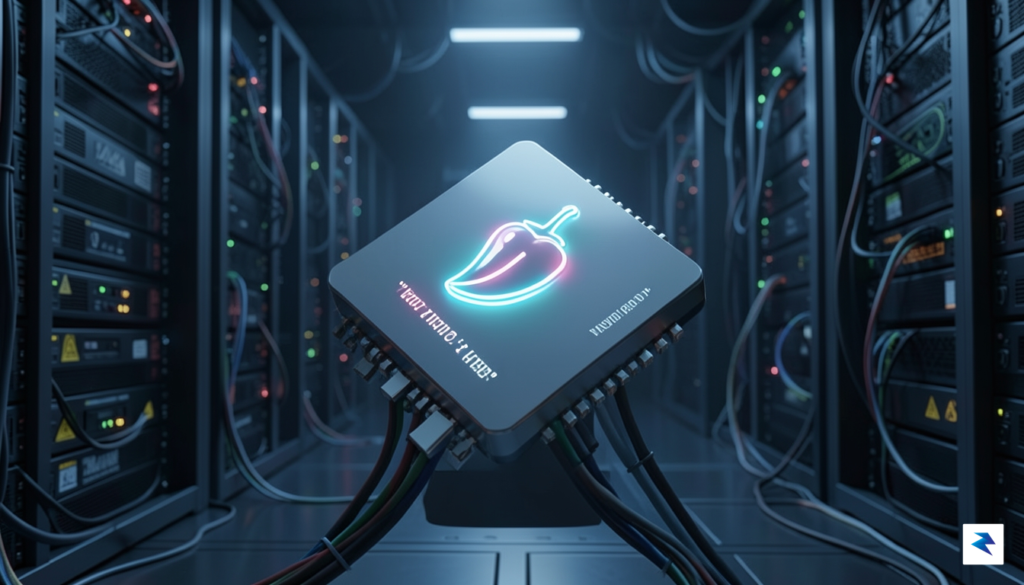
Beyond simple speed, power efficiency is perhaps the most critical driver for this hardware pivot. Running a massive language model for millions of users simultaneously consumes staggering amounts of electricity, leading to astronomical operating costs and significant thermal challenges. Jalapeño aims to change the economics of AI deployment by maximizing the number of tokens generated per watt of power consumed. Because inference happens constantly—every time someone asks a chatbot a question—even marginal improvements in power efficiency yield massive cumulative savings when scaled across OpenAI’s global server infrastructure.
The shift toward inference-specific silicon represents a transition from the “research phase” of AI, where creating models is the priority, to the “utility phase,” where delivering those models at scale is the defining challenge of the industry.
Ultimately, this approach signifies a departure from relying solely on off-the-shelf components that are constrained by the needs of the wider tech market. By controlling the hardware stack, OpenAI is effectively creating a symbiotic relationship between their software models and the physical chips that run them. This vertical integration allows them to optimize the instruction sets and memory bandwidth specifically for their own algorithms, potentially creating a performance gap that standard, general-market hardware simply cannot bridge. As the demand for AI grows, Jalapeño could become the backbone that makes ubiquitous, high-speed AI interactions both affordable and sustainable for the long term.
The Strategic Goal: Breaking the Nvidia Dependency

For OpenAI, the current state of the artificial intelligence industry is defined by an uncomfortable reality: they are essentially tenants in a house built by Nvidia. While the H100 and the emerging Blackwell architectures have provided the essential horsepower to train massive models like GPT-4, this reliance comes at a steep price, often referred to in industry circles as the “Nvidia Tax.” By paying massive premiums for limited hardware supply, OpenAI is effectively funneling a significant portion of its capital back into a single vendor’s ecosystem. This financial drain is not sustainable for a company aiming to scale infrastructure toward artificial general intelligence, as it limits their ability to allocate resources toward research, talent acquisition, and energy infrastructure.
Beyond the immediate financial impact, the reliance on a single hardware provider represents a profound strategic vulnerability. When one company controls the bottleneck of the entire AI supply chain, any disruption—whether due to geopolitical tensions, manufacturing defects, or logistical delays—could bring OpenAI’s development pipeline to a grinding halt. By diversifying their hardware strategy and investing in custom silicon, OpenAI is effectively purchasing an insurance policy against these supply chain shocks. Owning the hardware stack allows the organization to optimize its own proprietary software directly for the metal, creating a specialized synergy that off-the-shelf, general-purpose chips simply cannot replicate.

Furthermore, custom silicon serves as a critical piece of leverage in broader corporate negotiations. As it stands, cloud providers and hardware manufacturers hold considerable power because they control the scarce resources that AI labs desperately need. By developing their own chips, OpenAI signals to the market that they are no longer a captive audience. This shift fundamentally alters the power dynamic: when a major player like OpenAI demonstrates the capability to move their workloads to in-house silicon, it forces existing partners to remain competitive on both pricing and availability. It essentially transforms their position from one of desperate dependency to one of strategic optionality.
“In the high-stakes world of AI development, controlling the hardware is no longer just an efficiency play; it is an existential necessity for maintaining independence and long-term economic sustainability.”
Ultimately, the transition toward custom chips is about reclaiming agency over the future of compute. While Nvidia will undoubtedly remain a crucial partner for years to come, OpenAI’s pivot toward building its own silicon stack is a calculated move to insulate itself from market volatility. By vertically integrating their operations, they are not only solving for the current scarcity of high-end GPUs but are also preparing for a future where the most advanced AI models are defined by the seamless fusion of specialized code and bespoke, high-performance hardware.
Economic Realities: Scale, Cost, and the Infrastructure Gamble

While the allure of designing a custom chip for AI is strong, promising tailored performance and efficiency, the journey from concept to market is fraught with immense financial and logistical challenges. Developing the blueprints for a specialized processor, while complex, pales in comparison to the multi-billion dollar hurdle of manufacturing and deploying it at scale. This isn’t merely about creating a superior piece of silicon; it’s about building an entire infrastructure ecosystem, from fabrication lines to specialized data centers, all demanding a colossal upfront capital expenditure that could make or break even the most well-funded tech giants.
The very foundation of modern computing, often associated with Moore’s Law, now presents its own economic paradox. While chip density continues to increase, the cost to achieve these advancements has skyrocketed. Fabricating chips at the cutting edge, utilizing technologies like Extreme Ultraviolet (EUV) lithography, involves astronomical investments in machinery and processes. Each new generation of chip design requires increasingly expensive mask sets and R&D, making it an economically viable proposition only for products that can guarantee massive production volumes. Consequently, the initial investment to develop and produce even a single generation of custom silicon has become a staggering barrier to entry.
For OpenAI, the fundamental economic reality boils down to achieving unprecedented economies of scale in hardware. To justify the monumental financial outlay for developing and manufacturing their custom chips, they must produce them in quantities large enough to render their bespoke hardware cheaper per inference than renting compute power from established cloud providers like Amazon Web Services, Microsoft Azure, or Google Cloud Platform. This isn’t a small feat; it means not just building a few thousand specialized processors, but potentially millions, and integrating them seamlessly into their operational pipeline. The entire gambit hinges on whether their custom solution can deliver a superior cost-performance ratio at an industrial scale.
The path to achieving this scale is paved with potential pitfalls, starting with the inherent complexities and fragility of the global semiconductor supply chain. Manufacturing delays are a perpetual concern, exacerbated by geopolitical tensions and the sheer lead times required to secure capacity at advanced foundries. Any hiccup in production, whether due to material shortages, equipment breakdowns, or unforeseen technical issues, can ripple through the entire project timeline, pushing back deployment dates and significantly escalating costs. These delays not only impact the immediate bottom line but can also jeopardize market timing, potentially eroding any competitive advantage gained from custom silicon.
Beyond manufacturing, the challenges extend to the operational realm. A powerful custom chip is only as effective as the software stack that runs on it. Developing robust compilers, drivers, and AI frameworks specifically optimized for new, proprietary hardware is a colossal undertaking that demands significant engineering talent and resources. Furthermore, the semiconductor industry is fiercely competitive for top-tier talent, from chip architects to verification engineers and systems integrators. The high cost of attracting and retaining these specialized professionals adds another substantial layer to the operational expenditure, making the talent acquisition battle as critical as the silicon design itself.
Ultimately, OpenAI’s foray into custom silicon is an immense infrastructure gamble. It necessitates not just the development of groundbreaking chips but also the construction and maintenance of a vast, specialized data center footprint, complete with advanced cooling systems and immense power requirements. The long-term success of this ambitious endeavor will depend entirely on their ability to overcome these multi-faceted economic and operational hurdles, achieving a level of scale and efficiency that allows them to truly outcompete the established cloud giants on both performance and cost. The stakes are incredibly high, transforming what seems like a technical pursuit into a profound test of economic viability and strategic execution.
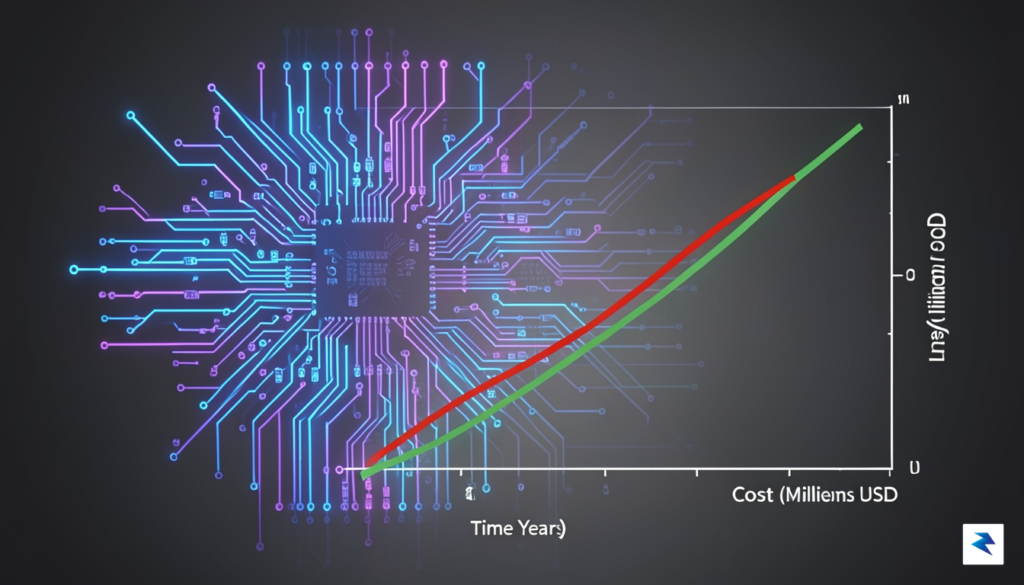
The Future of AI Inference and Data Center Efficiency

The pivot toward custom silicon represents a fundamental shift in how we approach the thermodynamics of intelligence. For years, the AI industry has relied on general-purpose GPUs, which, while powerful, are not inherently optimized for the specific mathematical patterns required by transformer-based models. By designing chips like Jalapeño, OpenAI is engaging in a radical form of hardware-software co-design, where the architecture of the chip is tailored precisely to the way neural networks process data. This synergy allows for a significant reduction in “data movement,” the energy-intensive process of shuffling information between memory and processor. When the hardware speaks the same language as the software, the resulting efficiency gains aren’t just incremental; they effectively lower the energy cost per inference, making high-performance AI sustainable in the long run.

Beyond the balance sheet, this evolution is a critical response to the escalating environmental footprint of large-scale data centers. As AI models grow in parameter count and complexity, their electricity demands have begun to strain regional power grids, raising urgent questions about the environmental viability of scaling generative AI. Custom chips mitigate these demands by maximizing the “work done per watt,” essentially allowing OpenAI to achieve greater computational output without a proportional increase in power consumption. This efficiency is the key to unlocking the next generation of AI capabilities, as it provides the headroom to run more complex, sophisticated models that were previously too energy-prohibitive to deploy at scale.
True progress in artificial intelligence will not be measured solely by model size, but by the efficiency with which we can bring that intelligence to the world.
Looking toward the horizon, this dedicated hardware infrastructure will likely pave the way for features that are currently tethered to the limitations of existing compute. With more efficient inference, we can expect a shift from centralized, cloud-heavy processing toward more responsive, real-time AI applications that feel instantaneous. Enhanced efficiency allows for the integration of more multimodal capabilities—such as live video analysis, high-fidelity audio synthesis, and complex reasoning—directly into everyday workflows without the latency or exorbitant costs currently associated with such tasks. By mastering the silicon layer, OpenAI is effectively building the foundation for an AI-native ecosystem where high-capacity intelligence is no longer a scarce, expensive resource, but a ubiquitous utility.
Conclusion: What This Means for the AI Landscape

OpenAI’s transition into designing its own silicon represents a definitive pivot from being a software-first entity to a vertically integrated powerhouse. By moving beyond the role of a mere software tenant on third-party hardware, OpenAI is signaling that the modern AI business model can no longer rely on general-purpose infrastructure. This shift mirrors the historical evolution of tech giants like Apple, which found that true product differentiation only occurs when hardware and software are developed in lockstep. Whether this specific project, internally codenamed Jalapeño, eventually becomes the gold standard for large-scale training or remains a specialized instrument, it undeniably alters the competitive geometry of the entire industry.
The risks associated with this foray are substantial, as the semiconductor industry is notoriously capital-intensive and fraught with supply chain complexities. However, the potential rewards for OpenAI—specifically regarding cost optimization and performance efficiency—far outweigh the initial R&D expenditure. By tailoring chips to the specific mathematical demands of their proprietary models, OpenAI can potentially slash their reliance on expensive, generic GPUs that were never truly optimized for the unique constraints of Transformer architectures. This transition essentially allows the company to reclaim control over its own destiny, effectively insulating its roadmap from the fluctuations and availability constraints of the broader hardware market.

The Competitive Ripple Effect
For rivals such as Anthropic, Google, and Meta, this development serves as a wake-up call that the AI arms race has firmly moved into the data center infrastructure. Google has long maintained an advantage with its Tensor Processing Units (TPUs), and Meta has been aggressive in its open-source hardware initiatives, but OpenAI’s entry forces a new level of scrutiny on how these companies manage their compute stack. If custom silicon becomes the prerequisite for maintaining state-of-the-art performance, smaller AI labs that lack the capital to design their own hardware may find themselves at a structural disadvantage. Consequently, the industry is likely to witness a period of intense consolidation and strategic partnerships, as firms scramble to secure both the talent and the manufacturing capacity necessary to compete at this new, hardware-centric level.
The true measure of this strategy lies not in raw benchmark scores, but in the ability to decouple AI innovation from the hardware monopolies that currently dictate the speed and scale of progress.
Ultimately, this move marks a permanent shift in how the tech industry perceives the “AI stack.” As we look toward the future, the boundary between software developers and hardware engineers will continue to blur, necessitating a new generation of talent that understands the deep interplay between algorithmic efficiency and physical transistor layout. OpenAI is betting that the path to Artificial General Intelligence is paved not just with better training data, but with a foundational architecture that is as bespoke as the intelligence it aims to cultivate. As these chips begin to populate data centers, they will redefine the economics of AI, likely accelerating the pace of deployment for complex models that were previously deemed too expensive to run at scale.