Adobe Acquires Topaz Labs: What This Means for Your Creative Workflow
The Strategic Implications of the Adobe-Topaz Labs Merger The recent acquisition of Topaz Labs by Adobe marks a significant inflection point…


For years, the customer experience landscape has been dominated by generative AI—systems primarily designed to summarize conversations, draft email responses, or offer polite, conversational suggestions to human support staff. While these tools undoubtedly improved the efficiency of contact centers, they remained fundamentally passive. They were digital assistants that could talk, but they lacked the agency to actually do. We are now witnessing a profound shift as the industry moves toward agentic AI, a new paradigm where software transitions from providing information to executing complex, multi-step workflows without constant human oversight.
The core difference between traditional generative AI and its agentic successor lies in autonomy. A standard chatbot might explain a company’s refund policy to a frustrated user, but an agentic system is designed to navigate the backend CRM, verify the transaction, process the refund, and send a confirmation email—all while keeping the user informed in real time. Platforms like Salesforce, Zoom, and Dialpad are at the forefront of this evolution, embedding these capabilities directly into the contact center workflow. Instead of merely surfacing a knowledge base article for a human agent to read, these autonomous agents are granted the permission and the reasoning capability to interact with internal business applications, effectively becoming digital employees rather than just sophisticated search bars.

This shift represents a fundamental change in the value proposition for enterprises. When AI moves from “assisting” to “acting,” the burden of repetitive, low-value administrative tasks is lifted from human agents entirely. Rather than spending minutes toggling between multiple browser tabs to update a client’s address or check the status of a shipping order, human agents can focus on the complex, empathetic, and nuanced aspects of customer relationship management that only people can handle. By delegating the “heavy lifting” of data entry and system reconciliation to autonomous agents, companies can significantly reduce handle times and minimize human error.
The true power of agentic AI isn’t just in better writing; it is in the ability to bridge the gap between intent and action, turning a customer’s request into a resolved outcome without a human ever having to click ‘submit.’
As these technologies mature, the goal is to create a seamless ecosystem where the AI understands the context of a customer’s journey across disparate platforms. Whether it is a voice interaction managed by Dialpad or a digital engagement supported by Salesforce, the agentic model ensures that the AI remembers past interactions, anticipates future needs, and proactively initiates actions. We are moving toward a future where the friction of the “customer support ticket” is eliminated, replaced by proactive, automated resolution that operates at the speed of modern digital commerce.

Transitioning from traditional, scripted chatbots to truly agentic AI is not a simple “plug-and-play” software update; it is a fundamental shift in how enterprise software functions. To succeed, organizations must move beyond surface-level automation and build a sophisticated technical architecture capable of autonomous decision-making. The core of this transition lies in the ability to access and interpret real-time data from across the enterprise. Without a live feed of customer history, inventory levels, and internal policy documentation, an AI agent is effectively blind, unable to provide the personalized, accurate resolutions that modern consumers demand.

A critical requirement for this integration is the adoption of an API-first architecture. By ensuring that all legacy systems and modern cloud platforms communicate through standardized, secure APIs, businesses can create a modular environment where AI agents can execute tasks rather than just retrieving information. When an agent is empowered by these APIs, it can move beyond simply summarizing a support ticket to actively updating a Salesforce record, processing a refund via a payment gateway, or triggering a logistics update in real-time. This capability turns the AI from a passive knowledge repository into an active participant in the enterprise workflow.
Success in the agentic era is defined by the depth of integration; an AI is only as capable as the data and operational tools it is granted permission to access.
Furthermore, the success of these deployments hinges on the concept of context-awareness. Unlike standard language models that operate in a vacuum, agentic AI must maintain a “memory” of the entire customer journey, spanning multiple channels and past interactions. Enterprise platforms are currently standardizing these capabilities by building robust middleware layers that synthesize disparate data points into a cohesive narrative for the AI. This ensures that when a customer reaches out, the agent understands the nuances of their situation, recognizes the urgency of their request, and anticipates the next logical step in the process. By prioritizing these strategic pillars—real-time data connectivity, API-driven execution, and deep contextual memory—organizations can finally move past the limitations of rigid chatbots and embrace a future of intelligent, autonomous customer service.

As AI agents transition from passive information providers to active participants in business operations, the traditional boundaries of software interaction are being rewritten. When an AI is granted the autonomy to execute sensitive tasks—such as initiating financial refunds, modifying subscription tiers, or syncing CRM records—the risk profile shifts from mere data leakage to potential operational disruption. To mitigate these dangers, IT leaders must prioritize the “human-in-the-loop” framework for high-stakes actions. By requiring a human supervisor to verify complex or costly transactions before they are finalized, organizations can maintain a critical layer of oversight that prevents autonomous workflows from spiraling into unintended outcomes.

Data integrity remains the cornerstone of this new operational paradigm. Because autonomous agents rely heavily on the quality and accuracy of the underlying data, robust encryption and strict access controls are no longer optional—they are foundational. Organizations must ensure that these agents operate within a “least privilege” environment, meaning they only access the specific datasets required to perform their current task. Furthermore, implementing rigorous data validation protocols is essential to prevent “hallucinations” from polluting live records. If an AI agent incorrectly interprets customer sentiment or misidentifies a billing anomaly, the resulting error could propagate through the entire ecosystem, causing significant downstream damage to both the customer relationship and the internal database.
Effective governance is not about stifling innovation; it is about building a framework of trust that allows AI agents to operate safely within the complex ecosystem of modern enterprise software.
Compliance and regulatory adherence further complicate the adoption of agentic AI. As these agents interact with customer records, they often fall under the strict scrutiny of GDPR, CCPA, and other industry-specific privacy mandates. IT departments are now tasked with creating comprehensive audit trails that document exactly why an agent took a specific action, which data points it referenced, and how it reached its decision. Establishing these guardrails requires a proactive approach to AI governance, including:
Ultimately, the goal is to create a symbiotic relationship between human intelligence and machine autonomy. By codifying strict operational guardrails and maintaining transparency in how agents interact with sensitive information, companies can harness the efficiency of automation without sacrificing the security and reliability that customers demand. Ensuring that AI agents act as reliable assistants rather than uncontrollable variables will be the deciding factor for businesses looking to gain a competitive edge in the era of intelligent customer experience.

The integration of autonomous agents into the contact center environment marks a profound departure from the traditional, script-heavy model of customer service. As AI systems increasingly handle routine inquiries—such as password resets, order tracking, and basic account updates—the human workforce is being liberated from the monotony of repetitive, high-volume ticket resolution. This transition does not signal the end of the human agent; rather, it demands a radical evolution in their professional identity. Instead of acting as front-line processors, employees are transitioning into roles as “AI orchestrators” and complex problem solvers who manage nuanced escalations that require genuine emotional intelligence, ethical judgment, and critical thinking.

Consequently, job descriptions within the customer experience sector are undergoing a significant transformation. Organizations are prioritizing candidates who possess strong analytical skills and the technical literacy to supervise, audit, and refine the outputs generated by autonomous agents. This shift necessitates a comprehensive upskilling initiative, as agents must now be trained to navigate sophisticated AI interfaces, interpret real-time data analytics, and provide high-level technical oversight. The ability to empathize with a frustrated customer while simultaneously leveraging AI tools to pull up deep-seated account history is becoming the new gold standard for excellence in the modern contact center.
The most successful companies will be those that treat AI as a collaborator that enhances human capability, rather than a replacement for human connection.
Managing this cultural shift requires more than just technical training; it demands a robust change management strategy to maintain employee morale and engagement. When employees fear that automation is a precursor to displacement, productivity and job satisfaction inevitably suffer. Leadership teams must frame the rise of agentic AI as an opportunity for career advancement, emphasizing that the elimination of “drudge work” allows agents to focus on the human-centric aspects of service that AI cannot replicate. By fostering a culture of continuous learning and transparently communicating how AI augments their roles, companies can transform potential anxiety into a sense of professional empowerment.
Ultimately, the future of the contact center lies in a symbiotic relationship between human intuition and machine efficiency. As the workforce adapts to this new reality, the value of the human agent will be measured not by how many tickets they close in an hour, but by the quality of the resolutions they provide in the face of unique, high-stakes challenges. By investing in the development of these refined human skills, businesses ensure that they are not just automating for the sake of efficiency, but elevating the entire customer journey to a more personalized and effective standard.
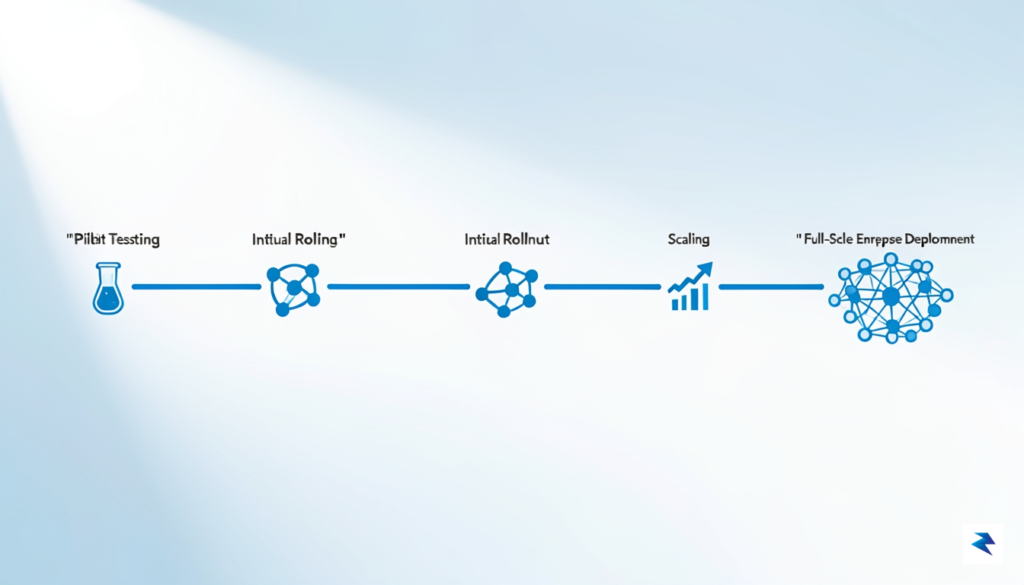
A truly successful transition to agentic AI within customer experience operations demands a strategic, methodical, and phased approach. Rushing into unvetted adoption, while tempting for its perceived speed, often introduces unforeseen risks and can undermine the very benefits an organization seeks to achieve. Instead, IT leaders must prioritize meticulous planning, focusing intensely on risk mitigation and demonstrating tangible, measurable return on investment from the outset. This deliberate journey ensures that the transformative power of agentic AI is harnessed responsibly, building confidence among stakeholders and laying a solid foundation for sustainable growth and innovation within the CX landscape.
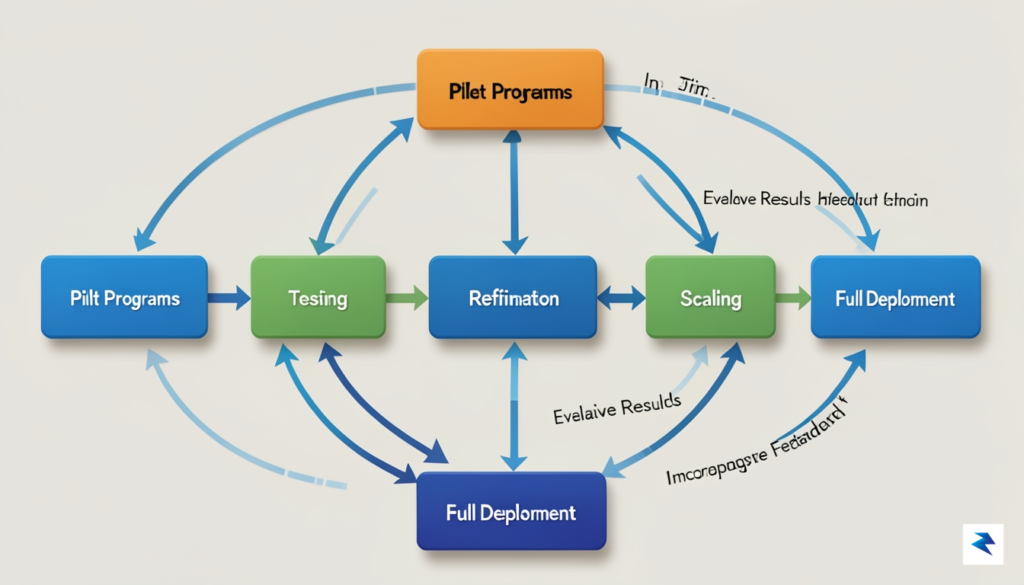
The initial step on this roadmap involves carefully identifying low-risk, high-impact use cases suitable for pilot programs. These are scenarios where AI can provide immediate value without jeopardizing critical customer interactions or requiring extensive re-engineering of existing workflows. Consider automating responses to frequently asked questions (FAQs), assisting with basic account inquiries, or intelligently routing complex customer requests to the most appropriate human agent. Such targeted deployments allow teams to test the AI’s capabilities in a controlled environment, gather real-world data, and refine the models without the pressure of enterprise-wide disruption, thereby proving the technology’s efficacy incrementally.
Establishing clear, quantifiable Key Performance Indicators (KPIs) is paramount to objectively measure the success of your agentic AI initiatives. Beyond general efficiency metrics, these KPIs should directly align with your overarching customer experience and business objectives. Metrics like improved first-contact resolution rates, reduced average handling time for agents, enhanced customer satisfaction (CSAT) scores specifically for AI-assisted interactions, and a quantifiable reduction in operational costs are essential. Regularly tracking these indicators against pre-defined benchmarks will provide invaluable insights into the AI’s performance, highlighting areas of strength and identifying opportunities for further optimization and refinement.
An agentic AI system is not a static deployment; it thrives on continuous learning and adaptation, which necessitates a robust and ongoing feedback loop. This involves actively soliciting input from multiple sources: the human agents who work alongside the AI, the customers interacting with it, and the performance logs generated by the system itself. Implementing mechanisms for agents to flag incorrect AI responses or suggest improvements, coupled with post-interaction customer surveys and sentiment analysis, creates a rich data stream. This invaluable feedback, processed by cross-functional teams comprising IT, CX, and product specialists, fuels iterative improvements, ensuring the AI models evolve in accuracy, helpfulness, and alignment with business goals.
While the allure of full automation is strong, a critical best practice involves conscientiously avoiding ‘over-automation’ – the tendency to push AI into scenarios where human empathy, nuanced understanding, or complex problem-solving are indispensable. The true power of agentic AI often lies in its ability to augment human capabilities, not entirely replace them, especially in emotionally charged or
You must be logged in to post a comment.