
CFTC Finalizes Permanent Ban Against Former Celsius CEO Alex Mashinsky
The End of the Road: CFTC Finalizes Mashinsky Ban The legal landscape for former Celsius Network CEO Alex Mashinsky has shifted into a…
History has etched Alan Turing’s name into the collective consciousness as the primary architect of the Allied victory against Nazi Germany. We celebrate him as the titan of Bletchley Park, the man whose logical brilliance dismantled the formidable Enigma machine and accelerated the end of the Second World War. Yet, this singular, monumental achievement has cast a long, distorting shadow over the rest of his intellectual legacy. While schoolbooks and blockbuster films fixate on the rhythmic ticking of rotors and the desperate race to decrypt enemy signals, they frequently leave the most compelling chapter of his post-war life in total darkness. As the dust of 1945 settled, Turing did not retreat into a quiet retirement; instead, he pivoted toward a new, daunting frontier: the absolute security of human speech.
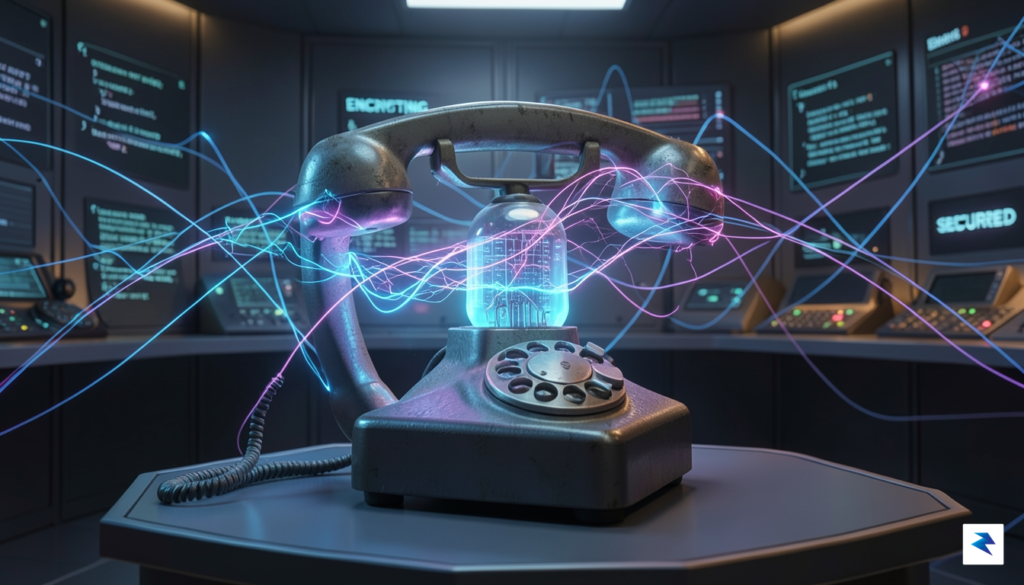
Following his departure from the high-pressure environment of the wartime codebreaking center, Turing transitioned to the less heralded confines of the Hanslope Park research facility. It was here, far removed from the public accolades of the war effort, that he poured his remaining creative energies into a project codenamed “Delilah.” Unlike the abstract mathematical puzzles that defined his youth, Delilah was a tangible, mechanical obsession—a speech-scrambling device designed to provide secure, impenetrable telephonic communication. In an era where the nascent Cold War threatened to turn every telephone line into a potential conduit for espionage, Turing envisioned a system that could translate the human voice into a digital cipher, ensuring that only the intended recipient could reconstruct the original signal.

The Delilah project serves as a bridge between the analog world of the past and the digital future Turing helped conceive. While Enigma was about unlocking the secrets of the enemy, Delilah was about building a sanctuary for our own words. It was an ambitious undertaking that demanded a deep understanding of pulse-code modulation and the limitations of 1940s vacuum tube technology. Despite its immense technical significance, Delilah remained largely forgotten, eclipsed by the sheer gravity of Turing’s wartime legend. By examining this overlooked endeavor, we uncover a more nuanced portrait of a man who was not merely a solver of ciphers, but a prophet of the information age, constantly searching for ways to shield the integrity of human communication in an increasingly precarious world.
Delilah was not just a machine; it was an early articulation of the digital privacy standards that define our modern existence, proof that Turing’s mind was occupied by the future long after the war had ended.
To understand Delilah is to understand the true trajectory of Turing’s genius. It represents the crucial shift from the tactical requirements of a battlefield to the strategic necessities of a global, networked society. As we peel back the layers of this forgotten project, we move beyond the simplified caricature of the “war hero” and encounter the reality of a pioneer struggling with the limitations of his time to build the foundations of secure digital transmission. Through the lens of this obscure research project, we can finally appreciate the breadth of an intellect that was never satisfied with past victories, always reaching toward the next great challenge.
In the aftermath of the Second World War, as the geopolitical landscape rapidly shifted into the tense standoff of the Cold War, the imperative for secure communication escalated dramatically. Nations found themselves locked in an ideological struggle where intelligence and strategic advantage were paramount. While cryptographers had made monumental strides during the war, particularly in breaking enemy codes, the focus largely remained on securing written text, such as teleprinter messages. High-level diplomatic and military conversations, however, often occurred vocally, and these direct, real-time exchanges presented a unique and pressing vulnerability that conventional text-based encryption methods simply could not address.
It was against this backdrop that Alan Turing, a mind celebrated for his foundational work in computing and code-breaking, turned his unique genius towards an entirely different challenge. Unlike many of his peers, who were meticulously refining existing methods for text encryption, Turing looked beyond the typed word to the human voice itself. He recognized that while teleprinter systems offered a degree of security, the immediacy and nuance of spoken communication made it an indispensable, yet dangerously exposed, conduit for critical information. Turing envisioned a system that could safeguard these vital vocal exchanges, moving beyond mere character substitution to a more profound transformation of the very waveform of speech.
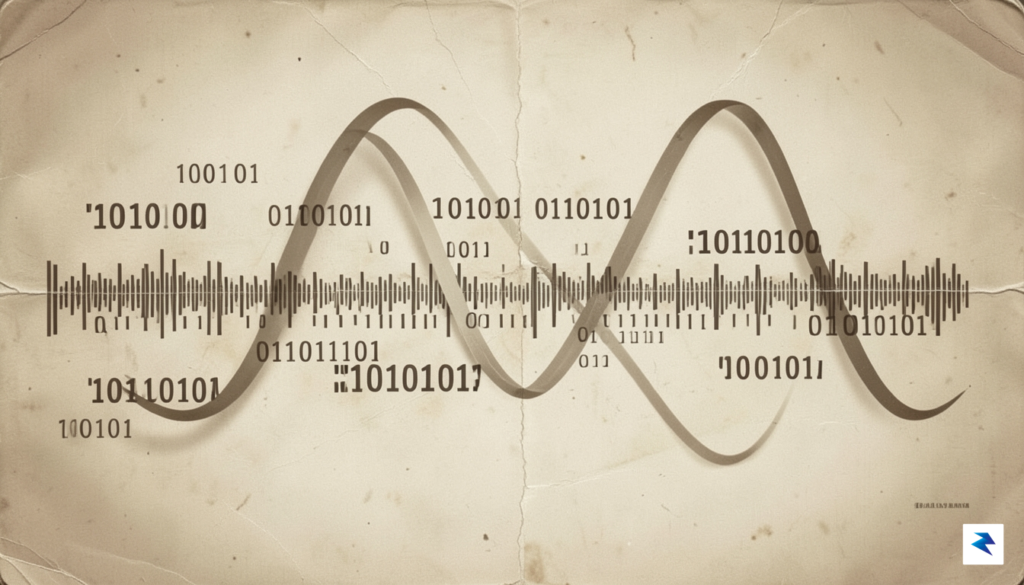
This bold vision gave birth to what would become known as the “Delilah” project. Delilah was not conceived merely as an incremental improvement in secure communications; it was a fundamental experiment, a deep dive into the theoretical and practical challenges of securing audio information against interception. Turing’s ambition was to create a device that could scramble speech in such a complex way that it would be utterly unintelligible to any unauthorized listener, yet perfectly reconstructable for the intended recipient. This involved pioneering work in signal processing, exploring how continuous analog signals could be manipulated in real-time, a concept far ahead of its time and a precursor to many modern digital encryption techniques.
Turing pursued this groundbreaking work at Hanslope Park, a highly secretive outpost of GCHQ, where he collaborated with a dedicated team of engineers and technicians. The environment was one of intense intellectual curiosity and practical problem-solving, perfectly suited to Turing’s innovative spirit. The primary challenge they faced was immense: transforming the complex, continuous waveform of human speech into an unrecognisable jumble, then reversing the process, all with the limited electronic components available in the late 1940s and early 1950s. This meant grappling with the intricacies of analog signal processing, including the development of sophisticated filters, modulators, and demodulators that could operate with precision and speed. The Delilah project, therefore, was not just about security; it was a testament to Turing’s relentless pursuit of fundamental scientific inquiry, pushing the boundaries of what was then technologically possible in the realm of electronic communication.
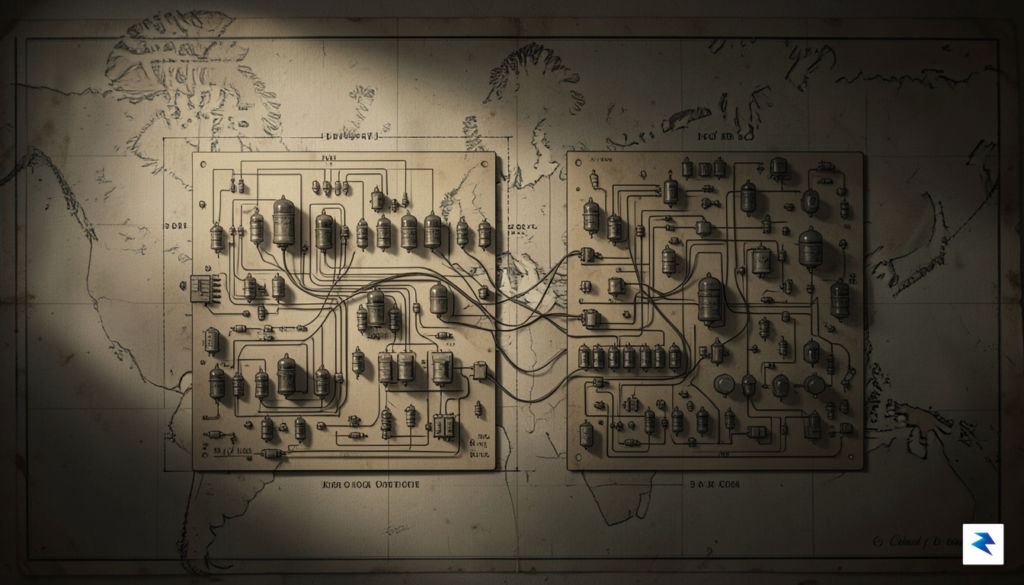
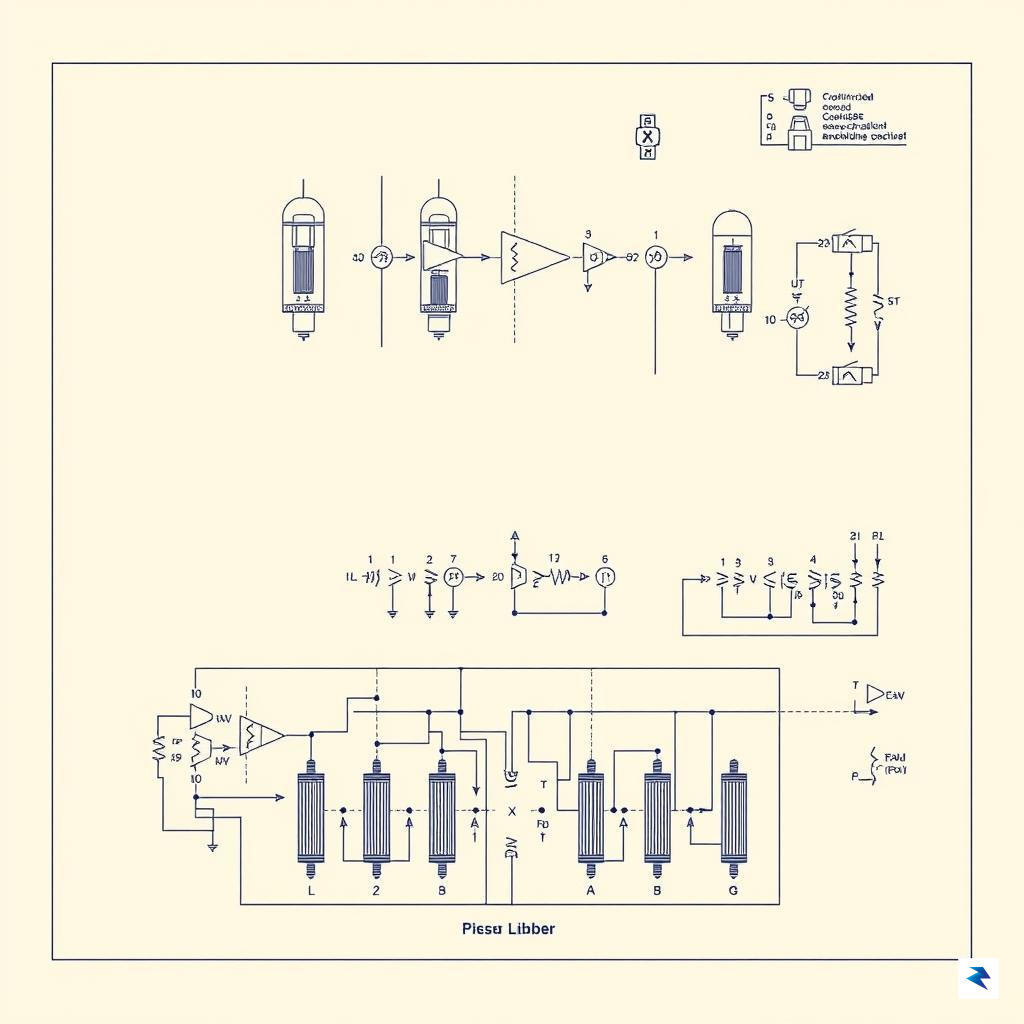
In the mid-1940s, the concept of securing voice communication was largely limited to simple inversion techniques—flipping the frequencies of a signal to make it sound like unintelligible warbling. Alan Turing’s Delilah project, however, approached the problem with a revolutionary perspective on non-linear signal processing. Instead of merely masking the audio, Delilah functioned by decomposing human speech into distinct, manageable fragments, which were then shuffled and reassembled according to a sophisticated, rotating key system. By treating the acoustic waveform as a mathematical variable rather than a static broadcast, Turing moved voice security into the realm of computational cryptography, effectively creating a prototype that was decades ahead of its contemporaries.
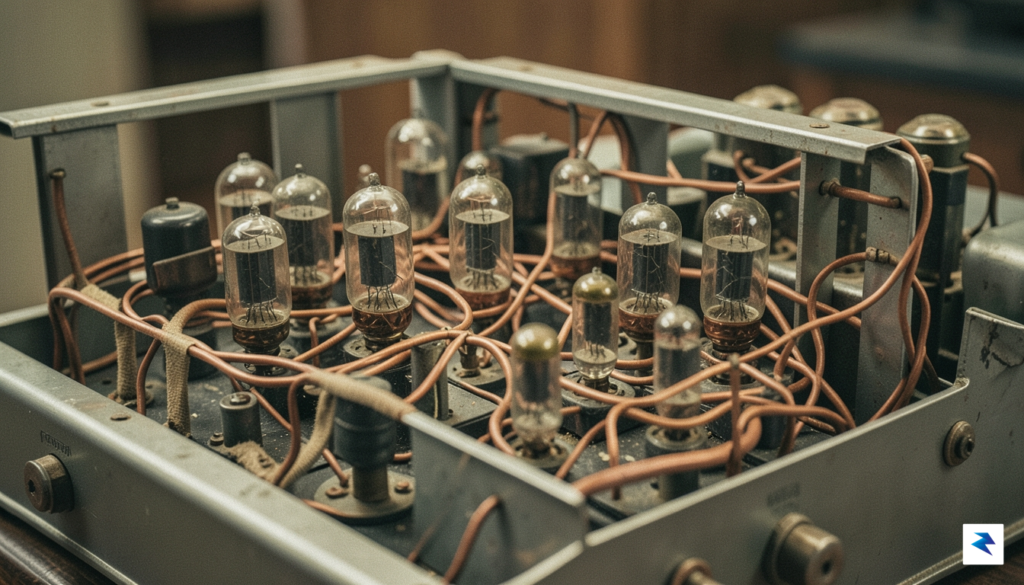
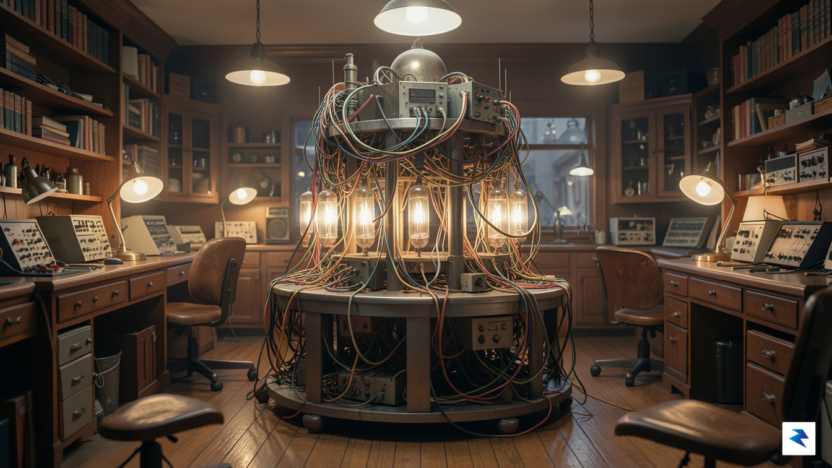
The hardware architecture required to execute such a complex task was a marvel of mid-century engineering, constrained by the physical limitations of the vacuum tube era. Delilah relied on an intricate array of these glowing glass tubes, which functioned as the logic gates and amplifiers for the signal processing chain. Crystal oscillators provided the necessary timing stability, ensuring that the shuffling of speech fragments remained perfectly synchronized between the transmitter and the receiver. Despite the inherent instability and bulk of these components—which generated significant heat and required constant calibration—Turing managed to orchestrate a high-speed dance of electronic pulses that would have been unthinkable for most engineers of the period.
At the heart of the system was a rotating key generation mechanism that elevated Delilah from a mere scrambler to a true cryptographic device. While other systems of the time used static or easily predictable patterns, Turing implemented a system where the sequence of fragmentation and reordering changed dynamically. This meant that even if an adversary intercepted the signal and possessed the hardware to process it, they would be thwarted by a constantly shifting mathematical cipher. The key was mathematically superior because it did not rely on the physical properties of the transmission line, but rather on the logical permutations of the data itself, creating a wall of complexity that was essentially impenetrable to the decryption methods available in the 1940s.
The genius of Delilah lay in its ability to treat sound as information, transforming the ephemeral nature of a human voice into a precise, randomized data stream that could only be reconstructed by a mirror-image machine possessing the correct cryptographic key.
Ultimately, the limitations of vacuum tube technology meant that Delilah remained a delicate, experimental giant rather than a mass-produced standard. The machine was notoriously difficult to tune and maintain, requiring a level of precision that strained the capabilities of early post-war manufacturing. Yet, the conceptual framework Turing developed proved that voice security could be achieved through digital-like logic long before the advent of the transistor. By successfully applying the principles of cryptanalysis to the chaos of audible speech, he laid the foundational logic for the secure telecommunications protocols that define our modern, interconnected world.

While Delilah represented a pinnacle of cryptographic innovation, its path to implementation was effectively blocked by a rigid and often insular British intelligence establishment. The post-war landscape at GCHQ was defined by a cautious, status-quo mentality that prioritized existing, familiar technology over the radical, vacuum-tube-driven complexity of Turing’s design. Turing, whose genius often operated at a theoretical velocity far beyond that of his contemporaries, frequently found himself at odds with the pragmatic, conservative military engineers who viewed his work as an unnecessary, if not outright dangerous, departure from established protocols. This friction was not merely academic; it was a fundamental clash of cultures between the abstract, visionary approach of the mathematician and the risk-averse, hardware-centric methodology of the intelligence bureaucracy.
The testing phases of the project served as the primary battleground for these conflicting ideologies. Although the system demonstrated a remarkable ability to secure voice communications—a feat that could have revolutionized signal intelligence in the early Cold War era—the internal reviews were plagued by skepticism regarding the reliability of such a complex machine in the field. Decision-makers were perpetually concerned with the maintenance requirements of the intricate circuitry and the potential for technical failure during critical operations. Rather than embracing the potential for a quantum leap in secure communications, the oversight committees focused on the logistical headaches that such a sophisticated device would inevitably impose upon military signal corps already stretched thin by post-war austerity and budget constraints.
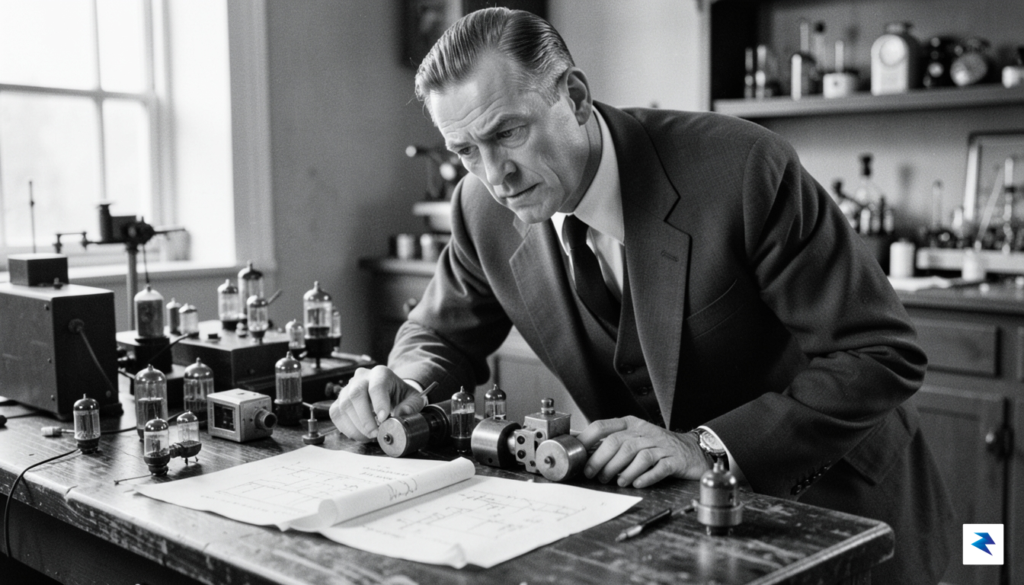
The tragedy of Delilah was not found in the machine itself, but in the institutional inability to reconcile visionary engineering with the crushing weight of administrative inertia.
Beyond the technical debates, there was a more insidious undercurrent of suspicion regarding Turing himself. In the years following his monumental contributions at Bletchley Park, the intelligence community’s relationship with Turing became increasingly strained. As his personal life and unconventional professional habits drew scrutiny, the willingness of senior officials to champion his projects diminished significantly. This lack of institutional support meant that whenever Delilah faced a technical hurdle or a funding shortfall, there was no high-level advocate to shield it from being quietly relegated to the back burner. Ultimately, the project was dismantled not because it was flawed, but because the machinery of the state was ill-equipped to integrate, support, or even understand the scope of the genius behind it. The shelving of Delilah serves as a sobering reminder of how institutional gatekeeping can stifle innovation, leaving transformative ideas to gather dust in the archives of history.
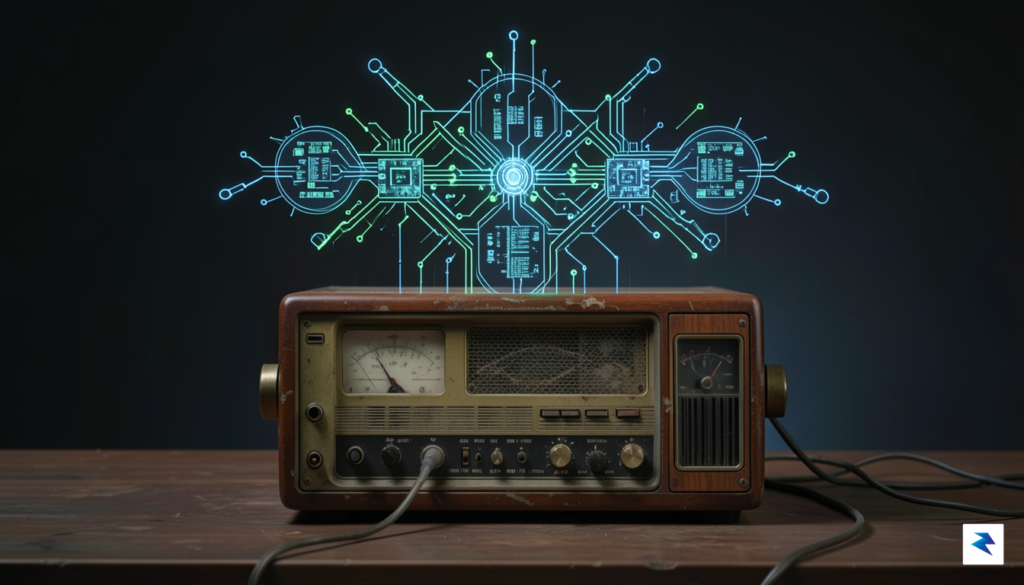
While the Delilah project was ultimately shelved and dismantled by the British government, its technical DNA survived as a quiet, foundational influence on the architecture of our modern digital world. At its core, Delilah was an ambitious attempt to secure voice communications through the application of information theory, a field that Turing helped pioneer. By experimenting with speech encryption through the inversion of frequency bands, Turing and his team were essentially prototyping the concepts of digital signal processing long before the hardware existed to handle such complex tasks at scale. Today, when we utilize secure VOIP services or encrypted messaging platforms, we are standing on the shoulders of these mid-century experiments, utilizing algorithms that mirror the fundamental logic of securing transient data streams against interception.

The importance of recovering the history of Delilah extends far beyond mere academic curiosity; it serves as a critical lens through which we can understand the rapid evolution of contemporary cybersecurity. For decades, the project remained a footnote in the shadow of Turing’s more famous work at Bletchley Park, leaving a gap in our collective understanding of post-war cryptography. Recent archival efforts, however, have breathed new life into the project’s documentation, revealing that the challenges Turing faced—such as balancing high-level security with the practicalities of real-time transmission—are identical to the hurdles faced by modern software engineers. By studying the limitations and breakthroughs of the Delilah prototype, current cryptographers can gain a deeper appreciation for the iterative nature of innovation, where today’s “impossible” security protocols are built upon the discarded experiments of yesterday.
The genius of Delilah was not found in its final deployment, but in its conceptual audacity—proving that voice could be treated as a mathematical puzzle rather than just an analog signal.
Understanding the legacy of this forgotten project highlights why historical recovery is essential for the future of technological development. When we look at the sophisticated, end-to-end encryption protocols that protect our personal data today, it becomes clear that they are the descendants of Turing’s visionary efforts to bridge the gap between abstract mathematics and tangible security hardware. The recent spotlight on the Delilah project reminds us that the quest for privacy is a continuous thread in history, one that requires constant refinement and a willingness to explore paths that may not yield immediate results. By acknowledging the debt modern digital communication owes to these early, clandestine trials, we better prepare ourselves to meet the next generation of cryptographic challenges with the same intellectual rigor and foresight that Turing once brought to his laboratory.

The Delilah project stands as a poignant testament to a mind that refused to be tethered by the constraints of its era or the shadow of its own wartime accolades. While history books often freeze Alan Turing in the moment of his triumph at Bletchley Park, the reality of his late career was a restless pursuit of innovation that reached far beyond the decryption of codes. Delilah was not merely an attempt to secure voice communication; it was an exploration into the frontiers of signal processing and digital logic at a time when the world was barely beginning to grasp the potential of such technology. By working in the relative obscurity of the post-war years, Turing demonstrated that his genius was not a singular event tied to a specific global crisis, but a persistent, forward-looking engine of discovery that remained active even as the social and political climate of Britain began to close in around him.
The tragedy of Delilah lies not in its eventual abandonment, but in the disconnect between Turing’s foresight and the institutional limitations of his time. He was a visionary operating in a landscape that still viewed his complex, abstract concepts with a mixture of confusion and indifference. Yet, the technical foundations he laid during this period—particularly regarding speech encryption and the conceptual architecture of secure transmission—foreshadowed the digital security protocols that underpin our modern world. Today, as we navigate an age of total connectivity, the DNA of Turing’s work in these quiet, forgotten workshops can be felt in the seamless encryption that protects our daily digital lives. He was, in many ways, an engineer building the infrastructure of the future before the present was ready to inhabit it.
The true measure of a scientific legacy is found not only in the machines that change the world overnight, but in the blueprints that challenge us to think differently about what is possible.
Ultimately, the story of this project serves as a crucial reminder of the inherent value in documenting the so-called “failed” or discarded ventures of history’s greatest thinkers. When we examine the endeavors that did not reach mass production or broad public acclaim, we often find the most raw and unfiltered expressions of intellectual curiosity. These projects humanize the architect, revealing a person who was willing to experiment, stumble, and pivot in the face of insurmountable technical and social obstacles. By reclaiming the narrative of Delilah, we do more than just fill a gap in the biography of a legend; we acknowledge that the most profound progress is often made in the shadows, fueled by the relentless, quiet determination of a mind that is always looking toward the horizon.
You must be logged in to post a comment.