NASA’s Bold New Mission: Saving the Swift Telescope Through Robotic Repair
The Aging Sentinel: Understanding the Swift Observatory's Decline Since its launch in 2004, the Neil Gehrels Swift Observatory has served…

The recent security incident at Tata Electronics has sent shockwaves through the global tech industry, serving as a jarring reminder that even the most meticulously guarded corporate secrets are only as secure as the weakest link in their supply chain. For years, Apple has cultivated a reputation for an almost impenetrable wall of secrecy surrounding its product development, yet this breach highlights a fundamental paradox in modern manufacturing. By outsourcing production to third-party partners to scale global operations, Apple effectively expands its attack surface, placing sensitive intellectual property into the hands of external entities whose internal security protocols may not always mirror the rigorous standards of Cupertino.
At the heart of the controversy are internal documents and visual assets related to future hardware designs, including early-stage materials for the rumored iPhone 18 Pro. These materials, which were intended to remain strictly confidential within the manufacturing ecosystem, found their way into the public domain through unauthorized channels. The exposure was not the result of a high-tech hack targeting Apple directly; rather, it stemmed from internal lapses within a partner facility. This underscores a critical vulnerability: when proprietary blueprints, component schematics, and prototype renders are distributed across a sprawling international network of vendors, the potential for human error, insider threats, or lax digital hygiene increases exponentially.

Supply chain security remains the most significant hurdle for companies that rely on global manufacturing to maintain their market dominance. While Apple enforces strict non-disclosure agreements and physical security measures—such as restricted access areas and surveillance—the sheer volume of personnel involved in the production process makes total containment an uphill battle. When a partner like Tata Electronics handles the assembly of high-value components, they are entrusted with the very DNA of future technology. If a single point in that chain fails to secure its digital infrastructure or fails to vet its internal workforce adequately, the resulting leak can undo months of strategic planning and marketing secrecy in a matter of seconds.
The breach at Tata Electronics demonstrates that intellectual property is no longer just a digital file; it is a physical asset that flows through an ecosystem of suppliers, each representing a potential point of failure in the broader security architecture.
Ultimately, this incident forces a difficult conversation regarding the balance between rapid innovation and total security. As Apple pushes forward with its next-generation devices, the company must decide whether to tighten its grip on its third-party partners or invest even more heavily in oversight and automated security monitoring. Until these manufacturing hubs can match the rigid security culture of Apple’s own headquarters, the risk of sensitive product information leaking prematurely will persist. The industry is now watching closely to see how this breach impacts future manufacturing contracts and whether it will trigger a paradigm shift in how tech giants audit their global supply chain partners.
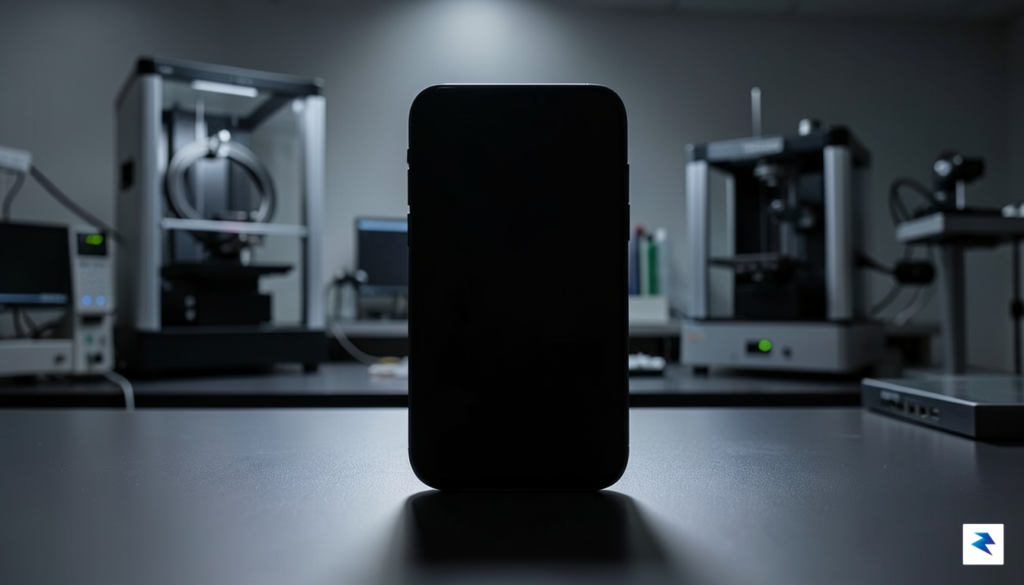
The sudden disappearance of leaked footage involving alleged iPhone 18 Pro drop tests acts as a stark reminder of the extreme measures Apple employs to protect its long-term product roadmap. While consumers often view these clips as mere entertainment or a glimpse into the future, for the Cupertino-based tech giant, they represent a catastrophic failure of the proprietary innovation cycle. By experimenting with hardware designs years in advance, Apple is able to refine material durability, structural integrity, and ergonomic functionality long before a device enters mass production. When these early-stage prototypes surface online, it compromises the company’s ability to iterate in secrecy, effectively stripping away the element of surprise that has defined its marketing strategy for decades.
Prototyping at this level is not simply about aesthetics; it is a rigorous process of stress-testing futuristic materials against the realities of everyday use. Drop-test videos, in particular, reveal critical data regarding chassis composition, screen resilience, and the internal housing of sensitive components like the Neural Engine or advanced camera arrays. If a competitor gains access to this data—even through a public leak—they can reverse-engineer the progress Apple has made, effectively neutralizing the research and development lead that Apple spends billions to maintain. Consequently, the company enforces a culture of absolute silence, where even the most minor deviation in supply chain protocols can lead to aggressive legal and logistical interventions to contain the breach.
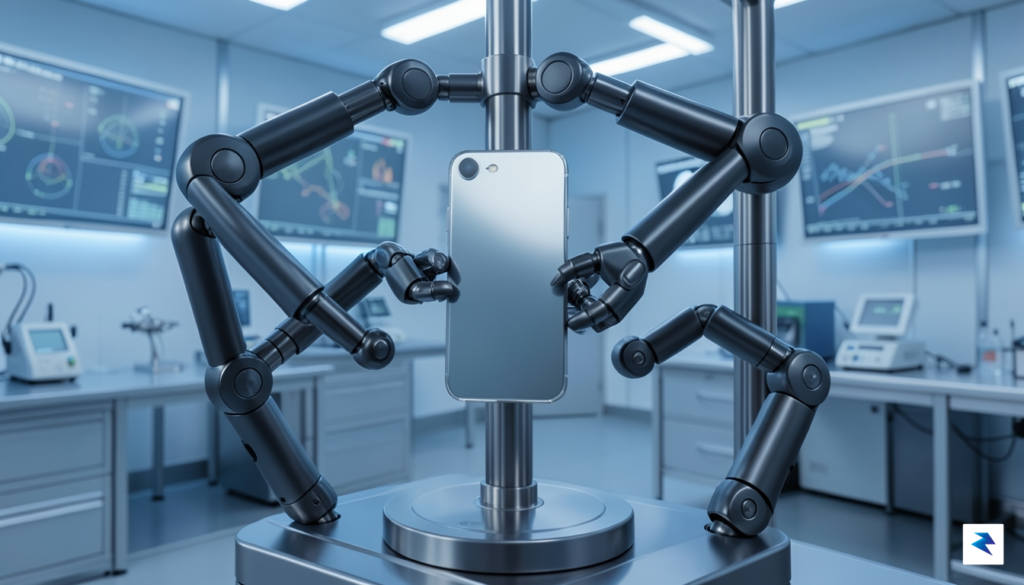
Furthermore, the premature exposure of iPhone 18 Pro hardware fundamentally distorts market expectations. When consumers see a device that is essentially a “work in progress,” they often project their own desires or misconceptions onto the final product, leading to inevitable disappointment or confusion when the actual device launches. This creates a difficult narrative environment where Apple must overcome inaccurate leaks while simultaneously trying to build genuine excitement for their upcoming releases. The strategic advantage of Apple’s secrecy lies in its power to dictate the conversation; when that control is lost to amateur footage or unauthorized supply chain leaks, the company loses its grip on the premium narrative that justifies its high price points.
The core of Apple’s competitive edge is not just the hardware itself, but the controlled, orchestrated reveal of how that technology solves human problems. When the mystery is stripped away, the product becomes just another piece of hardware in a saturated market.
Ultimately, these leaks are far more than just a nuisance to the legal department; they are a direct threat to the internal rhythm of product design. By forcing Apple to acknowledge or combat unauthorized information, these incidents can actually distract engineering teams from their primary focus: perfection. As the industry continues to move toward more complex material science and integrated hardware, the sensitivity surrounding these early prototypes will only intensify, making the suppression of such leaks a top-tier priority for the company’s survival in a hyper-competitive global landscape.

The sudden evaporation of high-fidelity footage showcasing the alleged iPhone 18 Pro from X (formerly Twitter) was not a mere glitch in the platform’s algorithm, but rather a calculated exercise in corporate damage control. When proprietary hardware designs surface prematurely, the primary objective for a tech giant is to stifle the momentum of the leak before it permeates mainstream discourse. By leveraging rapid-response legal teams and automated content moderation tools, these companies engage in a relentless digital cleanup. This swift removal process serves a dual purpose: it mitigates the potential erosion of the product’s “surprise factor” during an official launch, while simultaneously sending a stern message to those who traffic in stolen intellectual property.
At the center of this enforcement strategy is the Digital Millennium Copyright Act (DMCA), a legal framework that provides a streamlined mechanism for companies to flag and remove infringing material. Once a takedown notice is filed, social media platforms are legally compelled to act; failure to do so could potentially strip them of their safe harbor protections. However, the process is far more nuanced than simple paperwork. Modern security operations teams utilize advanced digital fingerprinting technology—often referred to as “hash matching”—to track and automatically flag re-uploads across the web. This creates a high-stakes, cat-and-mouse game where leakers attempt to circumvent automated filters by slightly altering video metadata, resolution, or framing, only to find their content scrubbed again within minutes by persistent corporate monitoring.
The speed at which these videos vanish confirms that modern tech companies treat information security with the same gravity as physical supply chain logistics.

Beyond the legal hurdles, there is a sophisticated technical layer to this scrubbing process. Major social platforms maintain private, direct lines of communication with the security departments of global electronics manufacturers. This “fast-track” reporting allows for near-instantaneous removal of content that is deemed to violate non-disclosure agreements or intellectual property rights, effectively bypassing the slower, standard reporting queues that regular users experience. This orchestration of effort highlights a reality of the modern information age: while the internet is often viewed as a space of total freedom, it remains profoundly susceptible to corporate intervention when the stakes involve multi-billion dollar product pipelines. The result is a fragile digital environment where the most controversial leaks are often erased before the majority of the public even has a chance to hit the play button.

Apple has long cultivated an almost mythical reputation for its unwavering secrecy, an impenetrable veil that historically shrouded its product development in mystery until the grand reveal on a keynote stage. This carefully constructed enigma was once a cornerstone of the company’s marketing and brand identity, driving unparalleled anticipation and excitement. However, as the digital age accelerates and Apple’s operational footprint expands exponentially across the globe, maintaining such an ironclad standard has become an increasingly formidable challenge. The recent disappearance of iPhone 18 Pro videos, allegedly originating from a manufacturing partner, serves as a stark reminder that even the most disciplined organizations are vulnerable when their operations scale to such an unprecedented degree.
The historical trajectory of Apple’s leak patterns tells a compelling story of evolution, reflecting the changing landscape of global manufacturing and information dissemination. In the early 2000s, product leaks were exceedingly rare, often bordering on accidental occurrences like the infamous iPhone 4 prototype left in a bar. These were anomalies rather than routine events. Fast forward to the present, and leaks pertaining to unreleased devices, often detailing design elements, specifications, or even functional prototypes, have become a more regular fixture in the tech news cycle. This shift isn’t merely coincidental; it underscores a fundamental difficulty in preserving the company’s traditional “cone of silence” when thousands of individuals across multiple continents are involved in the intricate process of bringing a new product to life.
Managing a vast, intricate network of global manufacturing partners presents perhaps the most significant hurdle to Apple’s secrecy model. Companies like Tata Electronics, implicated in the latest alleged incident, are just one piece of an enormous puzzle that includes countless third-party suppliers, assemblers, and logistics providers. Each node in this complex supply chain represents a potential point of vulnerability, a doorway through which sensitive intellectual property could escape. The sheer volume of people with access to pre-production information – from engineers and designers to assembly line workers and quality control specialists – makes comprehensive oversight an almost Herculean task. Furthermore, varying local regulations, cultural norms regarding information sharing, and differing economic incentives across regions can all contribute to a fragmented security environment, making uniform adherence to Apple’s stringent standards incredibly difficult to enforce.
In the wake of such high-profile incidents, it is almost certain that Apple will undertake a rigorous re-evaluation and intensification of its security protocols across its global supply chain. This could manifest in several ways, beginning with significantly more stringent contractual agreements with manufacturing partners, potentially incorporating harsher penalties and stricter liability clauses for any breaches of confidentiality. We can also anticipate an increase in on-site security audits, where Apple’s own teams conduct unannounced inspections of partner facilities, scrutinizing everything from physical access controls to digital data management systems. Enhanced monitoring technologies and tighter controls over the distribution and handling of prototypes and sensitive data are also likely to be implemented, aiming to track every component and every piece of information with greater precision. Ultimately, while complete eradication of leaks in such a vast ecosystem might be an impossible dream, these measures aim to deter potential breaches and reinforce the message that Apple’s intellectual property is to be safeguarded at all costs.

To restore confidence in the wake of these unauthorized leaks, both Apple and Tata Electronics must move beyond reactive damage control and initiate a fundamental restructuring of their cybersecurity architecture. For a supplier like Tata Electronics, the primary imperative is the implementation of a “Zero Trust” model that strictly limits access to design schematics and prototype footage. This means moving away from broad internal networks and instead utilizing highly restricted, compartmentalized environments where only essential personnel can view specific proprietary files. By enforcing multi-factor authentication, robust endpoint monitoring, and automated logging of every file access event, the company can ensure that even if a single employee’s credentials are compromised, the potential for a catastrophic data exfiltration event is significantly curtailed.

Furthermore, the relationship between Apple and its global manufacturing partners requires a more rigorous, transparent verification process regarding data integrity. Stakeholders and investors should anticipate that Apple will likely introduce more stringent “security-first” auditing standards for all tier-one suppliers. This involves not only regular, unannounced third-party security audits but also a potential shift toward localized data storage solutions, where prototype information is stored on air-gapped systems that physically prevent external transmission. These measures will be critical in ensuring that the secrecy surrounding future hardware launches—such as the upcoming iPhone 18 Pro—is not compromised by vulnerabilities in the supply chain.
True supply chain security in the modern era requires that no single point of failure can lead to the exposure of an entire product roadmap.
Ultimately, the burden of trust rests on how transparently these entities communicate their remediation efforts to the public and their shareholders. While Apple has historically preferred silence regarding internal mishaps, the magnitude of this incident suggests that a more proactive stance on supply chain integrity is now necessary. Moving forward, customers should expect a more rigid framework for how sensitive information moves from the Cupertino design teams to the factory floor. By investing in advanced encryption, AI-driven anomaly detection, and stricter personnel vetting, both companies can demonstrate that they have learned from these lapses, ensuring that their manufacturing ecosystem remains as impenetrable as the devices they produce.
You must be logged in to post a comment.