
Is the AI Money Bubble Bursting? Neil Rimer on the Coming Wealth Redistribution
The AI Wealth Paradox: Silicon Valley’s Concentration Problem The current landscape of artificial intelligence investment resembles a…
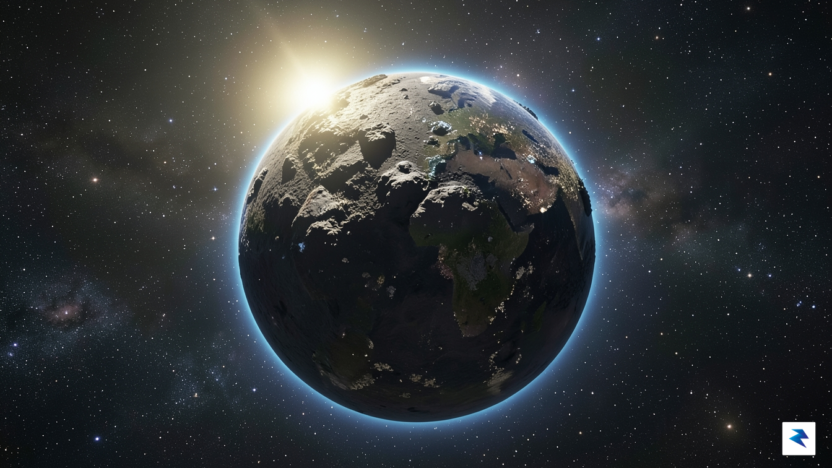
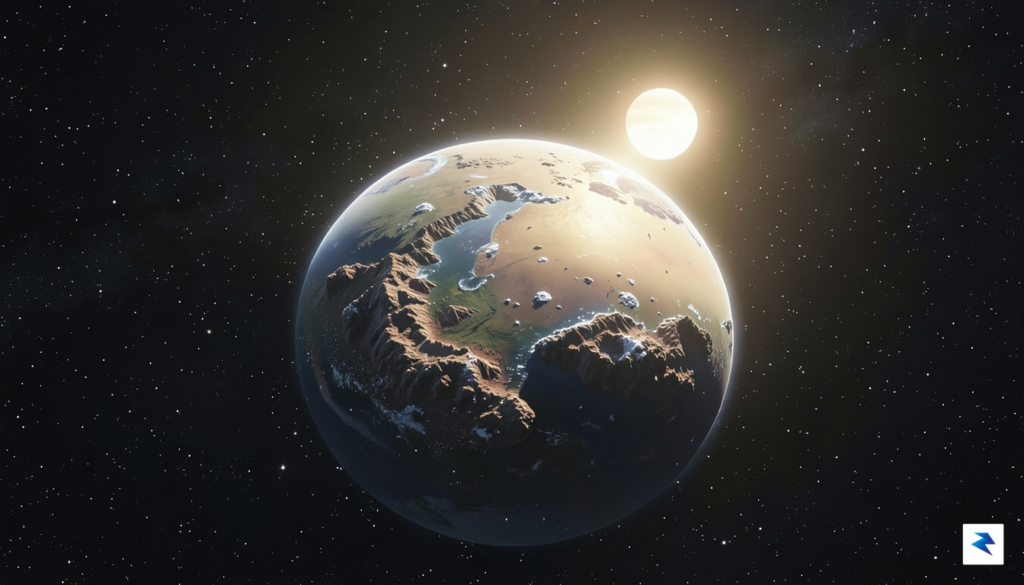
For decades, the hunt for life beyond our solar system has been defined by a frustrating technological barrier: while astronomers have successfully identified thousands of exoplanets, they have primarily been limited to observing massive, gaseous giants. These “Hot Jupiters” are relatively easy to detect because their sheer size and proximity to their stars allow for clear measurements of their light signatures. In contrast, rocky, Earth-like worlds—the very candidates most likely to harbor conditions suitable for life—are diminutive and notoriously difficult to study. Their atmospheres are thin, fragile, and easily masked by the blinding glare of their host stars, leaving scientists to rely on theoretical models rather than direct empirical data.
This long-standing frustration has finally begun to dissolve with the recent, groundbreaking detection of a secondary atmosphere on 55 Cancri e. This rocky planet, which orbits a star roughly 40 light-years away, has long been a subject of intense scientific curiosity, but confirming the presence of a stable gaseous envelope marks a definitive turning point in our observational capabilities. By utilizing the advanced sensitivity of the James Webb Space Telescope, researchers were able to peel back the layers of distance and brilliance, capturing the faint thermal signature of an atmosphere clinging to a solid surface. This achievement serves as a profound validation of the sophisticated instrumentation we have spent years developing, proving that we are finally entering an era where we can characterize the “skin” of distant, terrestrial worlds.
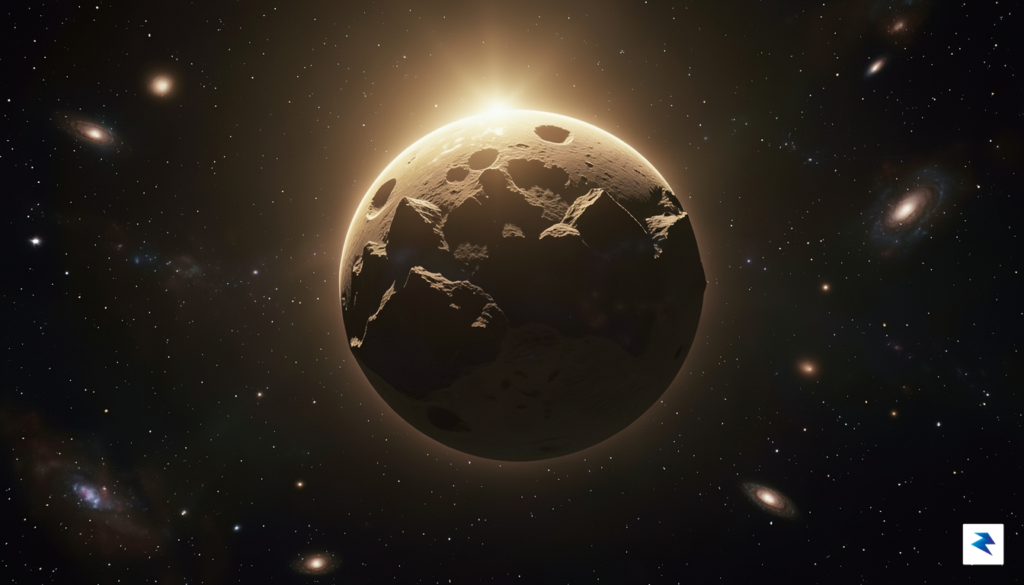
The confirmation of a secondary atmosphere on a rocky planet is not just a triumph of engineering; it is a fundamental shift in our understanding of planetary evolution and the potential for habitability across the cosmos.
The significance of this discovery extends far beyond the specific data points collected from 55 Cancri e. It provides a concrete blueprint for how we might identify similar features on other worlds that exist within the temperate, habitable zones of their respective stars. By understanding how these secondary atmospheres form—typically through volcanic outgassing or geological activity—astronomers can better distinguish between planets that are barren, scorched rocks and those that possess the volatile chemicals necessary to sustain complex environments. As we refine these observational techniques, we move closer to answering the ultimate question of whether Earth is truly an anomaly or merely one of many vibrant, atmosphere-shrouded worlds scattered throughout the galaxy.
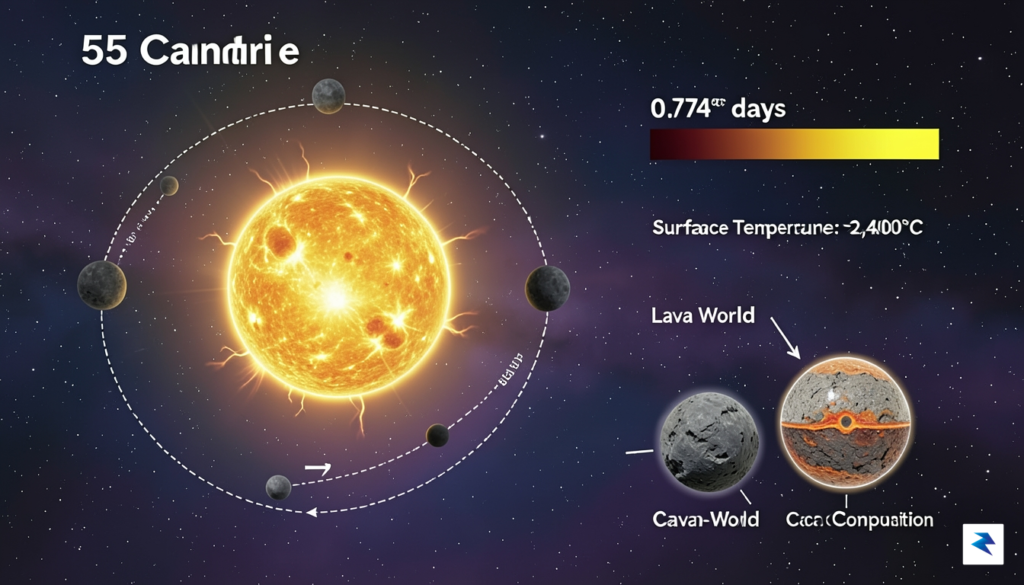
Located a mere 41 light-years away in the constellation Cancer, 55 Cancri e stands as one of the most enigmatic worlds ever identified in our cosmic neighborhood. Although it is frequently categorized as a “Super-Earth” because its diameter is roughly twice that of our own planet, the comparison ends abruptly when examining its physical conditions. This world is locked in an incredibly tight orbit around its host star, completing a full revolution in less than 20 hours. Because it is positioned so close to its sun—roughly 25 times closer than Mercury is to our own—the planet is subjected to blistering temperatures that would melt even the most resilient rocks, effectively turning its surface into a roiling, volcanic landscape of molten magma.
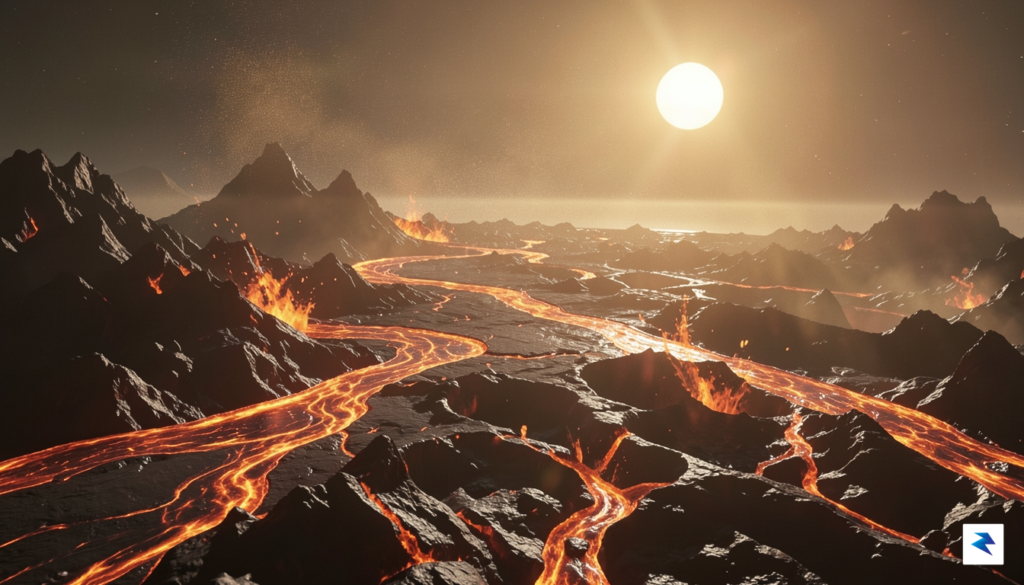
The sheer intensity of the stellar radiation hitting 55 Cancri e makes it a high-stakes laboratory for astrophysicists attempting to understand the evolution of rocky planets. On a world where surface temperatures can soar to over 3,000 degrees Fahrenheit, any primordial atmosphere would typically be expected to boil away into the vacuum of space. However, the discovery of a secondary atmosphere—likely sustained by the constant outgassing of volcanic activity—suggests that this planet is far more dynamic than a simple, dead rock. By studying how 55 Cancri e manages to replenish its gas envelope despite being blasted by solar winds, scientists can refine their models for how other rocky worlds maintain their chemical signatures across the galaxy.
The proximity and extreme nature of 55 Cancri e turn it into the ultimate testing ground for our understanding of planetary geology and atmospheric retention in the face of intense stellar bombardment.
Its relatively close proximity to Earth makes 55 Cancri e a primary candidate for high-resolution analysis using the James Webb Space Telescope (JWST). Because the planet passes directly in front of its star from our vantage point, astronomers can utilize transit spectroscopy to catch starlight filtering through the planet’s thin atmospheric layer. This process allows researchers to identify the chemical fingerprints of gases like carbon dioxide or carbon monoxide, providing a rare glimpse into the volatile cycles of a world beyond our solar system. By peeling back the layers of this extreme Super-Earth, we are not just learning about one distant orb; we are gaining a fundamental blueprint for how rocky, terrestrial-sized planets survive the harsh realities of their own star systems.

Detecting an atmosphere on a distant, rocky world is one of the most significant technical challenges in modern astrophysics. Because exoplanets are often millions of times dimmer than their host stars, researchers cannot simply snap a photograph to see what lies on the surface. Instead, they must rely on the James Webb Space Telescope’s (JWST) Mid-Infrared Instrument (MIRI), a sophisticated sensor designed to capture the faint heat signatures radiating from these worlds. By measuring this infrared light, scientists can effectively “see” the thermal profile of a planet, discerning the subtle differences between a barren, airless rock and a world swaddled in a protective gaseous layer.
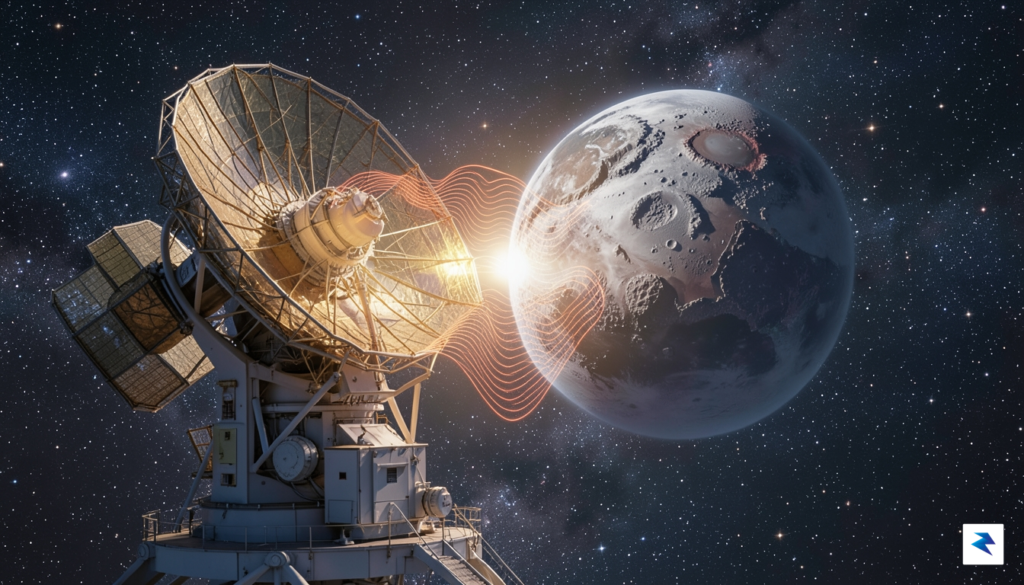
The primary technique employed in this discovery is known as secondary eclipse spectroscopy. This method involves observing the planet as it moves behind its star from our vantage point on Earth. By measuring the total infrared light coming from the system just before the planet disappears behind the star, and then comparing it to the light from the star alone once the planet is eclipsed, researchers can isolate the specific heat radiation emitted by the planet itself. If a planet possesses an atmosphere, that shroud of gas acts as a thermal regulator, redistributing heat from the dayside to the nightside and altering the specific wavelengths of infrared light we detect. This data allows astronomers to construct a phase curve, a graphical representation of how the planet’s brightness changes as it completes an orbit, providing a fingerprint of its atmospheric composition.
The presence of an atmosphere is not just a chemical observation; it is a thermal one. By tracking how heat is retained and moved across the planet’s surface, we can infer the thickness and potential composition of its gaseous shell.
Beyond the thermal phase curves, transit spectroscopy plays a vital role in confirming these findings. As the planet passes in front of its star, a tiny fraction of the starlight filters through the outer edges of the planet’s atmosphere. The gaseous molecules within that atmosphere absorb specific colors—or wavelengths—of light, creating a unique absorption spectrum. By analyzing these tiny dips in the starlight, scientists can identify the chemical signatures of gases like carbon dioxide or methane. When combined with the high-precision thermal data from MIRI, this multi-faceted approach creates a robust dataset that confirms the existence of an atmosphere, moving us one step closer to understanding whether these distant, Earth-like worlds could truly harbor the conditions necessary for life.
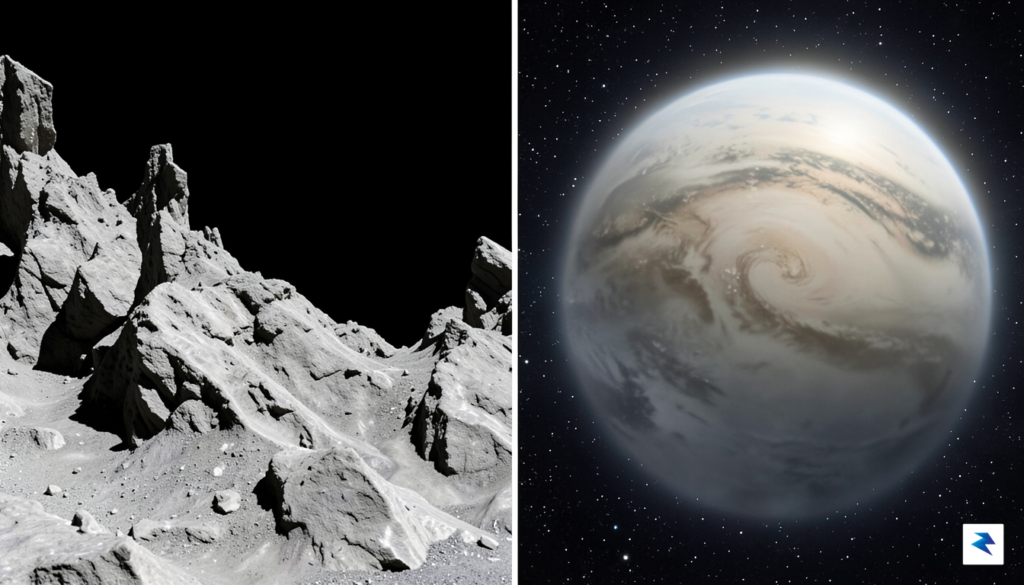
While the detection of an atmosphere on 55 Cancri e represents a monumental leap in observational astronomy, it is crucial to temper our expectations regarding the planet’s immediate hospitality. This world is a “super-Earth” locked in a blistering orbit so close to its host star that its surface is likely a roiling ocean of molten magma. The atmosphere discovered here is almost certainly carbon-rich, dominated by carbon dioxide or carbon monoxide, which stands in stark contrast to the nitrogen-oxygen mix that sustains life on our own planet. However, the true scientific value of this finding lies not in the prospect of finding extraterrestrial civilizations on this specific world, but in what it reveals about the resilience of planetary envelopes under extreme duress.
For decades, many astrophysicists assumed that rocky planets orbiting as close to their stars as 55 Cancri e would have their atmospheres stripped away by intense stellar winds and radiation long ago. The fact that this planet has managed to retain a gaseous shroud challenges our fundamental models of planetary evolution. It suggests that a continuous process of replenishment—likely through intense, planet-wide volcanism—is actively feeding gas back into the atmosphere at a rate that offsets the atmospheric escape caused by the star’s proximity. This discovery provides us with a concrete laboratory to study “secondary atmospheres,” which are formed not from the primordial gases of a planet’s birth, but from the internal geological activity of the world itself.
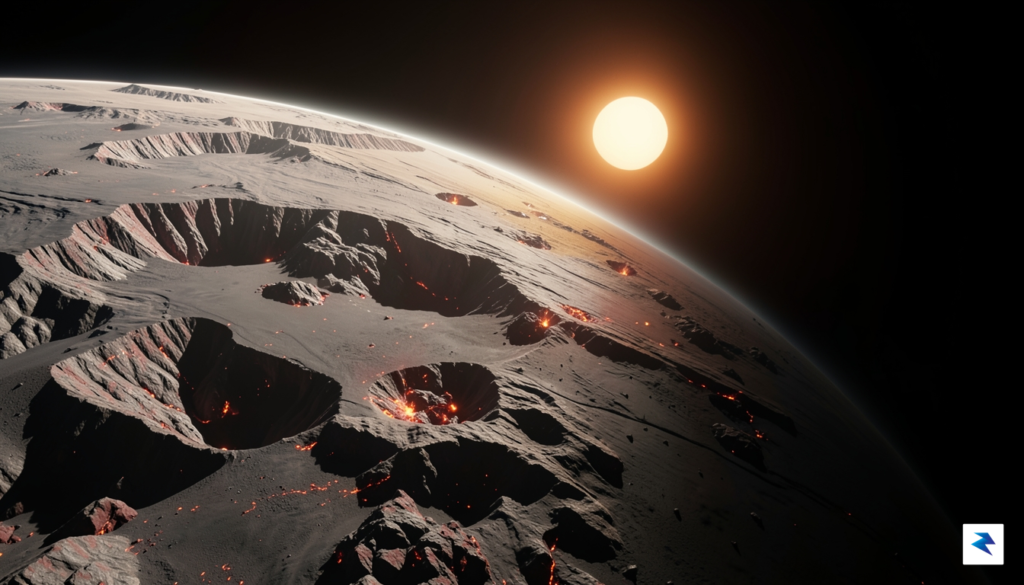
The durability of this atmosphere implies that rocky worlds are far more dynamic than we previously theorized, potentially possessing internal engines that can sustain a gaseous layer even in the most hostile environments.
By studying the composition of this carbon-rich blanket, researchers can now refine their models of planetary degassing and tectonic activity. If a planet as tortured as 55 Cancri e can maintain an atmosphere, it stands to reason that other, more temperate rocky planets in the habitable zones of distant stars are even better candidates for doing the same. This discovery effectively widens the search parameters for life; it shifts the focus from looking merely for “perfect” Earth analogs to understanding the complex, geological mechanisms that allow a planet to breathe. By observing how these gases interact with the stellar environment, astronomers are gaining the critical data needed to distinguish between a dead, airless rock and a living world capable of shielding its surface from the harshness of space.
Ultimately, this breakthrough serves as a foundational milestone in the field of exoplanet characterization. We are no longer limited to merely counting planets or measuring their sizes; we are now entering an era where we can begin to decode the chemical signatures of their atmospheres. Each new data point gathered from 55 Cancri e acts as a benchmark, helping us calibrate our instruments and our theories for the day we eventually point our telescopes at a true, Earth-like twin. The durability of such an atmosphere under extreme pressure is a promising indicator that nature is quite adept at providing worlds with the essential ingredients for potential habitability.

This monumental achievement marks far more than a singular success; it represents a fundamental shift in how we approach the exploration of the cosmos. By successfully detecting and characterizing the atmosphere of 55 Cancri e, astronomers have moved from merely counting planets to actively studying their chemical compositions. This success serves as a definitive proof-of-concept, establishing a rigorous blueprint for future missions tasked with scrutinizing smaller, cooler, and ultimately more hospitable worlds. As we refine our observational techniques, the focus will inevitably shift toward identifying “secondary” atmospheres—those that might harbor the volatile gases essential for life as we know it.
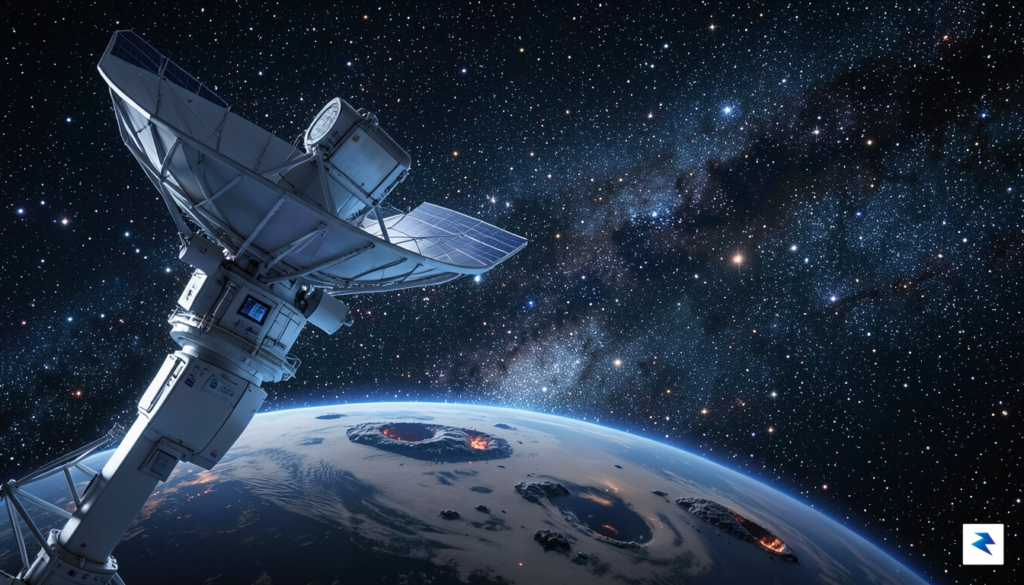
The roadmap for exoplanetary science over the next decade is defined by a series of increasingly sophisticated technological leaps. With the James Webb Space Telescope leading the charge, we are now entering an era of high-precision spectroscopy that allows us to disentangle the faint light of a planet from the overwhelming glare of its host star. Following in its wake, upcoming missions—such as the Nancy Grace Roman Space Telescope and the future Habitable Worlds Observatory—are specifically designed to push the boundaries of what is detectable. These instruments will not only broaden our census of rocky worlds but will also enhance our ability to distinguish between geological outgassing and the potential signatures of biological activity.
The discovery of a rocky atmosphere is the first step in a long journey toward understanding our place in the universe; each data point brings us closer to answering the profound question of whether we are truly alone.
Ultimately, this scientific endeavor is inherently iterative, characterized by a steady progression from the possible to the probable. Every discovery, whether it confirms a familiar atmospheric composition or reveals a completely alien chemical environment, forces us to re-evaluate our models of planetary formation and evolution. This process of constant refinement is essential for the search for “Earth 2.0,” as it allows us to discard flawed assumptions and focus our resources on the most promising candidates for habitability. As our instruments grow more capable, we are transitioning from a phase of observation to one of deep comprehension, setting the stage for a future where we may finally identify an exoplanet that mirrors the complexity and life-sustaining conditions of our own home.
You must be logged in to post a comment.