Why Alibaba Is Restricting AI Coding Agents: A Security Deep Dive
The Growing Tension Between AI Productivity and Corporate Security The landscape of modern software engineering has shifted beneath our feet,…

At the heart of Bitcoin’s security architecture lies Elliptic Curve Cryptography (ECC), a mathematical framework that ensures only the rightful owner of a private key can authorize a transaction. While this system is practically unbreakable for today’s most powerful supercomputers, it faces a theoretical “doomsday” scenario posed by quantum computing. Specifically, Shor’s algorithm—a quantum-based mathematical procedure—could theoretically derive a private key from a public key with terrifying speed. Unlike classical computers, which would take trillions of years to guess these keys, a large-scale, fault-tolerant quantum computer could potentially solve these equations in a matter of hours, effectively stripping away the digital locks protecting Bitcoin wallets.
The urgency of this threat is not uniform across the entire Bitcoin network because not all addresses are created equal. The oldest wallets, often referred to as P2PK (Pay-to-Public-Key) addresses, are significantly more exposed than modern iterations. In the early days of Bitcoin, the public key was directly visible on the blockchain, meaning a quantum attacker would have the “blueprint” necessary to run Shor’s algorithm immediately. Conversely, modern address formats like P2PKH (Pay-to-Public-Key-Hash) and SegWit provide an additional layer of obfuscation. Because these addresses hide the public key behind a cryptographic hash until a transaction is broadcast, they are currently immune to direct quantum decryption, as the necessary data for the algorithm to function is simply not present on the ledger.
The 1.1 million Bitcoin attributed to Satoshi Nakamoto are stored primarily in these archaic, vulnerable P2PK formats, making them the most high-profile target for a potential quantum adversary.
This reality brings us to a complex timeline debate among developers and security researchers. While experts generally agree that a sufficiently powerful quantum computer is likely decades away, the prospect of such technology is no longer considered science fiction. Because these legacy coins have remained untouched since the network’s inception, they represent a massive, dormant store of value that could be “drained” if a quantum breakthrough occurs before the protocol is upgraded. Critics of a “freeze” argue that interfering with the ledger violates the core principles of immutability, yet proponents insist that proactive measures are necessary to prevent a catastrophic loss of confidence in the network should these early coins suddenly begin to move in an unauthorized manner.
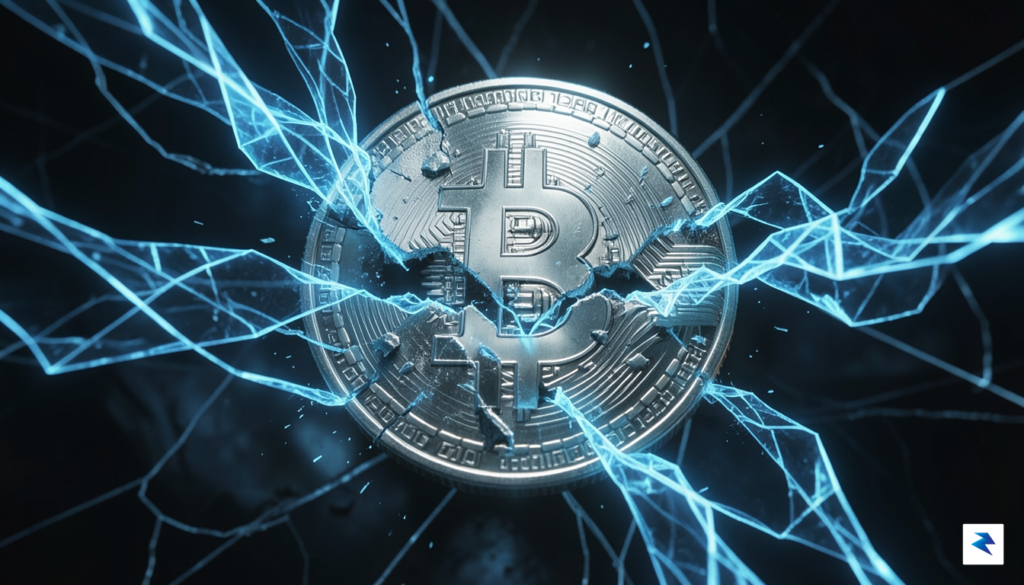
Ultimately, the discussion revolves around whether Bitcoin should evolve to defend its heritage or remain static at the risk of its own history. If we wait until quantum computers are already capable of cracking ECC, it will be far too late to secure the oldest assets on the chain. By initiating this debate now, the community is essentially weighing the philosophical sanctity of “code is law” against the pragmatic necessity of long-term security in an era of rapid technological advancement. The challenge lies in finding a solution that protects the network without compromising the decentralized ethos that made Satoshi’s invention so revolutionary in the first place.

The core of the current proposal involves a proactive, albeit controversial, technological intervention: the implementation of a soft fork designed to blacklist or effectively “freeze” the approximately 1.1 million Bitcoin attributed to Satoshi Nakamoto. Proponents of this move, including influential industry figures like Binance co-founder Changpeng Zhao, argue that these dormant assets represent a singular, systemic vulnerability for the entire cryptocurrency ecosystem. By transitioning these coins into a state of permanent cold storage—or by programmatically restricting their movement via protocol-level changes—advocates believe the network could neutralize the risk of a “black swan” event triggered by the sudden liquidation of such a massive hoard.
This massive figure of 1.1 million BTC is not just a symbolic number; it represents roughly 5% of the total eventual supply, and its sudden introduction to exchange liquidity would be mathematically catastrophic for market stability. Should a bad actor—or worse, a future quantum adversary capable of breaking current cryptographic standards—gain unauthorized access to the private keys associated with these early addresses, they could dump these assets, potentially crashing the price and triggering a widespread panic. In this context, freezing the coins is framed not as an act of theft, but as an essential insurance policy for the longevity and health of the decentralized network.

“The threat of a quantum-enabled breach is not merely theoretical; it is a ticking clock for the oldest, most vulnerable addresses on the blockchain that haven’t yet moved to modern, post-quantum signature schemes.”
However, this proposal has sparked a fierce ideological backlash from those who view the immutability of the Bitcoin ledger as its most sacred feature. Opponents argue that the right to spend is an absolute property right, and that Satoshi, as the network’s creator, retains the sovereign right to access these funds at any time. To implement a soft fork that selectively targets specific addresses would be a profound violation of the “code is law” ethos, effectively turning a decentralized, permissionless protocol into a censored system governed by committee consensus rather than mathematical certainty. Critics warn that if the community establishes a precedent for “freezing” assets, it creates a dangerous slippery slope where future protocol changes could be used to blackball any address deemed “undesirable” by the majority.
Ultimately, the debate hinges on a fundamental trade-off between security and sovereignty. While the fear of market volatility and quantum threats provides a pragmatic incentive to isolate these coins, the long-term cost may be the degradation of Bitcoin’s foundational trust. For the proposal to gain any real traction, developers would need to bridge the gap between the pragmatic necessity of protecting the network from a potential quantum catastrophe and the rigid, immutable principles that have defined Bitcoin since its inception in 2009.

At the core of the Bitcoin network lies the uncompromising mantra of “code is law,” a principle that posits the protocol’s rules as immutable, objective truths beyond the reach of human fallibility. To suggest that the network should intervene to freeze Satoshi Nakamoto’s dormant 1.1 million Bitcoin—even in the face of an existential quantum computing threat—is to challenge the very foundation of trustless finance. If the protocol can be modified to target a specific entity, regardless of how legendary that entity may be, the distinction between Bitcoin and the traditional, centralized banking system begins to blur. For many maximalists, the immutability of the ledger is not merely a feature; it is the ultimate value proposition that differentiates Bitcoin from every other digital asset in existence.
The danger inherent in this proposal is the creation of a dangerous precedent. If the community successfully coordinates a hard fork or a protocol change to seize or sequester these specific addresses, it signals that the network’s rules are subject to the prevailing political winds of its stakeholders. Once the door to governance-led intervention is opened, it becomes incredibly difficult to close. This introduces a “slippery slope” scenario where future participants might lobby for interventions against other “undesirable” actors, political dissidents, or simply those holding large amounts of wealth. By opting for a pragmatic security fix that involves human discretion, the community risks sacrificing the neutrality that makes Bitcoin a global, censorship-resistant store of value.

If Bitcoin can be rewritten to solve a problem today, it can be rewritten to create new problems tomorrow. The moment you introduce a human override to the protocol, you transition from a system governed by mathematics to one governed by whoever holds the most influence.
Furthermore, this philosophical conflict forces us to ask whether the risk of quantum theft is truly more dangerous than the risk of protocol erosion. While quantum computing represents a legitimate technological hurdle that the network must eventually address, proponents of strict immutability argue that the response must be universal and algorithmic, rather than targeted or discretionary. Creating an exception for Satoshi’s wallet implies that there are “good” and “bad” ways to alter the ledger, a subjective framework that Bitcoin was specifically designed to transcend. Ultimately, the battle over these early coins is less about the security of the funds themselves and more about the future identity of the Bitcoin network: will it remain a rigid, machine-governed monument to decentralization, or will it evolve into a more flexible, human-managed financial institution?
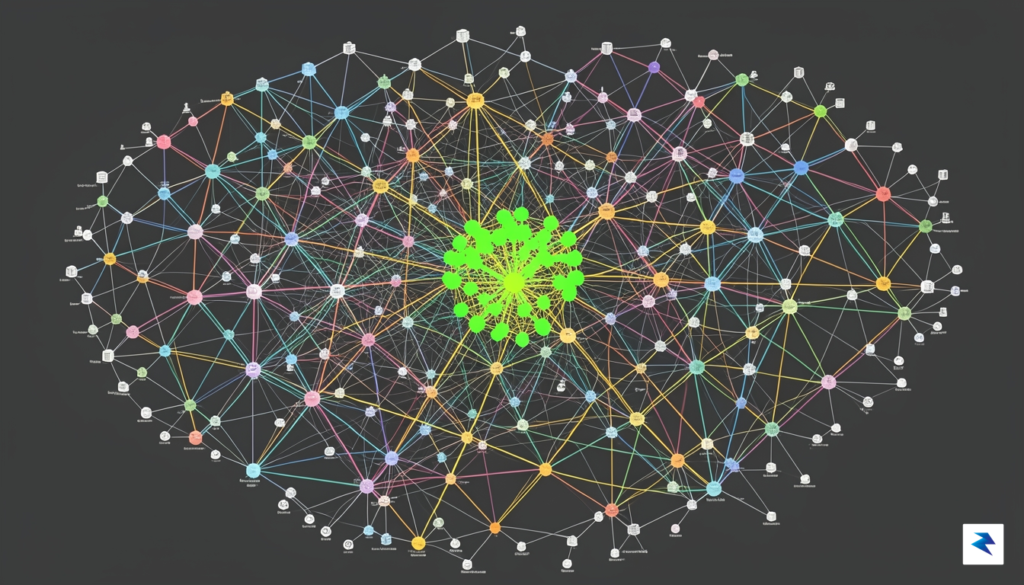
Executing a block-level freeze on dormant addresses—specifically those attributed to the pseudonymous Satoshi Nakamoto—is far more than a simple software patch. Because Bitcoin operates as a decentralized ledger without a central authority, any modification to the protocol’s core rules requires a network-wide upgrade. To implement such a change, developers would likely need to propose either a soft fork or a hard fork. A soft fork would involve tightening the validation rules so that previously valid transactions are rendered invalid, which is generally backward-compatible but still requires the overwhelming majority of the hash power to enforce. Conversely, a hard fork would introduce a fundamental change to the protocol that is not backward-compatible, essentially forcing the entire network to migrate to a new set of rules to remain functional.
The mechanics of achieving this transition rely heavily on the cooperation of the ecosystem’s three primary stakeholders: developers, miners, and node operators. Miners play a pivotal role in this process by signaling their support for proposed protocol changes through the metadata included in their mined blocks. If a sufficient threshold of miners—usually 90% or more—signals their approval, the upgrade can be locked in and activated. However, the proposal to freeze specific assets is highly contentious, as it contradicts the foundational principle of immutability that defines Bitcoin. If a significant portion of the mining community and the node-running population remains opposed to the change, a forced update would almost certainly lead to a chain split, creating two competing versions of the Bitcoin network.

The strength of Bitcoin lies in its predictability; the moment that the protocol is altered to target specific users, regardless of their status, the entire premise of “code is law” is fundamentally undermined.
Should the community remain deeply divided, the resulting chain split would likely manifest as a contentious hard fork, similar to the historical division between Bitcoin and Bitcoin Cash. In such a scenario, users would effectively own coins on both chains, but the value and security of the “frozen” chain would be severely compromised by the lack of consensus. Node operators, who ultimately choose which software version to run, act as the final check against any changes that they deem malicious or contrary to the network’s long-term health. Because freezing these wallets requires a explicit change to the UTXO (Unspent Transaction Output) set, it would be viewed by many as an act of censorship. Consequently, the technical challenge is eclipsed by the sociological one: convincing thousands of independent, globally distributed participants to intentionally violate the protocol’s core tenet of censorship resistance for the sake of long-term quantum security.

The core philosophy of Bitcoin is rooted in the concept of immutability—the idea that once a transaction is etched into the blockchain, it is permanent and beyond the reach of any governing body. By contemplating the proactive freezing of Satoshi Nakamoto’s estimated 1.1 million Bitcoin, the community risks opening a proverbial Pandora’s box that could permanently alter the network’s foundational integrity. If the consensus mechanism is repurposed to selectively blacklist specific wallets, it effectively transforms Bitcoin from a decentralized, censorship-resistant protocol into a system governed by the subjective whims of whoever holds the most influence. This shift would undermine the very premise of “code as law,” replacing algorithmic certainty with human-centric governance that is inherently prone to bias, political pressure, and future abuse.
Once the precedent for “justified” coin freezing is established, the logical question becomes: where does it stop? If the community justifies the seizure of dormant coins due to a theoretical quantum threat, it sets a chilling standard for what constitutes a “valid” reason to interfere with private property. Today, the justification may be the protection of the network against a potential security breach, but tomorrow, that same mechanism could be leveraged to freeze coins deemed “problematic” by various interest groups, corporations, or state actors. The moment Bitcoin stakeholders begin curating which addresses are allowed to interact with the network, the censorship-resistance argument—the primary value proposition that attracts institutional and individual investors alike—effectively evaporates.

Historical precedents serve as cautionary tales, most notably the 2016 DAO hack on the Ethereum network. In that instance, the community chose to perform a hard fork to reverse the theft, successfully recovering the funds but simultaneously fracturing the ecosystem into Ethereum and Ethereum Classic. While the move was lauded by some as a necessary act of damage control, it proved that immutability is not a technical absolute, but a social contract. If Bitcoin developers were to follow a similar path regarding Satoshi’s stash, it would likely precipitate an existential crisis. Proponents of the original, unadulterated chain would almost certainly reject the fork, leading to a permanent schism that could devalue both iterations of the currency.
The strength of Bitcoin lies in its inability to be controlled by any person or entity; once you introduce human oversight to “correct” the ledger, you are no longer using Bitcoin as a trustless system.
Ultimately, the danger is not just the loss of one specific stash of coins, but the degradation of the trust model that gives Bitcoin its market cap. If users realize that their holdings are only as secure as the current consensus of the development team or a mining majority, the perception of Bitcoin as “digital gold” will be replaced by the reality of it being a managed financial asset. Protecting the network from quantum threats is a valid engineering challenge, but it must be solved through protocol-level upgrades that apply to everyone equally, rather than through targeting the assets of a specific creator. Sacrificing the network’s neutrality to solve a future security threat may inadvertently destroy the very thing users are trying to protect.

The growing shadow of quantum computing has ignited a fierce debate within the crypto community, forcing stakeholders to choose between reactionary measures and systemic evolution. While the idea of “freezing” Satoshi Nakamoto’s dormant 1.1 million Bitcoin stash might seem like a prudent safety measure against future decryption threats, many core developers argue that such a move would be both technically flawed and ideologically dangerous. Attempting to target specific coins requires a form of censorship or administrative intervention that fundamentally contradicts Bitcoin’s decentralized ethos. Instead of playing “whack-a-mole” with specific addresses, the community is increasingly coalescing around the necessity of proactive, network-wide cryptographic upgrades designed to secure the entire ecosystem against the looming quantum threat.

Rather than relying on human intervention to blacklist or lock specific holdings, the path forward lies in integrating post-quantum cryptographic standards—such as lattice-based cryptography—directly into the Bitcoin protocol. This approach ensures that every user, from the smallest holder to the largest institutional wallet, benefits from the same level of security. If the protocol is upgraded to support quantum-resistant digital signatures, the entire network becomes naturally resilient, rendering the vulnerability of any individual address moot. By focusing on systemic upgrades, developers can preserve the immutable nature of the ledger while simultaneously inoculating the currency against the high-speed processing capabilities of future quantum computers.
The strength of Bitcoin lies not in the protection of specific accounts, but in the mathematical integrity of the network itself; a protocol-wide defense is the only way to ensure long-term, trustless security.
Maintaining Bitcoin’s core principles—decentralization, censorship resistance, and permissionless operation—is non-negotiable during this transition. If developers were to create a precedent for freezing funds, they would introduce a “governance backdoor” that could be exploited for other, more malicious purposes in the future. Therefore, the goal is to implement upgrades that are backward-compatible and opt-in where possible, allowing the network to evolve without compromising its foundational promise of sovereignty. Ultimately, the transition to a post-quantum era will be the next great stress test for Bitcoin, proving whether the protocol is truly robust enough to withstand the most significant technological paradigm shift of the 21st century.
You must be logged in to post a comment.