
Ethereum Foundation Initiates 40% Budget Cut in Major Strategic Reset
The Ethereum Foundation’s Strategic Pivot: An Overview The Ethereum Foundation (EF), the non-profit organization serving as the primary…

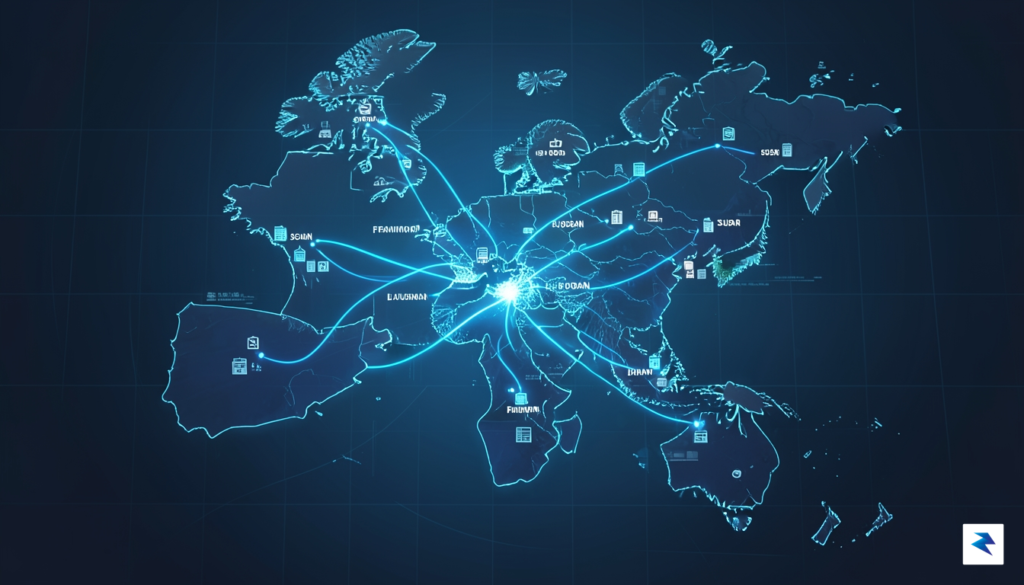
For decades, the global financial system has relied on a patchwork of legacy networks to move money across borders, a framework largely defined by the traditional SWIFT messaging standard. While this legacy infrastructure succeeded in establishing a secure baseline for international communication, it was never designed for the speed and fluidity of the modern digital economy. Instead of facilitating direct transfers, funds must navigate a complex, fragmented labyrinth of correspondent banks, each acting as an intermediary that adds its own layer of fees, manual compliance checks, and operational delays. This antiquated process not only introduces multiple points of friction and potential failure, but it also traps billions of dollars in liquidity capital, which must sit idle in foreign accounts to guarantee these slow-moving transactions.
Consequently, businesses and consumers have long accepted the “T+2” settlement cycle—where international transactions take two or more business days to fully clear—as an unavoidable cost of doing global business. In an era where information travels instantaneously, waiting forty-eight hours or longer for high-value currency settlements is a glaring inefficiency that stifles corporate cash flow and inflates operational risk. Fluctuations in foreign exchange rates during these multi-day waiting periods can easily turn profitable trades into financial liabilities, forcing institutions to hedge aggressively at significant expense. The financial sector has reached a critical tipping point where transitioning from these delayed, asynchronous settlement cycles to near-instantaneous, real-time processing is no longer a luxury, but an absolute necessity.
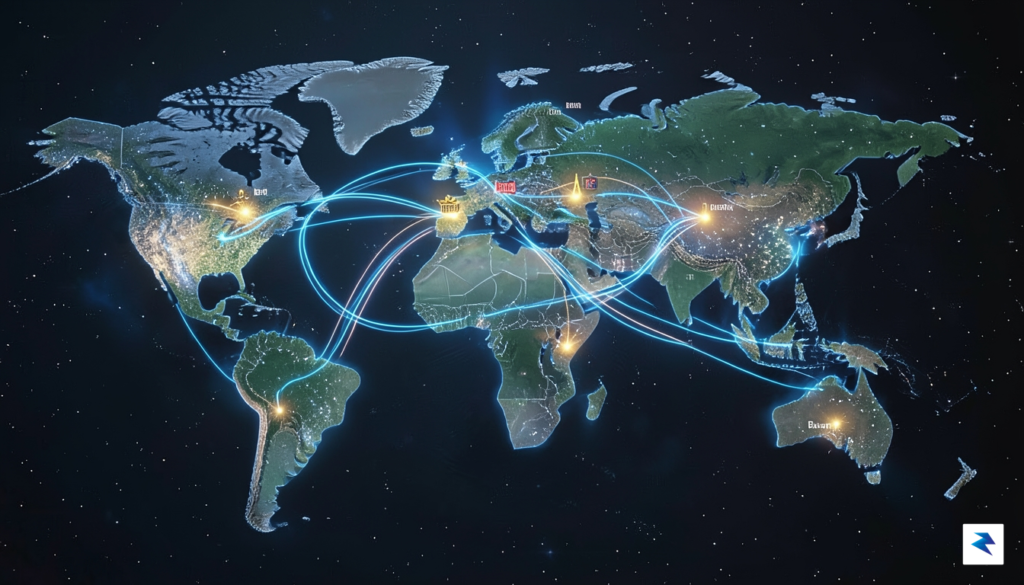
To address these systemic vulnerabilities, Project Pangea has emerged as a groundbreaking initiative designed to dismantle historical bottlenecks by uniting 47 prominent banking institutions across South Korea and Europe into a cohesive, interoperable ecosystem. Rather than relying on outdated messaging systems that simply transmit transaction instructions without actually moving the underlying value, this project leverages advanced blockchain technology to facilitate high-value, multi-currency trades. By utilizing secure decentralized infrastructure to bridge the gap between traditional banking databases and distributed ledgers, Project Pangea enables atomic settlement, a process where the exchange of assets occurs simultaneously and securely. This collaborative endeavor represents a monumental shift away from isolated national banking silos toward a globally integrated network capable of executing cross-border transactions in mere seconds.
Project Pangea represents a fundamental paradigm shift, moving the global banking sector away from isolated database silos and toward a unified, real-time ledger system that eliminates settlement risk and unlocks idle capital.

At the heart of this transformative initiative is the Cross-Chain Interoperability Protocol (CCIP), which functions as the essential connective tissue linking siloed, traditional banking ledgers with the high-velocity world of stablecoin-based settlement. For decades, international money transfers have been hampered by fragmented communication channels, relying on antiquated messaging systems that are both slow and prone to reconciliation errors. CCIP fundamentally changes this dynamic by providing a secure, standardized messaging layer that allows different blockchain networks and private banking databases to “speak” the same language, effectively turning disparate ledgers into a unified, interoperable ecosystem.

Stablecoins have emerged as the preferred asset for this modern settlement layer because they offer the best of both worlds: the immediate finality and 24/7 liquidity of digital assets, paired with the price stability of fiat currencies. By utilizing stablecoins, banks can bypass the multi-day settlement cycles inherent in correspondent banking, moving value across borders in near real-time. Chainlink’s oracle networks play a critical role here, acting as the bridge that ensures data authenticity. These oracles pull verified, real-time market and transaction data from the outside world into the blockchain environment, ensuring that the smart contracts governing these transfers are always operating on accurate, tamper-proof information.
The integration of CCIP allows financial institutions to bridge the gap between their existing infrastructure and the blockchain-based future, ensuring that cross-border payments become as seamless as sending an email.
Security remains the paramount concern for any institution dealing with global capital, and Chainlink addresses this through a defense-in-depth approach. Unlike centralized bridges that often become targets for malicious actors, Chainlink’s architecture utilizes a decentralized network of nodes to validate and relay messages. This ensures that no single point of failure exists, maintaining banking-grade security standards that satisfy the rigorous compliance requirements of the 47 participating South Korean and European banks. By providing a verifiable audit trail for every cross-chain interaction, Chainlink enables these institutions to modernize their infrastructure without compromising the integrity or the regulatory safety of the global financial system. Consequently, this synergy creates a robust foundation where legacy stability meets the efficiency of modern decentralized technology.

The collective move by 47 major financial institutions from South Korea and Europe to integrate Chainlink’s infrastructure marks a profound pivot in how legacy banks view their global infrastructure. For decades, international money transfers have relied on a fragmented web of correspondent banking relationships, which are notoriously slow, expensive, and prone to “capital idling.” By leveraging blockchain-based messaging and settlement protocols, these banks are signaling a transition toward a model where liquidity is no longer trapped in transit. Instead, they are prioritizing a system that treats global capital as a dynamic, fluid asset, significantly reducing the operational overhead that has historically plagued cross-border clearing processes.

At the heart of this strategic shift is the quest for balance sheet optimization. In the traditional financial system, funds often sit in various accounts for days while waiting for reconciliation between clearinghouses, effectively rendering that capital unproductive. By moving toward near-real-time settlement, these institutions can unlock significant amounts of trapped capital, allowing for more aggressive reinvestment and improved daily liquidity management. This is not merely an upgrade to existing software; it is a fundamental transformation of capital efficiency that allows banks to maintain smaller buffers while simultaneously increasing the velocity of their transaction throughput.
The integration of blockchain technology into institutional banking is no longer an experiment; it is an essential evolution required to maintain relevance in an age of instant digital finance.
Furthermore, the motivation for these 47 banks is driven by the urgent need to remain competitive against agile, tech-first fintech alternatives. As nimble payment providers continue to erode the market share of traditional banks by offering lower fees and faster processing times, large financial institutions have found that maintaining the status quo is increasingly untenable. By adopting a unified, interoperable infrastructure, these banks are effectively “future-proofing” their operations. This move allows them to match the speed and cost-efficiency of emerging challengers while leveraging their existing regulatory and institutional trust. Consequently, this massive collaboration acts as a defensive and offensive maneuver, ensuring that institutional banking remains the bedrock of the global economy even as the underlying technology shifts toward a more decentralized, automated, and instantaneous future.
Ultimately, the economic impact of this initiative extends far beyond the bank balance sheets. By reducing the friction associated with cross-border payments, the entire global trade ecosystem stands to benefit from lower transaction costs and reduced risk. When money can move across borders as easily as an email travels across the internet, the barrier to entry for international commerce lowers, potentially stimulating greater economic activity and integration between the European and South Korean markets. This is a clear indicator that the banking sector is moving toward a more interconnected, transparent, and resilient framework for the next century of global trade.
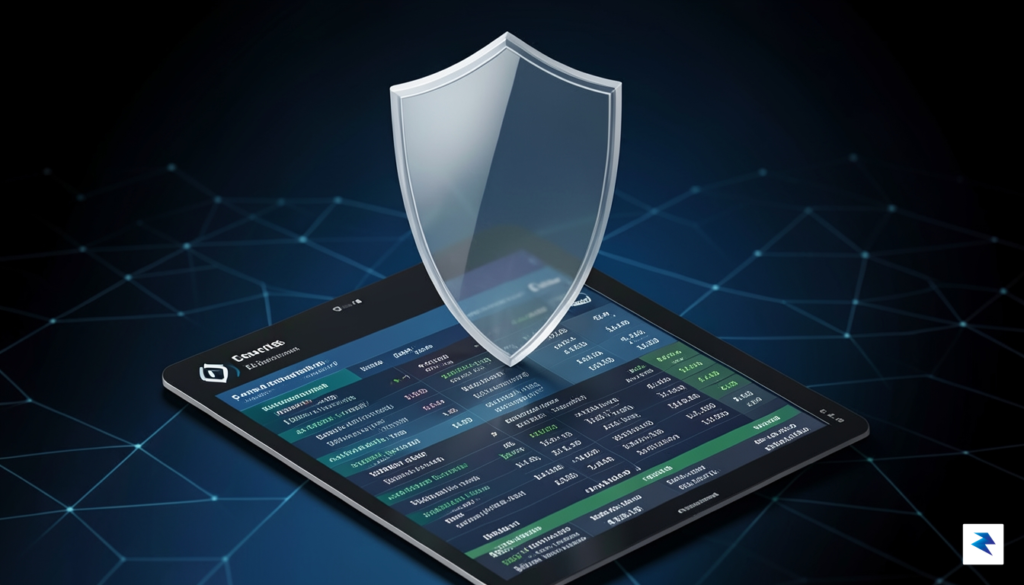
At the heart of Project Pangea lies a robust architecture designed to treat security not as an afterthought, but as the foundational layer of international finance. By embedding rigorous Know Your Customer (KYC) and Anti-Money Laundering (AML) protocols directly into the smart contract environment, the initiative ensures that every transaction is validated against real-time global regulatory standards. Rather than bypassing traditional legal frameworks, these automated smart contracts act as digital enforcers, programmatically verifying the identities of participants and the legitimacy of funds before a single cent is moved. This integration allows South Korean and European financial institutions to operate within a trusted, transparent environment that satisfies the stringent oversight requirements of diverse jurisdictions simultaneously.
The operational model relies on a sophisticated hybrid blockchain architecture, which skillfully balances the transparency of public networks with the ironclad privacy required by commercial banks. By utilizing a permissioned framework, participating banks retain absolute control over their underlying assets and internal ledgers, ensuring that sensitive data never leaves their secure environments unnecessarily. This setup allows institutions to benefit from the interoperability and speed of decentralized ledger technology while maintaining the strict data sovereignty mandated by regional financial authorities. Consequently, banks can participate in a global network without compromising the proprietary nature of their institutional operations or the privacy of their high-net-worth clients.

The convergence of decentralized infrastructure and institutional oversight represents a paradigm shift, proving that technological innovation can enhance, rather than replace, the necessary safeguards of the global banking system.
To address the inherent risks associated with high-value cross-border settlements, the platform employs multi-layered risk mitigation strategies designed to prevent systemic failure. These strategies include automated “circuit breakers” that trigger during anomalous activity, as well as multi-signature authorization processes that require approval from multiple institutional stakeholders for large-scale transfers. By distributing trust across a consortium of 47 reputable banks, the system eliminates the dangers of a single point of failure. This collaborative approach creates a self-regulating ecosystem where institutional safety is continuously reinforced by the collective vigilance of every member bank, effectively turning the volatility associated with traditional settlement methods into a streamlined, predictable, and highly secure digital experience.

The successful execution of Project Pangea acts as a definitive blueprint for a global paradigm shift in how multinational financial institutions handle cross-border liquidity and settlement. By leveraging Chainlink’s Cross-Chain Interoperability Protocol (CCIP), the participating banks have effectively demonstrated that the friction-heavy, multi-day waiting periods associated with legacy systems like SWIFT are no longer a technical necessity. As these experiments scale, the financial industry is moving toward a future where tokenized assets serve as the bedrock for daily clearing, drastically reducing the capital tied up in “nostro” and “vostro” accounts. This shift does not merely represent an incremental improvement in speed; it signifies a fundamental restructuring of how value moves across borders, promising to unlock billions in trapped liquidity that can be redeployed for more productive economic activities.
Looking ahead, the long-term implications for currency exchange markets are profound. When banks can execute atomic settlements across disparate blockchain networks and traditional ledgers, the reliance on complex intermediary correspondent banking layers diminishes significantly. This transition will likely lead to tighter bid-ask spreads and reduced transaction costs for retail and institutional customers alike, as the “middleman tax” that has historically plagued international transfers is stripped away. Furthermore, as this model expands beyond the initial coalition of South Korean and European institutions, we can anticipate a “network effect” where regional financial hubs across Asia, the Americas, and the Middle East feel compelled to integrate to remain competitive in a modernized, 24/7 global economy.

Institutional blockchain adoption is no longer a speculative experiment; it has evolved into a strategic necessity for any bank aiming to retain its relevance in a tokenized global market.
The transition from experimental pilots to industry-wide adoption is now driven by the undeniable pressure for operational efficiency and regulatory compliance. Traditional systems were built for an era of manual verification and localized banking; in contrast, blockchain-native infrastructure provides inherent transparency and immutability, which are increasingly demanded by global regulators. Consequently, those institutions that hesitate to adopt these interoperability standards risk being sidelined as the rest of the industry migrates toward a unified, high-speed digital ledger. By embracing this technological evolution, the banking sector is not merely updating its software—it is building the robust, transparent, and hyper-efficient foundation required for the next century of global commerce.
You must be logged in to post a comment.