
OKX and NYSE Join Forces: A New Era for TradFi and Crypto Integration
The Convergence of Traditional Finance and Digital Assets For over a decade, the relationship between Wall Street’s traditional financial…


Rare earth elements (REEs) are the silent backbone of the 21st-century economy, a group of seventeen chemically similar metallic elements that, despite their misleading name (they are not actually rare in terms of abundance, but difficult to extract and process), are absolutely non-negotiable for modern technology and national security. From the compact motors powering electric vehicles to the sophisticated guidance systems in advanced defense hardware, these elements are not merely components; they are the fundamental enablers that allow contemporary innovations to function with unparalleled efficiency, precision, and power. Their pervasive influence underscores a profound dependency that touches nearly every aspect of modern life and strategic global competition.
What makes these elements so indispensable lies in their extraordinary and unique physical and chemical properties. REEs exhibit remarkable magnetic, catalytic, and phosphorescent characteristics that are unmatched by other materials. For instance, tiny amounts of elements like Neodymium, Praseodymium, Samarium, and Dysprosium are crucial for creating the world’s most powerful permanent magnets. These magnets are essential for miniaturization, allowing powerful motors and generators to be built in incredibly small footprints, which is critical for everything from smartphone speakers to precision-guided missiles. Similarly, their catalytic properties are vital in refining petroleum and reducing emissions, while their phosphorescent qualities are key to vibrant display technologies and energy-efficient lighting.
This unique suite of properties positions rare earth elements at the very heart of the global green energy transition. The ambitious shift away from fossil fuels relies heavily on technologies that simply cannot operate at optimal efficiency or scale without REEs. Electric vehicles, for example, demand powerful, lightweight, and compact motors that are heavily reliant on neodymium-iron-boron magnets. Wind turbines, particularly the large offshore models, utilize vast quantities of these same powerful magnets in their direct-drive generators to convert wind into electricity with maximum efficiency. Without a stable and accessible supply of these critical elements, the world’s ability to develop and deploy the infrastructure necessary to combat climate change would be severely hampered, making REEs a lynchpin in future sustainability efforts.
Beyond clean energy, the strategic importance of rare earth elements extends critically into the realm of national security and advanced military technology. These elements are vital for the precision and performance of modern defense systems, providing the technological edge that defines contemporary warfare. They are integral to advanced radar and sonar systems, enabling superior detection capabilities, and form the core of powerful lasers and guidance systems for precision-guided munitions. Furthermore, REEs are found in stealth technology, secure communications, and advanced sensor arrays, enhancing the operational effectiveness and survivability of military assets. The reliable access to these materials is therefore not just an economic concern but a fundamental aspect of maintaining a nation’s defense capabilities and geopolitical standing.
Ultimately, rare earth elements are the quiet facilitators of high-tech innovation across a dizzying array of sectors. From the vibrant screens of our smartphones and laptops to the advanced MRI machines in hospitals, and from fiber optic cables transmitting vast amounts of data to specialized catalysts for advanced manufacturing processes, REEs are ubiquitous. They enable the performance, efficiency, and miniaturization that we have come to expect from modern devices and systems. Their continued availability is not merely a convenience but a prerequisite for future technological advancement, economic competitiveness, and the very fabric of our interconnected digital world, making their supply chain a critical point of global strategic interest.

China’s entrenched dominance in the rare earth sector is far from a mere byproduct of geological fortune; it is the culmination of decades of deliberate, state-led industrial engineering. By prioritizing the entire value chain—from extraction and refinement to the production of high-performance permanent magnets—Beijing has effectively created a global dependency that is difficult to untangle. The recent implementation of stringent export controls marks a definitive pivot in this strategy, moving away from simple market participation toward a more overt form of economic statecraft. By regulating the outflow of processed rare earth elements, China is signaling that its vast mineral wealth will henceforth be managed as a strategic lever to protect its domestic interests and influence global trade dynamics.
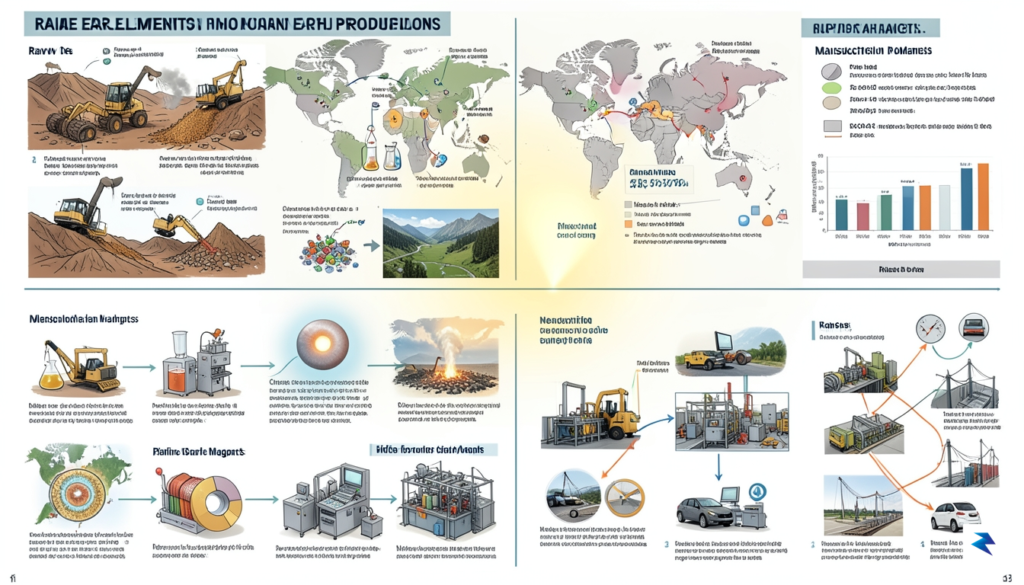
The new regulations function primarily through a complex system of export licensing, which requires firms to provide granular data on the destination and intended use of rare earth materials. This mechanism grants the Chinese Ministry of Commerce unprecedented visibility into the supply chains of foreign manufacturers, effectively allowing Beijing to curate which industries—and which nations—receive priority access to critical materials. For Western companies, this creates a profound layer of operational uncertainty. Because these controls specifically target the refined materials essential for electric vehicle motors, wind turbines, and advanced defense systems, they transform a standard supply chain hurdle into a significant geopolitical friction point.
The shift toward restricted exports suggests that China is no longer content with being the world’s factory for raw materials; it is now exercising its power to dictate the pace of technological development abroad.
Economically, the impact of these restrictions is already manifesting as increased price volatility and supply chain fragmentation. As availability tightens, the global market for processed magnetic materials is experiencing a sharp upward trend in costs, forcing downstream manufacturers to absorb significant premiums or seek expensive, time-consuming alternatives. Furthermore, these policies incentivize a “bifurcation” of the global market: Western firms are now under intense pressure to develop localized, independent supply chains, yet the infrastructure required to replicate China’s decades-old refining capabilities will take years, if not decades, to mature. Consequently, the immediate reality for U.S. manufacturers is a period of heightened vulnerability, as they struggle to balance current production demands against a shifting landscape of controlled access and restricted materials.
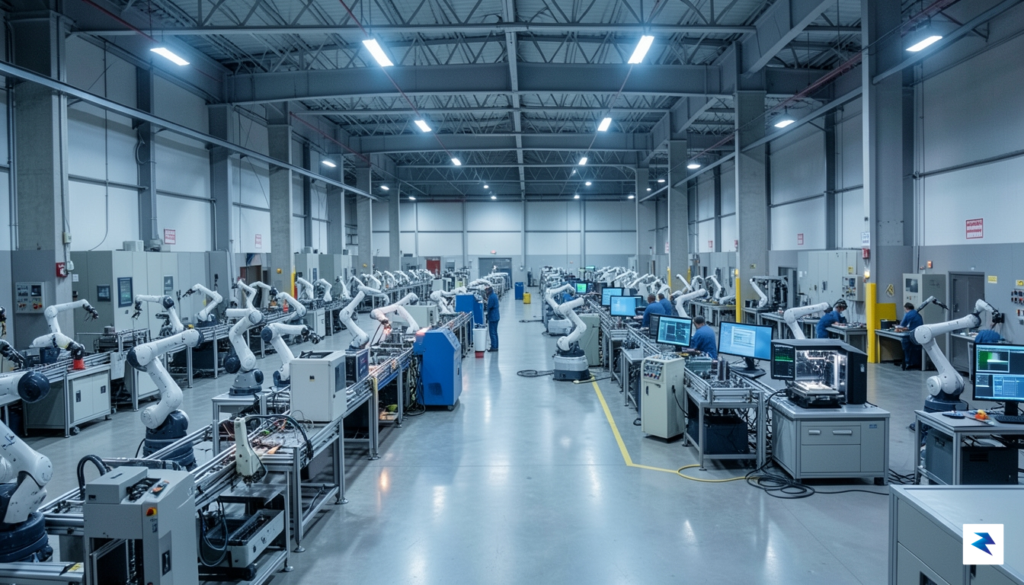
For U.S. manufacturers currently racing to onshore the production of high-performance permanent magnets, China’s recent export restrictions represent a significant, structural bottleneck. Companies like MP Materials and various emerging magnet-fabrication startups have invested heavily in the promise of a sovereign supply chain, yet these firms remain tethered to Chinese processing capabilities for the specialized separation and refinement of rare-earth oxides. When Beijing implements targeted export controls on the technology required to turn these raw materials into finished magnets, it effectively pulls the rug out from under domestic initiatives that were designed to mitigate precisely this kind of geopolitical leverage.
The “missing link” in the American industrial ecosystem is not the mining of rare-earth ores—which has seen a resurgence in locations like Mountain Pass, California—but rather the mid-stream processing and the advanced alloy-making phase. Because the United States lacks the extensive infrastructure to convert refined oxides into the specific metallic powders and sintered magnets required for electric vehicle motors and wind turbines, domestic firms are forced to rely on foreign partners. By tightening the flow of processing technology and specialized machinery, China is signaling that it intends to maintain its chokehold on the most value-added segments of the supply chain, forcing U.S. manufacturers to scramble for costly and often inferior alternatives.
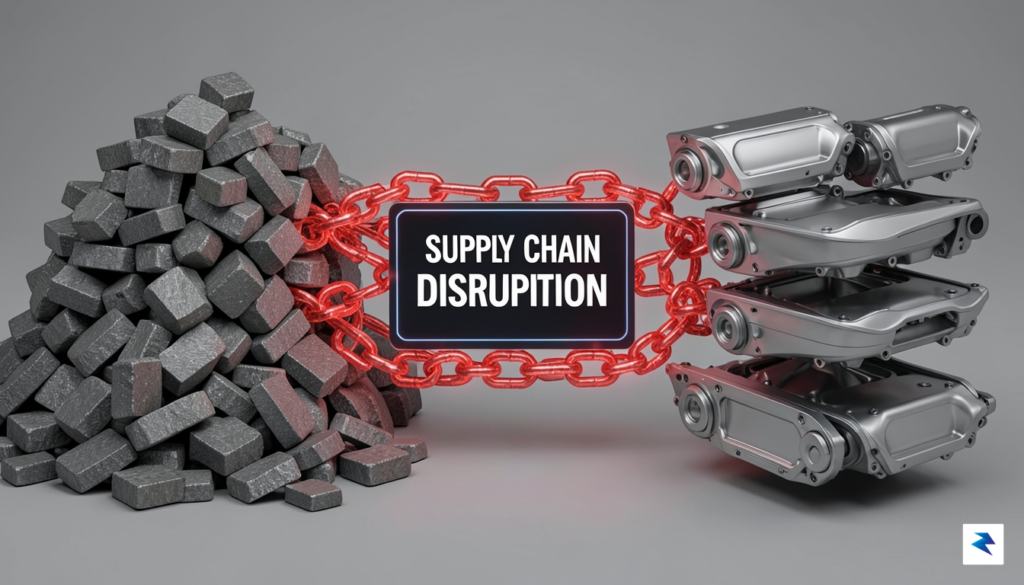
The vulnerability of the U.S. manufacturing sector is not found in the ground beneath our feet, but in the sophisticated industrial processes that turn raw elements into the high-tech components that power the modern economy.
This reliance creates an acute vulnerability that manifests immediately during periods of heightened trade tension. When a U.S. company is singled out by export restrictions, the operational delays are not merely measured in days or weeks; they often translate into months of stalled production cycles and broken procurement contracts. For a domestic manufacturer operating on thin margins, a three-to-six-month delay in receiving specialized magnet precursors can lead to a cascade of failures, potentially forcing the cancellation of major projects or the deferment of multi-year infrastructure goals. These delays also inflate costs significantly, as firms are forced to exhaust capital on emergency logistics or expensive re-engineering efforts to bypass the missing components.
Ultimately, the current policy shift acts as a stark reminder that supply chain independence requires more than just domestic extraction; it demands a total vertical integration that the U.S. has yet to achieve. As long as the processing and magnet-making phases remain geographically concentrated under the jurisdiction of a strategic competitor, the domestic supply chain will remain a fragile work in progress. Until the U.S. can bridge this technical gap with its own proprietary refining facilities, its manufacturers will continue to function at the mercy of shifting geopolitical winds, constantly threatening the viability of the transition to a localized, green-energy economy.

The struggle over rare earth elements transcends mere commerce; it has rapidly escalated into a fundamental test of national sovereignty and technological leadership in the digital age. These seventeen crucial minerals, often dubbed the “vitamins of modern industry,” are indispensable components in everything from advanced semiconductors and electric vehicle batteries to sophisticated defense systems and renewable energy technologies. As global superpowers intensify their competition for dominance in these critical sectors, the ability to control the supply of such foundational inputs has become a primary lever of geopolitical power, reshaping alliances and challenging established economic paradigms.
At the heart of this evolving dynamic lies the concept of resource nationalism, where a nation asserts greater control over its natural resources to achieve strategic economic or political objectives. China, holding a near-monopoly on the processing and refining of many rare earths, has increasingly leveraged this advantage to safeguard its industrial ambitions and project influence. Beijing’s recent actions, including tightening export controls and imposing restrictions on certain processing technologies, are not isolated trade measures but rather calculated moves designed to bolster its domestic industries, secure its position in high-tech manufacturing, and potentially slow the technological advancement of competitors. This strategic assertion underscores a broader global trend where access to critical materials is increasingly viewed through a national security lens, rather than purely as a matter of market efficiency.
Indeed, these trade restrictions are part of a much larger, long-term geopolitical posturing. They signal a deliberate intent to influence future technological landscapes, particularly in areas like artificial intelligence, quantum computing, and advanced aerospace. By controlling the foundational elements necessary for these innovations, a nation gains significant leverage over the pace and direction of global technological development. It forces other countries to either invest heavily in their own, often more expensive, domestic production or remain vulnerable to supply disruptions dictated by geopolitical rivalries. This strategic maneuvering transforms rare earths from a commodity into a potent instrument of statecraft, capable of shaping the economic futures and defense capabilities of nations for decades to come.
This complex situation inevitably brings to the forefront the risks and realities of economic decoupling. While a complete separation of the U.S. and Chinese economies seems improbable and potentially catastrophic, targeted decoupling in critical sectors is gaining traction as a policy objective. The motivations are clear: enhance national security, build supply chain resilience, and reduce strategic dependencies. However, the costs are substantial, potentially leading to higher prices for consumers, reduced economic efficiencies due to redundant infrastructure, and a possible slowdown in global innovation if collaboration diminishes. Navigating this path requires a delicate balance between safeguarding national interests and avoiding a fragmentation of the global economy that could harm all parties involved.
Ultimately, the rare earth saga raises profound questions about the sustainability of one-sided supply chain dependence in an increasingly fractured global order. The hyper-efficient, globally integrated supply chains that characterized the late 20th and early 21st centuries were built on assumptions of stable geopolitical relations and open trade. However, as great power competition intensifies and trust erodes, the fragility of relying on a single, dominant supplier—especially one that is also a strategic competitor—becomes glaringly apparent. Nations are now compelled to reassess their vulnerabilities, prioritize diversification, and invest in resilient domestic or allied supply chains, even if it means sacrificing some degree of economic efficiency. This shift marks a significant departure from previous globalization models, heralding a new era where national security and strategic autonomy are increasingly valued over pure cost optimization.
In response to tightening export restrictions, the United States is aggressively deploying policy levers to build up a resilient domestic buffer. Through initiatives like the Defense Production Act, the federal government has channeled hundreds of millions of dollars into rebuilding a domestic processing infrastructure that had languished for decades. Historically, the U.S. mined these critical minerals only to ship them abroad for refining; today, public-private partnerships are rushing to establish heavy rare earth separation facilities on American soil. This shift is paired with
You must be logged in to post a comment.