
Robinhood Chain Hits Top 5 in DEX Volume: What Investors Need to Know
The Rise of Robinhood Chain in Decentralized Finance Robinhood’s venture into blockchain infrastructure was once a subject of considerable…


The landscape of software development is undergoing a profound transformation, largely driven by the rapid advancements in artificial intelligence. What began as intelligent code completion and interactive chat assistants has quickly evolved into sophisticated, agentic AI tools capable of handling increasingly complex tasks. These agents, from generating entire functions to refactoring large codebases and even assisting with debugging, promise a future of dramatically accelerated workflows and unprecedented developer productivity. As these powerful tools transition from experimental novelties to indispensable components of our daily coding routines, their integration into continuous development pipelines becomes not just a convenience, but a strategic imperative for many organizations.
However, beneath the surface of this newfound efficiency and impressive intelligence, a subtle yet significant operational concern has begun to emerge. Developers and teams, while thrilled with the output quality, have started noticing an almost intangible overhead associated with certain AI coding agents. It’s a feeling that some tools seem to “think” more extensively, processing a vast amount of information or engaging in lengthy internal deliberations before finally presenting their solution, even for seemingly straightforward prompts. This anecdotal observation, a quiet hum in the background of active development, has sparked a crucial question: are all AI agents created equal when it comes to their underlying resource consumption, or are some secretly demanding a disproportionate share?
This brings us to the critical concept of token overhead. In the realm of large language models (LLMs), a “token” is the fundamental unit of text processing—it can be a word, part of a word, a punctuation mark, or even a space. Every single token that an AI model processes, whether as input from your prompt or as output in its response, incurs computational cost and consumes resources. High token overhead, therefore, translates directly into two major implications for development teams: increased monetary expense due to higher API usage and a noticeable degradation in performance. Longer processing times mean developers wait longer for responses, breaking their flow and reducing their effective productivity, while hitting API rate limits more frequently can bottleneck an entire team’s operations. Understanding and minimizing this overhead is paramount to leveraging AI agents sustainably and cost-effectively.
In an environment where AI tools are rapidly becoming essential infrastructure, relying solely on perceived intelligence or persuasive marketing narratives is no longer sufficient. To make truly informed decisions about which AI coding agents to integrate into our workflows, we must move beyond subjective impressions and delve into objective, empirical data. The true cost and efficiency of these tools lie not just in their ability to generate correct code, but also in the invisible resources they consume behind the scenes. It’s imperative to look beyond the immediate utility and scrutinize the operational footprint, ensuring that our pursuit of enhanced productivity doesn’t inadvertently lead to an inflated budget or sluggish development cycles.


To truly understand the token expenditures of AI agents like Claude Code and OpenCode, we recognized the limitations of anecdotal evidence and surface-level observations. Moving beyond mere hunches and speculative claims, our objective was to engineer a robust, controlled logging environment that could meticulously observe and record the precise communication flow between these agents and Anthropic’s powerful API endpoints. This rigorous, data-driven approach was essential to gather irrefutable evidence on the actual tokens consumed during their operation, allowing us to accurately distinguish between what an agent *appears* to be doing and what the API *reports* it’s consuming.
Our core strategy involved deploying an intercepting layer, effectively acting as a transparent proxy positioned directly between the AI agents and the Anthropic API. Instead of the agents communicating directly with `api.anthropic.com`, we configured them to route all their requests through our custom logging server. This server was meticulously designed to inspect every outgoing request and incoming response without altering the agents’ intended behavior or the API’s functionality. This allowed us to capture the raw HTTP traffic, offering an unparalleled view into the exact data packets exchanged at the precise moment of interaction, thereby ensuring that no token-related detail went unnoticed or unrecorded.
Within this controlled environment, our logging system was configured to capture several critical pieces of information for each API call made. This included the complete JSON payload of every request sent by the agents, which crucially contained the entire prompt text, system messages, and any other parameters passed to the model. Equally vital was the capture of the full response payload returned by the Anthropic API. Most importantly, we specifically extracted the `usage_block` embedded within these responses. This `usage_block` is the authoritative source for token accounting, providing distinct values for `input_tokens` (representing the tokens sent to the model) and `output_tokens` (representing the tokens generated by the model), alongside other essential request metadata such as timestamps and the specific API endpoint invoked, allowing for granular analysis of each interaction.
To ensure the integrity and fairness of our comparison, stringent controls were implemented across the entire testing methodology. Both Claude Code and OpenCode were presented with the *identical* initial prompts and subsequent interaction sequences, guaranteeing that any observed differences in token usage were attributable to the agents’ internal behaviors rather than varying input. Furthermore, all tests were executed on the same dedicated machine, under consistent network conditions, to minimize external variables that could introduce bias into the results. We also conducted multiple runs for each agent and averaged the results, a practice that helps to mitigate transient network fluctuations or minor inconsistencies, thereby reinforcing the reliability and robustness of our observed data.
While this controlled logging environment provided an exceptionally precise view into token consumption, it is important to acknowledge the inherent limitations of any study. Our findings represent a snapshot of the agents’ behavior and API interactions at the specific time of testing, and it is plausible that future updates to either the agents themselves or Anthropic’s API could alter these dynamics. Moreover, while we meticulously controlled the test environment, real-world agent interactions can be highly complex and variable, involving diverse user inputs and unpredictable conversational paths. Nevertheless, by focusing on a direct, identical prompt scenario, our methodology provides a robust and apples-to-apples comparison of the foundational token overhead introduced by each agent, offering clear insights into their underlying efficiency.
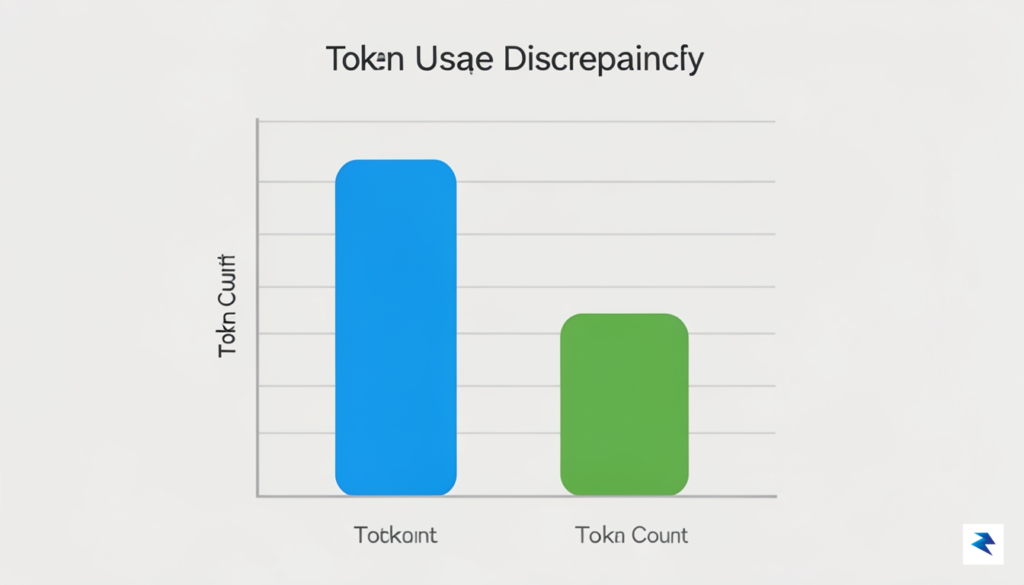
When analyzing the underlying mechanics of AI-driven development tools, the disparity in token consumption between Claude Code and OpenCode reveals a significant architectural gap. Our empirical measurements show that Claude Code consistently initializes with a massive footprint, sending approximately 33,000 tokens before the user prompt is even processed. In stark contrast, OpenCode operates with a much lighter initialization sequence, utilizing only about 7,000 tokens to achieve a similar state of readiness. This 26,000-token difference is not merely a negligible technical quirk; it represents a substantial overhead that compounds rapidly over the course of a long-term coding session.
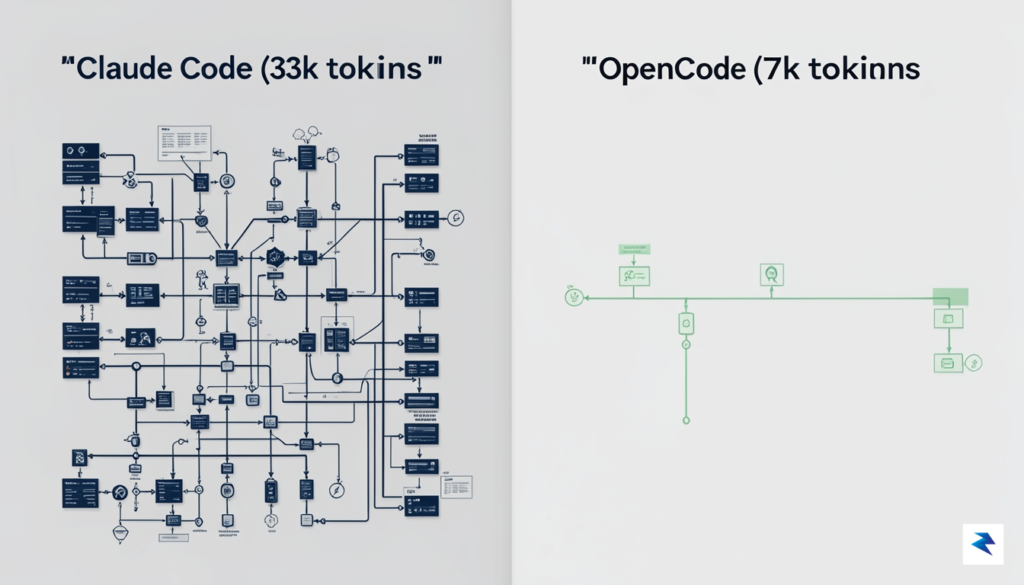
The primary driver behind this efficiency gap lies in how each agent handles its initial environment context and system harness. Claude Code appears to favor a more exhaustive approach to pre-loading repository metadata and file structure definitions, likely intended to minimize future latency during complex tasks. While this “eager loading” strategy can lead to faster responses once the agent is fully active, it forces the user to pay a steep upfront tax on every new session. Conversely, OpenCode employs a more selective, just-in-time loading mechanism that defers the ingestion of non-essential system information until it is specifically required by the user’s query.
The cost of “eager” context loading becomes exponentially expensive when high-frequency agent interaction is required, potentially doubling the operational budget for developers who frequently restart their coding sessions.
Beyond simple initialization, these numbers highlight a fundamental difference in caching strategies and harness implementation. A robust harness is necessary for an AI agent to understand a codebase, yet Claude Code’s current implementation seems to carry a heavy “weight” of boilerplate instructions and environment state descriptors that are sent repeatedly. OpenCode’s leaner harness suggests a more optimized serialization process, where only the most critical system state is transmitted. This discrepancy forces us to reconsider what is actually required for an AI to be “aware” of a project; if OpenCode can function effectively with 7,000 tokens, the additional 26,000 tokens in Claude Code represent either a massive redundancy or an area ripe for aggressive optimization.
Ultimately, the side-by-side efficiency pattern suggests that developers must choose between two distinct philosophies. If you prioritize immediate, broad-spectrum context awareness at the cost of high token burn, the current iteration of Claude Code offers a comprehensive, albeit expensive, experience. However, for those looking to maximize their token-to-output ratio and minimize unnecessary API costs, the streamlined approach demonstrated by OpenCode provides a significantly more sustainable model for daily development tasks.

When you initiate a session with an AI coding agent, the immediate consumption of your token budget is rarely a reflection of your current request. Instead, it is the result of a complex “handshake” between your local environment and the large language model. This process, often referred to as context window management, involves the agent packaging your project’s metadata, file structures, and system instructions into a single payload. Tools like Claude Code may opt for a verbose, exhaustive approach, pushing 33,000 tokens upfront to ensure the model has a “total awareness” of the codebase. Conversely, leaner agents like OpenCode prioritize efficiency, sending only 7,000 tokens by utilizing selective indexing or just-in-time retrieval. The disparity arises because every token sent is a cost incurred, and the architectural philosophy of the agent dictates exactly how much “memory” is mandated before a single line of code is analyzed.
The primary driver of this token bloat is the persistent need for the model to understand the state of your project. To maintain continuity, an agent must send system prompts that define its personality, its available tools, and the rules of engagement. When an agent is designed to be highly autonomous, these system instructions become bloated, often containing hundreds of lines of behavioral protocols that are re-transmitted with every single turn of the conversation. Furthermore, if an agent is configured to automatically scan and index your file directory, it creates a massive header containing file paths, dependency lists, and recent git history. While this depth is helpful for complex debugging, it creates a “tax” on every query; even if you only ask the AI to change a single variable, it must re-process that entire project map to maintain its operational context.
Token bloat is the hidden cost of convenience. Every redundant piece of data sent in the initial context window is a silent drain on your budget, prioritizing the model’s “readiness” over your financial efficiency.
Another layer of complexity involves how these agents handle “state synchronization.” Some agents prefer to keep the model updated with an exhaustive snapshot of the active workspace, which ensures the AI rarely suffers from hallucinated file references but inevitably leads to massive input costs. Others utilize a reactive approach, sending only the files relevant to the current task—a method that significantly lowers the token entry barrier. The difference between a 7,000-token start and a 33,000-token start is essentially the difference between a “stateless” assistant that fetches what it needs and a “stateful” assistant that carries the entire project in its mental briefcase. As users, we must weigh the utility of having an AI that knows our entire directory structure against the reality that such knowledge is being purchased, in tokens, every single time we press enter.

Ultimately, the way an agent manages its system prompts and context headers is a design choice that directly impacts the longevity of your API credits. Developers looking to optimize their workflow should investigate whether their chosen agent allows for “context pruning” or the ability to ignore specific directories, such as node_modules or large build artifacts, which often inflate token counts without providing useful signal. By understanding that these agents are not just “thinking,” but are actively re-transmitting your project’s digital blueprint with every interaction, you can begin to see why some tools feel significantly more expensive than others despite performing similar tasks.

When evaluating AI coding assistants, the conversation often centers on code quality, speed, or context awareness, but the underlying token overhead represents a silent drain on operational budgets. The disparity between Claude Code’s 33,000-token initialization and OpenCode’s 7,000-token footprint is not merely a technical nuance—it is a financial multiplier that compounds over time. For an independent developer running a few dozen prompts a day, that extra 26,000-token “tax” per interaction translates into hundreds of thousands of unnecessary tokens spent every week. At current API pricing tiers, these invisible costs shift from being a negligible rounding error to a significant monthly subscription-level expense that eats directly into your project’s profitability.
To put this into perspective, consider a professional developer performing 50 active coding sessions throughout a standard work week. By choosing the more bloated agent, you are effectively paying for the privilege of burning through your API quota nearly five times faster than necessary. If your workflow involves complex debugging or refactoring across large codebases, this overhead triggers rate limits far sooner, forcing you to throttle your productivity or wait for billing windows to reset. For large enterprises managing teams of developers, this inefficiency scales linearly, turning a manageable monthly cloud bill into a bloated line item that could have been avoided with a more lightweight integration.

The true cost of an AI agent isn’t just the price of the model itself; it is the total volume of tokens required to maintain context every single time you hit ‘enter.’
As your codebase grows, the financial impact becomes even more pronounced. Sophisticated AI agents often need to re-index or re-scan project files to maintain coherence, and if the base initialization is already high, the cumulative cost of managing a large, modular codebase becomes prohibitive. Developers working on enterprise-scale repositories may find themselves hitting their soft monthly spending limits in just a few days if they are tethered to a high-overhead tool. Consequently, the decision to use a specific AI agent should be treated as a procurement exercise: calculate your expected daily volume, multiply it by the per-session token overhead, and compare that against your monthly development budget. By scrutinizing the “hidden” cost of initialization, you can ensure that your AI-assisted workflow remains a productivity catalyst rather than a financial liability.

While the developers behind sophisticated AI tools are diligently working to optimize their internal mechanisms and reduce unnecessary token consumption, there are immediate, actionable strategies you can implement right now to gain better control over your AI usage and expenditure. Proactive management of your agentic workflows is paramount, transforming you from a passive consumer of AI services into an active orchestrator, ensuring efficiency and cost-effectiveness in your development cycles. This isn’t just about saving money; it’s about refining your interaction with AI, leading to more predictable outcomes and a deeper understanding of how these powerful tools operate.
One of the most significant levers developers have is how they manage the AI’s contextual understanding. Many AI agents, especially those designed for complex tasks, may ingest a vast amount of information, sometimes even before truly engaging with your specific prompt, leading to unexpectedly high token counts. To counteract this, cultivate a habit of rigorous context pruning. Before sending a request, review the accumulated conversational history or reference documents and actively remove any information that is no longer directly relevant to the current task. This isn’t always easy, as it requires a keen understanding of what the AI truly needs to perform effectively, but it’s a skill that pays dividends.
Furthermore, consider implementing iterative prompting strategies. Instead of attempting to solve an entire complex problem in a single, monolithic prompt, break it down into smaller, sequential steps. Each step can then leverage a more focused context window, building upon the summarized output of the previous stage. This not only reduces the token load for each individual call but also makes debugging and refining your AI’s behavior significantly easier, as you can pinpoint exactly where an agent might be veering off track. Employing techniques like summarizing previous interactions or extracting key information to pass forward can drastically reduce the cumulative token count over a multi-turn conversation or task execution.

The landscape of AI tools is diverse, and not every agent or model is suited for every task. A crucial aspect of optimizing your workflow involves strategically rotating your AI tools based on the specific demands of your project. For smaller, more confined tasks—like generating a simple function, summarizing a short document, or performing a quick data transformation—opt for more lightweight and often more cost-effective models. These models, while perhaps less capable of open-ended reasoning, excel at focused execution without the overhead of larger, more generalized agents that might bring extensive, unnecessary context to bear.
Conversely, for large, intricate projects involving multiple stages, complex logic, or extensive code generation, a more powerful, larger-context agent might be indispensable. However, even with these robust tools, it’s vital to segment the work and, where possible, integrate cheaper models for preliminary planning, error checking, or documentation generation. Think of it as a hybrid approach: using a specialized, high-performance tool for critical, demanding phases, and more economical options for the scaffolding and supplementary tasks. This dynamic switching allows you to harness the strengths of various AI agents while keeping a vigilant eye on your token budget.
Ultimately, to manage what you use, you must first understand what you’re consuming. The current state of telemetry for many AI agent tools leaves much to be desired, often presenting only a cumulative token count without granular detail. Developers should vocally advocate for, and where possible, implement their own monitoring solutions to track AI usage more effectively. This means understanding not just the total tokens, but the breakdown of input tokens versus output tokens, tokens consumed by internal “thoughts” or planning phases that don’t directly contribute to the final output, and tokens associated with tool calls or API interactions.
Key Takeaway: Demand granular telemetry. Without clear insights into how tokens are spent, optimizing your AI agent workflow becomes an exercise in guesswork, rather than data-driven decision-making.
When evaluating or choosing an AI agent, prioritize those that offer transparent, detailed usage reports. If such reports are not readily available, consider building wrappers or logging mechanisms around your AI calls to capture this data yourself. By meticulously tracking these metrics, you can identify patterns of inefficiency, pinpoint agents or prompts that are disproportionately consuming resources, and make informed decisions about refactoring your agentic prompts or even switching to different tools. This level of transparency is not merely a convenience; it’s a fundamental requirement for anyone serious about building efficient, cost-effective AI-powered applications.
You must be logged in to post a comment.