
Slate Auto Debuts $24,950 Electric Truck: A New Era for Affordable EVs
The Evolution of Affordable Electric Utility Vehicles For the better part of the last decade, the electric vehicle revolution has felt like an…


The recent $409 million penalty imposed on Coupang by South Korea’s Fair Trade Commission serves as a watershed moment in the intersection of artificial intelligence and corporate accountability. At the heart of this massive fine lies a sophisticated algorithmic manipulation scheme: the company’s search ranking algorithms were found to have been engineered to prioritize private-label goods over those of third-party competitors. By artificially inflating the visibility of its own products, Coupang effectively tilted the digital playing field, undermining consumer choice and distorting market competition. This was not merely a technical glitch or an unintended side effect of machine learning optimization; it was a deliberate strategy that turned the internal logic of the platform into a tool for unfair trade, triggering one of the largest regulatory crackdowns on algorithmic bias to date.
This incident represents a definitive paradigm shift in how global regulators view corporate responsibility within the AI era. For years, companies have operated under the assumption that algorithmic processes were “black boxes,” shielded from traditional antitrust scrutiny by their technical complexity. However, the sheer scale of the Coupang fine proves that regulators are no longer willing to accept “it’s just the algorithm” as a valid defense. Instead, authorities are now demanding radical transparency, holding the C-suite and board of directors personally accountable for the outcomes generated by their automated systems. The message is clear: if an algorithm is used to deceive consumers or suppress competition, the legal and financial consequences will be treated with the same severity as traditional corporate fraud or price-fixing.
The cost of poor AI governance is no longer just a reputation risk; it is a direct, multi-million dollar liability that can erode years of market capitalization in a single regulatory ruling.
The financial ramifications of this case extend far beyond the immediate $409 million hit to the bottom line. It sets a dangerous precedent for any enterprise that relies on AI-driven recommendation engines, dynamic pricing models, or automated supply chain logistics. As global markets move toward stricter AI governance frameworks—such as the EU’s AI Act—the Coupang case serves as a warning signal that the era of “move fast and break things” is over. Organizations must now integrate robust oversight, ethical auditing, and human-in-the-loop protocols into their AI development lifecycles. Failing to prioritize these governance structures is no longer an operational oversight; it is a fundamental business risk that threatens the long-term viability of the modern digital enterprise.

For far too long, the corporate world treated artificial intelligence and data management as purely technical maintenance tasks, relegating oversight to the IT department. In this traditional model, governance was viewed through the narrow lens of operational uptime, server security, and software patch cycles. However, as the massive penalty levied against Coupang demonstrates, modern AI systems have outgrown the server room. They are no longer just tools for internal efficiency; they are active architects of market behavior, consumer outcomes, and legal compliance. When organizations treat AI governance as a technical checkbox rather than a core business strategy, they create a dangerous strategic blind spot that can lead to catastrophic financial and reputational loss.
The persistence of the “silo mentality” within corporate structures is perhaps the greatest inhibitor to effective AI oversight. By sequestering AI responsibility within IT, leadership inadvertently signals that algorithmic accountability is a minor technical detail rather than a foundational pillar of corporate integrity. IT professionals are experts in infrastructure, but they are rarely equipped to navigate the complex nuances of consumer protection laws, ethical social engineering, or the long-term brand impact of biased automation. When the C-suite abdicates its responsibility to oversee the logic and intent behind AI systems, they leave the company vulnerable to decisions that are technically functional but strategically and ethically disastrous.

True AI governance is not about managing software; it is about managing the risks that software poses to the company’s license to operate.
Furthermore, relying solely on technologists to govern AI creates a gap in legal and ethical alignment. An IT team might optimize a search algorithm to increase short-term sales—effectively doing its job—without realizing that the underlying logic violates regulatory standards or manipulates consumer trust in ways that invite massive fines. Without a multi-disciplinary approach that includes legal, ethics, and marketing departments, companies are effectively flying blind. The resulting failure is not a technical glitch; it is a failure of leadership to integrate AI oversight into the broader institutional risk management framework. To move forward, organizations must dismantle these silos and elevate AI governance to a board-level priority where strategy, ethics, and technology converge to protect the company’s future.

For decades, boards of directors have refined their expertise in navigating financial volatility, regulatory compliance, and cybersecurity threats. However, the rapid integration of artificial intelligence into core business operations has created a blind spot that traditional oversight models are ill-equipped to address. As evidenced by the record-breaking fine levied against Coupang, algorithmic decision-making is no longer merely an operational detail—it is a material risk factor that can jeopardize shareholder value and brand reputation. To avoid similar failures, boards must pivot from a passive, high-level observation style to a rigorous, active engagement model that treats algorithmic auditing as a central pillar of corporate governance.
The primary shift required is the expansion of the board’s duty of care to encompass the entire lifecycle of AI systems. This means directors can no longer rely solely on technical teams to “self-regulate” or assume that automated processes are inherently neutral. Instead, the board must establish a structured framework for algorithmic oversight, ensuring that AI-driven outcomes are aligned with the company’s stated ethical standards and legal obligations. This involves challenging management on the “black box” nature of internal algorithms, demanding transparency regarding data inputs, and insisting on regular, independent audits that stress-test models for bias, discriminatory patterns, and unintended market manipulation.
True AI governance is not about understanding the code, but about governing the consequences of that code. Boards must demand visibility into how AI models make decisions that impact customers, employees, and competitive fairness.
To effectively manage these risks, AI governance must be fully integrated into existing Enterprise Risk Management (ERM) frameworks. Rather than treating AI as a siloed IT concern, companies should map algorithmic risks directly to their existing risk appetite statements. This integration allows the board to monitor AI performance metrics alongside traditional KPIs, such as revenue growth and debt-to-equity ratios. Furthermore, boards should consider the following steps to professionalize their oversight:

Ultimately, the cost of weak governance is far higher than the cost of implementing robust oversight. By fostering a culture of accountability where algorithmic risks are treated with the same severity as financial malfeasance, boards can protect their organizations from the reputational and economic fallout of AI gone wrong. The goal is to move beyond the reactive “damage control” phase and toward a proactive stance where AI is deployed as a transparent, ethical, and reliable engine for sustainable growth.
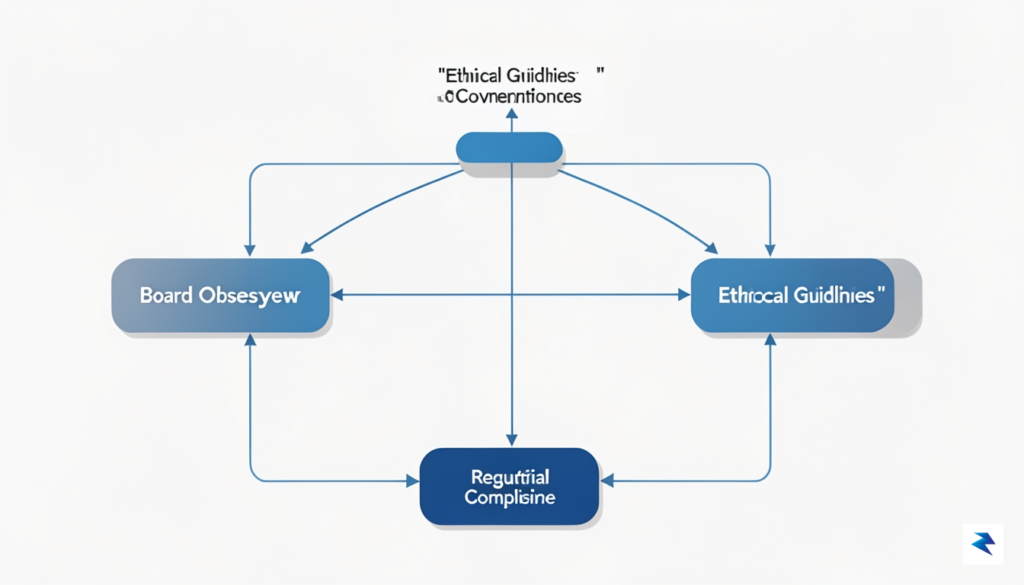
Building a sustainable governance framework is no longer a luxury reserved for tech giants; it is a fundamental requirement for any organization that intends to leverage machine learning while maintaining the trust of its consumers and regulators. To move beyond mere compliance and avoid the catastrophic financial and reputational damage seen in recent high-profile cases, companies must integrate ethical oversight into the very architecture of their operations. This requires a transition from reactive policy-making to a proactive, lifecycle-oriented approach that monitors AI from the initial stage of data ingestion through to final output delivery.

To institutionalize these protections, organizations should implement a comprehensive four-pillar framework:
True AI governance is not a “set it and forget it” policy document; it is a living, breathing commitment to ethical accountability that evolves alongside the technology itself.
Ultimately, the goal is to shift the corporate culture from one that views AI as a “black box” to one that views it as a transparent, manageable asset. When organizations document their protocols and subject their algorithms to the same scrutiny as their financial statements, they do more than just avoid fines—they build a resilient brand identity that consumers can trust in an increasingly automated world. By adopting these four pillars, businesses can demonstrate that they are not just focused on speed and growth, but are equally invested in integrity and long-term societal responsibility.

In the wake of massive regulatory penalties, the narrative surrounding artificial intelligence is undergoing a profound transformation. Rather than viewing governance as an expensive administrative burden or a hurdle to rapid innovation, forward-thinking organizations are beginning to recognize ethical AI as a significant brand asset. When a company embeds transparency, fairness, and accountability into its algorithmic architecture, it does more than just satisfy regulators; it builds a foundation of reliability that consumers increasingly demand. In a marketplace saturated with automated tools, the businesses that survive and thrive will be those that differentiate themselves through the integrity of their data practices, turning trust into a tangible competitive advantage.
This shift toward a “trust-based” economy is already reshaping how customers interact with digital platforms. Users are becoming more sophisticated, often researching how companies utilize their personal data and whether the underlying AI models are prone to bias or manipulation. When an organization demonstrates that it has proactively implemented robust oversight—such as rigorous model auditing and clear algorithmic disclosures—it signals to the market that it values customer security over short-term gains. This proactive stance effectively inoculates the brand against the catastrophic financial and reputational pitfalls that currently plague companies caught in the “old” way of doing business, where speed was prioritized at the expense of social and legal responsibility.
The true cost of weak AI governance is not merely the size of the fine; it is the permanent erosion of the trust capital that takes decades to build but only a single algorithmic failure to destroy.

Ultimately, the burden of this transition falls squarely on the shoulders of executive leadership. AI governance is no longer a peripheral concern for IT departments or a checkbox for legal teams; it is a fundamental board-level priority that dictates the long-term viability of the enterprise. Leaders must stop treating compliance as an afterthought and start integrating ethical oversight into the very DNA of their product development lifecycles. By taking immediate ownership of these responsibilities, boards can ensure that their AI initiatives are not only compliant with emerging global standards but are also engines of sustainable growth. The organizations that commit to this level of stewardship today will be the ones that define the standards of the next generation, transforming the chaos of current regulations into a clear path for lasting success.
You must be logged in to post a comment.