
Why 42% of Adults Receive Financial Support from Parents (And Why It’s Okay)
The New Normal: Why Financial Interdependence is Growing For generations, the transition into adulthood was marked by a clear, linear…


The European Union has long positioned itself as the global architect of digital governance, and its recent focus on the Android ecosystem represents a significant escalation in its regulatory strategy. At the heart of this movement is the Digital Markets Act (DMA), a robust legal framework designed to curb the unchecked power of “gatekeepers”—large platforms that exert significant control over digital markets. By mandating that Google open its mobile operating system to third-party artificial intelligence competitors, the EU is moving beyond traditional antitrust litigation. Instead, it is treating AI integration as a fundamental public utility, ensuring that the next generation of digital infrastructure remains open, interoperable, and fair for all participants.

The EU’s decision to target Android is rooted in the platform’s role as the primary gateway to the modern internet. For billions of users, the smartphone is the first and most frequent point of contact with generative AI, whether through built-in assistants or integrated search features. Regulators fear that if Google is permitted to bake its proprietary AI models into the operating system without providing equal access for rivals, it will create an insurmountable barrier to entry for smaller, innovative firms. This is a strategic shift in perspective; whereas previous antitrust battles focused on search engine bias and browser bundling, the current oversight targets the “AI stack”—the layers of software and data processing that power intelligent, automated responses.
The DMA represents a fundamental pivot from punishing past abuses to preemptively mandating competitive architecture in emerging technological fields.
This shift from search dominance to generative AI control is far from accidental. While Google has historically argued that its products succeed because of their inherent utility, the EU contends that this success is increasingly dependent on the “walled garden” architecture of Android. By forcing Google to allow alternative AI agents to run with similar levels of system access, the European Commission is attempting to prevent the monopolization of the intelligence layer. This approach recognizes that in an AI-first world, whoever controls the user’s primary interface controls the flow of information, decision-making, and economic value. Consequently, the EU is not merely regulating a company; it is actively shaping the future structure of the global AI marketplace to prevent a future where a single provider dictates the capabilities of every smartphone on the planet.
At its core, true interoperability within the mobile ecosystem means moving beyond simple app-based interactions to a model where third-party artificial intelligence can function as a core system service. Historically, Android has operated as a “walled garden” for Google’s own tools, granting Google Assistant privileged, low-level hooks into the operating system. This allows the assistant to pull context from screen content, manage hardware settings, and intercept voice commands with a level of latency and authority that third-party developers, such as OpenAI or Anthropic, have never been able to match. By forcing Google to open these deep system APIs to external competitors, regulators are attempting to ensure that an AI’s capability is determined by the quality of its underlying model rather than its proximity to the operating system’s kernel.
The technical shift required to achieve this level of integration is profound, as it necessitates a fundamental restructuring of how Android manages context awareness. Currently, Google Assistant sits at the center of the Android experience, acting as a broker for user data and system permissions. If third-party AI providers are granted similar access, Google must build robust, secure abstraction layers that allow these external models to interpret user intent without compromising sensitive data. This essentially creates a “neutral” interface where users could theoretically swap their primary system AI as easily as they change their default browser or SMS application, effectively decoupling the intelligence layer from the hardware manufacturer’s proprietary software stack.
However, this transition introduces significant security hurdles that cannot be overlooked. Providing deep OS access to third-party models risks exposing private user information or system-level vulnerabilities if not managed with extreme caution. Google will likely argue that maintaining a “secure by design” environment requires strict oversight of any code that interacts with the system kernel. Consequently, the operational implementation of this mandate will likely involve a heavily vetted sandbox environment, where external AI providers must adhere to rigorous privacy protocols to receive the necessary permissions. Balancing this security-first approach with the demand for an open, competitive marketplace will define the next phase of mobile software architecture.
The true test of this mandate lies in whether third-party models can achieve the same “system-wide awareness” as Google Assistant without triggering a cascade of security vulnerabilities or performance degradation.
Ultimately, the burden of proof rests on how effectively Google creates these bridges for their rivals. If the implementation is overly restrictive or technically cumbersome, the mandate may fail to spark genuine competition, leaving the status quo largely intact. Conversely, if Google provides seamless, high-performance hooks for external models, it could trigger a new era of innovation where users are no longer forced to rely on a single vendor’s vision of artificial intelligence. This shift represents a massive operational pivot for a company that has spent over a decade perfecting the tight integration of its own services, signaling a major transition in how mobile operating systems interact with the burgeoning world of generative AI.
At first glance, the European Union’s sweeping mandates regarding AI interoperability on mobile platforms appear to be a decisive strike against Big Tech’s dominance. By forcing open the gates of Android, regulators aim to level the playing field, theoretically allowing smaller AI developers to compete directly with Google’s proprietary models. However, this regulatory pursuit of competition may inadvertently trigger a phenomenon known as regulatory capture, where the very rules designed to constrain a giant actually serve to fortify its position. Because Google already owns the underlying architecture of Android, it possesses the unique capacity to dictate the technical specifications for compliance, effectively forcing every other AI player to build their products within a framework that Google controls.
The disparity in resources creates an insurmountable hurdle for smaller competitors when faced with complex legal and technical mandates. Implementing the rigorous compliance measures demanded by the EU—ranging from data privacy safeguards to intricate API integration protocols—requires a massive dedicated legal and engineering workforce. While a startup might struggle to allocate the necessary capital to meet these shifting regulatory goalposts, Google has the institutional inertia and deep pockets to implement these requirements systematically across its ecosystem. Consequently, the company can absorb the costs of compliance as a standard operating expense, whereas smaller rivals may find the regulatory burden so prohibitive that it stifles their ability to innovate or scale their own AI solutions.
The paradox of modern tech regulation is that the largest players often benefit most from increased complexity, as they are the only ones with the infrastructure to navigate the maze they helped create.

Furthermore, Google has proven remarkably adept at utilizing the language of “security” and “user privacy” to maintain a tight grip on its application programming interfaces (APIs). When regulators demand that third-party AI models be given deeper access to Android’s system-level data, Google can strategically argue that such open access poses a fundamental risk to user security. By setting the security standards themselves, they create a gatekeeping function that permits them to vet, authorize, or restrict third-party access under the guise of protecting the consumer. This creates a circular dependency: to play on the Android field, competitors must comply with Google’s technical definitions of safety, which inherently prioritizes Google’s own vertically integrated AI services over those of its rivals.
Ultimately, by forcing the AI ecosystem to coalesce around Android’s technical requirements, the EU may be inadvertently cementing Google’s role as the primary arbiter of the mobile AI experience. Rather than dismantling the “walled garden,” these regulations might simply be installing a standardized gatekeeper, one whose rules are written by the very company that stands to benefit most from their enforcement. As competitors scramble to align their technologies with the latest mandates, they are inadvertently tethering their future to Google’s infrastructure, ensuring that even in a more “open” market, the rules of the game remain firmly in the hands of the incumbent.

The regulatory landscape in Brussels has long functioned as a global bellwether, and the latest interventions regarding AI integration are no exception. History has repeatedly shown that when the European Union sets stringent compliance standards, multinational corporations often find it more cost-effective to adopt these mandates as their global default rather than maintaining a fragmented, region-specific infrastructure. This “Brussels Effect” is particularly potent in the tech sector, where the complexity of managing disparate AI protocols across different markets could stifle innovation. By forcing Google and other platform giants to ensure interoperability and fairness, the EU is effectively dictating the architecture of AI development for the entire world, not just its own citizens.

While the EU leans heavily into oversight, the reactions from the United States and various Asian markets are creating a complex, multi-polar regulatory reality. In the U.S., the approach remains a delicate balancing act between fostering the rapid commercialization of AI and addressing mounting concerns regarding market monopolization. However, if the EU successfully mandates a more open, competitive environment for AI on mobile devices, American regulators will likely face increased domestic pressure to adopt similar guardrails to prevent their own tech giants from creating “walled gardens” that exclude smaller innovators. Similarly, in Asia—particularly in markets like Japan and South Korea—there is a growing emphasis on sovereign AI initiatives, where governments are striving to ensure that local developers are not entirely sidelined by the dominance of Western-centric models.
The transition toward platform-agnostic AI is not merely a technical shift; it is a fundamental reconfiguration of the power balance between software developers, hardware manufacturers, and the end users who rely on these tools daily.
Ultimately, these regulatory pressures are accelerating a fundamental shift from “platform-native” AI—where features are tightly locked into a specific operating system—to a more “platform-agnostic” future. As developers are forced to build tools that can operate across various ecosystems to satisfy international compliance standards, the proprietary moat that once protected major tech companies begins to erode. This transition will likely empower smaller, niche AI providers to compete on a more level playing field, as they will no longer be excluded by the technical barriers imposed by dominant mobile platforms. In the long term, this evolution will lead to a more diverse, albeit more heavily regulated, global AI ecosystem that prioritizes user choice and system interoperability over the convenience of a closed, singular digital experience.

For the average smartphone user, the ongoing regulatory tug-of-war between tech giants and global commissions is beginning to transition from abstract legal debates into tangible changes on your home screen. As mandates push for greater interoperability and competition, we are likely to see the end of the “walled garden” approach to digital assistance. In the near future, setting up a new smartphone might involve an “AI choice” screen, similar to the browser selection menus that appeared in Europe years ago. This shift represents a fundamental change in how we interact with our devices, moving away from a singular, pre-installed default toward a marketplace where you can select an AI agent tailored to your specific needs, whether that is high-level creative writing, deep local file management, or enhanced privacy protections.
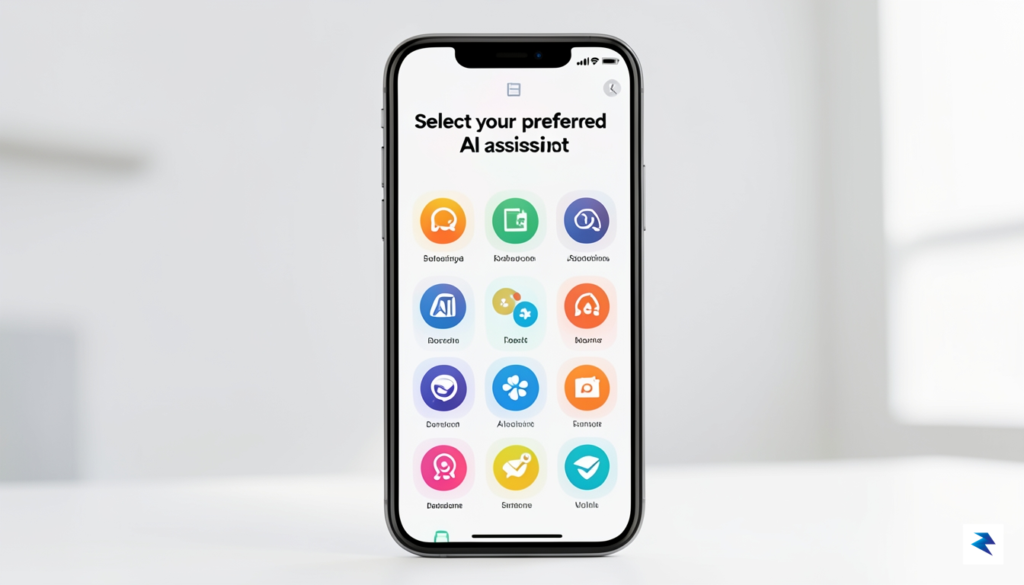
The primary benefit of this shift is the potential for increased specialization. Instead of being forced to rely on a one-size-fits-all assistant that may struggle with niche tasks, users could soon toggle between agents that excel in different domains. For instance, a professional might choose an assistant optimized for secure document analysis and scheduling, while a creative hobbyist might opt for a model fine-tuned for image generation and linguistic nuance. Furthermore, this competitive environment naturally prioritizes privacy; as companies vie for your trust, they are incentivized to offer more transparent data handling practices and granular control over what information your AI can access across your device. This could lead to a future where your digital assistant is a truly personal tool, rather than a data-collection arm of a massive conglomerate.
The transition toward an open AI ecosystem implies that your digital assistant will eventually become a modular utility rather than a static feature baked into the operating system’s core.
However, this transition toward an open environment is not without its potential drawbacks. The most immediate concern for consumers is the risk of software fragmentation. When an operating system is designed to support a multitude of third-party AI agents, the seamless integration we currently enjoy—where an assistant can easily pull data from your calendar, email, and navigation apps simultaneously—could become clunky or inconsistent. There is also the technical reality of system overhead; running multiple AI models or a complex third-party layer on top of a mobile OS could lead to increased battery drain and degradation in overall performance. While the promise of choice is enticing, users must be prepared for a period of adjustment where the convenience of a tightly integrated ecosystem is traded for the flexibility of a more open, yet potentially less polished, digital experience.
You must be logged in to post a comment.