
Alibaba Takes Pentagon to Court Over Military-Linked Label
The Legal Clash: Alibaba Challenges Pentagon Designation Alibaba Group has dramatically escalated its confrontation with the U.S. government,…
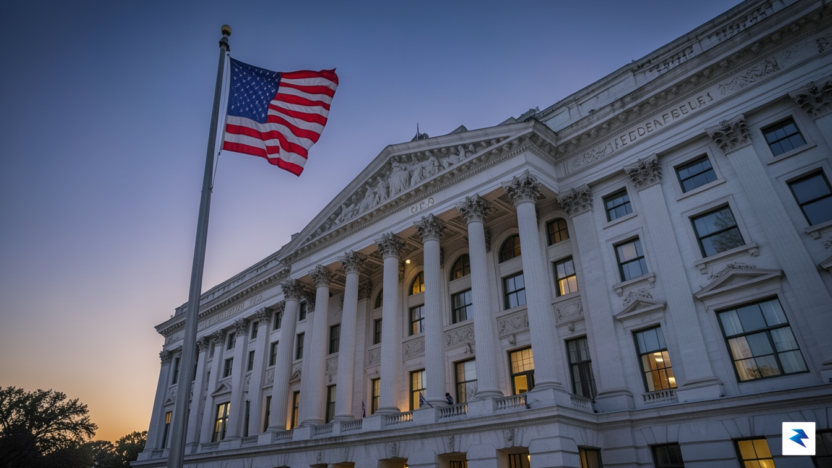

The Federal Reserve occupies a unique and often precarious position within the American governance structure. Mandated by Congress to pursue the dual goals of maximum employment and stable prices, the central bank is designed to operate with a high degree of insulation from the immediate pressures of the electoral cycle. This independence is not merely a bureaucratic preference; it is a fundamental safeguard against the temptation of short-term political maneuvering. If monetary policy were tethered to the political winds, officials might be inclined to lower interest rates to artificially stimulate the economy before an election, only to face a catastrophic inflationary reckoning later. By remaining autonomous, the Fed is theoretically empowered to make the difficult, sometimes unpopular decisions necessary to ensure long-term economic health, even when those decisions cause short-term political friction.
Despite this structural independence, the reality of midterms often creates a complex environment where monetary policy and political optics inevitably collide. While the governors of the Federal Reserve focus on lagging indicators and long-term economic trends, the electorate and incumbent politicians view interest rates through the immediate, visceral lens of the cost of living. When the central bank moves to raise rates—a standard tool to combat inflation—the resulting increase in borrowing costs for mortgages, credit cards, and business loans can cast a shadow over an incumbent administration’s economic platform. This creates a challenging narrative for those in power, who must balance the Fed’s clinical efforts to cool the economy with the public’s desire for continued growth and affordable credit.

The market’s anticipation of these rate adjustments adds another layer of complexity to the midterm landscape. Investors, analysts, and everyday voters pay close attention to the Federal Open Market Committee (FOMC) meetings, looking for signals that could dictate the direction of the broader economy. If the Fed signals a more aggressive posture ahead of an election, it can heighten market volatility and exacerbate voter anxiety regarding the trajectory of their personal finances. This friction is inevitable, as central bank decisions rarely align perfectly with the campaign timelines of politicians seeking reelection. Consequently, the Federal Reserve finds itself in the uncomfortable spotlight, where its technical adjustments are frequently misinterpreted or weaponized as campaign fodder.
The true test of the Federal Reserve’s independence is not how it acts during times of economic calm, but whether it remains steadfast in its mandate when the political stakes are at their absolute highest.
Ultimately, the tension between the Fed and the midterm cycle highlights a broader debate about the limits of technocratic governance in a democracy. While voters rely on politicians to manage the economy, the most significant levers of that economy remain in the hands of unelected officials who are explicitly tasked with ignoring political optics. This separation of powers is meant to protect the currency and the financial system from the volatility of partisan politics, yet it remains a point of contention whenever the economic realities felt by voters diverge from the macro-indicators monitored by central bankers. As midterm elections approach, this dynamic ensures that the Federal Reserve will remain a central, albeit unintentional, character in the unfolding political drama.

When the Federal Reserve adjusts interest rates, the impact rarely stays confined to the sterile halls of high finance; instead, it ripples outward until it reaches the kitchen tables of everyday Americans. These adjustments act as a transmission mechanism that dictates the cost of living in very personal ways, influencing everything from the monthly payment on a new sedan to the interest accruing on a credit card balance. For the average voter, an interest rate hike is not just a technical policy shift—it is a tangible increase in the cost of borrowing that constricts household budgets and limits disposable income. When the price of money goes up, the ability to finance major life milestones becomes significantly more expensive, creating a visceral sense of economic friction that can sour the national mood long before voters reach the ballot box.
Beyond the immediate math of monthly payments, rising rates trigger a psychological shift known as the “wealth effect” in reverse. As borrowing costs climb and markets react to tightening monetary policy, households often feel less secure about their financial trajectory. When the cost of credit becomes prohibitive, middle-class families frequently pull back on discretionary spending, fearing that the economic environment is becoming increasingly hostile. This caution is precisely what policymakers aim for to cool inflation, yet it also creates a pervasive sense of pessimism. For voters, this translates into a feeling that the economy is no longer working for them, transforming abstract macroeconomic data into a direct critique of the current administration’s stewardship.
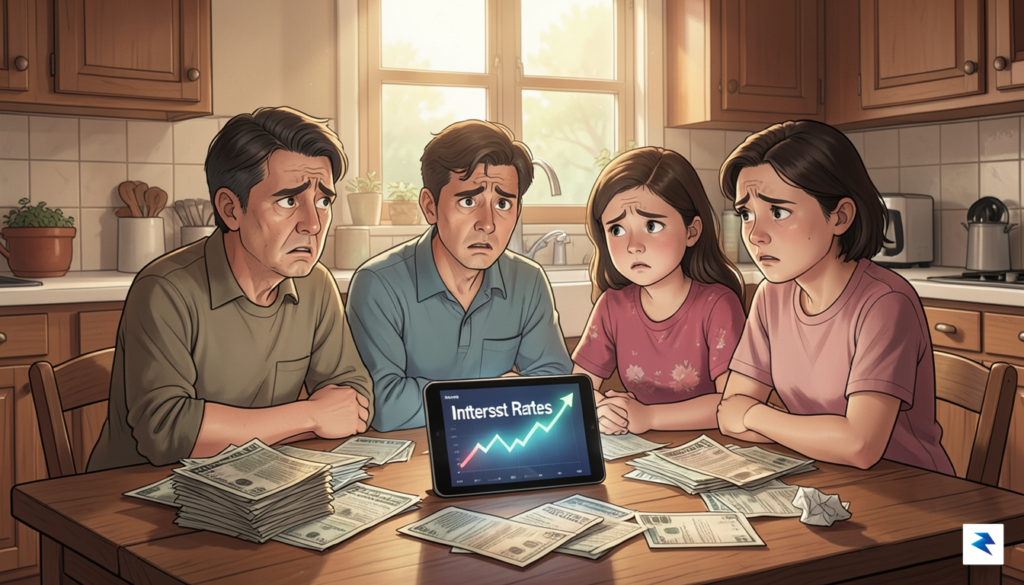
Incumbents have historically viewed aggressive interest rate hikes with deep anxiety, and for good reason: economic sentiment is the most reliable predictor of midterm outcomes. When families feel the squeeze of high mortgage rates or struggle with the mounting interest on revolving debt, they are far more likely to associate these hardships with the governing party. The frustration is compounded by the fact that rate hikes often feel like a double-edged sword; they are designed to combat the high prices of goods, yet they simultaneously make the financing of those same goods more painful. This paradox leaves voters feeling caught between the sting of inflation and the burden of debt service, a reality that often drives them to seek change in the halls of power.
The true political cost of interest rate policy is found in the gap between the stabilization of prices and the immediate, painful reality of the household budget.
Ultimately, the Federal Reserve’s influence over the midterm cycle serves as a reminder that the economy is fundamentally a psychological enterprise. While policymakers may focus on cooling an overheated market to ensure long-term stability, the short-term reality for voters is one of increased financial pressure. When the cost of capital rises, the perceived “well-being” of the electorate drops, creating a fertile ground for political dissatisfaction. By tightening the purse strings of the nation, the Fed inadvertently sets the stage for an election environment where incumbents must defend not just their legislative achievements, but their perceived ability to keep the American dream affordable for the average family.
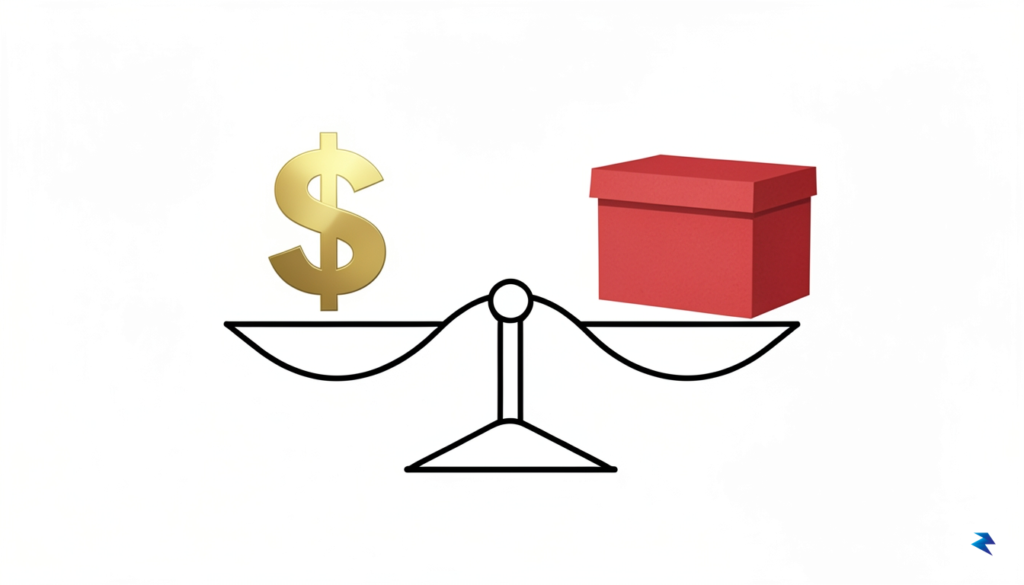
The relationship between the White House and the Federal Reserve is defined by a delicate, often strained, dance of independence and influence. While the administration naturally craves a robust economy to bolster its standing heading into election season, the central bank is structurally designed to prioritize long-term price stability over the immediate anxieties of the political calendar. This creates a strategic dilemma: when the Fed aggressively hikes interest rates to curb inflation, it inadvertently cools the very economic momentum that incumbents rely on to secure voter approval. Consequently, the administration must walk a tightrope, attempting to express empathy for the public’s rising cost of living while carefully avoiding the appearance of interfering with the monetary policy decisions of an institution meant to be insulated from partisan pressure.
Attempts by political leaders to exert pressure on the Fed often carry significant risks, as any perceived erosion of the central bank’s autonomy can unsettle global markets. When an administration chooses to publicly criticize the Fed’s trajectory, they risk signaling a lack of confidence in the nation’s economic governance, which can exacerbate the very instability they are trying to manage. Investors and international markets rely on the Fed’s predictability and independence to anchor their expectations; therefore, aggressive political rhetoric can inadvertently trigger market volatility. Such backlashes often paint the administration into a corner, where they must weigh the short-term political gain of vocal dissatisfaction against the long-term economic cost of a perceived institutional crisis.

To navigate this minefield, White House communication strategies have become increasingly nuanced and deliberate. Rather than engaging in direct confrontation, administrations often employ a two-pronged approach: they publicly acknowledge the central bank’s independence while simultaneously highlighting their own legislative efforts—such as infrastructure spending or targeted subsidies—to demonstrate that they are actively working to mitigate the pain caused by higher borrowing costs. By creating this distance, the White House attempts to insulate itself from the unpopularity of interest rate hikes while still claiming credit for the broader resilience of the labor market. It is a sophisticated, if precarious, form of messaging that attempts to separate the administration’s narrative of growth from the Fed’s narrative of restraint.
The core of this political tension lies in the fundamental disagreement over timing; the White House operates on a two-to-four-year election cycle, while the Federal Reserve is tasked with protecting the purchasing power of the dollar over the course of decades.
Ultimately, the effectiveness of this balancing act depends heavily on public perception of the underlying economic reality. If voters feel the tangible weight of inflation or unaffordable mortgage rates, the administration’s efforts to distance itself from the Fed may fall on deaf ears. Conversely, if the economy avoids a recession despite the restrictive policy, the administration can pivot to a narrative of stability and resilience. This dynamic ensures that the Fed, despite its best efforts to remain apolitical, remains a silent, looming participant in every midterm election campaign, its policy decisions serving as the invisible backdrop against which the battle for voter mandate is fought.
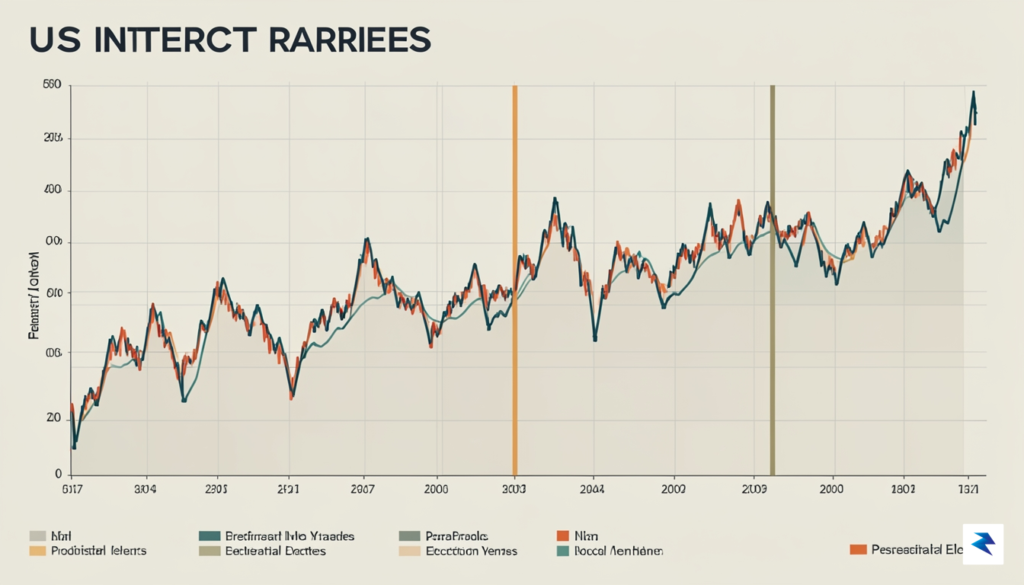
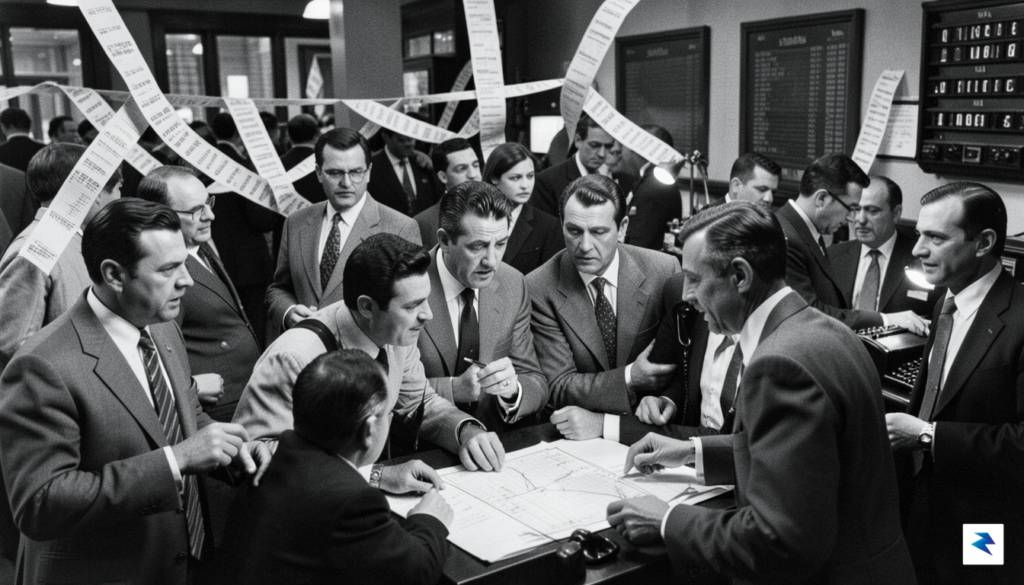
The notion that the Federal Reserve operates in a vacuum, shielded from the pressures of the political cycle, is a common misconception that crumbles under the weight of historical data. Time and again, the central bank has demonstrated that its commitment to its dual mandate—maintaining price stability and maximizing employment—often necessitates bold, unpopular actions right in the heat of an election year. History suggests that when economic reality demands a correction, the Federal Reserve rarely hesitates to move interest rates, regardless of whether a president is campaigning for reelection or a party is fighting to maintain control of Congress.
Consider the turbulent economic landscape of 1980, a presidential election year defined by rampant inflation. Despite the immense political pressure to keep borrowing costs low, then-Fed Chair Paul Volcker initiated a period of aggressive monetary tightening to break the back of double-digit inflation. This move, while politically painful for the incumbent administration, proved that the institution prioritizes long-term economic health over short-term political optics. Similarly, in the lead-up to the 2004 and 2012 elections, the Federal Reserve made significant adjustments to the federal funds rate as they navigated the complexities of post-recession recovery. These examples underscore a persistent pattern: the Fed views the calendar as a secondary concern compared to the primary metrics of inflation and labor market stability.
The independence of the Federal Reserve is not merely a theoretical construct; it is a functional necessity that has repeatedly manifested in the form of interest rate hikes or cuts that defy the prevailing political winds of an election cycle.
Current market anxieties often mirror the fears of previous eras, where investors worry that aggressive rate hikes could dampen consumer sentiment and influence voter behavior. However, historical precedents consistently suggest that the Federal Reserve is far more sensitive to data trends than to polling numbers. When the central bank identifies an overheating economy or persistent inflationary pressure, it acts with a calculated resolve that frequently ignores the potential fallout for those currently in power. While markets may experience short-term volatility in response to these decisions, the long-term historical record shows that the Fed’s focus remains steadfastly anchored to its mandate. By analyzing these past cycles, it becomes clear that the central bank is unlikely to alter its trajectory to accommodate the political calendar, making economic data the true architect of the election-year landscape.

For the average investor, the current intersection of aggressive monetary policy and political campaigning can create a deafening amount of market noise. It is easy to feel overwhelmed by headlines that suggest every interest rate hike is a harbinger of financial collapse or that a specific election outcome will either save or destroy the economy. However, the most successful investors distinguish between short-term emotional volatility—often fueled by 24-hour news cycles—and the underlying long-term economic trends that actually drive portfolio performance. While the Federal Reserve’s decisions on interest rates certainly influence borrowing costs and corporate profits, they operate on a timeline that transcends any single election cycle. By grounding your strategy in fundamental indicators like the Consumer Price Index (CPI) and monthly employment reports, you can strip away the political theater and focus on the data that truly matters for your financial future.
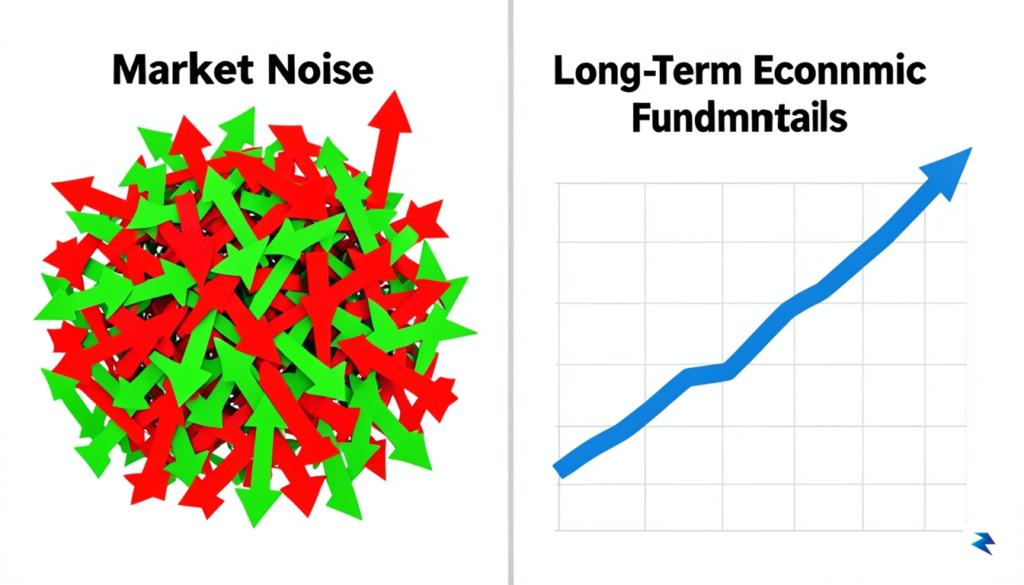
To avoid falling victim to financial fear-mongering, it is essential to develop a filter for the information you consume. Much of the media coverage surrounding the midterms is designed to generate clicks through sensationalism rather than providing objective financial analysis. When you read a headline predicting a market crash based on a specific legislative result, ask yourself whether the source is prioritizing alarmist rhetoric or providing historical context. Genuine investment analysis typically avoids absolutes and instead presents a range of probable outcomes based on historical data. If a report sounds overly dramatic or attempts to link complex, global economic shifts solely to a single political candidate, treat it as entertainment rather than actionable investment advice.
The market does not care about political rhetoric as much as it cares about liquidity, interest rate predictability, and corporate earnings. Focus on the trends, not the talking points.
Ultimately, history demonstrates that market performance is remarkably resilient regardless of which party holds power in Washington. While individual sectors may shift their focus based on regulatory changes or fiscal policy shifts, the broader stock market generally trends upward over long horizons, driven by innovation, consumer demand, and corporate efficiency. Instead of attempting to time your investments based on election results, consider a balanced strategy that prioritizes asset allocation and diversification. By keeping your attention fixed on objective metrics like wage growth and inflation data, you can maintain a disciplined, long-term perspective. This measured approach allows you to navigate the inevitable volatility of the midterm season with confidence, ensuring that your financial plan remains anchored in reality rather than political speculation.
You must be logged in to post a comment.