
IO Interactive Shifts Focus: What Recent Layoffs Mean for Project Fantasy
The Evolution of IO Interactive: From Hitman to Project Fantasy IO Interactive has carved out a distinct and celebrated niche in the video…


For the past few years, the generative AI landscape has been defined by a “bigger is better” philosophy. Early pioneers in the field focused on massive, parameter-heavy neural networks that required sprawling server farms to produce a single high-fidelity image. While these behemoths were capable of breathtaking artistic nuance, they were notoriously slow and prohibitively expensive for all but the most well-funded enterprises. Users often found themselves trapped in a cycle of waiting for minutes at a time, watching progress bars crawl while the model attempted to synthesize complex pixels from nothing. This latency was not merely an inconvenience; it acted as a functional barrier that kept generative art firmly in the realm of experimental hobbyists rather than integrated professional workflows.
The industry is now undergoing a radical transformation, moving away from these cumbersome architectures toward leaner, more agile solutions. This paradigm shift—exemplified by the arrival of specialized tools like the Nano Banana 2 Lite—prioritizes computational efficiency without compromising the integrity of the final artistic output. By optimizing the underlying mathematics of diffusion models, developers have managed to strip away the redundant processing layers that once bloated these systems. Consequently, we are entering an era where “Lite” versions of popular AI engines no longer imply a downgrade in quality, but rather an upgrade in utility. This evolution represents a maturation of the technology, moving from a brute-force approach to a sophisticated, streamlined execution that fits comfortably within the constraints of everyday consumer hardware.
Speed remains the single greatest bottleneck preventing the widespread adoption of AI in professional creative environments. Graphic designers, architects, and content creators operate on tight deadlines where waiting ten minutes for a single iteration of an image is simply not viable. When a tool operates in near real-time, it stops being a mere novelty and starts becoming a true creative partner; it allows for the rapid testing of ideas, instant feedback loops, and a fluid brainstorming process that mimics human sketching. The recent push toward lightweight models is a direct response to this need for immediacy, effectively turning AI generators from slow-motion printers into responsive, interactive canvases.
The true power of generative AI is unlocked only when the time between a user’s spark of inspiration and the visual result is reduced to a blink of an eye.
Furthermore, the democratization of these tools depends entirely on cost-effectiveness. By reducing the energy and processing power required to generate high-resolution imagery, developers are lowering the barrier to entry for independent creators and small businesses. This shift toward resource-conscious AI ensures that high-quality visual synthesis is no longer the exclusive playground of tech giants. As these agile models continue to evolve, we can expect them to integrate deeper into mobile devices and local software, effectively decentralizing the power of generative AI and placing it directly into the hands of anyone with a creative vision.

Google has officially unveiled Nano Banana 2 Lite, a strategic evolution in its generative AI portfolio that shifts the focus from purely high-end performance to widespread, high-efficiency accessibility. By streamlining the underlying architecture of its previous image generation models, Google has successfully engineered a tool that maintains impressive visual fidelity while slashing the technical barriers that often hinder casual creators and small-scale developers. This release marks a significant departure from the resource-heavy demands of earlier iterations, signaling that the future of generative media lies in lightweight, nimble systems that can thrive on a broader variety of hardware configurations.

When compared to its predecessor, the Nano Banana 2 Lite offers a stark contrast in operational efficiency. While the original model was designed to push the boundaries of extreme complexity, the 2 Lite version prioritizes rapid inference speeds, allowing users to generate high-quality imagery in a fraction of the time previously required. This reduction in latency is not merely a marginal improvement; it represents a fundamental change in how users interact with AI. By minimizing the time spent waiting for a prompt to render, the tool fosters a more fluid, iterative creative process that encourages experimentation without the frustration of long processing queues.
The core value proposition of Nano Banana 2 Lite lies in its ability to democratize high-end creative tools, making professional-grade image synthesis both faster and more cost-effective for everyday users.
Beyond the immediate gains in speed, the most compelling aspect of this new release is the drastic reduction in computational overhead. For many developers and hobbyists, the cost—both in terms of power consumption and cloud service fees—has historically been the primary obstacle to integrating advanced AI into their workflows. Nano Banana 2 Lite effectively lowers these costs by requiring fewer GPU resources to produce comparable results. This efficiency makes the technology far more sustainable and accessible, ensuring that users with limited infrastructure can still leverage state-of-the-art generative capabilities. Consequently, this model is poised to become the go-to solution for those who demand reliability and speed without the prohibitive expense associated with legacy AI image generation systems.

The remarkable speed and efficiency of Google’s Nano Banana 2 Lite are not merely incremental improvements but stem from a fundamental re-engineering of the underlying AI architecture and its operational mechanics. This breakthrough is the result of meticulously stripping away unnecessary computational weight and optimizing every facet of the image generation process. It’s akin to streamlining a complex machine, identifying and removing superfluous parts while enhancing the efficiency of the remaining critical components, ultimately leading to near-instantaneous creative cycles.
A core strategy behind this performance leap involves advanced model distillation and parameter optimization techniques. Google’s engineers have employed methods such as knowledge distillation, where a smaller, more efficient “student” model is trained to mimic the outputs and behaviors of a much larger, more complex “teacher” model. This process allows the smaller model to achieve comparable quality while significantly reducing its size and computational footprint. Furthermore, techniques like parameter pruning and quantization play a crucial role, by identifying and eliminating redundant connections within the neural network or reducing the precision of numerical representations without sacrificing creative fidelity, making the entire model leaner and faster to execute.
Beyond the model’s inherent structure, significant gains have been realized through a complete overhaul of the inference pipelines. This refers to the highly optimized sequence of operations that occur from the moment a user inputs a text prompt to the final image appearing on screen. The pipeline is designed to minimize latency by streamlining data flow, pre-fetching necessary information, and parallelizing computations wherever possible. This meticulous orchestration ensures that each step in the generation process is executed with maximum efficiency, preventing bottlenecks and accelerating the overall throughput of image creation.
Crucially, the Nano Banana 2 Lite has been engineered to exploit modern hardware capabilities with unparalleled efficiency. The model’s design is deeply integrated with optimized software that leverages the parallel processing power of cutting-edge GPUs and Google’s custom AI accelerators. This synergy means that the model can perform complex calculations with minimal overhead, making optimal use of memory bandwidth and computational units. By finely tuning the interaction between the AI model and the underlying hardware, Google has managed to unlock significant speed advantages, transforming what was once a multi-second or even minute-long process into a virtually instantaneous one.
The culmination of these technical advancements directly translates into a transformative user experience. The ability to generate high-quality images in a blink of an eye empowers creators with unprecedented agility, enabling rapid iteration, experimentation, and refinement of their visual ideas. This reduction in latency removes a significant barrier to creative flow, allowing designers, artists, and enthusiasts to explore more possibilities and bring their visions to life with fluidity. The efficiency also carries economic benefits, potentially lowering the computational cost per generation and making sophisticated AI image creation tools more accessible to a broader audience globally.


For independent creators and small teams, the barrier to high-quality visual production has historically been a combination of time constraints and restrictive budgets. Google’s Nano Banana 2 Lite dismantles these hurdles by offering a rapid-fire iteration process that fundamentally changes how ideas move from conception to completion. Whether you are a social media manager building a content calendar or an indie game developer drafting environment assets, the speed of this tool allows you to generate dozens of variations in the time it once took to create a single rough sketch. This acceleration means you can focus more on refining your creative vision and less on the technical latency that previously bogged down AI-assisted workflows.
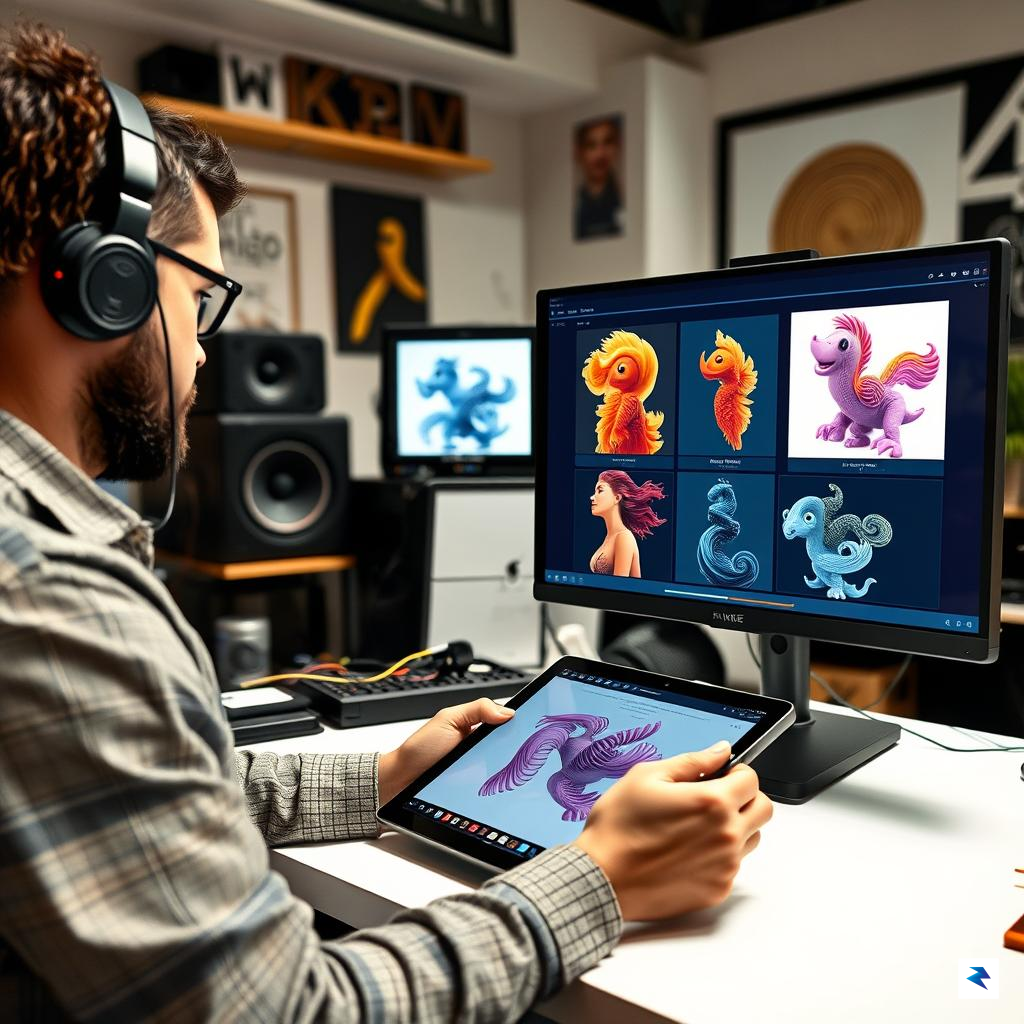
The practical integration of this technology into your daily routine is best realized through rapid prototyping and storyboarding. Instead of spending hours searching for stock photography that never quite fits the brand aesthetic, you can now generate custom imagery that aligns perfectly with your specific project requirements. For storytellers, this means you can visualize entire scripts or game levels within minutes, providing a tangible reference point for collaborators or clients before committing to final high-resolution assets. By treating the tool as a digital sketchbook, you can test complex lighting, color palettes, and composition styles with virtually no cost to your bottom line, which is a massive advantage for freelancers operating on tight margins.
The true power of Nano Banana 2 Lite lies in its ability to democratize high-fidelity concept art, turning a single afternoon of brainstorming into a comprehensive library of visual assets.
Beyond simple image generation, the platform’s efficiency allows for a more fluid integration with existing creative suites. Creators can now generate baseline assets that serve as the foundation for more intricate work in software like Adobe Photoshop or Blender, effectively bypassing the “blank canvas” phase that often leads to creative blocks. Furthermore, the cost-effective nature of this model allows small teams to scale their output without incurring the prohibitive expenses associated with enterprise-level AI licenses. By incorporating these images into your existing pipeline, you create a hybrid workflow that blends human oversight with machine-speed execution, ensuring that your final deliverables remain polished, unique, and perfectly tailored to your audience’s expectations.
To maximize these benefits, consider the following strategies for your daily production:

The introduction of the Nano Banana 2 Lite represents a strategic evolution in how we interact with generative AI, but it also highlights the inherent tension between speed, resource efficiency, and creative fidelity. While flagship models are designed to handle the most complex, high-fidelity artistic renders, the “Lite” architecture is optimized for responsiveness and lower-latency environments. This transition inevitably requires a recalibration of how the model handles intricate details, textures, and lighting. However, Google has prioritized maintaining a high threshold for output quality, ensuring that the reduction in processing overhead does not translate into a perceptible decline in visual coherence or stylistic nuance for the end user.

Achieving this balance is not merely a technical challenge; it is a commitment to responsible AI development. In previous iterations of smaller models, efficiency gains often came at the cost of “hallucinations” or diminished safety guardrails. With Nano Banana 2 Lite, the development team has integrated advanced distillation techniques that compress the model’s intelligence without stripping away its adherence to safety protocols. By refining the training data and streamlining the neural pathways, Google has ensured that the model remains robust against generating harmful content or perpetuating societal biases, even when operating at significantly higher speeds than its predecessors.
The true measure of a “Lite” model is not just how fast it can generate an image, but whether it can do so with the same ethical integrity as its more resource-intensive counterparts.
Furthermore, bias mitigation remains a cornerstone of this new release. Smaller models are historically more susceptible to adopting stereotypical patterns found in raw datasets, yet Google has implemented rigorous post-training alignment to counteract these tendencies. This involves a multi-layered verification process that checks image outputs against strict fairness benchmarks, ensuring that representations of people, cultures, and concepts remain inclusive and accurate. As users deploy these faster tools across diverse applications—from mobile app interfaces to real-time creative brainstorming—the consistency of these safety measures provides a reliable foundation. Ultimately, the Nano Banana 2 Lite demonstrates that democratization through performance does not have to come at the expense of quality or the values that define responsible technology.
You must be logged in to post a comment.